
Have you ever been fast asleep, then suddenly felt a tiny rough tongue licking your face in the dark?
If this keeps happening, you are probably asking, why does my cat lick my face at night and how can you make it stop without hurting your cat’s feelings. It can feel sweet at first, but when it happens over and over, it gets annoying fast. You lose sleep, your cat learns a habit you do not want, and you may start worrying that something is wrong.
The good news is that this behavior is usually normal. Your cat is not trying to be bad. In most cases, your cat is licking your face at night because of affection, attention seeking, grooming instincts, salt on your skin, hunger, stress, or a learned habit. Once you understand the reason, it becomes much easier to fix.
In this article, you will learn why your cat does this, when you should worry, and how to stop nighttime face licking in a calm and kind way.
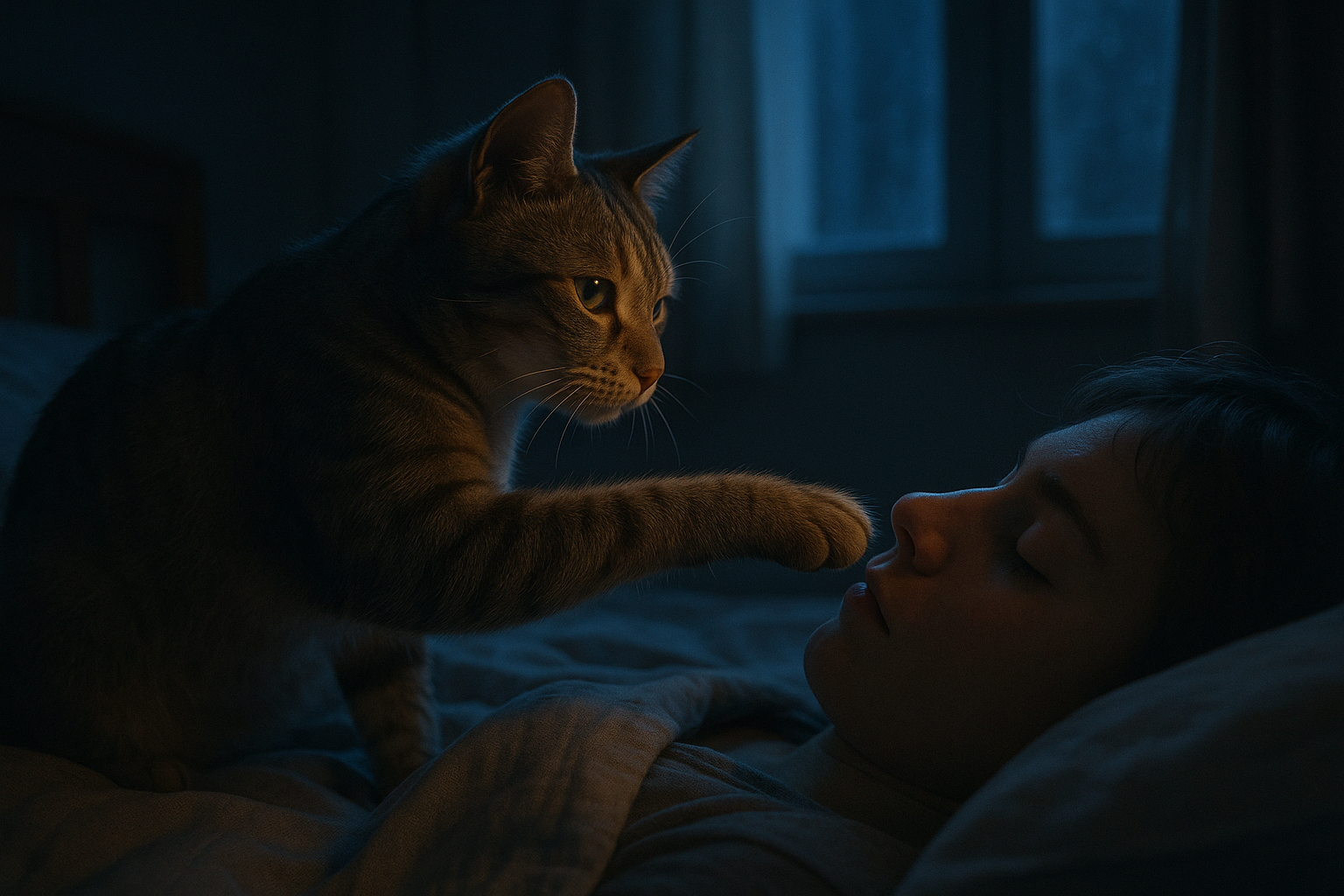
Why your cat licks your face at night
Cats do many things that seem strange to you, but make perfect sense to them. Face licking is one of those behaviors. Your cat may have one reason or several reasons at the same time.
Your cat is showing affection
One of the most common reasons is love. Cats groom each other when they trust each other. If your cat licks your face, your cat may see you as part of the family.
This is called social grooming. Mother cats groom kittens, and friendly cats groom each other. When your cat licks you at night, your cat may be saying, “You are mine, and I care about you.”
Your cat wants your attention
Night is quiet. Your room is calm. There are no phones, no chores, and no noise. That means your cat has a perfect chance to get your full attention.
If your cat licks your face and you wake up, talk, pet your cat, or get out of bed, your cat learns something important. Your cat learns that licking works. Even if you gently push your cat away, that can still count as attention.
Your cat is hungry
Some cats lick faces at night or very early in the morning because they want breakfast. Your cat may have learned that waking you up leads to food.
This is very common in cats who eat at the same early time every day. Your cat’s body clock gets used to it. Then your cat starts helping you “remember” meal time by licking your face.
Your skin tastes interesting
Your face has natural oils and salt from sweat. To your cat, that can be interesting. Some cats really like licking salty skin, lotion, or leftover smells from your day.
If you use scented skincare products, your cat may be curious about the smell or taste. This does not always mean your cat likes the product. It just means your cat notices it.
Your cat is grooming you
Cats often lick what they think needs cleaning. If your cat licks your face, hair, or forehead, your cat may simply be trying to groom you.
This is sweet, but it can become a problem if it happens while you are trying to sleep. Your cat does not understand bedtime rules the way you do.
Your cat feels anxious or overstimulated
Some cats lick more when they feel stressed, clingy, or unsettled. Nighttime can make this more obvious, especially if your cat is very attached to you.
Changes in your home can also lead to this behavior. A move, a new pet, a baby, or even a change in your schedule can make your cat seek comfort from you in the middle of the night.
Your cat has too much energy
If your cat sleeps a lot during the day, your cat may become active at night. Then your sleeping face becomes an easy target for licking, pawing, or meowing.
This happens often in young cats and kittens. They are awake, playful, and looking for something to do while you are trying to rest.
Is it normal or a sign of a problem?
Most of the time, this behavior is normal. Still, it helps to know when face licking may mean something more.
Usually normal signs
If your cat is otherwise healthy, relaxed, and acting normal, face licking is often just a habit or a sign of affection. Your cat is eating, playing, using the litter box, and behaving normally during the day.
In that case, the problem is not danger. The problem is your sleep.
When to pay closer attention
You should look more closely if your cat suddenly starts licking a lot more than usual, especially if this comes with other behavior changes.
Watch for signs like these:
- Sudden clinginess
- Loud crying at night
- Pacing or restlessness
- Not eating normally
- Hiding
- Aggression
- Overgrooming
- Weight loss
- Vomiting
- Changes in litter box habits
If you notice any of these, your cat may be stressed or sick. A vet check is a good idea.
Why this behavior gets worse over time
Cats repeat behaviors that work. This is very important to understand.
If your cat licks your face and you respond in any way, your cat may think, “Great, that worked.” Your cat does not care if the attention is happy attention or sleepy annoyed attention. Attention is still attention.
This is why the habit can become stronger over time.
How to stop your cat from licking your face at night
You do not need to punish your cat. In fact, punishment often makes things worse. Your cat may get confused, scared, or even more needy.
The best way is to remove the reward, build better habits, and make nighttime less exciting.
Step 1: Do not reward the licking
This is the hardest step, but it matters most.
When your cat licks your face at night, try not to talk, pet, laugh, or get up right away. If you react, your cat may keep doing it.
You can calmly turn away, cover your face with the blanket, or gently move your cat off the bed without a big response. Keep it boring.
If you stay consistent, your cat will slowly learn that face licking no longer gets results.
Step 2: Feed your cat on a better schedule
If hunger is part of the problem, changing the feeding routine can help a lot.
Try giving your cat a meal or snack right before bedtime. This can help your cat feel full longer. You can also use an automatic feeder if your cat wakes you early for food.
An automatic feeder is helpful because it teaches your cat that food comes from the machine, not from your face.
Feeding tips that help
| Problem | Helpful fix |
|---|---|
| Your cat wakes you for breakfast | Use an automatic feeder in the early morning |
| Your cat seems hungry at night | Give a small meal before bed |
| Your cat begs on a strict schedule | Slowly move meal times later or spread meals out |
Step 3: Tire your cat out before bed
A tired cat is more likely to sleep when you sleep.
Spend 10 to 20 minutes playing with your cat in the evening. Use a wand toy, feather toy, or toy mouse. Let your cat chase, pounce, and burn energy.
After playtime, offer food. This follows the natural pattern of hunt, eat, groom, and sleep. It can help your cat settle down for the night.
Step 4: Give your cat other bedtime routines
Cats like routine. If your cat uses face licking as part of bedtime, you can replace it with a better habit.
Try this simple bedtime routine:
- Play with your cat
- Feed a small meal
- Offer a cozy sleeping spot
- Turn off the lights
- Ignore attention seeking behavior
Over time, your cat may start relaxing in the new routine instead of waking you.
Step 5: Make a better sleeping space for your cat
Sometimes your cat licks your face because your bed is the warmest and safest place. You may not want to ban your cat from the bed, but you can make another space more inviting.
Try a soft cat bed, heated pet pad, blanket, or cat tree near your bed. If your cat likes being close to you, place the sleeping spot where your cat can still see or smell you.
This gives your cat comfort without your face being the target.
Step 6: Protect your face while you train the habit away
This is not the final fix, but it can help you sleep during the process.
You can:
- Pull the blanket up over your cheek
- Sleep facing away from your cat
- Use a pillow to create a little space
- Close your bedroom door if needed
If you close the door, make sure your cat has everything needed outside the room, like water, litter box access, and a cozy place to sleep.
Step 7: Do not use punishment
It is tempting to scold your cat when you are tired. But yelling, spraying water, or pushing your cat roughly can hurt trust and make the problem worse.
Your cat will not connect punishment with “I should stop licking at night.” Your cat may only learn that you are scary when your cat comes close.
Kind, steady training works better.
Step 8: Help an anxious cat feel safer
If your cat seems clingy or stressed, work on the stress instead of only the licking.
You can help by:
- Keeping a steady daily routine
- Giving your cat hiding spots
- Using puzzle feeders
- Offering playtime every day
- Using calming products recommended by your vet
- Making sure your cat has enough attention during the day
A cat who feels secure is less likely to wake you for comfort.
Common reasons and best fixes
| Reason your cat licks your face at night | What it means | What you can do |
|---|---|---|
| Affection | Your cat is bonding with you | Redirect to cuddling before bed |
| Attention seeking | Your cat wants a response | Ignore the licking and stay consistent |
| Hunger | Your cat wants food | Feed later or use an automatic feeder |
| Grooming instinct | Your cat is cleaning you | Offer another bedtime routine |
| Stress or anxiety | Your cat wants comfort | Reduce stress and keep routines steady |
| Too much energy | Your cat is bored and awake | Play before bed to tire your cat out |
Should you let your cat keep doing it?
That depends on how you feel. If you do not mind and your cat is healthy, there is no rule saying it must stop.
But if it wakes you up, ruins your sleep, or turns into a bigger habit like biting, kneading your face, or loud meowing, it is a good idea to stop it now.
Small habits can grow into very annoying nighttime routines if you keep rewarding them by accident.
FAQ
1. Why does my cat lick my face at night only?
Your cat may feel more affectionate, hungry, or active at night. Night is also quieter, so your cat gets your attention more easily then.
2. Does face licking mean my cat loves me?
Often, yes. Many cats lick people they trust. It can be a sign of bonding and comfort.
3. Why does my cat lick my face and then bite me?
This can happen when your cat gets overstimulated. Your cat may start grooming and then switch to a small bite, like cats sometimes do with each other.
4. Is it safe to let my cat lick my face?
Usually it is not dangerous, but it is not the cleanest habit. Cats clean themselves with their tongues, so many people prefer to stop face licking, especially near the mouth or eyes.
5. How do I stop my cat from waking me up at night?
Use playtime before bed, give a bedtime meal, ignore attention seeking behavior, and avoid rewarding your cat when you wake up.
6. Should I shut my cat out of my bedroom?
You can if needed. If you do, make sure your cat has food, water, litter access, and a comfortable sleeping area. Some cats adjust well, but you need to stay consistent.
7. Why did my cat suddenly start licking my face?
A sudden change can happen because of stress, a new routine, hunger, or health issues. If the behavior is new and intense, watch for other symptoms and talk to your vet if needed.
8. Do kittens lick faces for the same reason?
Yes, often for affection, attention, or play. Kittens also have lots of energy, so bedtime training is very important.
9. Can stress cause nighttime licking?
Yes. Some cats lick more when they feel anxious or clingy. Think about any recent changes in your home or routine.
10. How long does it take to stop this habit?
It depends on how long your cat has been doing it and how consistent you are. Some cats improve in a few days, while others take a few weeks.
Final thoughts
If you have been asking why does my cat lick my face at night, the answer is usually simple. Your cat is most likely showing love, asking for attention, looking for food, or following a habit that has worked before.
You are not dealing with a bad cat. You are dealing with a cat who has learned a nighttime routine that does not work for you.
Stay calm, stay consistent, and make bedtime less rewarding for face licking. Give your cat play, food, comfort, and routine before sleep. In most cases, that is enough to bring back peaceful nights.
If the licking starts suddenly or comes with other strange behavior, trust your gut and ask your vet. It is always okay to get help when something feels off.
With a little patience, you can help your cat feel safe and loved without being licked awake at 3 a.m.