
Have you ever been petting your cat during a sweet, calm moment, only to get bitten out of nowhere?
If that has happened to you, you are not alone. Many cat owners ask, why does my cat bite me suddenly while petting, especially when their cat seemed happy just one second earlier. It can feel confusing, upsetting, and even a little hurtful. You may wonder if your cat is angry, if you did something wrong, or if this is a bad habit that will only get worse.
The good news is that sudden biting during petting is usually not random. Your cat is trying to tell you something with their body and behavior. Cats do not always use clear signals the way people expect. A bite can be your cat’s fast way of saying, “That is enough,” “I feel uncomfortable,” or “I am too excited now.”
When you understand the reason behind the behavior, you can make petting safer, calmer, and more enjoyable for both of you. In this article, you will learn why your cat bites during petting, what signs to watch for, how to stop the problem from getting worse, and how to help your cat feel more relaxed.
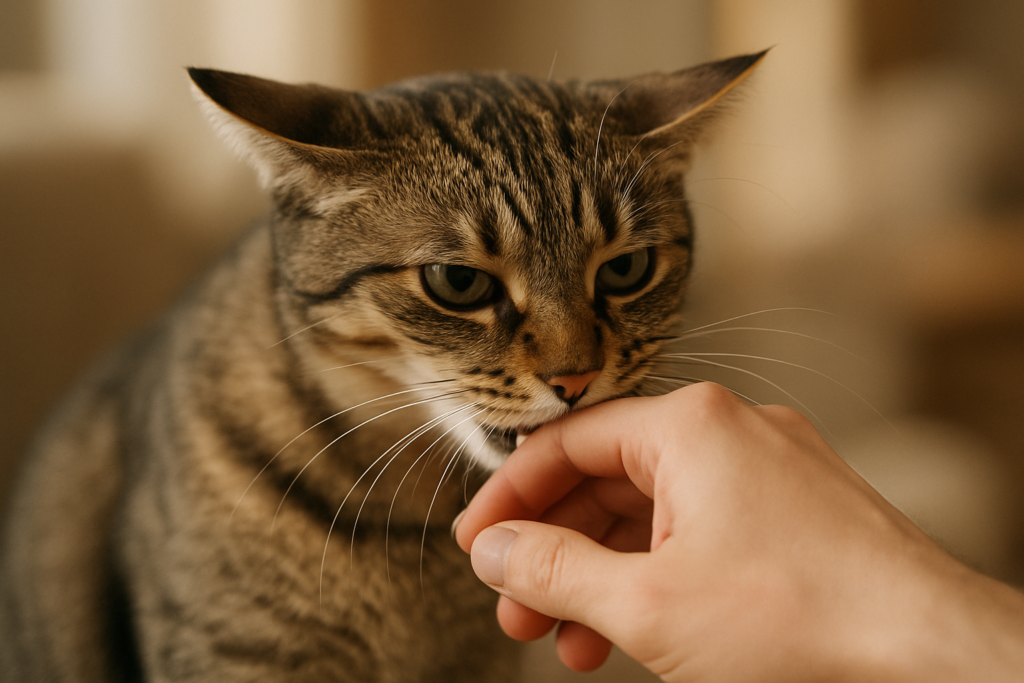
Why does your cat bite you suddenly while petting?
In most cases, your cat is not biting because they are mean or trying to punish you. Cats often bite during petting because they become overstimulated, uncomfortable, scared, or frustrated. Sometimes they enjoy touch only for a short time. Sometimes a hidden health problem makes petting painful.
This kind of biting is often called petting aggression or petting-induced biting. Even though the word aggression sounds serious, it does not always mean your cat wants to attack you. It often means your cat reached their limit and reacted quickly.
Your cat may enjoy the first few strokes, then suddenly feel irritated. That switch can seem instant to you, but your cat may have been giving small warning signs first.
The most common reason: overstimulation
One of the biggest reasons a cat bites during petting is overstimulation. This means your cat’s body and brain get too much touch, too much excitement, or too much sensation all at once.
At first, petting may feel nice. But after a while, repeated touching can start to feel annoying or overwhelming. Think of it like hearing the same sound over and over until it bothers you. Your cat may go from relaxed to irritated faster than you expect.
Some cats have a very low touch limit. They might enjoy only a few seconds of petting before they want space. Other cats can handle long cuddle sessions.
Signs your cat is getting overstimulated
Your cat may show little signs before the bite happens. These signs are easy to miss if you are focused on petting.
Watch for:
- Tail flicking or thumping
- Skin twitching on the back
- Ears turning sideways or back
- Sudden head turn toward your hand
- Tense body
- Dilated pupils
- Low growl or quiet sound
- Restlessness
- Quick licking of lips
- Grabbing your hand with paws
If you notice these signs, stop petting right away and give your cat space.
Your cat may like you but not like long petting sessions
This is an important thing to remember. Your cat can love you deeply and still not want to be touched for very long.
Many owners get confused because their cat asks for attention, rubs against them, purrs, and then bites. But asking for contact does not always mean asking for a long petting session. Sometimes your cat wants to say hello, rub their scent on you, or enjoy just a few strokes on the head.
Your cat is not being tricky on purpose. Cats often enjoy affection in short bursts. If you keep going after they have had enough, they may use a bite to stop the interaction.
Some body areas are more sensitive than others
Where you pet your cat matters a lot. Many cats prefer certain spots and dislike others.
Most cats usually prefer:
- Cheeks
- Chin
- Base of the ears
- Top of the head
- Neck area
Many cats are more sensitive about:
- Belly
- Lower back
- Tail
- Legs
- Paws
A cat may roll over and show their belly, but that does not always mean they want a belly rub. Sometimes it means they feel relaxed or playful, not that they want to be touched there.
If your cat bites when you pet certain places, it may be because those spots feel too intense or uncomfortable.
Pain can cause sudden biting
If your cat never used to bite during petting and suddenly starts doing it, pain is something you should think about.
A cat in pain may bite because touching hurts. Since cats are very good at hiding discomfort, biting may be one of the first obvious signs you notice.
Health problems that can make petting painful
These can include:
- Arthritis
- Skin irritation
- Fleas
- Wounds
- Dental pain
- Muscle soreness
- Back pain
- Ear infection
- Injury from jumping or falling
- Nerve sensitivity
If your cat reacts strongly when touched in one area, cries out, flinches, or seems less active than usual, it is a good idea to call your vet.
Stress and anxiety can lower your cat’s patience
A stressed cat may bite faster than a relaxed cat. Even if the petting itself is not the whole problem, stress can make your cat more sensitive.
Cats are creatures of routine. Changes in the home can make them feel unsafe or tense.
Things that may stress your cat
- A new pet
- A new baby
- Moving house
- Loud noises
- Guests visiting often
- Changes in feeding time
- Not enough hiding spaces
- Conflict with another cat
- Too much handling
- Boredom and lack of play
When your cat feels on edge, even normal petting may feel like too much.
Play aggression can look like petting biting
Sometimes your cat is not upset. Sometimes they are getting excited and playful. This is more common in kittens and young cats.
Your hand may become the target if your cat is in a playful mood. They may grab, bunny kick, or nip without meaning real harm. But even playful bites can hurt and become a bad habit.
This often happens when:
- Your cat has too much energy
- They are not getting enough playtime
- They learned that hands are toys
- You pet them when they are already excited
If the biting comes with pouncing, chasing, or grabbing, play may be part of the problem.
Your cat may have learned biting works
Cats learn from results. If your cat bites and you instantly pull away, they learn that biting makes the petting stop. From your cat’s point of view, the bite worked.
That does not mean your cat is being naughty in a human way. It just means the behavior got the result they wanted.
If this keeps happening, the habit can become stronger over time. That is why it helps to notice the warning signs early and stop before the bite.
How to tell the difference between love bites and warning bites
Some cats give small, gentle nibbles that are very different from a real warning bite. These are sometimes called love bites.
A gentle nibble may happen when your cat is relaxed and affectionate. It usually does not break the skin, and the body stays soft.
A warning bite is usually more tense and sudden. Your cat may show body language that says, “Stop now.”
Quick comparison
| Type of bite | What it usually means | Body language |
|---|---|---|
| Gentle nibble | Mild affection or excitement | Relaxed body, purring, soft eyes |
| Warning bite | Overstimulation or discomfort | Tail flicking, tense body, ears back |
| Play bite | Hunting or play behavior | Pouncing, grabbing, kicking |
| Pain-related bite | Touch hurts | Flinching, hiding, reacting to one spot |
If you are not sure which one your cat is giving, look at the whole body, not just the mouth.
What you should do right when your cat bites
If your cat bites you during petting, try not to yell, hit, or punish them. Punishment can make your cat scared of you and may make the behavior worse.
Instead, do this:
- Stop petting immediately.
- Stay as calm as you can.
- Move your hand away slowly if possible.
- Give your cat space.
- Wash the bite if skin is broken.
- Think about what happened right before the bite.
Your goal is not to win a fight. Your goal is to understand the trigger and prevent it next time.
What you should not do
It is easy to react strongly when a bite hurts, but some responses can make things worse.
Avoid these actions:
- Hitting or tapping your cat
- Yelling in their face
- Chasing them
- Scruffing them
- Forcing more petting
- Using your hands as toys later
- Cornering them after the bite
These actions can increase fear, stress, and distrust.
How to stop your cat from biting during petting
You can often reduce or stop this behavior by changing how and when you pet your cat. The goal is to respect your cat’s limits and help them feel safe.
1. Keep petting sessions short
Start with just a few strokes, then stop before your cat gets annoyed. This is one of the best ways to prevent petting aggression.
For example, try petting your cat three to five times, then pause. If your cat stays relaxed and wants more, you can offer a little more. If not, let the moment end there.
This teaches you both a new pattern with less stress.
2. Pet only favorite areas
Focus on safe spots like:
- Cheeks
- Chin
- Top of the head
- Around the ears
Avoid the belly, tail, and lower back unless you know your cat truly enjoys touch there.
3. Learn your cat’s body language
This is one of the most powerful things you can do. The more you notice the small warning signs, the more you can stop before the bite.
Pay close attention to:
- Tail movement
- Ear position
- Tension in the body
- Pupil size
- Head turning toward your hand
If you see a change, stop petting for a while.
4. Let your cat choose
A lot of cats do better when they feel in control. Instead of reaching for your cat often, let your cat come to you.
You can offer your hand and let your cat sniff it. If your cat rubs against you, that may be an invitation for gentle touch. If your cat walks away, respect that.
Choice helps many cats feel safer and calmer.
5. Do not pet when your cat is already wound up
If your cat is zooming around, stalking, flicking their tail hard, or acting very alert, this may not be the best time for petting.
Try petting when your cat is sleepy, settled, or already calm.
6. Give your cat more playtime
If your cat has a lot of extra energy, they may be more likely to bite or grab during touch.
Use wand toys, balls, and other cat-safe toys every day. A few short play sessions can make a big difference.
Good play can help with:
- Biting
- Scratching
- Nighttime craziness
- Attention seeking
- Stress
For kittens and young cats, play is especially important.
7. Never teach that hands are toys
If you wrestle with your cat using your hands, your cat may learn that biting skin is okay. This can lead to confusion later during petting.
Always use toys for play, not fingers or hands.
8. Reward calm behavior
When your cat enjoys gentle petting without biting, you can reward that calm moment. Use praise, a soft voice, or a small treat if your cat likes treats.
This helps your cat connect calm contact with good things.
9. Make your home feel safe
A stressed cat needs more than behavior correction. They need a calm environment.
Try to provide:
- A quiet resting spot
- Vertical space like cat trees
- Hiding places
- Regular feeding times
- Clean litter boxes
- Daily play
- Breaks from busy children or pets
A calm cat is often easier to handle.
10. See your vet if the behavior changes suddenly
If the biting is new, stronger than before, or happens with other signs of illness, get a vet check. Behavior problems and health problems are often linked.
A simple plan you can try this week
If you feel stressed and do not know where to start, use this easy plan.
Day by day idea
| Day | What you do |
|---|---|
| Day 1 | Watch your cat closely and write down when biting happens |
| Day 2 | Pet only the head and chin for a few seconds |
| Day 3 | Stop petting before any warning sign appears |
| Day 4 | Add two play sessions with a wand toy |
| Day 5 | Let your cat come to you instead of reaching first |
| Day 6 | Reward calm, relaxed interactions |
| Day 7 | Review what triggers the biting and adjust your routine |
Small changes often work better than trying to fix everything in one day.
Signs that your cat is asking for space
Your cat may not say “please stop” in a way that feels obvious to you. But their body often says it clearly.
Here are signs your cat wants space:
- They turn their head away
- They walk off
- They crouch low
- Their tail starts swishing
- Their ears flatten
- Their body gets stiff
- They stop purring suddenly
- They stare at your hand
- They twitch their skin
- They make a short, sharp sound
When you notice these signs and stop, you help your cat trust you more.
Why kittens bite while petting
Kittens bite for some of the same reasons as adult cats, but they also bite because they are babies learning how the world works.
A kitten may bite while petting because:
- They are teething
- They are excited
- They want to play
- They do not know bite strength yet
- They have too much energy
- They were not taught gentle play
Kittens need patient teaching. You can help by redirecting them to toys, keeping play sessions regular, and stopping interaction when biting starts.
Do not expect a kitten to have perfect manners right away. They are still learning.
When children are being bitten by the cat
If your cat bites a child during petting, it is important to teach both the child and the cat safer habits.
Children often pet too long, too fast, or in places the cat does not like. They may also miss warning signs.
Teach your child to:
- Pet gently
- Touch only the head, chin, or cheeks
- Stop after a few strokes
- Never grab the tail
- Never wake a sleeping cat
- Leave the cat alone when eating or hiding
- Walk away if the cat seems upset
Always supervise young children with cats. This protects both of them.
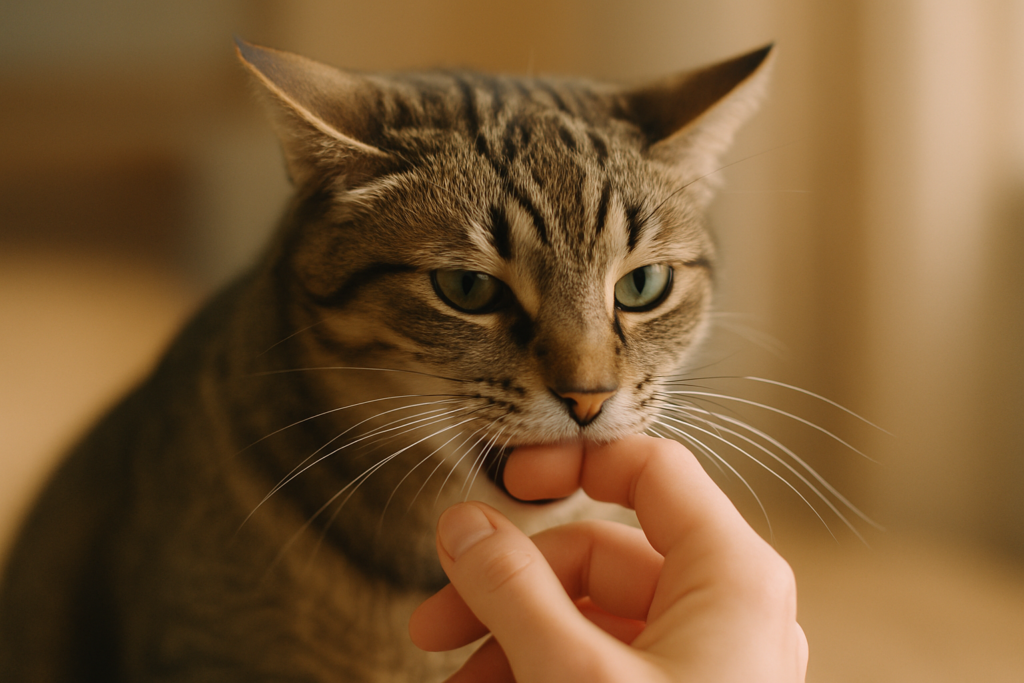
Can this behavior be fixed completely?
In many cases, yes, the biting can get much better. Some cats stop biting once you learn their limits and change your approach. Other cats may always be a little sensitive, but you can still prevent most bites by respecting their boundaries.
Success does not always mean turning your cat into a lap cat who loves endless petting. Success may mean understanding your cat well enough to avoid stress and enjoy the kind of affection they truly like.
That is still a big win.
When you should get extra help
Sometimes the problem is more serious or harder to manage alone.
You should ask for professional help if:
- The bites are deep or dangerous
- The behavior is getting worse
- Your cat seems in pain
- Your cat bites with no warning at all
- There are other behavior changes
- Your home has conflict between pets
- You feel afraid of your cat
- Children are being hurt
Your vet can rule out medical issues. A qualified cat behavior expert can help you build a plan for your specific situation.
FAQ
1. Why does my cat bite me suddenly while petting even when purring?
Purring does not always mean your cat wants endless petting. Your cat may feel good at first, then become overstimulated. Some cats also purr when they are stressed or unsure. Watch the tail, ears, and body too, not just the purr.
2. Is my cat angry at me when they bite during petting?
Usually, no. Most cats are not biting out of anger the way people think of anger. They are often saying they have had enough, feel uncomfortable, or got too excited.
3. How do I know if it is petting aggression or play biting?
Look at the whole situation. Petting aggression often happens after a few strokes and comes with warning signs like tail flicking or body tension. Play biting often includes chasing, pouncing, grabbing, and kicking.
4. Should I stop petting my cat completely?
No, not unless your vet tells you to avoid handling for a medical reason. Instead, change how you pet your cat. Keep sessions short, pet favorite areas, and stop before your cat becomes irritated.
5. Why does my cat ask for attention and then bite me?
Your cat may want contact, but only on their terms and for a short time. Rubbing against you does not always mean “pet me for five minutes.” It may mean “say hello” or “give me a few gentle strokes.”
6. Can pain cause my cat to bite during petting?
Yes. If your cat suddenly starts biting, reacts to one area, or seems less active, pain could be the reason. A vet visit is a smart idea if the behavior is new or unusual.
7. Do cats grow out of biting during petting?
Some kittens improve as they mature, especially with good training and regular play. Adult cats can also improve a lot. But many cats always have personal limits, so learning those limits is part of the solution.
8. Should I punish my cat for biting me?
No. Punishment can make your cat more fearful and may increase biting. It is better to stop the interaction, stay calm, and prevent the trigger next time.
9. Why does my cat bite only one person in the house?
Your cat may react differently based on how each person pets them, how long they pet, their energy level, scent, or whether they notice warning signs. One person may accidentally pet too long or touch sensitive areas more often.
10. When should I worry about cat biting during petting?
You should worry more if the biting starts suddenly, gets stronger, breaks skin often, happens with other behavior changes, or seems linked to pain. In those cases, call your vet.
Conclusion
If you keep asking, why does my cat bite me suddenly while petting, the answer is usually not that your cat is bad or that your bond is broken. Most of the time, your cat is trying to communicate a limit, a feeling, or a problem you cannot see right away.
The biggest step is to stop thinking of the bite as a mystery attack. Start seeing it as information. Your cat may be overstimulated, sensitive, playful, stressed, or hurting. Once you figure out which one fits, the problem becomes much easier to manage.
Be gentle with yourself too. This behavior confuses a lot of cat owners. You are not failing your cat. You are learning your cat’s language.
Keep petting sessions short. Watch the warning signs. Offer play every day. Respect your cat’s favorite touch spots. And if something feels off, trust your instincts and talk to your vet.
With patience, you can build a calmer, safer relationship where you and your cat both feel understood.