
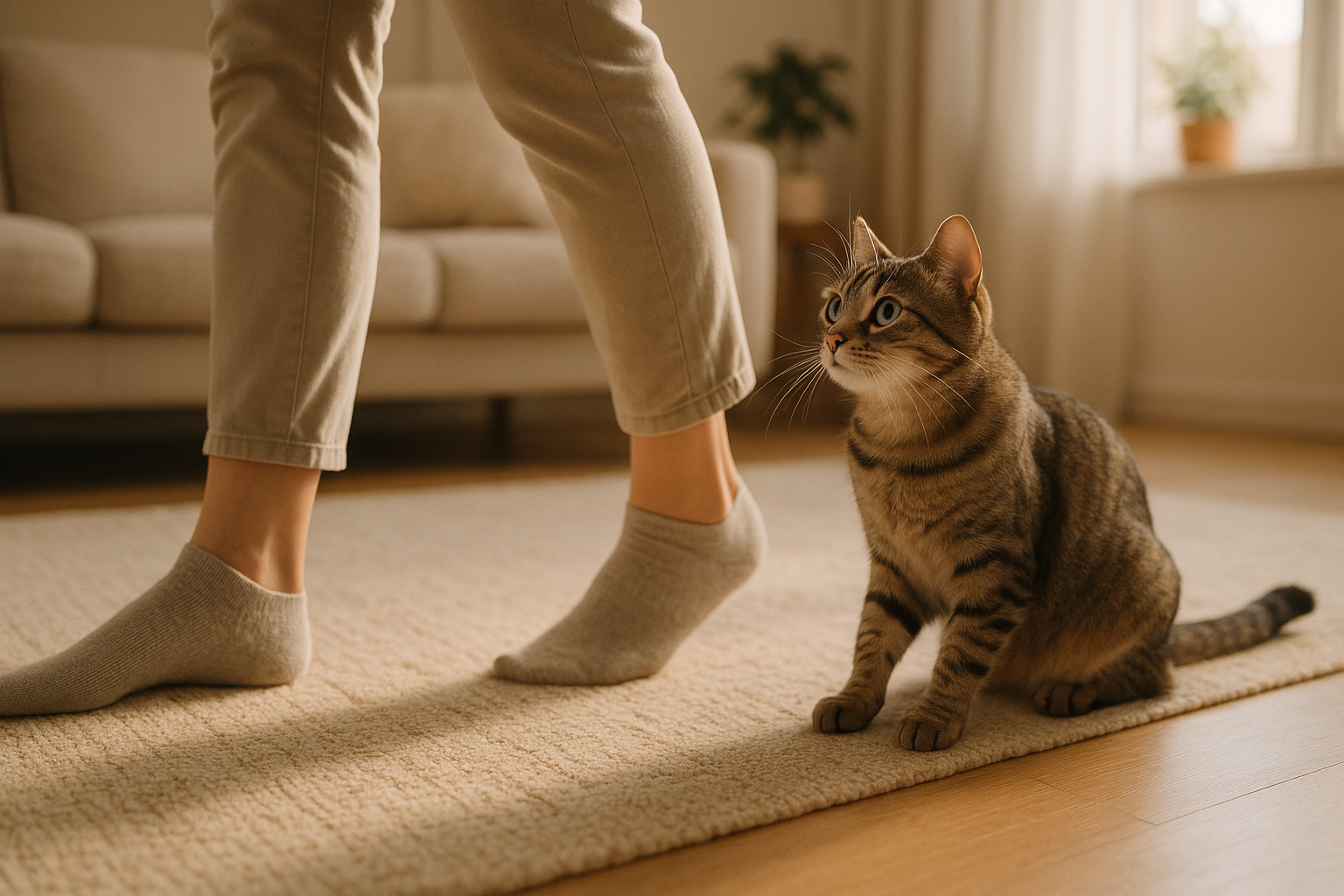
Have you ever tried to walk across your home, only to have your cat leap at your feet like they are tiny moving toys?
If that keeps happening, you are not alone. Many cat owners deal with this, and it can feel confusing, annoying, and even painful. One minute your cat looks sweet and calm. The next minute, your ankles are under attack. If you are searching for how to stop cat attacking feet while walking, the good news is that this problem can usually be improved with the right steps.
Your cat is not trying to be mean. In most cases, this behavior comes from play, hunting instincts, too much energy, stress, or a habit that has been accidentally rewarded. Once you understand the reason, you can start fixing it in a calm and kind way.
This article will help you understand why your cat attacks your feet while you walk, what you should do in the moment, and how you can teach better behavior over time.

Why Your Cat Attacks Your Feet While You Walk
When your cat attacks your feet, it usually makes sense from your cat’s point of view. Cats are natural hunters. Moving feet can look like prey. That is especially true if your cat is young, playful, bored, or full of energy.
Your cat may also be trying to get your attention. If your cat learns that biting or pouncing makes you react fast, the behavior can turn into a habit.
Play Aggression
Play aggression is one of the most common reasons for this behavior. Your cat sees your moving feet and ankles as something fun to chase.
This is very common in kittens and young cats. They often stalk, wiggle, pounce, grab, and bite because they are practicing hunting behavior. It may seem cute at first, but it can become a real problem if it keeps happening.
Boredom and Extra Energy
If your cat does not have enough playtime, your feet may become the most exciting thing in the room.
Indoor cats need daily activity. Without it, they often create their own games. Chasing your legs may be your cat’s way of burning energy.
Learned Behavior
Sometimes cats keep doing this because it worked before. If you laugh, run, shout, wiggle your feet, or pick your cat up right after the attack, your cat may see that as part of the game.
Even negative attention can still feel rewarding to a cat that wants interaction.
Fear or Stress
Some cats attack when they feel nervous or overstimulated. Sudden movement can trigger a quick reaction.
If your cat is already stressed by noise, changes in the home, other pets, or lack of safe spaces, the behavior may happen more often.
Medical Causes
Pain or discomfort can sometimes make a cat more reactive. If your cat has suddenly started attacking your feet, or the behavior seems more intense than normal, a vet check is a smart idea.
A cat in pain may become irritable or act in unusual ways.
Signs That Show What Is Causing the Behavior
It helps to look at the full situation, not just the bite or pounce. Your cat’s body language and timing can tell you a lot.
Signs of Play
If your cat looks relaxed before and after, with playful stalking, tail twitching, wide eyes, and quick pouncing, it is likely playful behavior.
Your cat may also run away and come back for more, almost like it wants you to join the game.
Signs of Stress or Fear
If your cat has flattened ears, a puffed tail, tense body, hiding behavior, or hissing, the problem may be stress and not simple play.
In that case, your cat needs help feeling safer, not just more exercise.
Signs of Attention Seeking
If your cat attacks your feet most when you are busy, walking to the kitchen, working, or talking on the phone, your cat may have learned this is a fast way to get your focus.
What to Do Right When Your Cat Attacks
In the moment, your reaction matters a lot. If you respond in a way that adds excitement, the behavior can grow stronger.
Stop Moving if You Can
If your cat grabs your feet, try to freeze for a moment. Quick movement often makes your feet seem even more like prey.
This can be hard, but it often helps stop the chase.
Stay Calm and Quiet
Do not yell, hit, or chase your cat. That can increase fear or excitement. It can also damage trust.
Use a calm voice if needed, but keep your reaction small.
Redirect to a Toy
As soon as possible, toss a toy away from your body or guide your cat toward an appropriate play object.
A wand toy, soft kicker toy, or small ball can help your cat switch targets.
End the Interaction Briefly
If your cat keeps going, quietly leave the area if you can. This teaches your cat that attacking your feet makes the fun stop.
How to Stop Cat Attacking Feet While Walking
To really solve this problem, you need to work on prevention, training, and better outlets for your cat’s energy.
Give Your Cat Daily Play Sessions
This is one of the best ways to reduce foot attacks. Your cat needs a safe way to chase, stalk, pounce, and grab.
Try to play with your cat at least two or three times a day for about 10 to 15 minutes each time. Use toys that move like prey.
Best Toys for Play Aggression
- Wand toys with feathers or string
- Small toy mice
- Soft kicker toys
- Balls that roll across the floor
- Puzzle toys for mental stimulation
Do not use your hands or feet as toys. Even in play, that teaches your cat that body parts are fair targets.
Create a Better Hunting Routine
Cats feel better when they can follow a natural cycle: hunt, catch, eat, groom, sleep.
You can copy that routine at home.
Easy Routine to Try
- Start with active play using a wand toy
- Let your cat “catch” the toy at the end
- Offer a meal or small treat
- Give your cat time to rest
This simple routine can lower frustration and help your cat feel satisfied.
Protect Your Feet While Training
You are not failing if you need to protect yourself during the process. Thick socks, slippers, or shoes can help while you work on the behavior.
This does not solve the root problem, but it can make daily life easier.
Remove Accidental Rewards
If your cat attacks and then gets a big reaction, your cat may think the plan worked.
Try not to:
- Run away in a playful way
- Wiggle your feet to tease your cat
- Push your cat roughly
- Laugh and continue the game
Instead, stay boring. Then redirect to a toy.
Reward Good Behavior
Cats learn better when you show them what works.
When your cat walks near your feet without attacking, reward that calm behavior. You can use:
- A small treat
- Gentle praise
- Petting if your cat enjoys it
- A toy tossed away from your legs
This helps your cat connect calm walking with good things.
Use the Environment to Your Advantage
Your home setup can make a big difference. A bored cat in a plain room will often make trouble.
Add Enrichment
Your cat needs places to climb, scratch, hide, and watch the world.
Helpful options include:
- Cat trees
- Window perches
- Scratching posts
- Cardboard scratchers
- Shelves for climbing
- Food puzzles
The more your cat can do during the day, the less likely your feet will become entertainment.
Watch for Trigger Times
Many cats attack feet at the same times every day. Maybe your cat does it in the morning, before dinner, or when you walk down a hallway.
If you notice a pattern, you can step in earlier.
Example Trigger Table
| Trigger Time or Situation | What Your Cat May Need | What You Can Do |
|---|---|---|
| Early morning | Play or food | Give a short play session before breakfast |
| Evening zoomies | Energy release | Schedule active play before this time |
| You walking to kitchen | Attention or routine | Toss a toy first or give a puzzle feeder |
| Narrow hallway | Ambush chance | Keep a toy nearby and move calmly |
| After being alone | Social contact | Spend a few minutes playing before walking around |
Should You Punish Your Cat?
No. Punishment usually makes things worse.
If you spray your cat with water, shout, or smack your cat, your cat may become scared of you. That fear can lead to more stress and even more aggression.
Your goal is not to scare your cat into stopping. Your goal is to teach your cat a better way to act.
What if Your Cat Is a Kitten?
Kittens attack feet very often because they are learning how to play and hunt. This is normal, but it still needs guidance.
You should:
- Give your kitten lots of short play sessions
- Never let your kitten chase hands or feet
- Redirect biting and pouncing to toys
- Reward calm behavior
- Keep routines consistent
Kittens usually improve a lot when they have enough play and clear boundaries.
What if Your Cat Attacks Only One Person?
This can happen if one person moves quickly, wears loose slippers, plays differently, or reacts more strongly.
It can also happen if your cat sees that person as more exciting. The solution is usually the same, but that person needs to be extra consistent with calm reactions and redirection.
When You Should Talk to a Vet or Cat Behavior Expert
Sometimes this problem needs extra help. You should contact a vet if:
- The behavior started suddenly
- Your cat seems more aggressive than playful
- Your cat shows signs of pain
- There are other behavior changes
- Your cat bites hard enough to break skin often
You should also consider a certified cat behavior expert if the attacks are frequent, intense, or not improving with home changes.
Common Mistakes That Keep the Problem Going
Sometimes cat owners do everything with love, but a few habits accidentally make the attacks worse.
Playing With Feet Under Blankets
This teaches your cat that moving body parts are toys. It may seem harmless, but it can increase stalking and biting.
Inconsistent Rules
If you stop the behavior one day but encourage it the next, your cat gets mixed messages.
Not Giving Enough Playtime
Many behavior problems improve when a cat has proper daily exercise and mental activity.
Reacting Big Every Time
A dramatic reaction can be exciting for your cat. Calm and simple is usually better.
FAQ
1. Why does your cat attack your feet when you walk?
Your cat usually attacks your feet because they move like prey. It may be play aggression, boredom, attention seeking, stress, or a learned habit.
2. Is your cat being aggressive or just playful?
Often it is playful, especially in kittens and young cats. But if your cat hisses, growls, flattens ears, or seems tense, stress or fear may be involved too.
3. Should you ignore your cat when it attacks your feet?
You should avoid giving a big reaction. Stay calm, stop moving if possible, and redirect your cat to a toy. Total ignoring is not always enough unless you also teach a better behavior.
4. Can boredom cause foot attacks?
Yes, very often. A bored cat will find something moving and interesting, and your feet are easy targets.
5. Do cats grow out of attacking feet?
Some do improve with age, but many do not stop on their own. Training, play, and routine help much more than waiting.
6. Should you use a spray bottle to stop the behavior?
No. Spray bottles can create fear and stress. They do not teach your cat what to do instead.
7. What toys help stop cats from attacking ankles?
Wand toys, kicker toys, toy mice, balls, and puzzle feeders are all helpful. The best toy is one that gives your cat a proper outlet for stalking and pouncing.
8. Why does your cat attack your feet more at night?
Cats are often more active in the evening. If your cat has stored up energy all day, nighttime foot attacks can happen more often.
9. Can anxiety make your cat attack while you walk by?
Yes. A stressed or anxious cat may react more strongly to movement. Safe hiding spots and a calmer environment can help.
10. When should you worry about this behavior?
You should worry if the attacks are sudden, severe, unprovoked, or paired with other changes like hiding, pain, appetite loss, or strong aggression.
Final Thoughts
If your cat keeps going after your feet, you are not dealing with a bad cat. You are dealing with a cat that needs help, guidance, and better ways to use its natural instincts. When you understand how to stop cat attacking feet while walking, the problem becomes much easier to manage.
Focus on daily play, calm reactions, redirection, and a more enriching home. Be patient with your cat and with yourself too. Behavior change takes time, but small consistent steps really do work. In many homes, a cat that once attacked ankles every day can learn to walk beside you peacefully instead.