
Do you wake up at night with your cat stretched across your chest and wonder, why does my cat sleep on my chest?
If you do, you are not alone. A lot of cat owners feel confused by this habit. Part of you may think it is sweet. Another part may worry that something is wrong, or that your cat is getting too attached, too clingy, or too demanding at bedtime.
The good news is that in most cases, this behavior is completely normal. When your cat sleeps on your chest, it usually means your cat feels safe, warm, and close to you. It can be a sign of love, trust, comfort, and routine. But sometimes it can also become a problem if you cannot sleep well, feel trapped, or worry about changes in your cat’s behavior.
In this article, you will learn why your cat does this, what it means, when you should worry, and how to gently change the habit if it is bothering you.
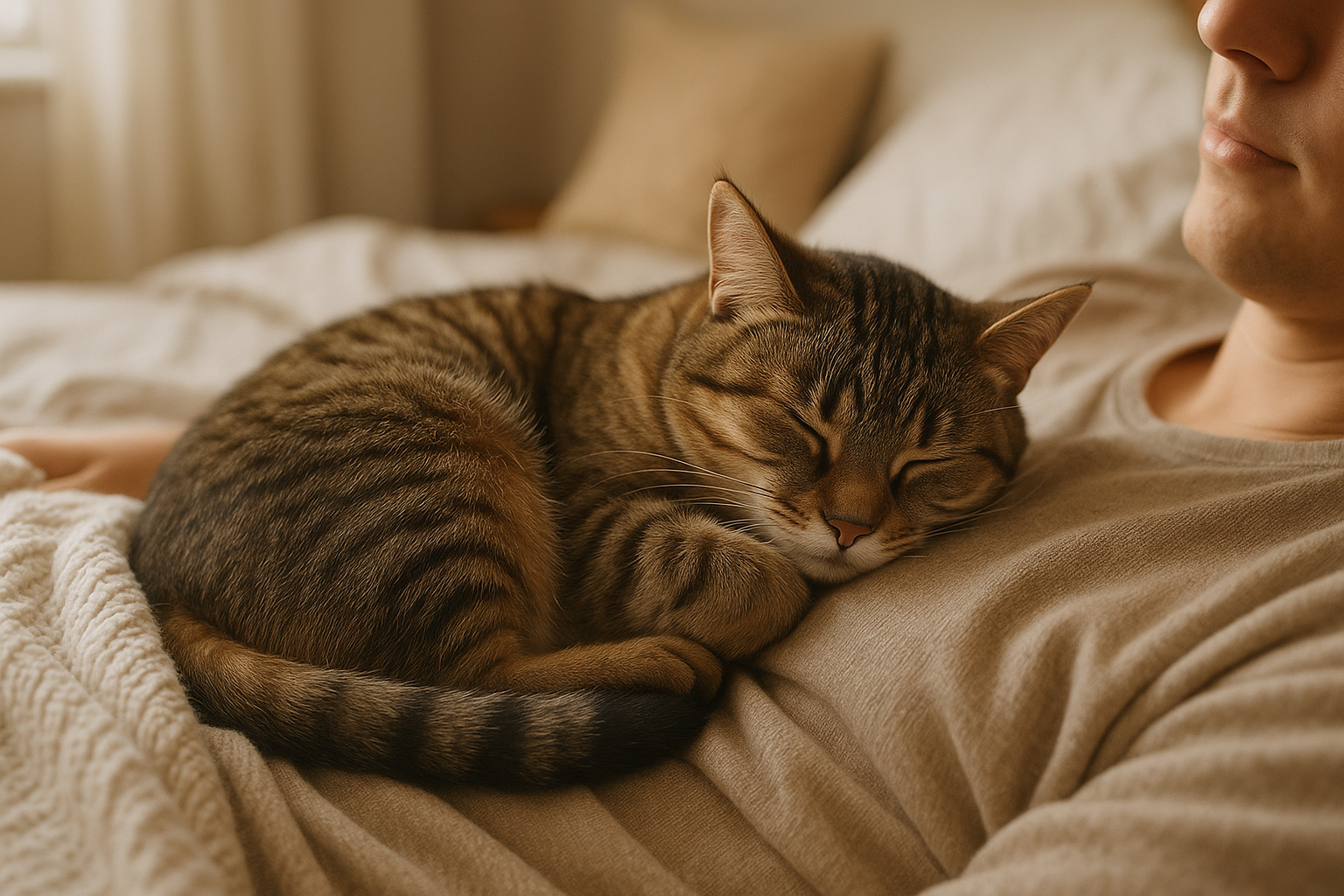
Why does your cat sleep on your chest?
Your cat may sleep on your chest for several simple reasons. Cats are not always easy to read, but this behavior usually comes from comfort and trust rather than anything bad.
When your cat chooses your chest, your cat is picking a spot that feels warm, steady, and familiar. Your body gives off heat. Your breathing and heartbeat create a calm rhythm. Your scent tells your cat that this is a safe place.
Here are the most common reasons.
Your cat feels safe with you
Cats are careful animals. Even the bold ones like to rest where they feel protected. If your cat sleeps on your chest, your cat may see you as the safest place in the house.
That is actually a big compliment. It means your cat trusts you enough to be vulnerable while sleeping. Since sleep is when cats are less alert, they choose resting places very carefully.
Your chest is warm and cozy
Cats love warm places. That is why they nap in sunbeams, on blankets, near heaters, and on laptops. Your chest is warm, soft, and raised off the ground, which can make it the perfect sleeping spot.
If your home is cool at night, your cat may be even more likely to curl up on you.
Your breathing and heartbeat are soothing
The rise and fall of your chest can feel calming to your cat. Your heartbeat and breathing create a gentle pattern that may remind a kitten of sleeping with its mother or littermates.
This is one reason some cats seem to settle down faster when they lie on a person rather than beside them.
Your cat wants closeness and bonding
Some cats are more affectionate than others. If your cat is strongly attached to you, sleeping on your chest may be one way your cat stays close.
This does not always mean separation anxiety. Often it simply means your cat enjoys being near you and sees bedtime as a quiet time for connection.
Your cat likes your smell
Cats know you by scent. Your skin, clothes, hair, and bedding all carry your smell. Your chest has a strong familiar scent, so your cat may feel comforted by being right there.
Cats also mix their scent with yours as part of bonding. If your cat kneads, rubs, purrs, or naps on you often, this can be part of that social behavior.
Your cat is claiming a favorite spot
Cats can be funny about territory. Your cat may not be trying to dominate you, but your chest may simply be a prime sleeping location in your cat’s mind.
It is warm, high, soft, and already occupied by your favorite human. To your cat, that may make it the best seat in the house.
Is it a sign that your cat loves you?
Usually, yes. If your cat sleeps on your chest, it often means your cat feels a strong bond with you.
Cats show love in quieter ways than dogs. They may not always run to you with wild excitement. Instead, they show affection by staying close, following you, blinking slowly, purring, head-butting, grooming you, or sleeping on you.
Sleeping on your chest is often one of the clearest signs that your cat feels secure and attached.
Still, every cat is different. Some loving cats sleep near your feet. Some sleep beside your pillow. Some prefer a chair in the same room. Your cat does not need to sleep on your chest to love you.
Why does this happen more at night?
Nighttime brings out certain cat habits. Your cat may be more likely to sleep on your chest at night because your home is quiet, dark, and calm.
During the day, there are distractions. At night, your cat may finally settle down and look for the coziest place to rest. That place may be you.
Also, many cats become extra affectionate at bedtime because they have learned that this is when you stop moving around and stay in one place long enough for a long nap.
Is this normal for kittens and adult cats?
Yes, both kittens and adult cats may do this, but the reason can feel a little different.
Kittens
Kittens often crave warmth, safety, and contact. If your kitten sleeps on your chest, it may be because your kitten misses the comfort of sleeping with littermates or its mother.
Young kittens can be clingier, especially during the adjustment period in a new home.
Adult cats
Adult cats usually sleep on your chest because they trust you, like the warmth, and enjoy the routine. If an adult cat suddenly starts doing this after never doing it before, it may simply be a new comfort habit.
But sometimes a sudden behavior change can be worth watching more closely.
When should you be concerned?
Most of the time, chest sleeping is harmless. But if this behavior is new and comes with other unusual signs, it is smart to pay attention.
You may want to look closer if your cat:
- Becomes suddenly extra clingy
- Seems anxious or restless
- Cries more than usual
- Stops eating normally
- Hides during the day
- Breathes heavily or seems uncomfortable
- Has changes in litter box habits
- Seems older and more confused than usual
Sometimes cats become more attached when they are stressed, not feeling well, or reacting to a change in the home. That does not mean sleeping on your chest is bad. It just means you should look at the full picture.
If your cat’s behavior changes suddenly and you also notice health symptoms, talk to your vet.
Why your cat sleeping on your chest can become a problem
Even loving behavior can be hard if it keeps you from sleeping. Some cat owners feel guilty about that, but you do not need to feel bad.
Your sleep matters too.
This habit may become a problem if:
- Your cat wakes you up often
- Your cat steps on your throat or face
- You feel hot or uncomfortable
- You cannot move without disturbing your cat
- You have breathing issues or chest discomfort
- Your kitten bites, kneads, or claws at bedtime
- You are trying to teach your cat better night habits
If that sounds familiar, you can teach your cat a new sleep routine without hurting your bond.
How to stop your cat from sleeping on your chest
If you enjoy it, you do not need to stop it. But if you want your cat to sleep nearby instead of on top of you, gentle changes work best.
Cats usually respond better to redirection than punishment.
Give your cat a better sleeping spot
Place a soft cat bed, folded blanket, or heated pad next to you on the bed or nearby on a chair. If possible, make it warmer and softer than your chest.
You can add a shirt that smells like you. That often helps your cat accept the new spot faster.
Move your cat calmly and consistently
When your cat climbs onto your chest, gently lift your cat and place your cat in the new sleep spot. Do this every time, as calmly as you can.
Consistency matters a lot. If you allow it some nights but not others, your cat may keep trying longer.
Create a bedtime routine
Cats love habits. If your cat gets playful or clingy at night, a routine can help.
Try this:
- Play with your cat for 10 to 15 minutes before bed
- Offer a small meal or snack afterward
- Dim the lights and keep things quiet
- Lead your cat to the sleeping area you want your cat to use
This helps your cat burn energy and settle more easily.
Reward the spot you want
If your cat lies in the new bed, beside your pillow, or at your feet, reward that choice. You can use praise, petting, or a small bedtime treat.
Your cat learns faster when the right behavior feels good.
Do not punish your cat
Do not yell, push your cat roughly, or scare your cat away. That can damage trust and make your cat anxious.
Your cat is not trying to annoy you. Your cat is choosing your chest because it feels good and safe.
Simple reasons and what you can do
| Reason your cat sleeps on your chest | What it means | What you can do |
|---|---|---|
| Warmth | Your body heat feels cozy | Offer a warm cat bed or blanket |
| Safety | Your cat trusts you | Keep the bond, redirect if needed |
| Affection | Your cat wants closeness | Give cuddle time before bed |
| Habit | Your cat has learned this routine | Be consistent with a new sleep spot |
| Stress or change | Your cat may need comfort | Check for home changes or health issues |
How to help a clingy cat feel calmer at night
Sometimes chest sleeping is part of a bigger problem. If your cat seems very clingy, cries at night, or cannot settle without being on you, your cat may need more support.
Add more play during the day
A bored cat often becomes more active or needy at night. Short play sessions during the day can help your cat feel calmer later.
Use wand toys, soft balls, or toy mice. Let your cat stalk, chase, and pounce.
Give your cat more daytime comfort
Some cats seek nighttime closeness because they do not feel settled enough during the day. Try adding:
- A cat tree
- A window perch
- Hiding spots
- Scratching posts
- Quiet nap areas
A cat that feels secure all day may be less intense at bedtime.
Watch for stress triggers
Cats can react strongly to changes that seem small to you. Stress triggers may include:
- Moving house
- A new pet
- A new baby
- Guests
- Loud noises
- Schedule changes
- Rearranged furniture
If your cat started sleeping on your chest after one of these events, your cat may be looking for reassurance.
Does this mean your cat sees you as a parent?
In a way, maybe. Your cat probably does not think of you exactly as another cat, but your cat may see you as a source of comfort, safety, food, warmth, and care.
That is why some cats show behaviors that seem kitten-like around their people, such as kneading, purring deeply, or curling up on the chest.
It is a trust-based relationship. Your cat depends on you and feels calm with you.
What if your cat sleeps on your chest and bites, kneads, or cries too?
That can be more frustrating, especially when you are trying to sleep.
If your cat kneads on your chest
Kneading is often a comfort behavior. It usually means your cat feels content, but those paws can hurt. Keep nails trimmed and place a thick blanket between you and your cat if needed.
If you want it to stop, gently move your cat to a nearby blanket or bed before the kneading starts.
If your cat bites at bedtime
Biting may mean your cat is overstimulated, playful, or asking for attention. A good play session before bed helps a lot.
Avoid using your hands as toys. That can teach your cat that your body is for grabbing and biting.
If your cat cries at night
Night crying can happen from boredom, habit, stress, aging, or illness. If your cat is also clingy and vocal, and this is new behavior, it is worth checking with your vet.
FAQ
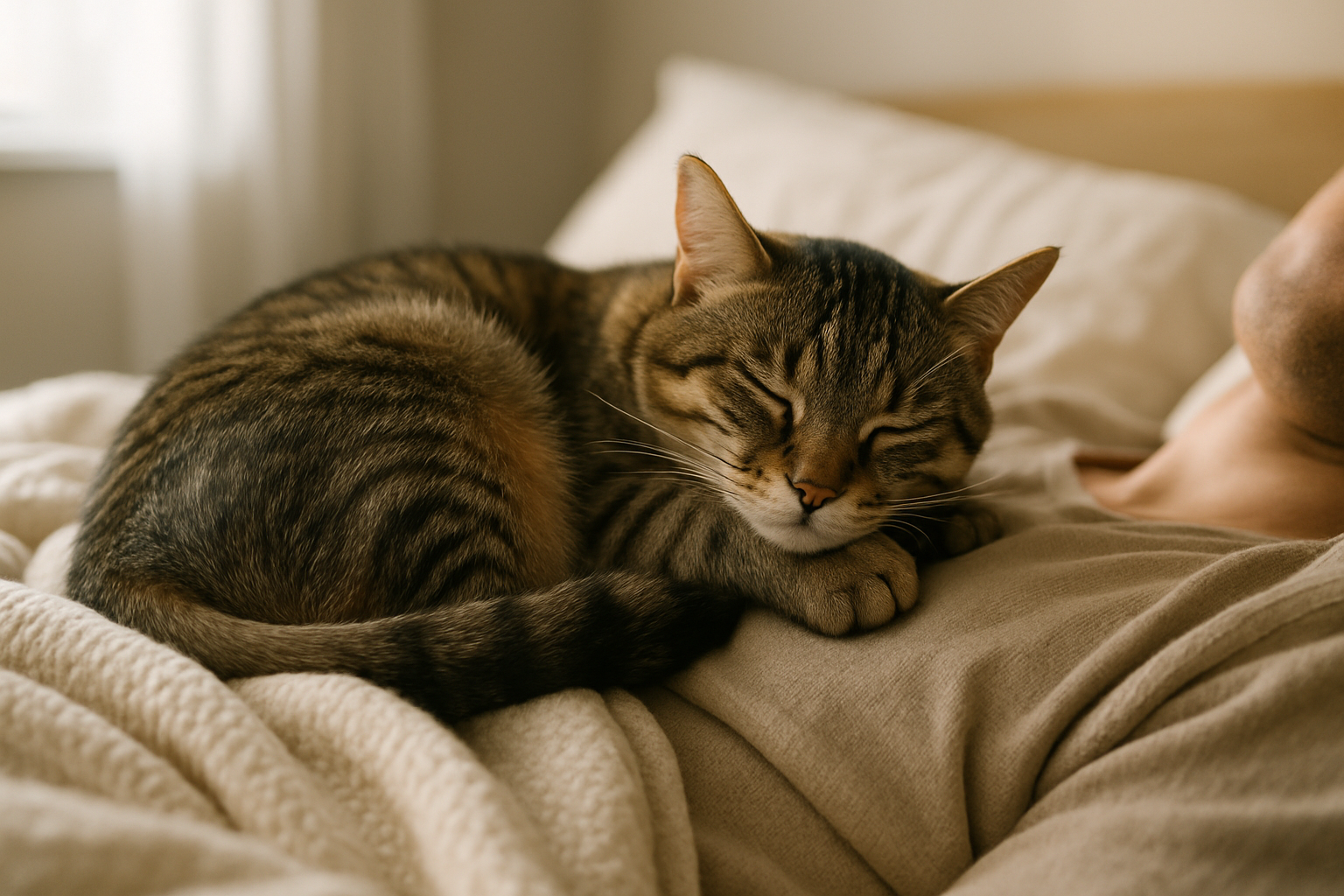
1. Why does my cat sleep on my chest and purr?
Your cat is most likely feeling safe, relaxed, and close to you. Purring often happens when a cat is content, though sometimes cats also purr for comfort when stressed.
2. Is it bad to let my cat sleep on my chest?
Not usually. If you are comfortable and your cat is healthy, it is often harmless. The only issue is if it affects your sleep, breathing, or comfort.
3. Why does my kitten sleep on my chest every night?
Your kitten may want warmth and security. Young kittens often like close body contact because it reminds them of sleeping with their mother and littermates.
4. Does my cat sleep on my chest because of love?
Very often, yes. It is usually a sign of trust and affection. Your cat feels good being close to you.
5. Can a cat sleeping on your chest mean the cat is sick?
By itself, not usually. But if your cat suddenly becomes much clingier and also shows other unusual signs, illness or stress could be part of the reason.
6. Why does my cat only sleep on my chest and not on anyone else?
Your cat may feel the strongest bond with you. Your scent, voice, body heat, and routine may be the most comforting to your cat.
7. How do I get my cat to sleep next to me instead of on me?
Create a soft, warm sleep spot beside you and gently move your cat there every time. Be patient and consistent.
8. Why does my cat sleep on my chest and stare at me?
Your cat may be watching your face, waiting for movement, or simply feeling connected to you. If the body language is relaxed, it is usually nothing to worry about.
9. Is my cat trying to protect me by sleeping on my chest?
Probably not in a guard-dog way. It is more likely that your cat feels protected by being close to you, and also enjoys the warmth and comfort.
10. Should I stop my cat from sleeping on my chest?
Only if it causes a problem for you or your cat. If you like it and your cat is healthy, there is no real need to stop.
Conclusion
If you have been asking, why does my cat sleep on my chest, the answer is usually sweet and simple. Your cat feels safe with you. Your cat likes your warmth, your smell, and the calm rhythm of your breathing. In many cases, it is one of the clearest signs that your cat trusts you deeply.
But even loving habits can become hard if you are losing sleep or feeling uncomfortable. The good news is that you can change the routine gently. Give your cat another cozy option, stick to a bedtime pattern, and stay consistent.
You do not need to choose between good sleep and a close bond with your cat. With a little patience, you can have both.