
Are you tired of trying to play with your cat, only to end up with teeth on your hands and arms?
If you are searching for how to stop cat biting during play, you are not alone. A lot of cat owners feel confused when a fun game suddenly turns into painful biting. You may wonder if your cat is angry, badly trained, or turning aggressive. In most cases, that is not what is happening at all. Your cat is usually acting on instinct, getting too excited, or trying to tell you something in the only way they know how.
The good news is this: you can teach your cat better play habits without yelling, fear, or stress. You do not need harsh punishment. You do not need to feel guilty either. You just need to understand why your cat bites during play and what to do instead.
This guide will help you understand the behavior, calm the chaos, and build better play routines so you can enjoy your cat again.
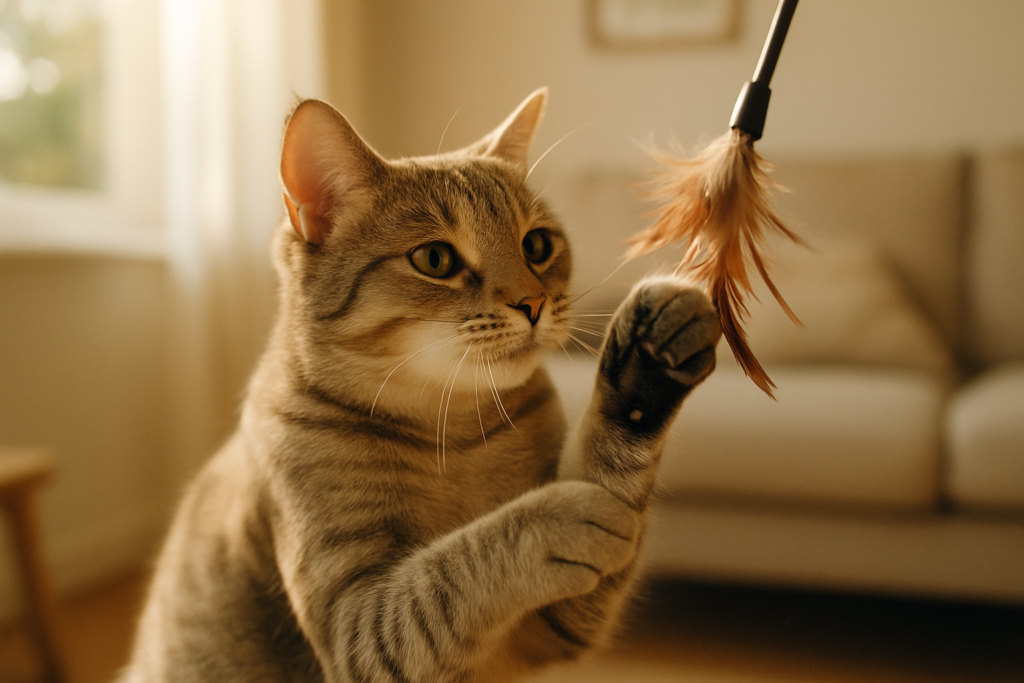
Why your cat bites during play
Play biting can feel personal, but usually it is not. Your cat is not trying to be mean. Your cat is acting like a little hunter.
Cats are built to stalk, chase, pounce, grab, and bite. In the wild, these actions help them catch prey. During play, your cat may treat your moving hand, foot, or arm like a target. This is especially common in kittens, but adult cats can do it too.
Here are the most common reasons it happens.
Your cat is using hunting instincts
Cats learn through pretend hunting. When your fingers wiggle, your foot moves under a blanket, or your hand darts around, your cat may think, “That looks like prey.”
This is one of the biggest reasons for cat biting during play. The behavior is natural, but that does not mean you have to accept it.
Your cat gets overexcited
Some cats start play gently and then get too wound up. Their body gets full of energy, and they lose control. That is when gentle pawing can turn into grabbing and biting.
This often happens when play goes on too long or becomes too rough.
Your cat never learned bite control
Kittens learn a lot from their mother and littermates. When one kitten bites too hard, the other usually squeals or stops playing. That helps kittens learn limits.
If your kitten was separated too early, or if they mostly played with human hands instead of toys, they may not have learned how hard is too hard.
You may be using your hands as toys
A lot of people do this without thinking. You wiggle your fingers in front of your kitten, tap their belly, or let them chase your hand under a blanket. It feels cute at first. Later, it becomes a problem.
If your cat learns that hands are toys, biting hands makes perfect sense to them.
Your cat has too much energy
A bored cat often makes their own fun. That can mean ambushing your ankles, biting during play, scratching furniture, or racing around the house at night.
Many biting problems get worse when your cat does not have enough active play each day.
Your cat feels frustrated or overstimulated
Sometimes a cat wants to play, but not in the way you are doing it. Sometimes petting turns into play. Sometimes play turns into stress. When the excitement gets too high, a bite can happen fast.
This is common in both kittens and adult cats.
Signs your cat is about to bite
It helps a lot if you can spot the warning signs early. Cats often give small signals before they bite. If you notice them, you can stop the play session before it turns rough.
Look for these body language clues:
- Wide eyes
- Fast tail flicking
- Ears turning sideways or back
- Skin twitching
- Sudden crouching
- Intense staring
- Grabbing with front paws
- Bunny kicking with back legs
- Short, sharp movements instead of relaxed play
If you see these signs, your cat is getting too excited. That is your moment to pause and redirect.
How to stop cat biting during play
You do not need to scare your cat to fix this. In fact, punishment often makes things worse. It can make your cat fearful, confused, or even more reactive.
Instead, use calm, clear, repeatable steps.
Stop using your hands and feet as play toys
This is the first big change. If your cat bites your hands during play, your hands should stop being part of the game.
Do not wiggle fingers at your cat. Do not wrestle with your cat using your arms. Do not let your kitten chase your toes under blankets.
Use toys that create distance between your body and your cat. This helps your cat learn what is okay to bite and what is not.
Good choices include:
- Wand toys
- Feather toys
- String toys used with supervision
- Small plush kicker toys
- Soft balls
- Toy mice
When your cat goes for your hand, gently move away and offer a toy instead.
End play the moment biting starts
If your cat bites during play, stop the game right away. This teaches your cat that biting makes the fun end.
Stay calm. Do not shout. Do not hit. Do not flick your cat’s nose. Do not push your hand toward their face.
Instead:
- Freeze for a moment
- Gently remove yourself if needed
- Stand up or turn away
- End the session for a short time
This works because cats learn from cause and effect. If biting leads to no more fun, the biting slowly loses value.
Redirect biting to an appropriate toy
If your cat is in full hunting mode, they need something safe to chase, grab, and bite. That is where kicker toys and wand toys help a lot.
A kicker toy is great because your cat can hold it with their front paws and kick it with their back feet. This gives them a normal outlet for rough play.
Try keeping one nearby during active play. If your cat grabs your arm, offer the kicker toy right away.
Keep play sessions short and regular
Long play sessions can push your cat into overstimulation. Shorter sessions often work better.
Try playing with your cat for 10 to 15 minutes, 2 to 4 times a day. For kittens, you may need even more frequent sessions because they have a lot of energy.
This helps in two ways:
- Your cat gets a healthy outlet for energy
- Your cat is less likely to build up wild frustration
Follow a hunting pattern during play
Cats enjoy play more when it feels like real hunting. That means the toy should not just wave in their face nonstop.
Try this pattern:
- Move the toy like prey
- Let your cat stalk
- Let your cat chase
- Let your cat pounce
- Let your cat catch it
If you never let your cat “win,” they may get more frustrated and rougher. Letting them catch the toy helps release tension.
Give your cat a cool down period
After exciting play, your cat may still be buzzing with energy. A small cool down helps.
You can:
- Slow the toy movement at the end
- Offer a kicker toy
- Give a food puzzle
- Offer a small meal or treat after play
This can mimic the natural hunt, catch, eat, rest pattern. Many cats calm down better when play ends this way.
What not to do when your cat bites
Some reactions are very common, but they can make the problem worse.
Do not punish your cat
Yelling, hitting, spraying water, or scaring your cat may stop the moment, but it does not teach the right lesson. Your cat usually will not think, “I should not bite during play.” They may think, “My person is scary.”
This can hurt trust and increase stress.
Do not pull your hand away fast
This sounds strange, but fast pulling can make the bite stronger. It can trigger your cat’s prey drive and turn your hand into something even more exciting.
If your cat has already grabbed you, stay as still as you can, then gently disengage.
Do not keep playing after a bite
If your cat bites and the game keeps going, your cat may learn that biting is part of play. That makes the habit stronger.
Be consistent. Bite means play stops.
Do not use rough play to tire your cat out
It may feel like rough hand play gets your cat’s energy out faster, but it teaches the wrong target. Your cat needs to burn energy on toys, not on your skin.
Best toys for cats that bite during play
The right toy can make a huge difference. Here is a simple guide.
| Toy Type | Why It Helps | Best For |
|---|---|---|
| Wand toy | Keeps distance between you and your cat | Chasing and pouncing |
| Feather toy | Triggers hunting instincts | Active cats and kittens |
| Kicker toy | Safe item to grab and bite | Rough play biters |
| Ball toy | Encourages solo play | Energetic cats |
| Puzzle feeder | Uses mental energy | Bored cats |
| Toy mouse | Good for stalking and batting | Cats who like prey-like toys |
Try rotating toys every few days so your cat does not get bored. Cats often lose interest if the same toy is always out.
How to teach a kitten not to bite during play
Kittens are adorable, but their tiny teeth are sharp. If you are losing sleep because of kitten biting, you are dealing with something many new cat owners face.
The good news is that kittens are still learning, so this is a great time to shape better habits.
Use toys every single time
If your kitten starts to chase your hand, stop and switch to a toy. Do this every time. Consistency matters more than perfection.
Your kitten is learning what belongs in the game. Help them get it right.
Make a small sound and stop play
If your kitten bites too hard, you can make a short, calm “ouch” or “eep” sound, then stop the game. Keep it simple, not dramatic.
Then pause for a little while. This copies how another kitten might respond.
Give your kitten lots of play chances
A kitten with no outlet will often become a bite machine. Short, frequent play sessions help a lot.
Think of your kitten like a little battery that keeps recharging. They need healthy ways to burn that energy all day.
Offer safe things to bite and wrestle
Kicker toys, soft toys, and chew-safe kitten toys can help. Your kitten may need to bite something. That is normal. Your job is to guide them to the right something.
How to stop an adult cat from biting during play
If your adult cat still bites during play, do not lose hope. Adult cats can learn too. It may take a little longer, especially if the habit has been going on for years.
Change the routine, not just the reaction
If your adult cat is used to rough play, simply saying “no” is not enough. You need to change the whole pattern.
That means:
- No more hand play
- More scheduled play sessions
- Better toys
- Clear stopping when biting happens
- Rewards for calm play
With time, your cat can learn that play works differently now.
Reward gentle behavior
When your cat plays with a toy nicely, praise softly or offer a small treat after the session. You want to show your cat what works.
Cats repeat behaviors that feel rewarding.
Watch for overstimulation
Adult cats can have stronger body signals before they bite. Learn your cat’s early warning signs. If the tail starts lashing or the movements get tense, end the session before the bite.
How your home setup affects play biting
Sometimes the problem is not just the play itself. Sometimes your cat’s whole environment is adding stress or boredom.
A cat with too little to do may act wild during the only exciting moment of the day.
Add daily enrichment
Enrichment means things that keep your cat’s brain and body busy.
You can try:
- Cat trees
- Window perches
- Scratching posts
- Food puzzles
- Toy rotation
- Paper bags without handles
- Cardboard boxes
- Treat hunts around the house
A busy cat is often a calmer cat.
Protect your sleep and reduce night biting
Some cats bite or pounce at night because they are full of leftover energy. If your kitten cries, zooms around, or attacks your feet in bed, try this:
- Add a good play session before bedtime
- Feed a small meal after play
- Keep nighttime calm and boring
- Ignore attention-seeking biting if your cat is safe and healthy
- Do not reward foot attacks under blankets
This helps your cat settle into a better evening pattern.
When play biting may be something else
Not all biting is playful. Sometimes a bite can point to fear, pain, or stress.
If your cat’s biting seems sudden, intense, or very different from normal, look closer.
Signs it may not be normal play biting
Watch for these signs:
- Growling or hissing
- Flattened ears
- Puffing up
- Hiding more than usual
- Biting during petting, not just play
- Limping or signs of pain
- Biting that seems to come out of nowhere
- Aggression around food, space, or other pets
If this sounds familiar, your cat may need a vet check or behavior help.
Pain can cause biting
Cats often hide pain very well. A cat with sore teeth, arthritis, skin pain, or another health problem may bite because they are uncomfortable.
If your cat suddenly starts biting more, especially an adult cat who did not do this before, a veterinary visit is a smart step.
A simple training plan you can start today
If you feel stressed and confused, keep it simple. Here is a basic daily plan you can follow.
| Time | What You Do | Why It Helps |
|---|---|---|
| Morning | 10 minutes of wand play | Burns energy early |
| Midday | Offer solo toys or puzzle feeder | Prevents boredom |
| Evening | 10 to 15 minutes of active play | Reduces wild behavior later |
| Before bed | Calm play, then small meal | Helps your cat settle |
And during any play session:
- Use toys, not hands
- Watch body language
- Let your cat stalk and catch
- Stop if biting starts
- Restart later, calmly
This is how you build a new habit.
How long does it take to stop cat biting during play?
This depends on your cat’s age, energy level, and how long the habit has been going on.
A young kitten may improve in a few weeks with steady training. An adult cat with a long history of rough play may need a couple of months. What matters most is consistency.
If everyone in your home responds the same way, progress comes faster. If one person still wrestles with the cat using their hands, the biting habit will stick around longer.
Common mistakes that keep the biting going
Sometimes cat owners are trying hard, but a few small habits keep the problem alive.
Mixed messages
If you stop biting one day but laugh and allow it the next day, your cat gets confused. Cats learn best from clear patterns.
Not enough exercise
A cat with extra energy is more likely to bite during play. Daily movement matters.
Ending play too early every time
If your cat never gets a proper hunting outlet, they may stay frustrated. Make sure play includes chasing and catching, not just teasing.
Accidental rewards
If your cat bites and gets attention, movement, or exciting reactions, the behavior may continue. Even pulling away fast can feel rewarding to some cats.
FAQ
1. Why does your cat bite you during play?
Your cat usually bites during play because they are acting out hunting instincts. They may also be overstimulated, bored, or used to playing with hands. Most of the time, it is not true aggression.
2. Is play biting normal for kittens?
Yes, play biting is very normal for kittens. Kittens learn about the world with their mouths and paws. Still, normal does not mean you should ignore it. You can teach better habits early.
3. Should you hiss at your cat when they bite?
No, that usually does not help. It can confuse or stress your cat. A calm pause, stopping play, and redirecting to a toy works better.
4. What is the best toy for a cat that bites during play?
Wand toys and kicker toys are usually the best choices. Wand toys keep your hands far away, and kicker toys give your cat a safe thing to grab and bite.
5. Can you train an adult cat to stop biting during play?
Yes, you can. Adult cats can learn new habits with patience and consistency. It may take longer than with a kitten, but it is very possible.
6. Why does your cat grab your arm and bunny kick?
This is a normal hunting move. Your cat grabs with the front paws and kicks with the back legs like they would with prey. It looks aggressive, but during play it often means your cat is too excited and needs a toy instead.
7. Should you stop playing with your cat if they bite?
Yes. End the game right away for a short time. This teaches your cat that biting makes the fun stop.
8. Can boredom cause cat biting?
Yes, very often. A bored cat with too little play, climbing, or mental activity may bite more because they have pent-up energy and frustration.
9. What if your cat bites with no warning?
Sometimes the warnings are subtle and easy to miss. Watch the tail, ears, eyes, and body tension. If biting truly seems sudden or out of character, talk to a vet to rule out pain or illness.
10. When should you get professional help?
Get help if the biting is severe, causes injuries, seems fearful rather than playful, or starts suddenly. A vet or qualified cat behavior expert can help you figure out what is going on.
Conclusion
If you have been struggling with how to stop cat biting during play, try to remember this one thing: your cat is not trying to ruin your bond. Your cat is usually excited, confused, under-stimulated, or simply following instinct.
You can fix this without fear or punishment. Use toys instead of hands. Keep play short and regular. Stop the game when biting starts. Give your cat better ways to chase, grab, and bite safely. Watch their body language and learn their limits.
Progress may be slow at first, and that is okay. Small changes add up. With patience, your cat can learn calmer play, and you can feel less stressed, less scratched, and much more confident.
You do not need a perfect cat. You just need a clear plan and a little time.