
Do you ever look at your indoor cat and wonder if you are doing enough to keep them happy all day?
If you do, you are not alone. Many people worry that their cat feels bored, lonely, too wild at night, or frustrated from staying inside. You may deal with kitten biting, crying at bedtime, zoomies at midnight, scratched furniture, or a cat who seems sleepy all day and naughty all evening. That can make you feel stressed and unsure of what your cat really needs.
The good news is this. Learning how to keep indoor cats entertained all day is not about buying endless toys or being busy every minute. It is about giving your cat the right mix of play, comfort, routine, climbing, scratching, hunting games, and quiet rest. When you set up your home in a cat-friendly way, your cat can feel safe, active, calm, and satisfied.
This guide will help you keep your indoor cat healthy and happy with simple ideas you can actually use. You will learn how to prevent boredom, reduce bad habits, and create a daily routine that works for both you and your cat.
Why indoor cats need entertainment every day
Indoor cats are safer from cars, outdoor fights, disease, and many dangers. That is a big benefit. But staying inside also means your cat has fewer chances to hunt, climb, chase, hide, and investigate new things.
In the wild, cats use their body and brain all day. Even house cats still have those same instincts. Your cat wants to stalk, pounce, scratch, watch, climb, sniff, and patrol their space. If those needs are ignored, your cat may try to meet them in ways you do not like.
That is when you may notice problems such as:
- Scratching furniture
- Biting hands and ankles
- Crying at night
- Knocking things off shelves
- Attacking feet under blankets
- Overeating from boredom
- Sleeping all day and acting wild all night
- Fighting with other pets
- Grooming too much
- Looking restless or frustrated
Entertainment is not just fun. It is part of good indoor cat care.
Signs your indoor cat may be bored
Sometimes boredom is easy to spot. Sometimes it looks like your cat is just being naughty. If you know the signs, you can fix the real problem instead of only reacting to the behavior.
Common signs of boredom in cats
Your cat may be bored if you notice:
- They follow you constantly and demand attention
- They meow a lot with no clear reason
- They sleep too much and seem lazy, then become very active late at night
- They scratch your couch even though they have claws in good condition
- They attack your hands during petting
- They chew cords, plastic, or random objects
- They gain weight from inactivity
- They stare out the window for long periods and seem frustrated
- They get into everything as if searching for something to do
Boredom can look like bad behavior
This part matters a lot. Your cat is usually not trying to upset you. Your cat is trying to release energy, satisfy instincts, or ask for more stimulation. When you understand that, it becomes much easier to help them.
How to keep indoor cats entertained all day with a simple routine
Cats often do best with a rhythm they can count on. Your cat does not need a full day of constant action. They need small bursts of activity and interesting choices spread through the day.
A simple routine helps your cat feel secure. It also helps stop the pattern of sleeping all day and going wild at night.
A sample daily routine for an indoor cat
| Time of Day | What You Can Do | Why It Helps |
|---|---|---|
| Morning | 10 to 15 minutes of wand toy play before breakfast | Mimics hunting and burns early energy |
| Mid morning | Window time, cat tree access, puzzle feeder | Keeps your cat mentally busy |
| Afternoon | Quiet nap space, soft toy, independent play item | Supports rest without stress |
| Evening | Active play session, climbing, chase game | Reduces night zoomies |
| Night | Small meal after play, calm petting if your cat likes it | Helps your cat settle and sleep |
This routine does not have to be perfect. Even two or three short play times can make a huge difference.
Use play to copy a real hunt
One of the best ways to keep your cat happy is to let them act like a hunter. Cats are built for short, exciting bursts of action. That means your play sessions should feel like prey is moving.
Best toys for hunting play
Good hunting-style toys include:
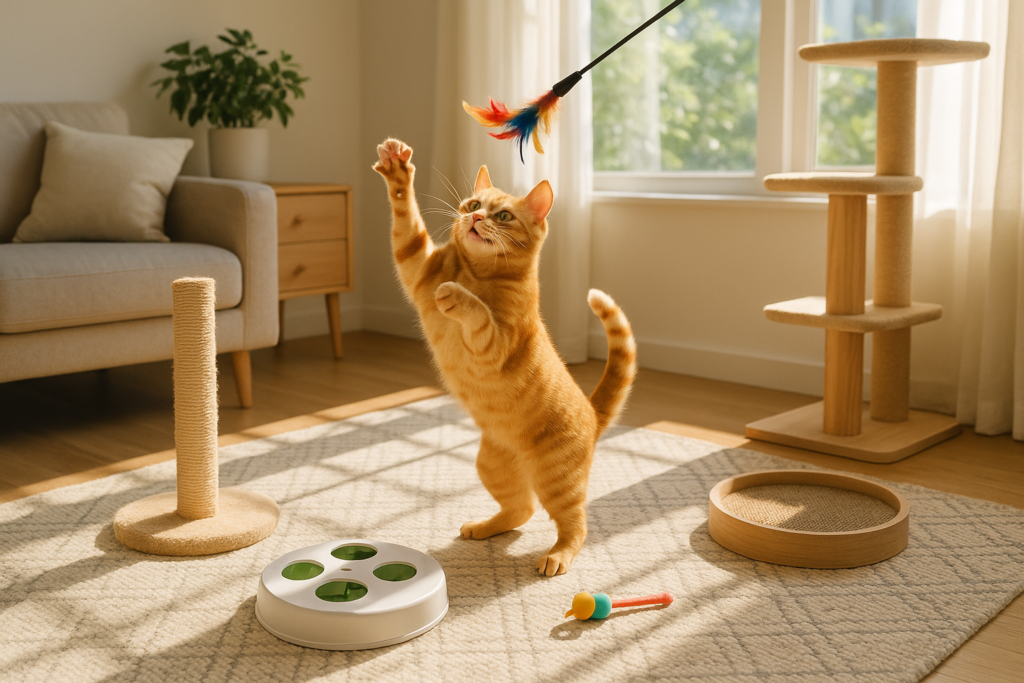
- Wand toys with feathers or ribbons
- Small toy mice
- Balls that roll in funny directions
- Crinkle toys
- Kick toys for grabbing and bunny kicking
- Battery toys used sometimes, not all day
Move the toy like prey, not like a helicopter. Let it hide behind furniture, peek around corners, dart away, then pause. Give your cat a chance to stalk, chase, pounce, and catch.
Let your cat win
This is important. If your cat chases and never catches the toy, they may get frustrated. End play by letting your cat catch the toy. Then offer a treat or meal. This gives a full hunt, catch, eat pattern that feels natural and calming.
Rotate toys so old toys feel new again
You do not need a giant pile of toys all over your house. In fact, too many toys left out all the time can become boring.
Try rotating toys every few days. Put some away in a box, then bring them back later. Your cat will often act like they found something brand new.
Easy toy rotation idea
You can divide toys into three groups:
- Group 1 for this week
- Group 2 for next week
- Group 3 for the week after
Then repeat. This keeps interest high without extra spending.
Create vertical space for climbing and watching
Cats love being up high. Height gives them exercise, a better view, and a feeling of safety. If your cat cannot go outside, vertical space becomes even more important.
Great climbing options for indoor cats
You can use:
- Cat trees
- Wall shelves made for cats
- Window perches
- Sturdy bookcases cleared for safe cat use
- Beds placed on safe elevated surfaces
Climbing helps your cat use muscles and feel more in control of their space. In homes with more than one cat, vertical areas also help reduce tension because each cat can claim a spot.
Give your cat a window view
A good window can work like cat television. Your cat can watch birds, leaves, people, rain, and changing light. That visual activity can help prevent boredom.
How to make window watching more fun
You can improve window time by adding:
- A soft perch or cat bed
- A bird feeder outside, if possible and safe
- A small shelf near the window
- Curtains that allow easy peeking
- A sunny resting spot
If your cat spends time at the window and then seems frustrated, pair window watching with other activities like puzzle feeders or a short play session.
Use food puzzles and treat games
Food is one of the easiest ways to keep your cat mentally active. Instead of giving every meal in a plain bowl, you can let your cat work for part of their food.
This does not mean making meals hard or stressful. It just means adding a little challenge.
Good food enrichment ideas
Try:
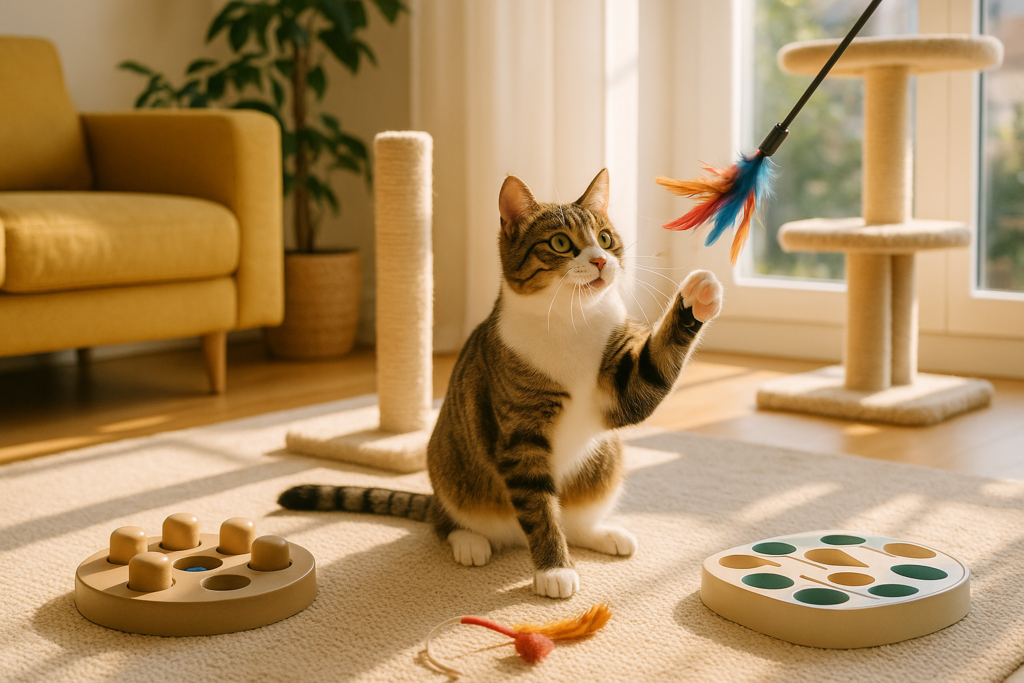
- Puzzle feeders
- Treat balls
- Hiding small amounts of kibble in safe spots
- Snuffle mats made for pets
- Muffin tin games with treats under balls or paper cups
These activities use your cat’s brain and slow down fast eating. They are especially helpful for cats who act hungry all the time or seem bored around meal times.
Protect your furniture with better scratching options
Scratching is not bad behavior. It is normal cat behavior. Your cat scratches to stretch, mark territory, remove old claw layers, and release energy. If your couch gets scratched, the answer is not to stop scratching. The answer is to direct it.
How to help your cat scratch the right things
Offer different kinds of scratchers:
- Tall vertical scratching posts
- Flat cardboard scratch pads
- Angled scratchers
- Rope or sisal posts
Place scratchers where your cat already likes to scratch. If your cat attacks the sofa arm, put a scratching post right next to it. You can also use catnip on the post or reward your cat for using it.
What makes a scratching post good
A good scratching post should be:
- Tall enough for a full stretch
- Stable and not wobbly
- Easy to reach
- In a place your cat uses often
Many cats ignore scratching posts because the post is too short or shaky.
Help kittens use their energy in healthy ways
Kittens are adorable, but they can also be wild little creatures. If your kitten bites, pounces on your feet, cries at night, or tears through the house, you are probably dealing with normal kitten energy plus a need for better play structure.
How to stop kitten biting through play
Never use your hands as toys. If you wiggle fingers for fun, your kitten learns that skin is for attacking. Use wand toys, balls, or stuffed toys instead.
Give your kitten several short play sessions every day. Kittens need more activity than adult cats. If they do not get enough, they may bite from excitement or frustration.
Help your kitten sleep better at night
Try this evening pattern:
- Active play
- A meal
- Calm time
- Sleep area ready and cozy
This often works better than simply hoping your kitten gets tired on their own.
Make your home feel interesting
Cats enjoy novelty, but it does not have to be fancy. Small changes can make your cat curious and engaged.
Easy enrichment ideas around the house
You can try:
- A cardboard box with holes cut into it
- Paper bags with handles removed
- A blanket fort
- Tunnels
- A new soft bed in a quiet corner
- Safe cat grass
- Catnip toys
- Silvervine sticks if your cat enjoys them
Even moving a bed to a sunny spot can make the day more enjoyable for your cat.
Give your cat places to hide and rest
Entertainment is not just activity. Your cat also needs safe quiet places to relax. A happy indoor cat has both fun zones and calm zones.
Why hiding places matter
Cats can get overwhelmed, especially in busy homes with children, noise, or other pets. Hiding spaces help your cat feel safe. When a cat feels secure, they are often more playful and better behaved.
Good hiding spots include:
- Covered cat beds
- Boxes
- A quiet shelf
- Space under a chair
- A crate left open with a blanket inside
Use scent enrichment for mental stimulation
Cats experience a lot through smell. You can make life more interesting by giving your cat safe new scents once in a while.
Safe scent ideas for cats
You can offer:
- Catnip
- Silvervine
- A blanket that was in a different room
- Safe outdoor scents brought in on your shoes or clothing
- A new cardboard box from a delivery
Watch your cat’s reaction. Some cats get playful with scents. Others just sniff and move on. That is fine too.
Keep your cat active when you are busy
You cannot play with your cat every minute. Real life is full of work, school, chores, and tired days. The goal is not perfection. The goal is setting up your home so your cat has good choices even when you are occupied.
Independent entertainment ideas
These are useful when you are not available:
- Window perch
- Ball track toy
- Puzzle feeder
- Cat tree
- Cardboard scratcher
- Toy rotation
- Tunnels
- Safe solo toys without strings or parts that can break off
For safety, avoid leaving out toys with loose strings, feathers, or small pieces when you are not around to supervise.
Reduce nighttime chaos
One of the biggest struggles for indoor cat owners is a cat that sleeps all day and then causes trouble at night. This is common, but it can improve a lot with routine and better daytime stimulation.
How to help your cat stay calmer at night
Focus on these steps:
- Give activity during the day, even small amounts
- Offer evening play before bed
- Feed a meal after play
- Keep overnight space comfortable
- Do not reward 3 a.m. meowing with exciting attention if your cat is healthy and safe
If your cat has lots of energy at bedtime, they likely need more chances to act like a cat earlier in the day.
Keep indoor cats healthy with exercise
Entertainment and exercise go together. Movement helps with:
- Weight control
- Muscle strength
- Joint health
- Better mood
- Lower stress
- Less boredom behavior
Easy ways to add more movement
You can encourage movement by:
- Tossing treats one at a time across the room
- Leading your cat up and down a cat tree with a toy
- Putting food puzzles in different places
- Encouraging short chase games
- Giving your cat room to run safely
If your cat is overweight, start gently. Short regular play is better than one long exhausting session.
If you have more than one cat
Multi-cat homes can be wonderful, but they can also become tense if cats compete for space, toys, or your attention. Boredom can make that worse.
How to keep peace in a multi-cat home
Try to provide:
- More than one scratching post
- More than one litter box area
- Several resting spots
- More than one feeding station
- Vertical space in different rooms
- Separate play opportunities if one cat is shy
Not every cat likes to play the same way. One may love a wand toy. Another may prefer a tunnel ambush. Learn what each cat enjoys.
What to do if your cat seems bored and anxious
Sometimes boredom mixes with stress. Your cat may want stimulation but also feel nervous. In that case, too much sudden change can backfire.
Start small and keep things calm
If your cat seems shy or tense:
- Add one new item at a time
- Keep routines predictable
- Offer quiet enrichment like a puzzle feeder or window perch
- Avoid forcing interaction
- Let your cat choose when to engage
If your cat shows major changes in eating, grooming, litter box habits, or mood, talk to your vet. Medical issues can sometimes look like boredom or behavior problems.
Mistakes that can make indoor cats more frustrated
Even loving cat owners sometimes do things that accidentally increase frustration. That is normal. You can change it once you notice it.
Common mistakes to avoid
Playing with hands and feet
This teaches biting and pouncing on people.
Giving attention only when your cat is naughty
Your cat may learn that chaos gets results.
Leaving one boring toy on the floor for months
Cats need variety and movement.
Using a tiny or unstable scratching post
Your cat will probably ignore it.
Skipping play and expecting your cat to self-entertain perfectly
Most cats need some guided activity every day.
Punishing normal cat behavior
Punishment can increase fear and confusion. Redirection works better.
A simple indoor cat entertainment plan you can start today
If you feel overwhelmed, keep it easy. You do not need to change everything at once.
Start with these five steps
- Add one good scratching post
- Do two short play sessions each day
- Set up a window perch or viewing spot
- Use one food puzzle for part of a meal
- Rotate toys every few days
These five changes alone can improve your cat’s day in a big way.
FAQ about how to keep indoor cats entertained all day
1. How many hours a day should you play with your indoor cat?
You do not need hours of nonstop play. Most cats do well with two to three play sessions a day, around 10 to 15 minutes each. Kittens often need more short sessions because they have so much energy.
2. Can indoor cats be happy without going outside?
Yes, indoor cats can be very happy if your home meets their needs. Your cat needs climbing, scratching, play, mental stimulation, safe resting spots, and a routine. A well-set-up indoor life can be both safe and satisfying.
3. What are the best toys for bored indoor cats?
Wand toys, toy mice, treat puzzles, kick toys, tunnels, and ball track toys are all good choices. The best toy depends on your cat’s personality. Many cats enjoy toys that mimic hunting and movement the most.
4. Why does your indoor cat act crazy at night?
This often happens when your cat sleeps most of the day and has extra energy by evening. More daytime enrichment and a play session before bed can help. Feeding after play also helps many cats settle down.
5. How do you stop your cat from scratching furniture?
Give your cat better scratching choices in the same area. Use tall stable scratching posts or cardboard scratchers. Reward your cat for using them, and make the furniture less appealing with covers or safe deterrents while your cat learns.
6. Are puzzle feeders good for cats?
Yes, puzzle feeders are great for many cats. They add mental stimulation, slow eating, and help reduce boredom. They can be especially helpful for indoor cats who need more activity during the day.
7. How do you keep a kitten entertained when you are busy?
Set up safe independent activities like a tunnel, soft toys, scratchers, boxes, and puzzle feeders. Give your kitten several short active play sessions when you are available. Never leave unsafe toys out without supervision.
8. Is it okay if your cat sleeps a lot during the day?
Yes, cats naturally sleep a lot. But if your cat sleeps almost all day and has no interest in play, try adding more enrichment. If your cat suddenly becomes much less active than usual, ask your vet for advice.
9. Do indoor cats need cat trees?
A cat tree is not the only option, but it helps a lot. It gives your cat a place to climb, scratch, rest, and watch the room from above. Many indoor cats feel happier and more secure when they have vertical space.
10. How can you tell if your cat is actually bored or sick?
Bored cats often still eat, groom, and move normally, but they may act destructive, restless, or overly demanding. Sick cats may show changes in appetite, litter box use, grooming, energy, or behavior. If you are unsure, it is always best to ask your vet.
Final thoughts
Learning how to keep indoor cats entertained all day is really about seeing life from your cat’s point of view. Your cat does not need a perfect house or expensive gear. Your cat needs chances to climb, scratch, chase, sniff, watch, rest, and feel safe.
If your cat is biting, crying, scratching furniture, or acting wild at night, try not to think of it as your cat being bad. Think of it as information. Your cat is telling you they need a better outlet for their energy and instincts.
Start small. Add a play routine. Put a perch by the window. Offer a scratching post your cat can actually use. Hide food in a puzzle. Rotate toys. Make bedtime calmer with play and a meal. These simple changes can turn a stressed, confused routine into a calmer, happier home for both of you.
With patience and a little creativity, you can help your indoor cat feel busy, safe, and content every day.