
Are you trying to keep your indoor cat happy, busy, and out of trouble while you also protect your sleep, your couch, and your sanity?
If yes, you are not alone. Many cat owners worry about the same things. Your cat cries at night, bites your hands, scratches the sofa, attacks your ankles, or races around the house at 2 a.m. It can feel confusing because you love your cat and want the best, but you are not always sure what your cat really needs.
The truth is simple. A lot of indoor cats are bored. When a cat has no good way to hunt, chase, climb, scratch, and play, that energy comes out in other ways. That is why finding the best toys for bored indoor cats can make such a big difference. The right toys help your cat feel calm, active, safe, and satisfied.
In this guide, you will learn which toys work best, how to choose them, how to use them the right way, and how to solve common indoor cat behavior problems with better play. If you want a happy, well-behaved cat, the answer often starts with daily fun and smart toy choices.
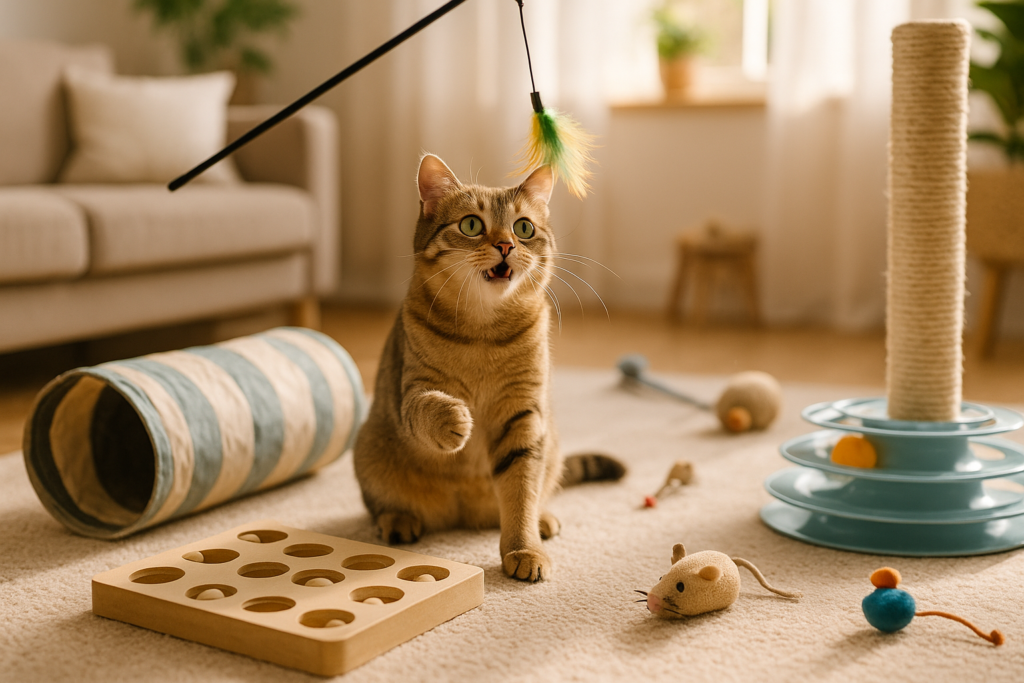
Why indoor cats get bored so easily
Your cat may live in a safe home with food, water, and love, but that does not always mean life feels exciting. Cats are natural hunters. Even a lazy-looking cat has strong instincts to stalk, chase, pounce, scratch, and climb.
Outside, a cat would hear birds, smell new things, watch leaves move, and react to tiny sounds. Inside, your cat may spend hours staring at the same walls. That can lead to boredom, stress, and bad habits.
A bored indoor cat may:
- Scratch furniture
- Bite hands or feet
- Cry at night
- Knock things off shelves
- Overeat
- Sleep too much during the day
- Get zoomies late at night
- Groom too much
- Fight with other pets
- Seem grumpy or restless
Toys help because they give your cat a healthy job to do. Good toys do not just entertain your cat. They also help your cat feel more balanced.
What makes a toy good for an indoor cat
Not every toy is a good toy. Some cats ignore toys that seem cute to people. Your cat usually wants something that moves like prey, feels fun to catch, or offers a little challenge.
The best cat toys often do one or more of these things:
- Let your cat chase or pounce
- Wake up hunting instincts
- Reward your cat with food or movement
- Allow scratching or kicking
- Keep your cat busy when you are not free
- Give variety so your cat does not get bored fast
You should also think about safety. Avoid toys with small parts that can break off and be swallowed. Check strings, feathers, and elastic parts often. Put away wand toys after playtime if your cat chews them.
Best toys for bored indoor cats that really help
Below are the toys that help many indoor cats stay active and happy. Not every cat loves the same thing, so you may need to test a few types before you find your cat’s favorites.
Wand toys for hunting and chasing
Wand toys are one of the best choices for indoor cats. They let you move the toy like prey, which makes play feel real to your cat. A feather, ribbon, or soft toy at the end of a wand can trigger stalking, jumping, and pouncing.
This type of play is great for cats that:
- Bite your hands during play
- Attack your feet
- Cry for attention
- Have lots of energy
Try to move the wand like a bird or mouse, not like a toy in a straight line. Let it hide behind furniture, stop, twitch, and dart away. That makes the game feel more natural.
Why wand toys work so well
Your cat gets to complete the hunt cycle. Your cat sees, stalks, chases, catches, and grabs. That helps release energy in a healthy way. It also gives you a better way to bond with your cat.
Best time to use wand toys
Use them before meals or in the evening. A strong play session before bed can help reduce nighttime zoomies and crying.
Ball toys and rolling toys for solo play
Ball toys are simple, but many cats love them. Lightweight balls, crinkle balls, and balls with bells can give your cat something fun to chase across the floor.
These are helpful when you are busy and your cat needs solo entertainment. Balls that bounce oddly or make a light sound often keep cats interested longer.
Good choices in this group
- Soft foam balls
- Crinkle balls
- Jingle balls
- Track balls inside a toy base
Track toys are especially good because the ball stays inside the track. Your cat can bat it again and again without losing it under the couch.
Puzzle feeders and treat toys for smart cats
If your cat eats too fast, begs all day, or seems bored after meals, puzzle feeders can help a lot. These toys make your cat work for food. Your cat may need to bat, roll, or move parts of the toy to get the treats or kibble out.
This is a great way to give your cat mental exercise. Some cats become calmer when mealtime feels more like hunting.
Benefits of food puzzle toys
- Slows down eating
- Reduces boredom
- Gives mental stimulation
- Helps with weight control
- Turns snack time into play time
Start with an easy puzzle so your cat does not feel frustrated. Once your cat understands the game, you can try a harder one.
Kicker toys for biting and bunny kicking
If your cat grabs your arm, bites, and kicks with the back feet, that does not always mean aggression. Many cats just need a safe toy for rough play. Kicker toys are long, soft toys made for grabbing, biting, and kicking.
These toys are perfect for cats that:
- Bite during play
- Wrestle with blankets
- Attack soft objects
- Need to release extra energy
Some kicker toys contain catnip or silvervine, which can make them even more exciting.
Catnip toys and silvervine toys
Many cats enjoy catnip toys, but not every cat reacts to catnip. If your cat seems uninterested, silvervine may work better. Both can encourage play and add excitement to toys your cat already has.
Catnip toys can help shy or lazy cats become more playful for short periods. You can use them as a special treat instead of leaving them out all day.
A helpful tip
Rotate catnip toys in and out. If your cat has them all the time, the excitement can wear off.
Interactive electronic toys for independent fun
Some indoor cats enjoy toys that move on their own. These can include battery-powered mice, fluttering toys, spinning toys, or toys that pop in and out unexpectedly.
These toys can be helpful when you are working, cooking, or caring for children and cannot actively play. They are not a full replacement for play with you, but they can add variety.
Use them the right way
Electronic toys are best when used in short sessions. If left on too often, your cat may lose interest. It is also smart to supervise at first to make sure your cat plays safely.
Scratchers and scratching toys to save your furniture
Scratching is not bad behavior. It is a normal need. Your cat scratches to stretch, mark space, and care for claws. If your cat scratches your couch, your cat may simply need a better scratching option in the right place.
Good scratching toys include:
- Cardboard scratchers
- Vertical scratching posts
- Angled scratch pads
- Cat trees with scratching surfaces
Place scratchers near sleeping areas and near the furniture your cat already scratches. That gives your cat an easy and better choice.
How scratching toys help with boredom
Scratching is physical and emotional release. It helps your cat move the body and feel secure. A bored cat often scratches more, so better scratching outlets can reduce damage at home.
Tunnel toys for hiding and ambushing
Many cats love tunnels because tunnels let them hide, run through, peek out, and ambush toys. A tunnel can turn a quiet living room into a mini hunting space.
Tunnels are great for:
- Shy cats
- Kittens with lots of energy
- Homes with more than one cat
- Cats that like surprise play
You can pair a tunnel with a wand toy or toss a ball through it. Some tunnels also make crinkly sounds that cats enjoy.
Climbing toys and cat trees for active indoor cats
A toy does not always have to be a small object. For many indoor cats, vertical space is one of the best boredom cures. Cat trees, shelves, window perches, and climbing towers help your cat jump, watch, rest, and feel safe.
Cats like to be up high. It helps them feel in control of their space. A climbing setup can reduce stress and give your cat more to do each day.
Why vertical toys matter
They give your cat exercise without needing a big home. They also help multi-cat homes because each cat can have more personal space.
Window toys and bird watching stations
If your cat spends a lot of time staring out the window, that is a clue. Your cat wants action. A window perch or suction seat can turn that interest into healthy entertainment.
You can make window time more fun with:
- A sturdy window perch
- A bird feeder outside the window
- Safe moving toys attached nearby
- A cozy blanket for resting
This kind of setup gives your cat visual stimulation during the day. It can help prevent boredom, especially for cats left alone for long hours.
Toy rotation keeps old toys exciting
One common mistake is leaving every toy out all the time. When toys never change, your cat may stop caring. Toy rotation is simple and works very well.
Keep only a few toys out at once. Put the others away in a box. Every few days, switch them. A toy that looked boring last week can suddenly feel new again.
Easy toy rotation plan
| Day | Toys Out |
|---|---|
| Monday to Wednesday | Wand toy, ball toy, tunnel |
| Thursday to Saturday | Kicker toy, puzzle feeder, track ball |
| Sunday | Catnip toy, scratcher refresh, climbing play |
This keeps your cat curious without making you buy endless toys.
How to choose the best toy for your cat’s personality
Your cat’s age, energy level, and personality matter. A toy that your friend’s cat loves might not interest your cat at all.
Here is a simple guide.
| Cat type | Best toy choices |
|---|---|
| High-energy kitten | Wand toys, tunnels, balls, kicker toys |
| Lazy adult cat | Catnip toys, easy puzzle feeders, short wand sessions |
| Smart curious cat | Puzzle toys, treat balls, electronic motion toys |
| Shy nervous cat | Tunnels, quiet soft toys, scratchers, window perch |
| Rough player | Kicker toys, sturdy wand toys, large plush prey toys |
| Older cat | Soft toys, slower wand play, easy-access scratch pads |
Watch what your cat already enjoys. Does your cat stalk? Climb? Kick? Bat objects under furniture? Your cat’s natural habits show you what kind of toy may work best.
How play helps with common indoor cat problems
The right toys do more than stop boredom. They can help fix daily behavior problems that make life stressful.
If your cat cries at night
Your cat may sleep all day and then feel ready to hunt when you want to rest. Try a strong play session in the evening with a wand toy, followed by a small meal. This often helps your cat settle down.
If your kitten bites your hands
Do not use your hands as toys. Give your kitten wand toys and kicker toys instead. This teaches your kitten that hands are for gentle touch, not hunting.
If your cat scratches your couch
Add scratching posts and pads near the couch. Reward your cat for using them. Play more often too, because stress and boredom can make scratching worse.
If your cat attacks your ankles
This is often ambush play. Your cat has energy and no proper target. Use chasing toys every day, especially at times when attacks usually happen.
If your cat seems lazy and overweight
Food puzzles, treat balls, climbing towers, and daily interactive play can help your cat move more. Even short sessions count.
How much play your indoor cat really needs
Many owners ask this because life gets busy. You do not need hours of play every day, but you do need consistency.
A good starting goal is:
- 2 to 3 play sessions a day
- 10 to 15 minutes each
- One session in the evening if possible
Kittens may need more. Older cats may prefer shorter sessions. Let your cat set the pace, but try to keep play part of your normal routine.
Signs your cat likes a toy
Sometimes people think a cat dislikes a toy when the cat is actually interested in a quiet way. Look for these signs:
- Ears forward
- Focused staring
- Stalking body position
- Tail twitching
- Pouncing
- Batting or carrying the toy
- Returning to the area where the toy was used
Some cats play hard right away. Others watch for a while before joining in.
Signs a toy is not right for your cat
A toy may be wrong if your cat:
- Walks away every time
- Seems scared by loud sounds
- Gets frustrated and gives up
- Tries to chew off dangerous parts
- Becomes too overstimulated
You can always try a different toy style. Cats can be very picky, and that is normal.
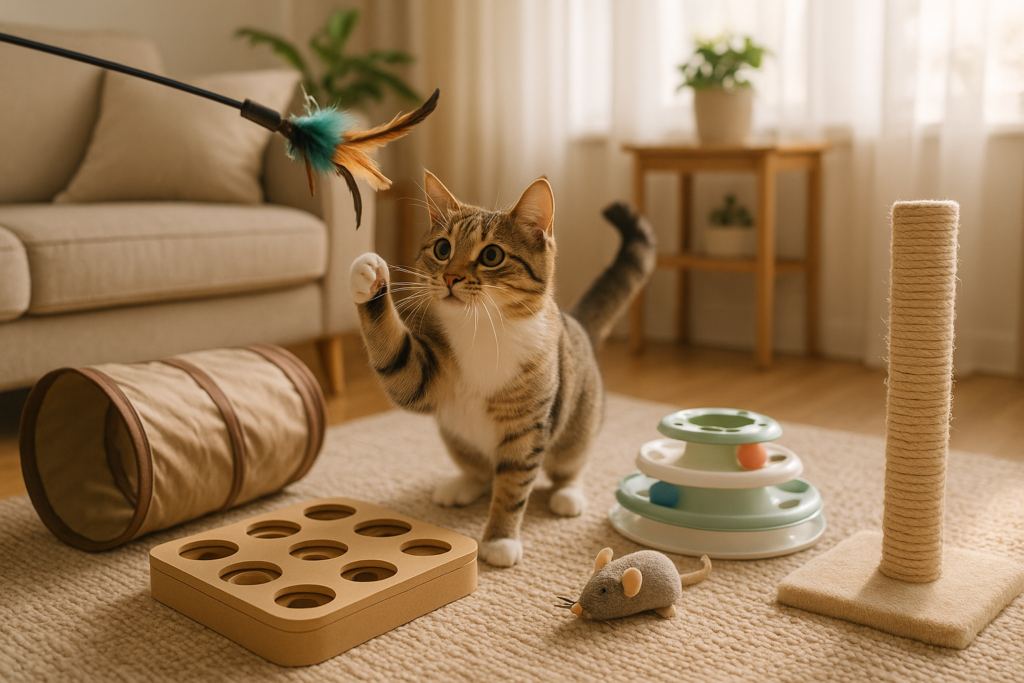
Safety tips for cat toys at home
Your cat’s fun should always be safe. Check toys often and replace damaged ones.
Important toy safety rules
- Put away string-like toys after supervised play
- Remove loose feathers or small broken parts
- Choose the right size so toys are not swallowed
- Watch battery toys for damage
- Wash soft toys when needed
- Supervise new toys at first
If your cat loves chewing, pick sturdy toys made for strong players.
You do not need expensive toys to make your cat happy
Some of the best cat fun is simple. Your cat may love a cardboard box, a paper bag without handles, a rolled paper ball, or a homemade treat hunt.
Low-cost ideas include:
- Empty boxes for hiding
- Cardboard scratch pads
- Toilet paper roll puzzle toys
- Paper balls
- Blankets draped over chairs for a fort
- Dry kibble hidden around the room
The goal is not to spend a lot. The goal is to give your cat a chance to act like a cat.
A simple daily toy routine for bored indoor cats
If you feel stressed and do not know where to begin, keep it easy. You do not need a perfect plan. Just give your cat a little active fun each day.
Morning
Use a short wand toy session or toss a few balls before breakfast. This helps your cat start the day with movement.
Afternoon
Leave out a puzzle feeder, track ball, or tunnel for solo play. If your cat is home alone, this can reduce boredom.
Evening
Do the biggest play session before dinner or before bed. Let your cat chase, jump, and catch. Then offer food and a calm rest time.
This routine often helps with attention-seeking, crying, and nighttime craziness.
Best toy combinations that work well together
Sometimes one toy is good, but a mix is even better. Here are a few smart combinations.
| Problem | Toy combination |
|---|---|
| Nighttime crying | Wand toy + evening meal + puzzle feeder |
| Furniture scratching | Scratching post + catnip toy + daily play |
| Biting hands | Wand toy + kicker toy |
| Bored while alone | Track ball + tunnel + window perch |
| Overeating | Puzzle feeder + treat ball + climbing tree |
| Shy cat | Tunnel + soft toy + quiet scratch pad |
This helps you match toys to the real problem in your home.
FAQ about the best toys for bored indoor cats
1. What are the best toys for bored indoor cats?
The best toys for bored indoor cats are usually wand toys, puzzle feeders, kicker toys, balls, tunnels, scratching posts, and cat trees. The best choice depends on your cat’s personality and energy level.
2. How do you know if your indoor cat is bored?
Your cat may be bored if your cat cries often, scratches furniture, bites during play, sleeps too much, overeats, zooms around at night, or seems restless. Boredom can show up as bad behavior or quiet sadness.
3. Are electronic cat toys worth buying?
Yes, they can be helpful for some cats, especially when you are busy. They work best as part of a bigger play routine, not as the only source of fun.
4. What toy is best for a kitten that keeps biting?
A wand toy and a kicker toy are usually the best choices. They give your kitten a safe way to chase, bite, and kick without using your hands.
5. Can toys stop a cat from scratching furniture?
Toys alone may not fully stop it, but scratching toys and posts help a lot. Place them near the furniture and reward your cat for using them. More play can also lower stress scratching.
6. How often should you rotate cat toys?
A simple plan is every few days or once a week. When you put toys away and bring them back later, they feel new again and your cat stays more interested.
7. Do older indoor cats still need toys?
Yes, older cats still need mental and physical activity. They may like slower, gentler toys, soft kicker toys, easy puzzle feeders, and low scratch pads.
8. Is catnip safe for indoor cats?
For most cats, yes. Catnip is usually safe in small amounts. Some cats become excited and playful, while others do not react much at all. You should still use it in moderation.
9. What if your cat ignores every toy?
Try different styles and watch your cat’s natural behavior. Some cats prefer chasing, some prefer hiding, and some prefer food puzzles. Toy rotation and better timing can also help. Many cats play more before meals or at night.
10. How long should you play with your indoor cat each day?
A good goal is about 20 to 30 minutes total each day, split into short sessions. Kittens may need more, while older cats may do better with shorter play times.
Final thoughts on keeping your indoor cat happy
If your cat seems bored, noisy, bitey, or destructive, you are not a bad pet owner. Usually, your cat is just asking for a better outlet. The best toys for bored indoor cats can change daily life more than many people expect.
Start small. Pick one wand toy, one scratching option, and one solo toy like a puzzle feeder or ball track. Watch what your cat enjoys most. Then build from there. You do not need to buy everything at once, and you do not need to make play complicated.
What matters most is that your cat gets chances every day to chase, scratch, climb, think, and relax. When your cat’s needs are met, you often get the result you want most too. A calmer home, better sleep, less damage, and a happy indoor cat that feels good in your care.
If you stay patient and keep trying, you will learn what makes your cat light up. That is when play stops feeling like a chore and starts feeling like one of the best parts of sharing life with your cat.