
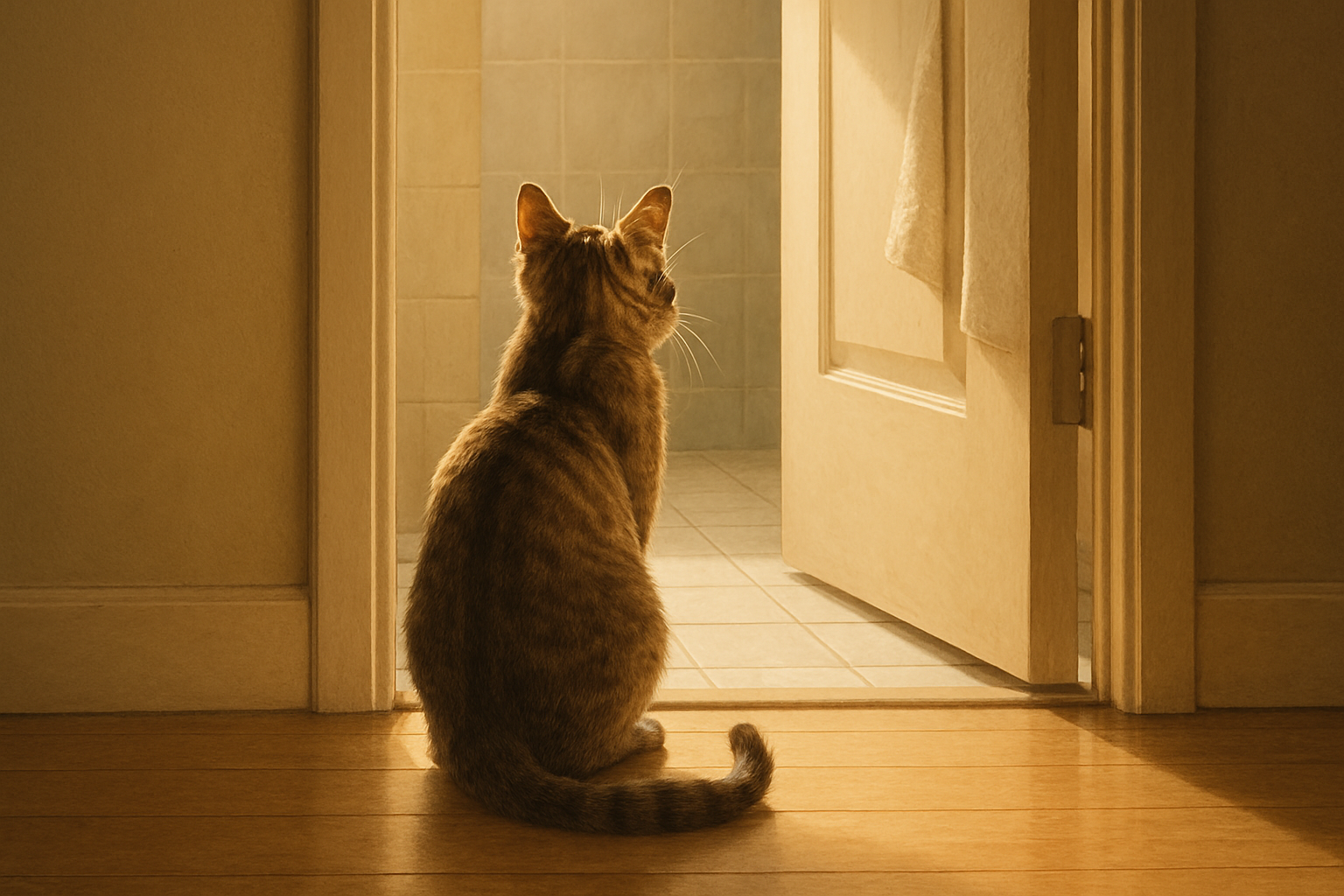
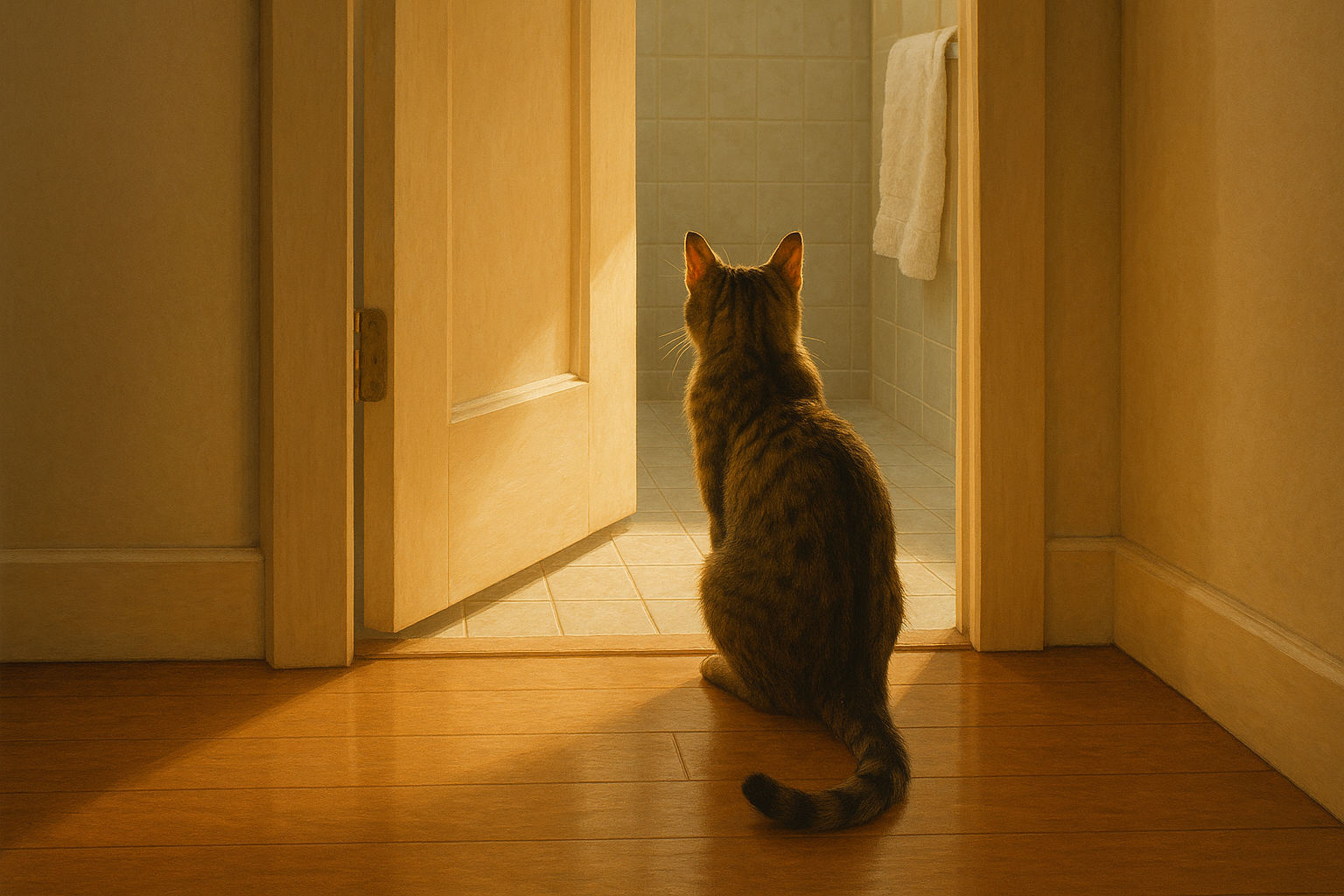
Have you ever closed the bathroom door and found your cat crying, scratching, or slipping inside right behind you?
If you keep asking, why does my cat follow me to bathroom, you are not alone. Many cat owners feel confused by this strange little habit. It can seem cute at first, but it can also feel annoying, clingy, or even worrying. You may wonder if your cat is too attached, scared, or trying to tell you something important.
The good news is that this behavior is usually normal. In most cases, your cat is not being weird. Your cat is being a cat.
When your cat follows you to the bathroom, it often means your cat is curious, feels safe with you, wants attention, or simply does not like closed doors. Sometimes it can also point to boredom, stress, or a stronger need for comfort.
In this article, you will learn what this behavior really means, when it is harmless, when it may be a problem, and what you can do if you want more privacy without upsetting your cat.
Why your cat follows you to the bathroom
Cats may act independent, but many of them love being near their favorite person. The bathroom just happens to be one of the places where you are still, quiet, and easy to reach.
Here are the most common reasons your cat follows you there.
Your cat feels safe with you
You are a big part of your cat’s world. You feed your cat, talk to your cat, clean the litter box, and give comfort. Because of that, your cat may see you as a safe person.
When your cat follows you into the bathroom, your cat may simply want to stay close. This is often true if your cat follows you into other rooms too.
Your cat is curious
Cats are naturally nosy. They want to know where you are going and what you are doing. A closed bathroom door can seem very interesting to a cat.
If your cat hears running water, moving towels, or a cabinet opening, your cat may want to inspect it all. To a cat, the bathroom can be full of exciting sounds and smells.
Your cat wants your full attention
In the bathroom, you are not walking around doing chores or staring at a screen. You are sitting still. To your cat, this can feel like the perfect time to ask for pets, rub against your legs, or sit in your lap.
If you usually talk to your cat or pet your cat there, the behavior can grow stronger. Your cat learns that following you to the bathroom leads to attention.
Your cat does not like closed doors
Some cats hate being shut out. It is not always about the bathroom itself. It is about losing access to you or to part of the home.
Closed doors can make a cat feel left out or uneasy. Your cat may scratch, cry, or push at the door because your cat wants control over the space.
Your cat likes the bathroom environment
Bathrooms can be fun for cats. The floor may be cool. The sink may have drips of water. There may be rugs to sit on and tubs to jump in. Some cats enjoy echoing sounds and small private spaces.
So if your cat seems extra interested in the bathroom, the room itself may be part of the reason.
Your cat is bored
A bored cat will often create little jobs to stay busy. Following you from room to room can become one of those jobs.
This is more common in indoor cats that do not get enough play, climbing, chasing, or mental exercise. Bathroom following may be one sign that your cat needs more to do.
Your cat may have mild separation anxiety
Some cats become very upset when they cannot reach their person. If your cat follows you everywhere, cries when you leave, and seems stressed whenever a door closes, anxiety may be part of the picture.
This does not always mean something serious is wrong. But it is worth noticing, especially if the behavior becomes intense.
What this behavior really means
Most of the time, this behavior means one simple thing. Your cat likes you and wants to be near you.
That is the sweet side of it.
But there can be more to it than love. It may also mean your cat:
- wants routine
- wants attention
- feels bored
- feels unsure when you disappear
- has learned that bathroom time brings rewards
To understand what your cat really means, look at the full pattern.
Signs it is probably normal
If your cat follows you to the bathroom but is calm, playful, and relaxed the rest of the day, this is usually normal behavior.
It is especially likely to be harmless if your cat:
- eats and drinks normally
- uses the litter box normally
- sleeps well
- plays and interacts normally
- does not seem distressed when left alone for short periods
In these cases, your cat is likely just attached, curious, or hoping for attention.
Signs it may be linked to stress or anxiety
You may need to look deeper if your cat:
- cries loudly when you shut the door
- scratches the door hard
- follows you constantly in every room
- acts panicked when you leave home
- becomes destructive when alone
- stops eating well
- overgrooms or pulls out fur
- hides more than usual
If you notice several of these signs together, your cat may be struggling with stress, boredom, or separation anxiety.
Is it bad if your cat follows you to the bathroom?
Usually, no. In most homes, this is just one of those odd cat habits.
It only becomes a problem if:
- you cannot have any privacy at all
- your cat becomes very upset when blocked from entering
- your cat gets into unsafe things in the bathroom
- the behavior is part of a bigger emotional problem
So the goal is not always to stop it completely. Sometimes the goal is just to make it easier and safer for both of you.
Why kittens do this even more
If you have a kitten, the behavior can be stronger. Kittens are more playful, more curious, and more dependent than adult cats. They are still learning what is safe and what is normal.
A kitten may follow you to the bathroom because:
- you feel like a parent figure
- everything you do is interesting
- your kitten gets lonely easily
- your kitten wants comfort and play
This is one reason tired kitten owners feel like they never get a break. If your kitten cries, bites, or scratches at doors too, the real issue may be energy, routine, and training rather than the bathroom itself.
How to tell what your own cat is trying to say
Every cat is a little different. Watching the details can help you understand the cause.
Here is a simple guide:
| Behavior | What it may mean |
|---|---|
| Quietly sits near you in bathroom | Affection, curiosity, comfort |
| Rubs against you or asks for pets | Attention seeking, bonding |
| Plays with rugs, tub, or water | Interest in bathroom environment |
| Cries outside closed door | Dislike of barriers, anxiety, frustration |
| Follows you all day long | Strong attachment, boredom, stress |
| Acts restless and needy at night too | Understimulated, anxious, seeking routine |
When you look at the whole picture, your cat’s message becomes clearer.
How to solve the problem if you want more privacy
If you do not mind your cat joining you, there may be nothing to fix. But if you want the behavior to calm down, there are gentle ways to help.
Give your cat more play time
A bored cat is much more likely to shadow you all day. Try adding two or three short play sessions each day.
Use toys your cat can chase, pounce on, and “catch.” Wand toys, soft balls, and treat puzzles can help a lot. Even 10 minutes at a time can make a big difference.
Create a better daily routine
Cats love patterns. If your cat gets meals, play, and rest at regular times, your cat may feel less needy and less likely to follow every move you make.
A simple routine can help your cat feel secure.
Reward calm independence
When your cat rests alone, plays alone, or stays calm outside the bathroom, reward that behavior. You can use praise, petting, or a small treat.
This teaches your cat that being relaxed and independent also leads to good things.
Do not accidentally train the clingy behavior
if your cat cries outside the bathroom door and you immediately open it every time, your cat learns that crying works.
This does not mean you should ignore your cat in a cruel way. It just means you should try not to reward the exact behavior you want to reduce.
Wait for a quiet moment if possible, then open the door or offer attention.
Make another space more attractive
Give your cat a cozy bed, cat tree, window perch, or soft blanket in another room. Add a toy or a food puzzle before you head into the bathroom.
If your cat has a better option, your cat may choose that instead of following you.
Leave the door open if you do not mind
Sometimes the easiest answer is the best one. If your cat simply wants to check on you and then settles down, leaving the bathroom door cracked may stop the scratching and crying.
Of course, this depends on your comfort level.
Keep the bathroom safe
If your cat goes in with you, make sure the room is safe. Put away:
- medicines
- hair ties
- razors
- cleaning products
- toilet bowl cleaners
- cotton swabs
- small choking hazards
Also keep the toilet lid down if your cat tries to drink from it.
What not to do
When you are tired or frustrated, it is easy to react in ways that make things worse.
Try not to:
- yell at your cat
- spray your cat with water
- punish scratching or crying harshly
- force your cat away in a scary way
Punishment does not teach your cat what to do instead. It can also damage trust and increase stress.
Gentle training and better routines work much better.
When you should talk to a vet
Bathroom following is usually harmless, but sometimes behavior changes are a clue that something else is going on.
Talk to your vet if your cat suddenly starts following you more than usual and also shows other changes, such as:
- increased vocalizing
- litter box problems
- appetite changes
- unusual clinginess
- hiding
- aggression
- weight loss
- overgrooming
Medical issues, pain, aging changes, and stress can all affect behavior. If the habit is new and intense, it is worth checking.
FAQ
1. Why does my cat follow me to bathroom every single time?
Your cat may feel attached to you, be curious about what you are doing, or expect attention there. Some cats also dislike closed doors and want access to every room you enter.
2. Does my cat follow me to the bathroom because your cat loves you?
Yes, often that is part of it. Following you can be a sign of trust, comfort, and affection. Your cat may simply enjoy being near you.
3. Is my cat too attached to me?
Not always. Many cats are more social than people expect. It becomes a concern only if your cat seems distressed when apart from you or cannot relax alone.
4. Why does your kitten cry outside the bathroom door?
Your kitten may feel lonely, curious, or frustrated by the closed door. Kittens often need more play, comfort, and routine than adult cats.
5. Should you let your cat in the bathroom?
If the bathroom is safe and you do not mind, it is usually fine. If you want privacy, you can gently train your cat to stay calm outside instead.
6. Why does your cat like sitting on the bathroom floor?
Bathroom floors are often cool, quiet, and easy to relax on. Some cats also like the smells and sounds in that room.
7. Can this behavior mean separation anxiety?
Yes, sometimes. If your cat cries, scratches, panics, or follows you constantly, anxiety may be part of the issue. Look at your cat’s overall behavior, not just the bathroom habit.
8. How do you stop your cat from scratching the bathroom door?
Give your cat more play and enrichment, avoid rewarding the scratching, and create a calm routine. You can also offer a cozy spot or treat puzzle outside the bathroom.
9. Why does your cat follow you but ignore other people?
Cats often pick one favorite person. Your cat may feel safest with you because you provide the most care, comfort, or attention.
10. Is this behavior more common in indoor cats?
Yes, it can be. Indoor cats sometimes have fewer things to do, so they pay closer attention to your movements. More play and stimulation can help.
Final thoughts
If you keep wondering, why does my cat follow me to bathroom, the answer is usually a mix of love, curiosity, routine, and a little cat weirdness.
In most cases, your cat is not trying to bother you. Your cat is trying to stay close, feel included, or make bathroom time part of the daily routine. That can be sweet, even if it is not always convenient.
If the behavior feels too intense, focus on the bigger picture. Give your cat more play, more mental activity, and a calm routine. Reward independence and keep the bathroom safe. If your cat seems anxious or suddenly much clingier than before, ask your vet for advice.
The more you understand your cat’s little habits, the easier it becomes to live together happily. And yes, sometimes that means accepting that you may never go to the bathroom alone again.