
Do you feel nervous just thinking about putting your kitten in the car without crying, panic, or a big mess?
If you do, you are not alone. Many first-time kitten owners worry about this. You may picture loud meowing, scratching inside the carrier, car sickness, or a kitten who gets so scared that every ride feels impossible. That stress is real. You want a calm, safe kitten. You want vet trips to feel easier. You want to know how to train a kitten to travel in a car without making your kitten scared of you or the carrier.
The good news is this: your kitten can learn. Most kittens are not born loving car rides. The sound, movement, smells, and strange feeling can be scary at first. But with gentle practice, patience, and the right steps, you can teach your kitten that car travel is safe and manageable.
This guide will show you exactly what to do, step by step, in a simple way.
Why car travel feels scary to your kitten
Before you start training, it helps to understand what your kitten feels. Your kitten is small, young, and still learning how the world works. A car is noisy, shaky, and full of strange motion. That can make your kitten feel unsafe.
Your kitten may cry in the car because of:
- Fear of the unknown
- Dislike of being in a carrier
- Motion sickness
- Separation stress
- Loud sounds and vibrations
- Past bad experiences, like a scary vet visit
When you understand the reason, training gets easier. Your goal is not to force your kitten to be quiet. Your goal is to help your kitten feel secure.
What you need before you start
A little setup can make a big difference. You do not need anything fancy, but a few good items help a lot.
Basic supplies for kitten car travel training
| Item | Why it helps |
|---|---|
| Hard or soft-sided carrier | Keeps your kitten safe and prevents jumping around the car |
| Soft blanket or towel | Adds comfort and familiar smell |
| Small treats | Helps build positive feelings |
| Favorite toy | Gives comfort and distraction |
| Puppy pads or towel backup | Helps with accidents |
| Seat belt strap for carrier | Keeps the carrier from sliding |
| Light cover for carrier | Can reduce visual stress for some kittens |
Choose a carrier that is well ventilated, secure, and easy to clean. Your kitten should be able to stand, turn around, and lie down inside it.
Start with the carrier, not the car
This is one of the biggest mistakes first-time kitten owners make. If your kitten only sees the carrier right before a car ride or vet trip, your kitten may quickly decide that the carrier means something scary.
Make the carrier a safe place at home
Leave the carrier out in a room where your kitten spends time. Keep the door open. Put a blanket inside. Add a few treats or a toy. Let your kitten go in and out freely.
Do not push your kitten inside. Do not close the door right away. Let curiosity do the work.
You want your kitten to think, “This is just another cozy spot.”
Feed near the carrier
Place food near the carrier at first. Later, place food just inside the entrance. Then move the bowl farther in. This gentle step helps your kitten build confidence.
If your kitten is nervous, go slowly. Even one small step forward is progress.
Reward carrier time
Any time your kitten sniffs, steps into, or rests inside the carrier, offer praise and a small treat. This teaches your kitten that good things happen around the carrier.
Step-by-step: how to train a kitten to travel in a car
This process works best when you go in small steps. Some kittens learn in a few days. Others need a few weeks. That is normal.
Step 1: Help your kitten relax inside the carrier
Once your kitten is comfortable entering the carrier, start short practice sessions with the door closed.
Close the door for just a few seconds. Then open it and give a treat. Slowly build up to one minute, then a few minutes.
Stay calm and nearby. Speak softly. If your kitten cries a little, wait for a brief quiet moment before opening the door. This helps prevent teaching that crying makes the door open.
If your kitten becomes very upset, go back to an easier step.
Signs your kitten is coping well
- Sniffing around
- Sitting or lying down
- Grooming
- Taking treats
- Quiet curiosity
Signs your kitten is too stressed
- Heavy panting
- Wild scratching
- Constant panic crying
- Drooling from stress
- Trying to escape frantically
If you see strong stress signs, slow down. Training should stretch your kitten’s comfort zone a little, not too much.
Step 2: Carry the carrier around the house
Now that the carrier feels safer, pick it up and carry your kitten around for a short time indoors. Walk a few steps. Set it down. Give praise and a treat.
This teaches your kitten that movement inside the carrier is not always scary. It also helps prepare for the feeling of being carried to the car.
Do a few short sessions each day if your kitten handles it well.
Step 3: Sit in the parked car together
Next, bring your kitten in the carrier to the parked car. Do not start the engine yet. Just sit inside for a few minutes.
Keep the session short and calm. Offer treats if your kitten will take them. Then go back inside the house.
This helps your kitten get used to the new place without also dealing with engine noise and motion.
Best place for the carrier in the car
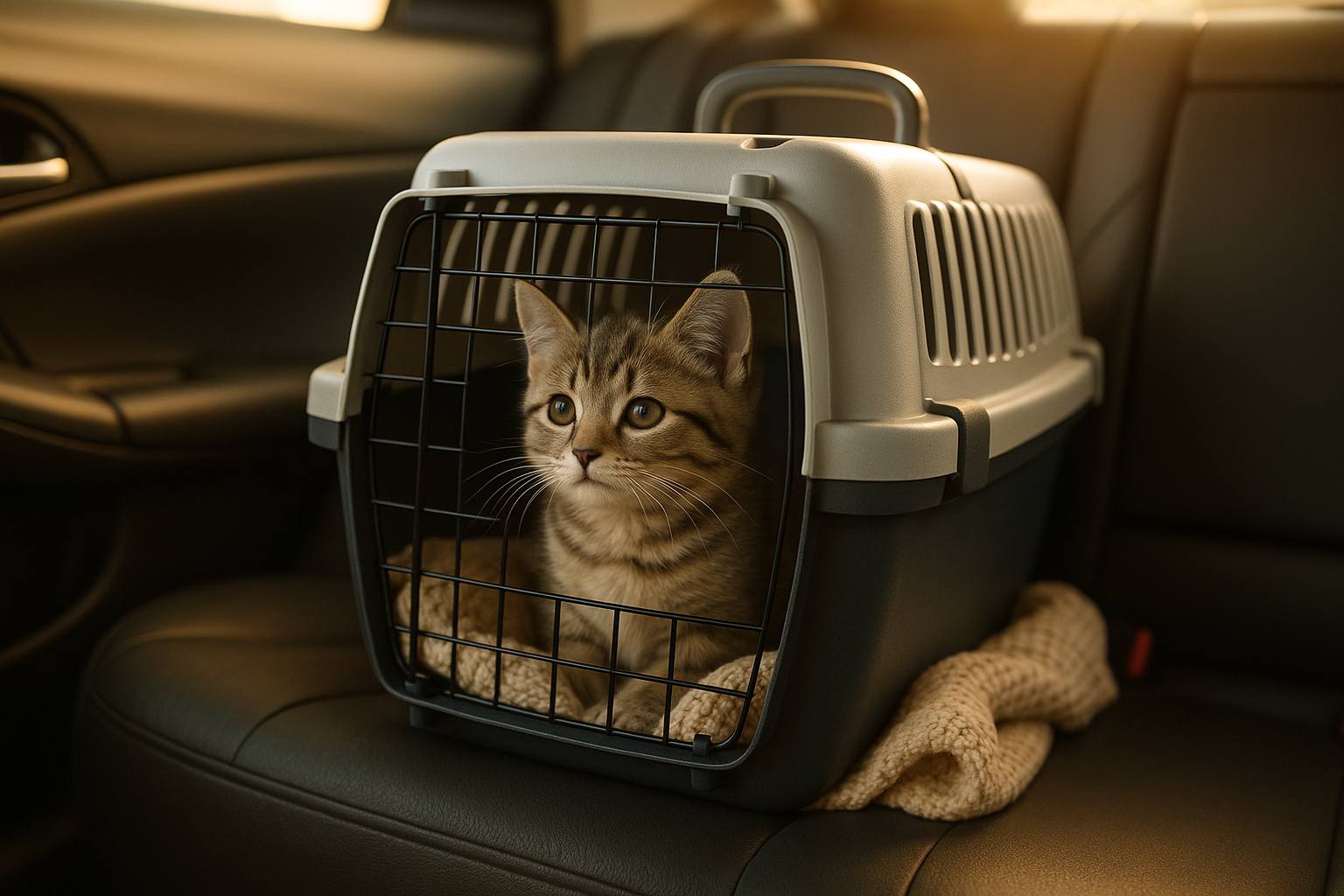
The safest place is usually the back seat, secured so it cannot move. Never let your kitten ride loose in the car. A loose kitten can get injured, distract you, or hide in dangerous places.
Step 4: Turn on the engine without driving
After your kitten can sit calmly in the parked car, turn the engine on for a short time. Stay parked. Let your kitten hear the sound and feel the vibration.
Keep this brief at first. One or two minutes may be enough.
Then turn the engine off and go back inside. Repeat this until your kitten seems more relaxed.
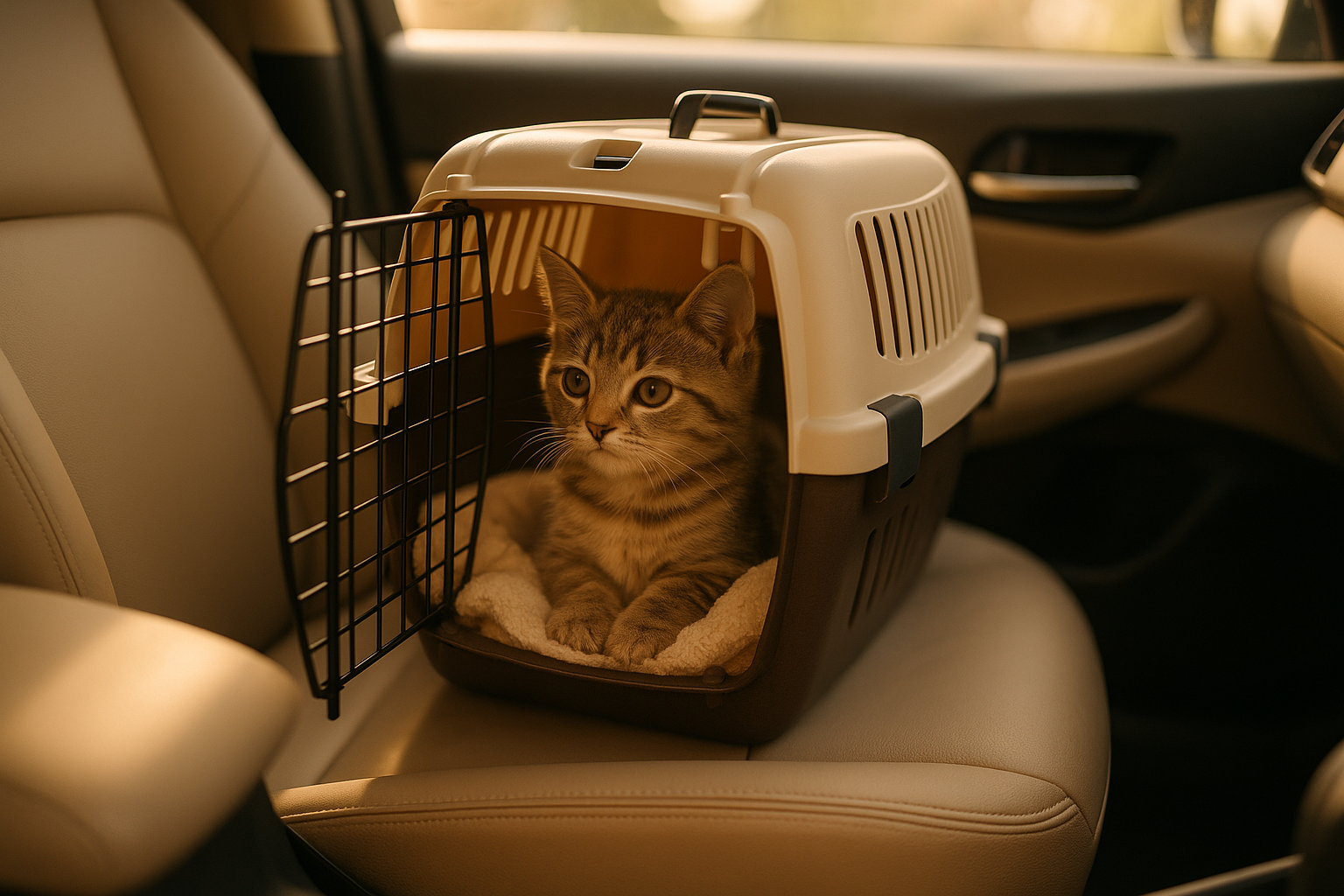
Step 5: Take very short car rides
Now you are ready for movement. Start with a ride that lasts only a minute or two. You can simply drive around the block and come home.
This is a key part of kitten car travel training. Keep the ride short enough that your kitten can handle it without becoming overwhelmed.
When you get home, give your kitten time to relax. Offer a treat, playtime, or quiet cuddle time if your kitten enjoys that.
Important tip
Not every car ride should end at the vet. If every trip leads to a thermometer, needles, or unfamiliar handling, your kitten may learn to fear the car. Sometimes take a short ride and come home again.
Step 6: Slowly make the rides longer
As your kitten gets better, add a few minutes at a time. Watch your kitten’s body language. If your kitten does well with a 3-minute trip, try 5 minutes next time. Then 8. Then 10.
Slow progress helps create lasting confidence.
Here is a simple example plan:
| Training day | Goal |
|---|---|
| Day 1 to 3 | Carrier stays open at home |
| Day 4 to 6 | Short time in carrier with door closed |
| Day 7 to 9 | Carry kitten in carrier around house |
| Day 10 to 12 | Sit in parked car |
| Day 13 to 15 | Engine on, no driving |
| Day 16 onward | Very short rides, slowly increasing |
This is only an example. Your kitten may need more or less time.
How to keep your kitten calm during car rides
Some kittens improve quickly. Others need extra support. These simple tips can help your kitten stay calmer.
Use familiar scents
A blanket that smells like home can be very comforting. You can place one inside the carrier. Familiar smell tells your kitten that this strange place is still connected to safety.
Keep the car quiet
Play no music, or keep it very soft. Loud sounds can make fear worse. Calm driving matters too. Avoid sudden turns and fast stops when possible.
Keep the temperature comfortable
If the car is too hot or too cold, your kitten will feel more stressed. Always make sure there is enough airflow. Never leave your kitten alone in the car.
Cover part of the carrier if needed
Some kittens feel better when they cannot see everything moving outside. You can cover part of the carrier with a light blanket, but make sure air can still flow well.
Stay calm yourself
Your kitten picks up on your mood. If you speak in a rushed or worried way, your kitten may feel more nervous. Use a soft, normal voice.
What not to do
When you are learning how to train a kitten to travel in a car, knowing what to avoid is just as important.
Do not let your kitten roam free
This is unsafe for both of you. A loose kitten can crawl under pedals, jump onto your lap, or get badly hurt in a sudden stop.
Do not rush the process
If you move too fast, your kitten may become more scared and training may take longer overall. Small wins are better than big setbacks.
Do not punish crying
Your kitten is not being naughty. Your kitten is scared, confused, or uncomfortable. Punishment can make the fear stronger.
Do not use the carrier only for unpleasant trips
Try to make the carrier part of normal life at home. That way it does not become a warning sign.
What if your kitten gets car sick?
Some kittens cry because they feel sick, not just scared. Motion sickness can happen, especially in young animals whose balance system is still developing.
Signs of car sickness in kittens
- Drooling
- Lip licking
- Vomiting
- Restlessness
- Weak or unhappy body posture
If you think your kitten gets car sick, talk to your vet. Your vet may suggest ways to help. Do not give human medicine unless your vet tells you to.
Simple things that may help
- Keep rides short at first
- Drive smoothly
- Avoid feeding a large meal right before travel
- Make sure the carrier is stable
How long does it take to train a kitten to travel in a car?
There is no perfect timeline. Some kittens adjust in one or two weeks. Some need a month or more. Personality matters. Early social experiences matter too.
A bold kitten may treat the car like a new adventure. A shy kitten may need many tiny practice sessions. That does not mean you are doing it wrong. It just means your kitten needs more support.
The best training pace is the one your kitten can handle.
When to ask your vet for help
Sometimes car anxiety is very strong. If your kitten becomes extremely distressed, vomits often, drools heavily, or cannot settle even with slow training, speak with your vet.
Your vet can check for:
- Motion sickness
- Pain or illness
- Severe anxiety
- Better travel setup ideas
In some cases, your vet may suggest calming tools or medicine for necessary trips. That does not mean training failed. It means your kitten needs extra help.
Real-life travel goals that matter most
It helps to think about what success really looks like. Your goal does not need to be a kitten who loves every second of the ride. A more realistic goal is a kitten who can travel safely with manageable stress.
That is a big win.
A kitten who enters the carrier without panic, rides quietly most of the time, and recovers quickly after the trip is doing very well.
FAQ
1. At what age can you start car training for a kitten?
You can start very early, as soon as your kitten has settled into your home and seems comfortable with you. Keep the first steps simple, like carrier training inside the house. Young kittens often learn faster when experiences stay gentle and positive.
2. How do you get your kitten into the carrier without a struggle?
You make the carrier a normal, cozy place before you need it. Leave it out, add bedding, and reward your kitten for going inside on their own. If you only bring it out for stressful trips, your kitten may resist it.
3. Why does your kitten cry in the car?
Your kitten may cry because of fear, confusion, motion sickness, or dislike of the carrier. The car feels strange to a kitten. With practice, many kittens cry less because they learn the ride is safe.
4. Should your kitten sit on your lap in the car?
No. Your kitten should stay inside a secured carrier. A lap is not safe. Even a calm kitten can panic suddenly, and a loose kitten can distract you while driving.
5. How long should the first car ride be?
Keep it very short. One to three minutes is enough for many kittens. You want the first ride to feel manageable, not overwhelming.
6. Can you use treats during car travel training?
Yes, if your kitten will take them. Treats help create a positive connection with the carrier and the car. Some nervous kittens will not eat at first, and that is okay.
7. What if your kitten has an accident in the carrier?
Stay calm. Clean the carrier well and place a fresh towel or puppy pad inside next time. Accidents can happen when a kitten is scared or carsick. It does not mean your kitten cannot learn.
8. Should you feed your kitten right before a car ride?
It is usually better to avoid a large meal right before travel, especially if your kitten seems prone to motion sickness. Ask your vet if you are unsure what timing is best for your kitten’s age and feeding schedule.
9. Can your kitten outgrow fear of the car without training?
Sometimes fear improves a little with age, but often it stays the same or gets worse if every trip is stressful. Gentle training gives your kitten a better chance to adjust well.
10. What if your kitten still hates the car after weeks of practice?
Go back to easier steps and make sessions shorter. If the fear stays strong, talk to your vet. Your kitten may need help with anxiety or motion sickness.
Conclusion
Learning how to train a kitten to travel in a car takes patience, but you can do it. Your kitten does not need force, scolding, or rushed practice. Your kitten needs small steps, safety, and repeated good experiences.
Start with the carrier at home. Then practice movement. Then the parked car. Then the engine. Then very short rides. Keep each step calm and easy enough for your kitten to handle. That is how real progress happens.
If things go slowly, that is okay. You are not failing, and your kitten is not being difficult on purpose. Your kitten is learning. With your help, car rides can become much less stressful and much more manageable.
If you stay patient and kind, you give your kitten the best chance to grow into a calm, confident travel companion.