
Does your kitten turn play time into bite time and leave you wondering if you are doing something wrong?
If you are trying to learn how to stop kitten biting during play time, you are not alone. Many first time kitten owners feel confused when a sweet, cuddly kitten suddenly grabs a hand, bites an ankle, or attacks moving fingers like they are a toy. It can hurt, it can feel upsetting, and it can make you worry that your kitten is becoming aggressive.
The good news is that this is very common, and in most cases, it is something you can fix with calm, simple training. Your kitten is not trying to be mean. Your kitten is learning how to play, how hard to bite, and what is okay to chase. With the right steps, you can teach better habits without yelling, fear, or stress.
In this guide, you will learn why kittens bite during play, what mistakes can make it worse, and exactly what you can do to help your kitten become calmer and gentler.
Why Your Kitten Bites During Play Time
Before you can stop the biting, it helps to understand why it happens. Most kittens bite because they are doing normal kitten things, not because they are bad.
Kittens learn about the world with their paws, mouths, and bodies. They chase, pounce, wrestle, and bite because that is part of how they practice natural hunting behavior. If your kitten lived with littermates, they would learn bite control by playing together. One kitten bites too hard, the other squeals and stops playing. That teaches a lesson.
When your kitten lives with you, you become the teacher.
Common reasons kittens bite during play
- They are full of energy
- They think your hands or feet are toys
- They were not taught bite control well enough
- They are overstimulated
- They are bored and need more active play
- They are teething
- They are practicing natural hunting skills
This means your goal is not just to stop the bite in the moment. Your goal is to teach your kitten a new and better way to play.
Signs Your Kitten Is Playing, Not Being Aggressive
A lot of first time kitten owners worry that biting means aggression. Usually, play biting looks very different from true aggression.
Play behavior often includes
- Pouncing
- Sideways hopping
- Chasing moving things
- Soft or quick bites
- Tail flicking with excited energy
- Coming back for more play right away
Aggressive behavior may include
- Flattened ears
- Growling or hissing
- Puffy fur
- Stiff body
- Hard staring
- Strong repeated biting with fear or anger
If your kitten mainly bites during excited play and then acts normal again, you are most likely dealing with play biting.
The Biggest Mistake: Using Your Hands as Toys
This is one of the most common reasons kitten biting gets worse.
If you wiggle your fingers under a blanket, tap your hand on the floor, or let your kitten attack your hands for fun, your kitten learns that human skin is part of the game. It may seem cute when your kitten is tiny, but it becomes a problem fast.
You need to teach one simple rule:
Hands are for petting and feeding, not for wrestling.
That rule helps your kitten understand what belongs in play and what does not.
How to Stop Kitten Biting During Play Time Step by Step
The best way to teach your kitten is to stay calm, stay consistent, and repeat the same response every time.
Step 1: Stop Moving Your Hand Right Away
When your kitten bites, your first instinct may be to pull away fast. That can make things worse because quick movement feels like prey. Your kitten may chase and bite harder.
Instead, freeze your hand for a moment. Stay still. This makes the game less exciting.
Then gently remove your hand without jerking it away.
Step 2: Make a Short, Clear Sound
If the bite is too hard, you can make a short sound like “ouch” in a calm but clear voice. You do not need to yell. The goal is to let your kitten know the bite was not okay.
Keep it simple. Loud or scary reactions can create stress.
Step 3: End the Play Session for a Minute
This is a powerful lesson. If biting makes the fun stop, your kitten starts to understand that gentle play keeps the game going.
After the bite:
- Stand up or turn away
- Stop interacting for 30 to 60 seconds
- Do not talk too much
- Do not punish
This is like saying, “Biting ends play.”
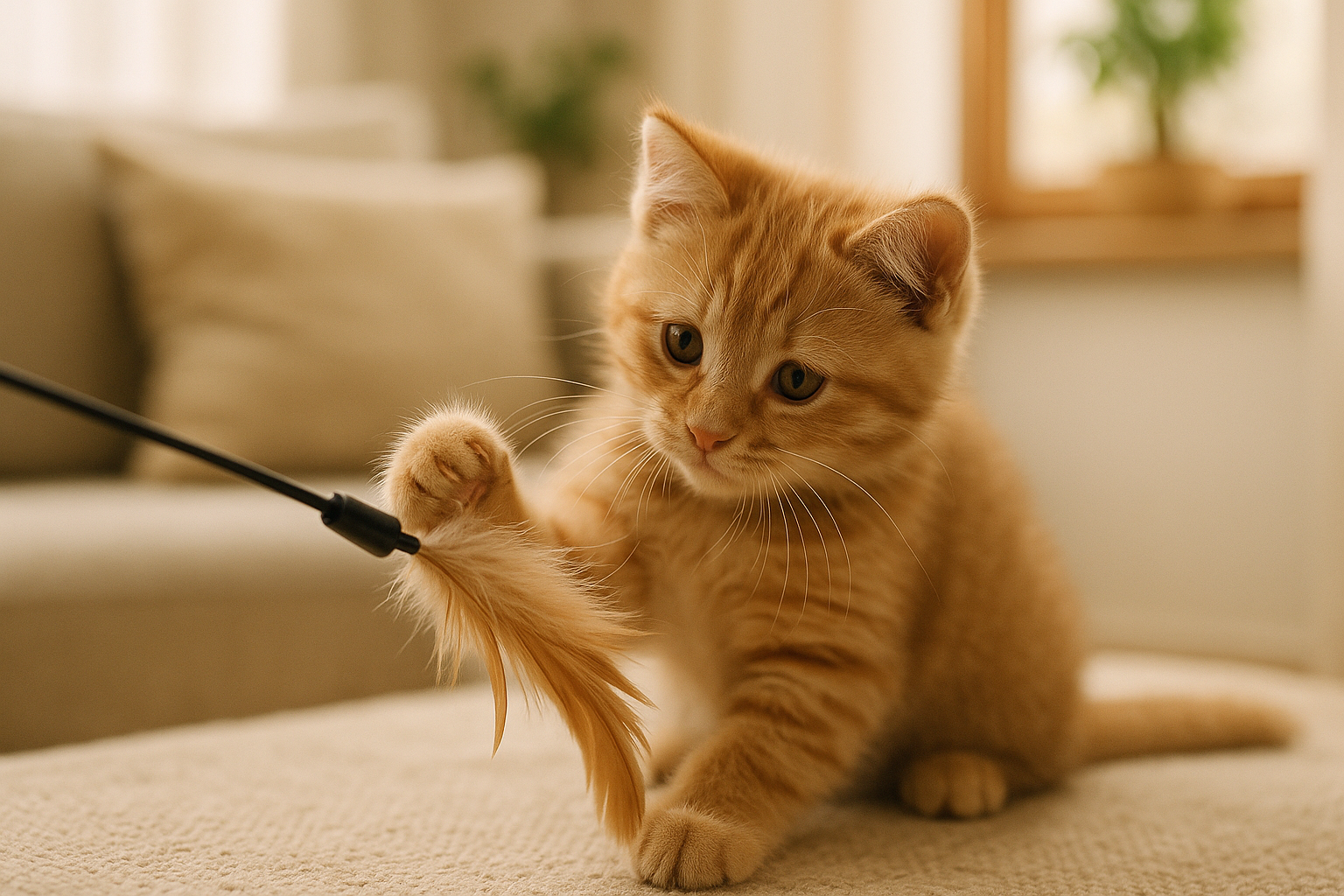
Step 4: Redirect to a Real Toy
Once your kitten is calm enough, offer a proper toy. Good choices include:
- Wand toys
- Soft toy mice
- Small kick toys
- Balls
- Crinkle toys
This teaches your kitten what is okay to bite and chase.
A wand toy is especially helpful because it keeps your hands far away from your kitten’s mouth.
Step 5: Reward Gentle Play
When your kitten plays with a toy instead of your hands, reward that choice.
You can reward with:
- Praise in a soft voice
- Another round of fun play
- A tiny treat after the session
- Gentle petting if your kitten likes it
Kittens learn fast when good behavior gets a positive result.
Step 6: Keep Play Sessions Daily
A kitten with too much energy often becomes a biting kitten. Short, active play sessions every day can make a huge difference.
Try 2 to 4 play sessions each day, depending on your kitten’s age and energy level. Even 10 to 15 minutes can help.
Use play that copies hunting:
- Chase
- Pounce
- Catch
- “Win” the toy
That pattern helps your kitten feel satisfied.
Step 7: Watch for Overstimulation
Sometimes biting starts because your kitten gets too wound up. You may notice this after a lot of fast movement, rough petting, or too much excitement.
Signs your kitten is getting overstimulated
- Fast tail flicking
- Ears turning back
- Skin twitching
- Sudden grabbing
- Pupils getting very large
- Stronger, wilder movements
If you see these signs, slow things down. Give your kitten a break before biting starts.
What You Should Never Do
When you are tired and frustrated, it can be tempting to react strongly. But punishment usually makes kitten training harder.
Avoid these common mistakes
| Mistake | Why it causes problems | Better choice |
|---|---|---|
| Yelling | Scares your kitten and creates stress | Use a calm “ouch” and stop play |
| Hitting or tapping the nose | Can create fear and damage trust | Redirect to a toy |
| Spraying water | Does not teach proper play skills | Reward gentle behavior instead |
| Pulling your hand away fast | Triggers chasing and harder biting | Freeze, then remove slowly |
| Playing with hands | Teaches that skin is a toy | Use wand toys and kick toys |
Your kitten learns best through clear, repeated patterns, not fear.
Simple Training Tools That Really Help
You do not need fancy products, but a few smart toy choices can make training much easier.
Best toys for kittens that bite during play
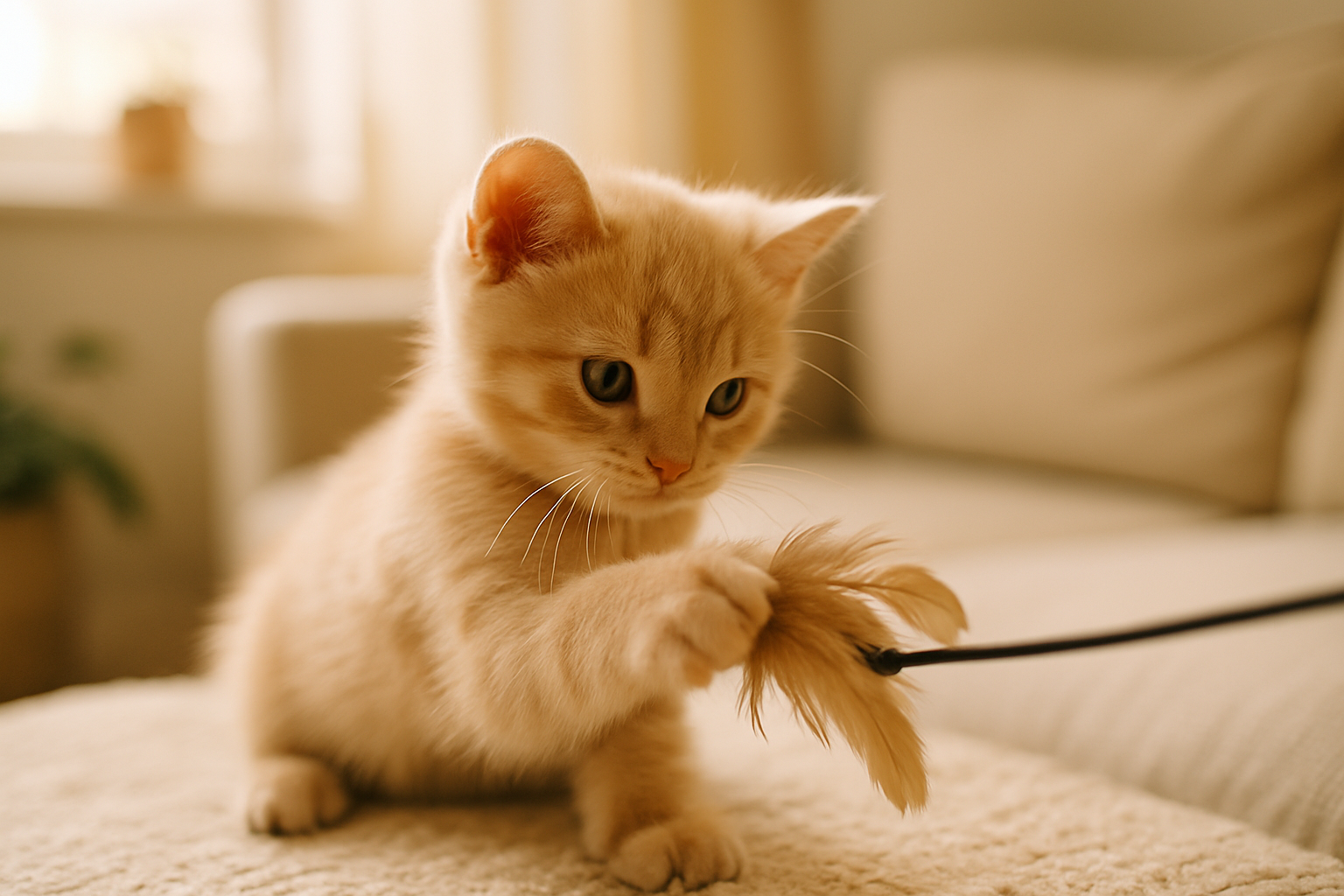
Wand toys
These are great because they let your kitten chase and pounce without reaching your skin. They are one of the best tools for teaching safe play.
Kick toys
These long soft toys let your kitten grab, bite, and bunny kick something appropriate.
Small toy mice or balls
These work well for solo play and help burn energy between your play sessions.
Puzzle feeders
These keep your kitten busy and help with boredom. A bored kitten often creates trouble.
Build a Daily Routine to Reduce Biting
Kittens do better when life feels predictable. A routine helps your kitten use energy in healthy ways.
Here is a simple example:
| Time | Activity |
|---|---|
| Morning | 10 to 15 minutes of active play, then food |
| Midday | Quiet toy or puzzle toy |
| Evening | 10 to 15 minutes of wand toy play |
| Before bed | Calm play, food, then rest |
Play before meals can be very helpful because it matches your kitten’s natural rhythm. Hunt first, eat next, then rest.
If Your Kitten Bites Your Feet or Ankles
This is a very common problem, especially when you walk by quickly. To your kitten, moving feet can look like prey.
What to do
- Stop using your feet to tease your kitten
- Keep a toy nearby to toss before your kitten attacks
- Increase daily play sessions
- Walk calmly instead of running past
- Wear slippers for protection while training
If your kitten attacks ankles most in the evening, that is often a clue that your kitten needs more active play before that time.
If Your Kitten Bites While You Pet Them
Not all biting happens during toy play. Sometimes your kitten bites while being touched.
This can happen because:
- Your kitten has had enough petting
- Your kitten is overstimulated
- You touched a sensitive spot
- Your kitten is in a playful mood, not a cuddly mood
How to handle it
Watch your kitten’s body language. If the tail starts flicking, the ears shift, or the body becomes tense, stop petting before the bite happens. This teaches you to notice limits and helps your kitten trust that you will listen.
How Long Does It Take to Stop Kitten Biting?
This depends on your kitten’s age, personality, energy level, and how consistent you are.
Some kittens improve in a few days. Many take a few weeks. Very energetic kittens may need longer. What matters most is that you respond the same way every time.
If one day biting ends play but the next day biting gets attention, your kitten gets mixed messages.
Consistency is what helps the lesson stick.
When Teething Makes Biting Worse
Kittens can become extra mouthy when they are teething. Their gums may feel uncomfortable, and biting can bring relief.
You can help by offering safe chew-friendly toys and soft kitten toys. Do not let teething turn into a habit of chewing hands.
If your kitten seems desperate to bite everything, teething may be part of the reason.
When to Ask a Vet or Behavior Expert for Help
Most play biting is normal, but sometimes you need extra support.
Talk to a vet if your kitten
- Suddenly becomes much more aggressive
- Seems to be in pain when touched
- Stops eating or acting normal
- Has other behavior changes
- Bites with intense fear or rage
- Cannot be redirected at all
A vet can check for pain, illness, or other causes. If needed, a cat behavior expert can help with a training plan.
FAQ About How to Stop Kitten Biting During Play Time
1. Is it normal for your kitten to bite during play?
Yes, it is very normal. Kittens play by chasing, grabbing, and biting. They need to learn that human skin is not a toy.
2. At what age do kittens usually stop play biting?
Many kittens improve as they grow, especially with training. The biting often starts to settle down over the first several months, but habits can continue if not taught properly.
3. Should you let your kitten bite your hand gently?
No. Even gentle biting teaches that hands are toys. It is better to redirect all biting to proper toys from the start.
4. What is the best toy for a kitten that bites a lot?
Wand toys are usually the best choice. They create distance between your hands and your kitten while giving your kitten a fun way to chase and pounce.
5. Why does your kitten bite you and then lick you?
This can happen during excited play or grooming behavior. It does not always mean anything bad. Still, if the biting is too hard, you should redirect and stop the game.
6. Will your kitten grow out of biting on its own?
Some kittens calm down with age, but many need training. If you do nothing, your kitten may keep the habit because it has worked before.
7. Should you punish your kitten for biting?
No. Punishment can cause fear and stress. Calm training, redirection, and ending play work much better.
8. Why does your kitten bite more at night?
Kittens often have bursts of energy in the evening. If your kitten bites more then, try adding an active play session before bedtime.
9. Can two kittens help reduce biting?
Sometimes, yes. Kittens often learn bite control from each other through play. But this does not mean all biting stops, and you still need to teach good behavior with people.
10. What if your kitten keeps biting no matter what you do?
Check whether you are being fully consistent. Make sure you are not using hands as toys, and increase daily play. If the biting is extreme or seems unusual, ask your vet for advice.
Conclusion
If you want to know how to stop kitten biting during play time, the answer is simple but important: stay calm, stop the game, redirect to a toy, and repeat the same lesson every time. Your kitten is not trying to upset you. Your kitten is learning, and you are the one showing what gentle play looks like.
Try not to expect perfection overnight. Training takes time, especially when you are tired and your kitten seems to have endless energy. Small changes add up. A kitten that bites less today can become a calm, well behaved cat with patient teaching.
Be kind to yourself while you train. You are learning too. With daily play, clear boundaries, and a lot of consistency, you can build trust and help your kitten grow into a happy companion who knows how to play without hurting you.