
Does your indoor cat race through the house at night, scratch your couch, or cry at the window like something is missing?
If so, you are not alone. Many cat owners feel worried when their indoor cat seems restless, bored, or full of wild energy. You want your cat to be safe inside, but you also want your cat to feel happy, calm, and satisfied. That is why learning how to stop indoor cat boredom naturally can make such a big difference in your home.
A bored indoor cat is not a bad cat. Your cat is simply trying to meet natural needs like hunting, climbing, scratching, hiding, and playing. When those needs are not met, you may see behavior problems like biting, nighttime zoomies, meowing, furniture scratching, or knocking things off shelves. The good news is that you can help without doing anything harsh or complicated.
In this guide, you will learn simple, natural ways to keep your indoor cat active, relaxed, and mentally engaged. These ideas can help you raise a cat that feels better and behaves better too.
Why indoor cats get bored
Your cat may live in a safe home, but safety alone does not always equal stimulation. In nature, cats spend a lot of time hunting, stalking, climbing, watching, and guarding their space. Indoors, life can become very repetitive.
If every day feels the same, your cat may start creating excitement. That can show up in ways you do not like, such as climbing curtains, attacking feet, waking you at 4 a.m., or scratching your favorite chair. Your cat is not being mean. Your cat is asking for more to do.
Common signs of indoor cat boredom
You may notice one sign or many signs at once. Some are loud and obvious, while others are easy to miss.
Here are common clues that your cat may be bored:
- Crying or meowing a lot
- Biting hands, ankles, or feet
- Scratching furniture
- Overeating or begging for food often
- Sleeping all day but becoming wild at night
- Chasing other pets too much
- Knocking objects off tables
- Overgrooming
- Staring out windows for long periods
- Acting clingy or needy all the time
Why boredom can turn into behavior problems
When your cat has too little mental and physical activity, stress builds up. That stress can come out as bad habits. Many owners think their cat needs punishment, but what the cat often needs is a better daily routine.
A cat with healthy outlets is usually easier to live with. That means fewer surprise attacks, less crying, and less damage around your home.
How to stop indoor cat boredom naturally
Natural boredom relief means giving your cat safe, healthy ways to act like a cat. You do not need fancy gadgets or expensive tricks. You need to build a life indoors that feels interesting and satisfying.
Below are the best natural ways to do that.
Make play feel like hunting
Play is one of the most important tools for stopping indoor cat boredom naturally. But not all play works equally well. Your cat enjoys play most when it feels like hunting.
That means the toy should move like prey. It should hide, dart, pause, and run. A toy waved right in your cat’s face can actually be less interesting than one that moves like a mouse or bird.
Best toys for natural cat play
Simple toys often work best. You can rotate them to keep things fresh.
Good options include:
- Wand toys with feathers or fabric
- Small toy mice
- Crinkle balls
- Soft kick toys
- Treat puzzle toys
- Cardboard boxes with holes
- Paper bags without handles
How to play the right way
Try short play sessions once or twice a day. Ten to fifteen minutes can help a lot. Move the toy slowly at first, then let it hide behind furniture, peek out, and dart away. Let your cat stalk before pouncing.
Always let your cat “catch” the toy sometimes. If the prey never gets caught, your cat can become frustrated.
A simple play routine
| Time of day | Activity | Why it helps |
|---|---|---|
| Morning | 10 minutes of wand play | Uses energy early |
| Afternoon | Puzzle toy or treat hunt | Keeps your cat busy |
| Evening | 15 minutes of chase and pounce play | Reduces nighttime craziness |
| After play | Small meal | Mimics hunt, catch, eat |
That last step matters. After a good play session, offer a small meal or snack. This follows the natural rhythm of hunt, catch, eat, groom, sleep.
Give your cat vertical space
Cats do not just enjoy floor space. They love height. Climbing lets your cat feel safe, curious, and in control of the environment.
If your home has little vertical space, your cat may feel trapped or under-stimulated. This is especially true in small apartments.
Easy ways to add climbing areas
You do not need to rebuild your home. Even one or two changes can help.
Try:
- A sturdy cat tree near a window
- Wall shelves made for cats
- A safe spot on a bookshelf
- A window perch
- A chair placed near a sunny area
Why vertical space matters
High places give your cat a place to watch, rest, and retreat. This can lower stress and reduce fights in multi-cat homes too. A cat that can climb and observe often feels much more settled.
Create a window watching station
A window can be like cat television. Birds, leaves, people, bugs, and changing light all give your cat something to watch.
This is one of the easiest ways to improve indoor cat life naturally.
How to make a good cat window area
Set up a safe place where your cat can sit comfortably. Add a perch, cat bed, or folded blanket. If possible, place it where your cat can see birds, trees, or outdoor activity.
You can make it even more interesting with:
- A bird feeder outside the window
- Plants outside that attract birds or butterflies
- A sunny resting spot
- A screened window for fresh air when safe
Be careful not to create frustration. If your cat becomes upset by outdoor cats nearby, try another window or limit access during stressful times.
Use food puzzles and treat hunts
Some cats become bored because food comes too easily. In nature, cats work for food. Indoors, food often appears in a bowl with no effort at all.
You can make mealtime more engaging by turning it into a small challenge.
Natural feeding ideas
Instead of giving all food in one bowl, try:
- Puzzle feeders
- Treat balls
- Hiding small portions around the room
- Placing food on different levels
- Using muffin tins with toys over some sections
These methods encourage movement, sniffing, searching, and problem-solving.
Why this helps so much
Food puzzles are great for high-energy cats and cats that beg all day. They slow eating, reduce boredom, and give your cat a “job” to do.
If your cat is new to puzzles, start easy. You want your cat to feel successful, not confused.
Rotate toys instead of leaving everything out
If every toy stays on the floor all the time, your cat may stop caring. Cats often enjoy novelty. A toy that disappeared for a week can feel exciting again.
A simple toy rotation system
Put most toys away and leave out only a few. Every few days, swap them.
For example:
- 2 chase toys
- 1 crinkle toy
- 1 kicker toy
- 1 puzzle toy
This keeps your cat interested without you buying more and more things.
Let your cat scratch in the right places
Scratching is natural. Your cat scratches to stretch, mark territory, and maintain claw health. If your cat scratches furniture, boredom may be part of the problem, but your cat also needs better scratching options.
How to choose the right scratching surfaces
Different cats like different textures and positions.
Offer:
- Vertical scratching posts
- Horizontal cardboard scratchers
- Sisal scratchers
- Carpet-free scratchers if your cat confuses carpet with furniture
Place scratchers where your cat already likes to scratch. Do not hide them in a corner your cat never uses.
Make scratching spots more appealing
You can encourage use by:
- Sprinkling catnip on the post
- Playing near the scratcher
- Placing it by sleeping spots
- Rewarding your cat after use
A good scratcher can save your couch and give your cat a healthy outlet.
Build a calm daily routine
Cats feel safer when life is predictable. A random day can sometimes make an indoor cat more anxious and needy.
A steady routine helps your cat know when to expect food, play, rest, and attention.
What a healthy cat routine can look like
Your routine does not need to be perfect. It just needs to be fairly consistent.
A simple daily rhythm:
- Morning meal
- Short play session
- Quiet rest time
- Midday enrichment like a puzzle feeder
- Evening play session
- Dinner
- Calm bedtime environment
This pattern can reduce nighttime crying and help your cat settle more easily.
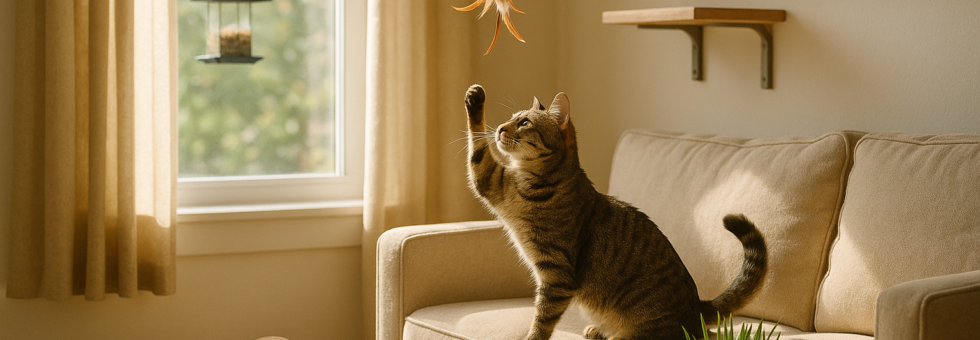
Give your cat safe places to hide
Not all boredom looks active. Some cats respond to stress or boredom by hiding too much, sleeping too much, or becoming very quiet.
Cats feel better when they have small safe spaces to retreat to.
Great hiding spots for indoor cats
You can create these with very simple items:
- Cardboard boxes
- Covered cat beds
- Blankets draped over a chair
- Cat tunnels
- Space under a bed if safe and clean
These hiding spots help your cat feel secure. A secure cat is usually more confident and more willing to play.
Use scent enrichment
Cats experience the world strongly through smell. New safe scents can make life more interesting.
This is a very natural way to enrich your cat’s day.
Safe scent ideas for cats
You can try:
- Catnip
- Silvervine
- Valerian root products made for cats
- A blanket with a new safe smell
- Leaves or sticks brought from outside, as long as they are clean and non-toxic
Always introduce new scents gently. Not every cat likes catnip, and too much stimulation can be overwhelming.
Important safety note
Never use essential oils around your cat unless a veterinarian specifically says it is safe. Many essential oils are dangerous for cats.
Spend quality time, not just nearby time
Your cat may be in the same room as you all day, but still feel bored. Being physically near you is not the same as having meaningful interaction.
Even a few minutes of focused attention can matter.
Good ways to connect with your cat
Try:
- Play sessions
- Gentle brushing if your cat enjoys it
- Clicker training
- Talking softly
- Handing out treats during simple games
- Sitting near the window together
This can strengthen trust and reduce attention-seeking behavior like biting or constant meowing.
Try simple training for mental exercise
Yes, cats can learn. Training is not just for dogs. It can help with boredom, confidence, and behavior problems.
A bored cat often benefits from having little jobs to do.
Easy things you can teach your cat
You can train your cat to:
- Come when called
- Sit
- Touch your hand with the nose
- Go to a mat
- Enter a carrier calmly
- High five
Use tiny treats and short sessions. Keep it fun. End before your cat loses interest.
Training builds mental focus and gives your cat a healthy challenge.
Help your cat watch, chase, and pounce safely
Your cat’s body is built for action. If your cat never gets to stalk and pounce, that energy may come out on your hands, ankles, or another pet.
Replace rough behavior with better outlets
If your cat attacks your feet under blankets or bites your hands, stop using body parts as toys. This is especially important with kittens.
Instead, redirect that energy to:
- Wand toys
- Toss toys
- Kickers
- Chase games down a hallway
- Puzzle feeders after play
When your cat learns where hunting energy should go, behavior usually improves.
Give kittens extra activity
Kittens get bored very fast. They also have lots of energy and very little self-control. If you are losing sleep because of kitten biting, crying, or nonstop movement, boredom may be a big part of the problem.
What kittens need most
Kittens do best with:
- Several short play sessions a day
- Safe climbing places
- Chew-safe toys
- A bedtime routine
- Interactive attention
- Enough rest between bursts of energy
A tired kitten is often a sweeter kitten. Not exhausted in an unhealthy way, but properly engaged.
Support older cats too
Senior cats can get bored as well, even if they move less. An older cat may enjoy slower play, scent games, window watching, and easy puzzle feeders.
Do not assume your senior cat wants to do nothing. Your older cat still needs interest and comfort.
Gentle boredom relief for older indoor cats
Try:
- Soft wand movement
- Food games that do not require jumping
- Heated beds near a window
- Low scratching surfaces
- Easy-access climbing steps
- Brushing and massage if your cat likes it
Always pay attention to pain, stiffness, or confusion. If your older cat changes behavior suddenly, talk to a veterinarian.
Keep the environment changing in small ways
You do not need constant noise and excitement. In fact, many cats prefer gentle variety over chaos. Small changes can keep life interesting without causing stress.
Easy ways to refresh your cat’s environment
You can:
- Move a cat bed to a new sunny spot
- Swap toys every few days
- Add a new box
- Change where treats are hidden
- Set up a blanket fort
- Rearrange a perch area
Little changes can wake up your cat’s curiosity.
Common mistakes that make boredom worse
Sometimes owners try hard to help, but a few habits can still make things harder.
Mistake 1: Free-feeding without enrichment
If food is always available in one place, your cat misses a chance to forage and think. Some cats do fine with free-feeding, but many benefit from a more interactive system.
Mistake 2: Using hands as toys
This can lead to biting and rough play. It teaches your cat that human skin is for attacking.
Mistake 3: Leaving your cat alone all day with no stimulation
Even independent cats need enrichment. A few toys on the floor may not be enough.
Mistake 4: Buying toys but never using them with your cat
Many cats prefer interactive play with you over solo toys. Your attention matters.
Mistake 5: Ignoring medical issues
A cat that seems bored may actually be stressed, itchy, in pain, or unwell. If behavior changes suddenly, do not assume boredom is the only cause.
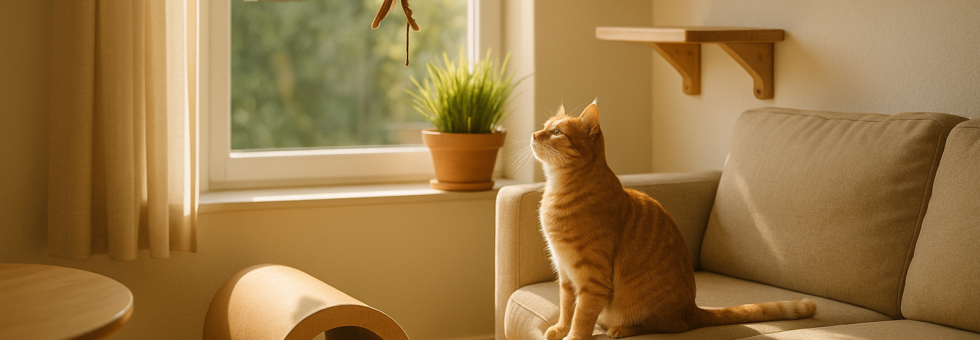
When boredom is not the only problem
If your cat cries constantly, overgrooms, stops using the litter box, hides more than usual, or becomes aggressive suddenly, it is smart to rule out health issues.
Natural enrichment helps a lot, but it cannot fix pain or illness.
Signs you should talk to a veterinarian
Contact a veterinarian if your cat:
- Stops eating
- Has sudden behavior changes
- Overgrooms until skin is damaged
- Hides much more than usual
- Cries in a distressed way
- Has litter box changes
- Seems stiff, weak, or confused
A healthy cat is much more likely to respond well to boredom solutions.
A natural indoor cat enrichment plan you can start today
If you feel overwhelmed, do not try everything at once. Start small. One or two changes can already improve your cat’s mood.
Your simple first-week plan
| Day | What you do |
|---|---|
| Day 1 | Add one 10-minute play session |
| Day 2 | Set up a window perch or resting spot |
| Day 3 | Introduce one scratching station |
| Day 4 | Hide a few treats around the room |
| Day 5 | Rotate toys and put some away |
| Day 6 | Create a box or tunnel hiding spot |
| Day 7 | Start a regular evening play and meal routine |
This gives your cat more action, more comfort, and more structure without making life complicated for you.
FAQ about how to stop indoor cat boredom naturally
1. How do you know if your indoor cat is bored?
Your cat may be bored if you notice excessive meowing, nighttime zoomies, furniture scratching, biting, overeating, or clingy behavior. Some cats also sleep too much or stare out the window for long periods with little interest in anything else indoors.
2. Can boredom make your cat act aggressive?
Yes, boredom can lead to rough play or aggression. If your cat has no healthy outlet for hunting energy, your cat may chase ankles, bite hands, or pounce on other pets.
3. What is the best natural way to stop indoor cat boredom?
The best natural method is a mix of interactive play, climbing space, window access, scratching spots, food puzzles, and a daily routine. Your cat needs both mental and physical activity to feel satisfied.
4. How much play does your indoor cat need every day?
Many indoor cats do well with at least two play sessions a day, around 10 to 15 minutes each. Kittens and very active cats may need more frequent short sessions.
5. Do indoor cats need puzzle feeders?
Puzzle feeders are not required, but they help many cats a lot. They give your cat something to work on, slow down eating, and reduce boredom during the day.
6. Why does your cat get crazy at night?
Your cat may have extra energy left over from a quiet day. If your cat sleeps most of the daytime and does not get enough evening play, nighttime activity often gets worse.
7. Can window watching help with cat boredom?
Yes, window watching can be great enrichment. It gives your cat movement, sounds, light changes, and things to watch. A safe perch near a good window can make a big difference.
8. Should you get another cat to fix boredom?
Sometimes a second cat helps, but not always. Some cats enjoy company, while others become stressed. It is better to improve enrichment first instead of assuming another cat will solve the problem.
9. What toys are best for bored indoor cats?
Wand toys, toy mice, crinkle balls, kicker toys, treat puzzles, and tunnels are all helpful. The best toy is often the one that matches your cat’s hunting style.
10. Can an older indoor cat still get bored?
Yes, older cats can still get bored. Your senior cat may want slower games, easier puzzle feeders, soft resting places, and safe window watching instead of fast jumping or chasing.
Conclusion
If your cat seems restless, noisy, destructive, or too wild, you are not failing. Your cat is simply asking for a life that feels more natural indoors. When you understand how to stop indoor cat boredom naturally, you can turn many frustrating behaviors into manageable ones.
Start with the basics. Add daily play. Give your cat places to climb, scratch, hide, and watch the world. Make meals more interesting. Keep a gentle routine. Spend a little focused time together each day.
You do not need to do everything perfectly. You just need to notice what helps your cat feel more like a cat. Small changes can lead to a calmer home, better behavior, and a happier companion by your side.