
Do you worry that your indoor cat is getting bored, gaining weight, or picking up bad habits like scratching the couch, biting, or crying at night?
If you do, you are not alone. Many cat owners love keeping their cats safe indoors, but they also worry about how to keep indoor cats active and healthy. When your cat lives inside all the time, you need to do a little more to support your cat’s body and mind.
Indoor life can be very safe. Your cat is protected from cars, fights, disease, and many outdoor dangers. But indoor cats can also become lazy, overweight, restless, or stressed if they do not get enough play, movement, and mental activity. That is when problems often begin. You may notice midnight zoomies, rough kitten biting, constant meowing, furniture scratching, or a cat that seems sad and withdrawn.
The good news is that you can fix a lot of these problems with simple daily habits. You do not need a huge house or expensive gadgets. You just need to understand what your cat needs and make indoor life more interesting.
Why indoor cats need extra support
Your cat may live inside, but your cat still has natural instincts. Your cat wants to stalk, chase, climb, scratch, hide, and inspect new things. If those needs are ignored, your cat will try to meet them in ways you may not like.
That is why learning how to keep indoor cats active and healthy matters so much. A healthy indoor cat needs more than food and a bed. Your cat also needs exercise, play, routine, attention, and a safe place to act like a cat.
Common signs your indoor cat needs more activity
These signs can mean your cat is bored, stressed, or not getting enough movement:
- Weight gain
- Sleeping all day and being restless all night
- Biting hands or ankles
- Scratching furniture
- Loud crying or meowing
- Chasing other pets too roughly
- Overgrooming
- Knocking things over
- Begging for food all the time
If you see these behaviors, do not assume your cat is being bad. Your cat may simply need better outlets for energy.
Make playtime part of every day
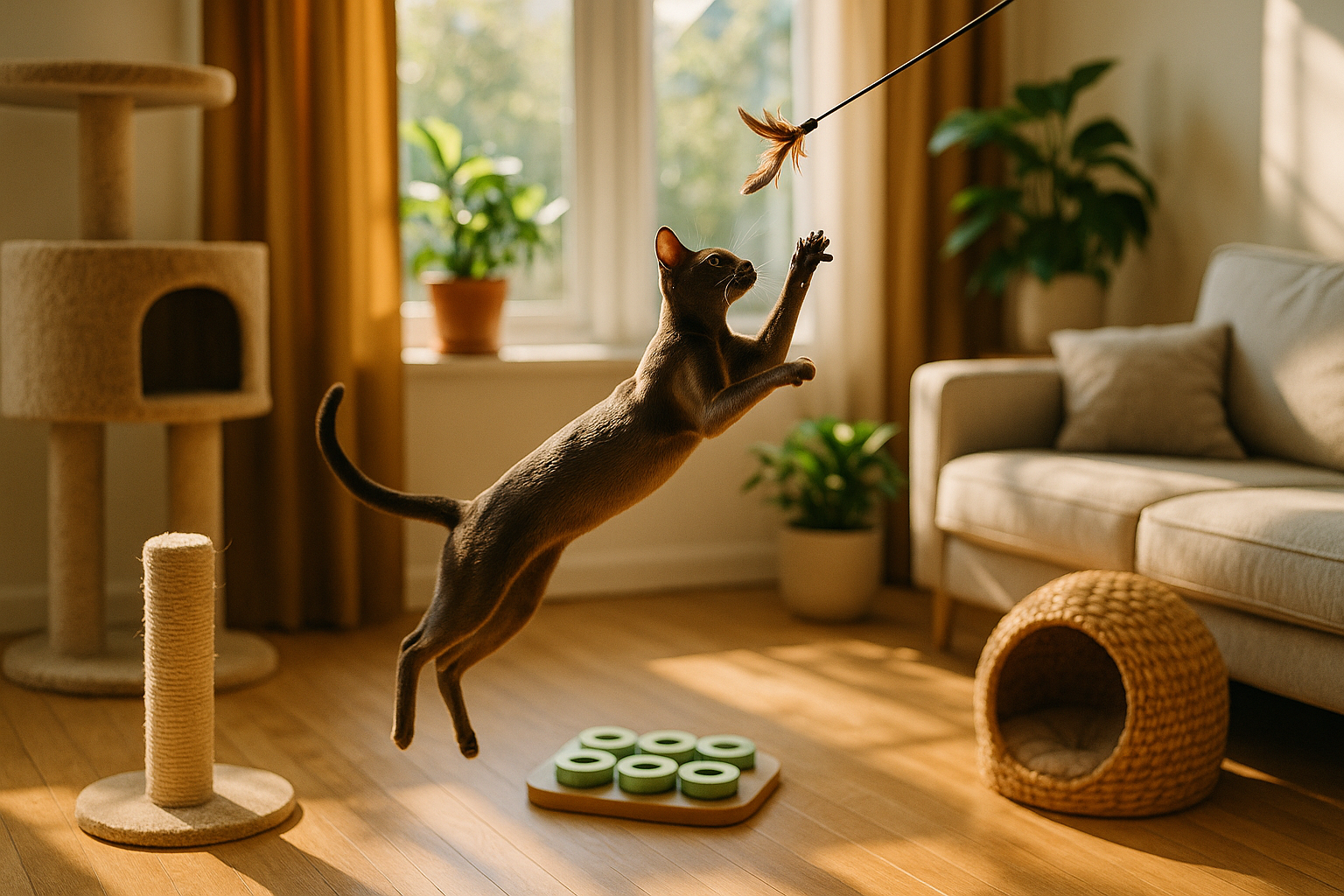
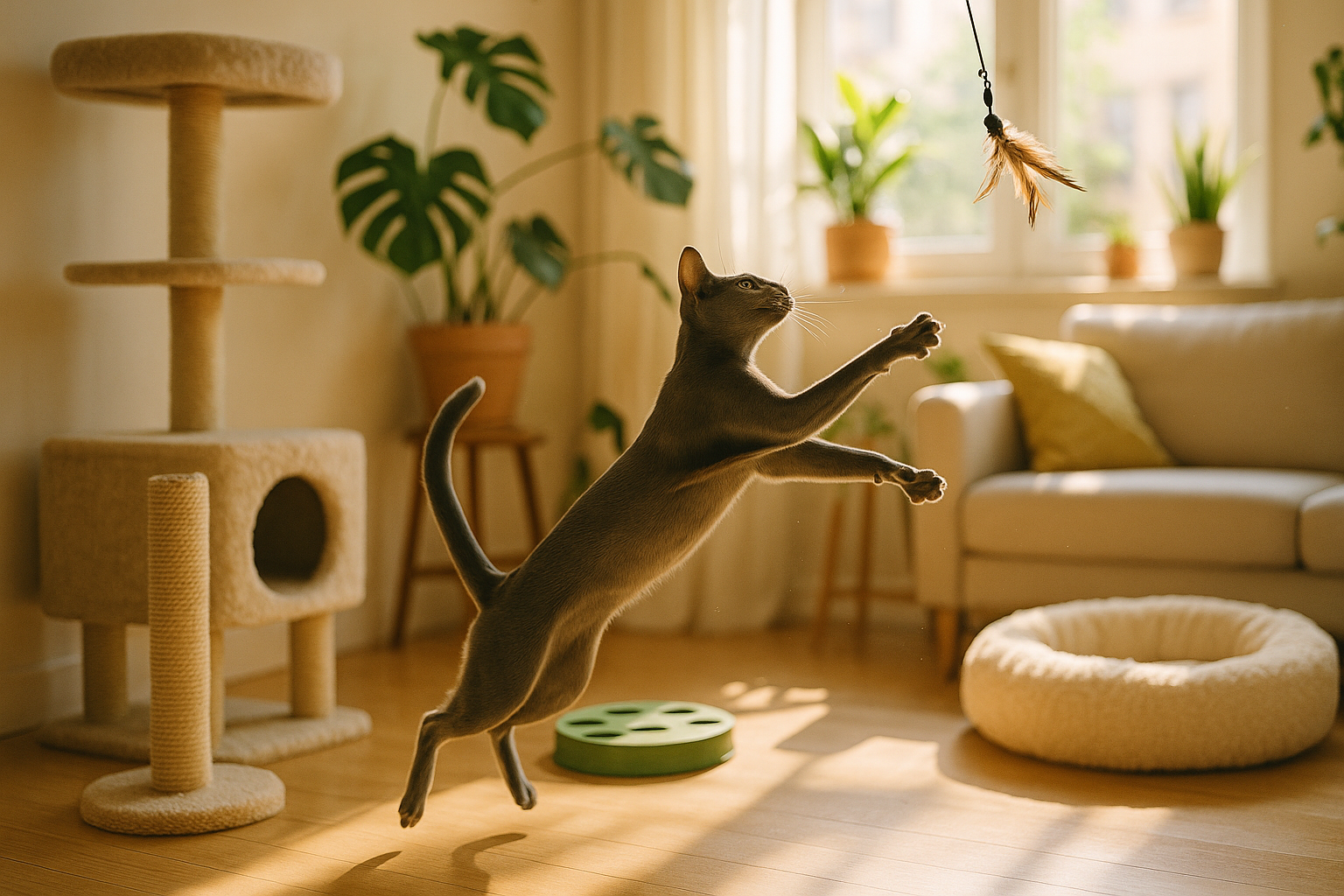
One of the best ways to keep your indoor cat healthy is daily interactive play. This means you play with your cat, not just hand over a toy and walk away.
Interactive play helps your cat burn energy, stay fit, and feel mentally satisfied. It also helps reduce behavior problems.
Best toys for active indoor cats
Cats usually enjoy toys that copy prey movement. Try a few types and see what your cat likes most.
- Wand toys with feathers or string
- Small toy mice
- Balls that roll unpredictably
- Crinkle toys
- Kicker toys for wrestling
- Puzzle toys with treats inside
Keep in mind that many cats get bored with the same toy every day. Rotate toys every few days so they feel fresh and exciting again.
How long should you play with your cat?
Most cats do well with 2 to 3 play sessions a day, even if each one is only 10 to 15 minutes. Kittens and young cats often need more.
A simple routine could look like this:
| Time of Day | Activity | Length |
|---|---|---|
| Morning | Wand toy chase | 10 minutes |
| Afternoon | Puzzle feeder or ball toy | 10 minutes |
| Evening | Active play before dinner | 15 minutes |
Playing before meals works especially well because it matches your cat’s natural hunt, eat, rest cycle.
Help your cat climb, jump, and watch
Cats do not just need floor space. They also love vertical space. Climbing gives your cat exercise and confidence. It also helps shy or nervous cats feel safer.
Add cat trees and window perches
A sturdy cat tree can make a huge difference. It gives your cat a place to climb, stretch, scratch, and rest. Window perches are also wonderful because they give your cat something to watch.
Birds, leaves, rain, and people outside can be like cat television. Even quiet viewing time can help reduce boredom.
Use shelves or safe climbing spots
If you have room, add cat shelves or clear off a safe dresser or shelf where your cat is allowed to sit. This helps your cat use muscles more often during the day.
Make sure all climbing areas are stable and safe. You do not want anything to tip over.
Turn mealtime into activity time
Free feeding can make some indoor cats eat too much and move too little. A smarter option is making food part of your cat’s activity.
Try puzzle feeders
Puzzle feeders make your cat work a little for food. This gives your cat mental exercise and slows down eating. Some cats who cry for food all day do better when meals become more engaging.
You can buy puzzle feeders or make simple ones at home using safe containers designed for pets.
Scatter feeding for movement
You can also place small amounts of kibble in different safe spots around the room. This encourages your cat to walk, sniff, and search.
This works especially well for cats who seem bored or obsessed with food.
Protect your cat from weight gain
Many indoor cats gain weight because they eat more calories than they burn. Extra weight can lead to serious health problems like diabetes, joint pain, and grooming trouble.
Know if your cat is overweight
It can be hard to tell because fluffy fur hides body shape. Ask your vet to show you your cat’s ideal body condition. In general, you should be able to feel the ribs under a small layer of fat, and your cat should have a visible waist from above.
If you are unsure, a vet check is the best place to start.
Healthy weight habits for indoor cats
Use these simple habits:
- Measure food instead of guessing
- Ask your vet about correct calorie needs
- Avoid too many treats
- Use treats during play or training only
- Encourage movement before meals
- Weigh your cat regularly if possible
Do not put your cat on a crash diet. Fast weight loss can be dangerous for cats.
Give your cat safe scratching options
Scratching is normal. Your cat is not trying to annoy you. Scratching helps remove old nail layers, stretch the body, and mark territory.
If your cat scratches furniture, the answer is not punishment. The answer is a better scratching setup.
What kind of scratcher do cats like?
Many cats prefer:
- Tall scratching posts for full body stretches
- Cardboard scratchers
- Sisal rope scratchers
- Flat scratch mats
- Scratchers placed near sleeping spots
Try more than one style. Some cats like vertical scratching. Others like horizontal surfaces.
How to guide your cat away from furniture
Place a scratcher right next to the area your cat uses most. Reward your cat with praise, petting, or a small treat when your cat uses it.
You can also make furniture less tempting by using safe cat deterrent tape or covering the area for a while.
Prevent boredom and stress
An indoor cat can look calm while still feeling bored. Boredom can lead to stress, and stress can show up as bad habits.
Change the environment often
You do not need to redesign your whole home. Small changes can help a lot.
Try things like:
- Rotating toys
- Putting out a paper bag for supervised play
- Giving a new cardboard box
- Moving a perch to a new window
- Hiding treats around the room
- Offering safe cat grass
These little changes make your home feel more interesting.
Use training for mental exercise
Cats can learn simple things, and training is a great way to use brain power. You can teach your cat to come when called, touch your hand, sit, or go into a carrier calmly.
Use treats, patience, and short sessions. Keep it fun. Even five minutes of training can tire out an active kitten in a good way.
Solve common indoor cat behavior problems
Many behavior issues improve when your cat gets more exercise and structure.
Kitten biting and rough play
Kittens often bite because they are playful, excited, or overstimulated. They may also bite if hands are used as toys.
What helps:
- Never use fingers for play
- Use wand toys instead
- Stop play if biting starts
- Offer kicker toys for wrestling
- Give several short play sessions a day
A tired kitten is usually a better behaved kitten.
Crying at night
If your cat cries at night, your cat may be bored, hungry, stressed, or used to getting attention then.
Try this routine:
- Active play in the evening
- Feed dinner after play
- Keep a steady bedtime routine
- Ignore attention seeking cries if medical issues are ruled out
- Ask your vet if crying is sudden or unusual
Scratching furniture
This is often caused by instinct plus lack of better options. Add scratching posts near problem areas and reward use right away.
Too much energy and chaos
Young cats often need more structure than owners realize. If your cat races around the house, attacks feet, and seems impossible to calm down, increase active play, food puzzles, climbing space, and routine.
Keep your cat’s body healthy too
Activity is important, but health is not just about exercise. Indoor cats also need regular care.
Regular vet visits matter
Even indoor cats need checkups. A yearly visit can catch weight issues, dental trouble, skin problems, and early illness.
If your cat suddenly becomes lazy, angry, clingy, or noisy, do not assume it is just behavior. Pain or sickness may be the cause.
Water, diet, and litter box care
These basics matter every day:
- Fresh water in clean bowls or a fountain
- High quality food for your cat’s age and health
- Clean litter boxes in quiet places
- Enough litter boxes for the home
A good rule is one litter box per cat, plus one extra.
Build a routine your cat can trust
Cats often feel best when life is predictable. A routine can reduce anxiety and improve behavior.
Feed your cat around the same times each day. Play at regular times. Keep sleeping spots and litter boxes in stable locations. Predictable care helps your cat feel safe.
This is especially helpful for shy cats, kittens, and cats that cry for attention.
A simple daily plan for a healthy indoor cat
If you feel overwhelmed, start with a basic plan like this:
| Daily Habit | What You Do | Why It Helps |
|---|---|---|
| Morning play | 10 minutes with a wand toy | Burns energy early |
| Measured meals | Feed correct portions | Prevents weight gain |
| Vertical space | Cat tree or shelf access | Encourages climbing |
| Scratching setup | Place posts in key areas | Protects furniture |
| Mental activity | Puzzle feeder or treat hunt | Reduces boredom |
| Evening routine | Play, dinner, calm time | Helps with night crying |
You do not need perfection. Small consistent habits work best.
FAQ about how to keep indoor cats active and healthy
1. How much exercise does your indoor cat need?
Most indoor cats need at least 20 to 30 minutes of active play each day. Kittens and young cats often need more. You can split this into short sessions to make it easier.
2. What are the best toys for indoor cats?
Wand toys, toy mice, balls, puzzle feeders, and kicker toys are all good choices. The best toy is the one your cat wants to chase, grab, and interact with often.
3. Why does your indoor cat cry at night?
Your cat may be bored, hungry, lonely, or used to attention at night. Evening play and a meal before bedtime can help. If the crying is new, ask your vet to check for health problems.
4. How do you stop your kitten from biting?
Do not use your hands as toys. Use wand toys and kicker toys instead. If biting starts, stop the game and redirect your kitten to a toy.
5. Why does your cat scratch the couch even with a scratching post?
Your cat may not like the type or location of the scratching post. Try a taller post, a different material, or place it right beside the couch where your cat already scratches.
6. Can indoor cats become depressed?
Yes, they can become bored, stressed, or withdrawn if they lack stimulation. More play, climbing space, window views, and routine can help improve mood.
7. How do you know if your indoor cat is overweight?
You may notice less movement, trouble grooming, and loss of a clear waist. Your vet can tell you your cat’s healthy weight and body condition.
8. Are food puzzles really helpful for cats?
Yes. Food puzzles give your cat mental work and can slow fast eating. They are especially helpful for bored cats and cats that beg for food often.
9. Is it cruel to keep your cat indoors all the time?
Not if your cat’s needs are met. Indoor living can be very safe and healthy when your cat gets exercise, play, enrichment, and good care.
10. What is the easiest way to start improving your indoor cat’s life?
Start with two things: daily play and better scratching options. These simple changes often improve behavior, activity, and mood very quickly.
Conclusion
Keeping your cat indoors can be one of the safest choices you make, but indoor life works best when you actively support your cat’s natural needs. If you want to know how to keep indoor cats active and healthy, the answer is not one big trick. It is a group of small loving habits done every day.
Play with your cat. Give your cat places to climb and scratch. Make meals more engaging. Watch your cat’s weight. Keep routines steady. And when behavior problems show up, try to see them as clues instead of bad behavior.
You do not need to do everything at once. Pick one or two changes today and build from there. Your cat does not need a perfect home. Your cat needs your attention, your patience, and a home that feels safe, active, and interesting.
When you give your indoor cat the right mix of movement, comfort, and fun, you help your cat become calmer, healthier, and happier. And that makes life better for both of you.