
Are you tired of hearing that sharp scratching sound and finding new marks on your sofa, chair legs, or carpet every day?
If you live with an indoor cat, this is one of the most common problems you face. You love your cat, but you also want to protect your home. The good news is that the best scratching posts for indoor cats can save your furniture, help your cat feel calm, and make daily life much easier for both of you.
Scratching is not your cat being naughty. It is a normal, healthy behavior. Your cat scratches to stretch, mark territory, remove old nail layers, and release energy. When your cat does not have the right place to scratch, your couch often becomes the next best thing.
In this guide, you will learn how to choose the right scratching post, which types work best, how to get your cat to use one, and how to stop furniture scratching without stress.
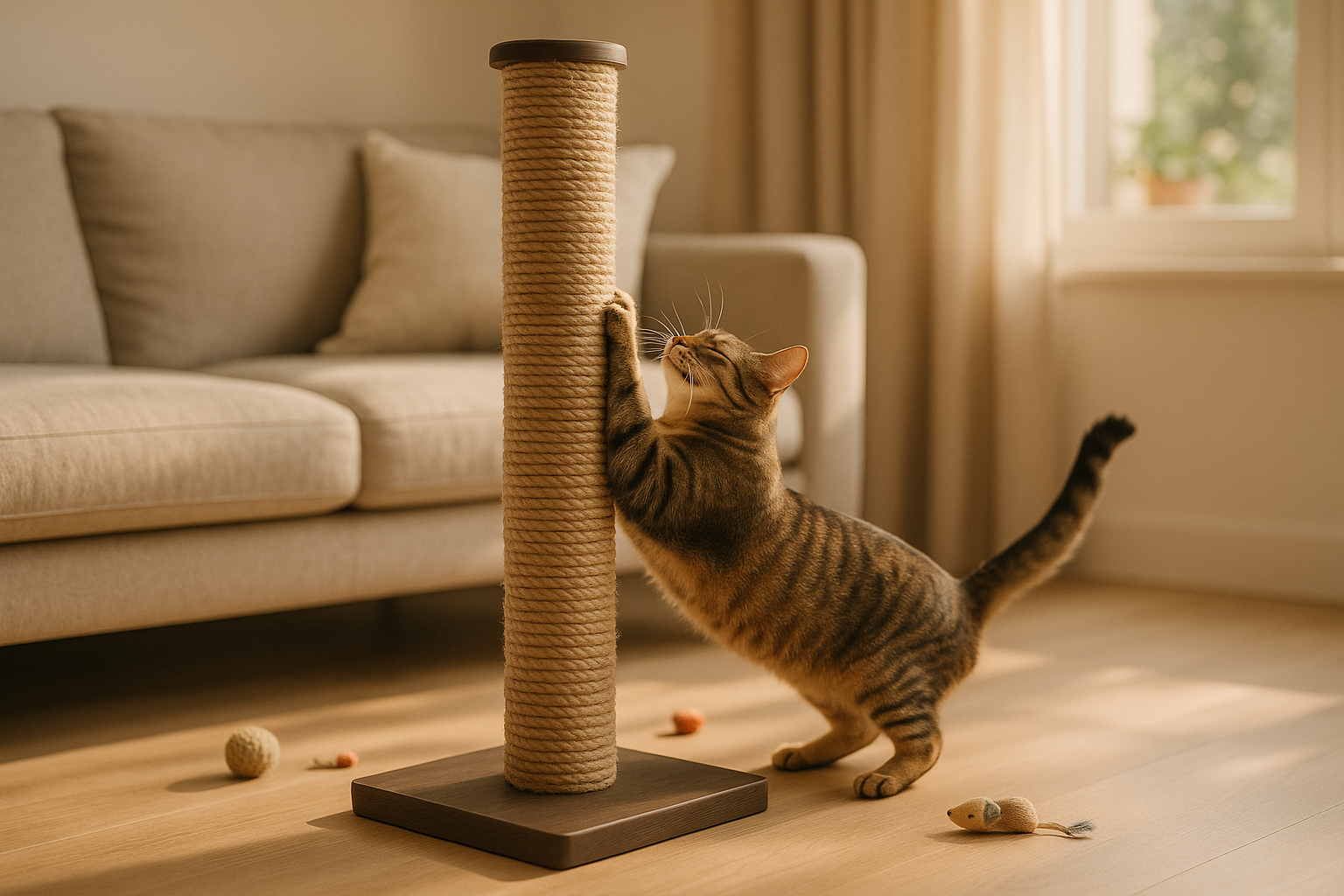
Why Your Indoor Cat Needs a Scratching Post
Your indoor cat still has natural instincts, even if your cat never goes outside. Scratching is one of those instincts. It helps your cat stay active, healthy, and emotionally settled.
When your cat scratches a proper post, your cat can:
- Stretch the back, shoulders, and legs
- Keep claws in better shape
- Leave scent marks from paw glands
- Burn off nervous energy
- Feel safe and confident in the home
If you do not give your cat a good scratching post, your cat will usually choose something else. That might be your couch, bed frame, rug, or curtains.
What Makes the Best Scratching Posts for Indoor Cats
Not every scratching post works well. Some are too short, too wobbly, or made of materials cats do not like. If you want to save your furniture, you need a post your cat truly enjoys using.
1. Height matters
A good scratching post should be tall enough for your cat to fully stretch. Many cats like to reach up high while scratching. If the post is too short, your cat may ignore it.
For most adult cats, look for a post that is at least 30 to 32 inches tall. Bigger cats may need even more height.
2. Stability is very important
If the post tips over the first time your cat uses it, your cat may never trust it again. A sturdy base helps your cat feel safe.
Choose a scratching post with a heavy bottom that does not wobble.
3. Material can make or break it
Most cats like rough materials that catch their claws in a satisfying way. Sisal rope and sisal fabric are top choices. Cardboard can also work very well, especially for cats that like horizontal scratching.
Common scratching post materials include:
- Sisal rope: durable and popular with many cats
- Sisal fabric: strong and less messy than some ropes
- Cardboard: budget friendly and loved by many cats
- Carpet: sometimes used, but it may confuse your cat if you also have carpet in your home
- Wood: some cats enjoy natural wood textures
4. Shape matters too
Cats have different scratching styles. Some like to scratch upward. Others like to scratch flat on the floor.
The best setup often includes more than one scratching surface:
- Vertical scratching post
- Horizontal cardboard scratcher
- Angled scratcher or cat tree section
Best Types of Scratching Posts for Indoor Cats
There is no single perfect scratching post for every cat. Your cat’s age, size, energy level, and scratching style all matter.
Tall vertical scratching posts
These are often the best choice if your cat scratches sofa sides or chair corners. A tall post lets your cat stand up and stretch fully.
This type works best for:
- Adult cats
- Large cats
- Cats that scratch walls or furniture edges
- Active cats who like a full body stretch
Horizontal cardboard scratchers
These are simple but very effective. Many indoor cats love cardboard because it is easy to dig claws into.
This type works best for:
- Cats that scratch rugs or carpet
- Older cats
- Kittens
- Cats that like to lounge and scratch in one spot
Cat trees with scratching posts
A cat tree gives your cat more than one thing to do. Your cat can climb, perch, nap, and scratch all in one place. This is great for indoor cats who need more activity.
This type works best for:
- Bored indoor cats
- Homes with one main living space
- Multi cat homes
- Cats that like to climb and watch from above
Wall mounted scratchers
These save floor space and can be placed where your cat already scratches. They can be useful in small apartments.
This type works best for:
- Small homes
- Cats with favorite scratching spots on walls or corners
- Owners who want a neat setup
Angled scratchers
Some cats do not like a fully flat or fully upright scratching surface. An angled scratcher gives a middle option that feels comfortable.
This type works best for:
- Picky cats
- Cats that switch between floor and upright scratching
- Kittens learning good habits
How to Match the Scratching Post to Your Cat
Your cat will use a scratching post more often if it matches your cat’s natural style. Watch your cat for a few days before buying.
Use this quick guide:
| Your cat’s habit | Best scratching option |
|---|---|
| Scratches couch sides | Tall vertical sisal post |
| Scratches carpet or rugs | Horizontal cardboard scratcher |
| Scratches corners | Corner scratcher or wall mounted scratcher |
| Loves climbing | Cat tree with sisal posts |
| Seems nervous or shy | Stable post near safe resting area |
| Is older or less active | Low cardboard or angled scratcher |
This simple step can save you money and stop frustration.
Where to Put a Scratching Post So Your Cat Actually Uses It
Placement is one of the biggest reasons scratching posts fail. You may buy a great post, but if you hide it in a quiet corner your cat never uses, it may go untouched.
Cats often scratch in important places. They like to scratch where they sleep, where they play, and where they see family activity.
Best places to put scratching posts
- Next to the sofa or chair your cat already scratches
- Near sleeping spots
- Close to windows
- In the main family room
- Near doorways or room entrances
- Beside your cat tree or favorite perch
At first, do not worry if the post looks a little awkward in your room. Saving your furniture comes first. Once your cat builds a strong scratching habit, you can slowly move it if needed.
How to Get Your Cat to Use a Scratching Post
Some cats use a new scratching post right away. Others need time and encouragement. You cannot force your cat, but you can make the post much more appealing.
Make the post interesting
Try these easy tricks:
- Sprinkle a little catnip on the post
- Rub catnip leaves into the surface
- Use a wand toy around the post
- Place treats near and on the base
- Praise your cat when your cat touches or scratches it
Show your cat the right spot
Bring your cat near the post when your cat wakes up from a nap. Many cats like to stretch and scratch right after sleeping.
You can also gently tap the post with your fingers to get attention. Do not grab your cat’s paws and force a scratching motion. Many cats dislike that and may avoid the post.
Reward good behavior fast
When your cat uses the post, give praise, a treat, or gentle petting right away. This helps your cat connect the scratching post with something good.
How to Stop Your Cat from Scratching Furniture
If your cat is scratching furniture, do two things at the same time:
- Make the scratching post better
- Make the furniture less tempting
This works much better than punishment.
Make furniture less attractive
You can:
- Cover the area with double sided pet tape
- Use a furniture protector
- Place a scratching post directly in front of the favorite scratching spot
- Use a blanket or slipcover for a while
Never punish your cat
Do not yell, spray water, or scare your cat. This does not teach the right behavior. It can make your cat anxious and damage trust.
Your cat needs a better choice, not fear.
Common Mistakes You May Be Making
Sometimes the problem is not your cat. It is the setup.
Buying a post that is too small
Tiny posts often look cute in stores, but many cats ignore them because they cannot stretch properly.
Choosing a wobbly base
If the post shakes, your cat may feel unsafe.
Putting it in the wrong place
A great post hidden in a spare room may not help at all.
Expecting one post to solve everything
Many homes need more than one scratching area. This is especially true if you have a large home or more than one cat.
Throwing away the old post too soon
Cats often like familiar smells. If your cat already uses one old scratcher, keep it until the new one becomes popular too.
Best Features to Look for Before You Buy
When shopping for the best scratching posts for indoor cats, check for these features:
- Tall enough for full stretch
- Heavy and stable base
- Sisal or strong cardboard surface
- Safe materials with no loose sharp parts
- Size that fits your cat
- Easy to place near furniture
- Good reviews from cat owners with similar cats
A simple well made post often works better than a fancy weak one.
When You Need More Than One Scratching Post
Many indoor cats do best with several scratching options around the home. This is not spoiling your cat. It is making the home easier to live in.
You may want more than one post if:
- You have more than one cat
- Your cat scratches in different rooms
- Your cat likes both vertical and horizontal scratching
- Your cat gets bored easily
- Your home has more than one main living area
A good rule is to place scratchers where scratching problems already happen.
FAQ About Scratching Posts for Indoor Cats
1. What is the best material for a cat scratching post?
Sisal is one of the best materials because it is strong and many cats love the texture. Cardboard is also a great choice, especially for cats that like floor scratching.
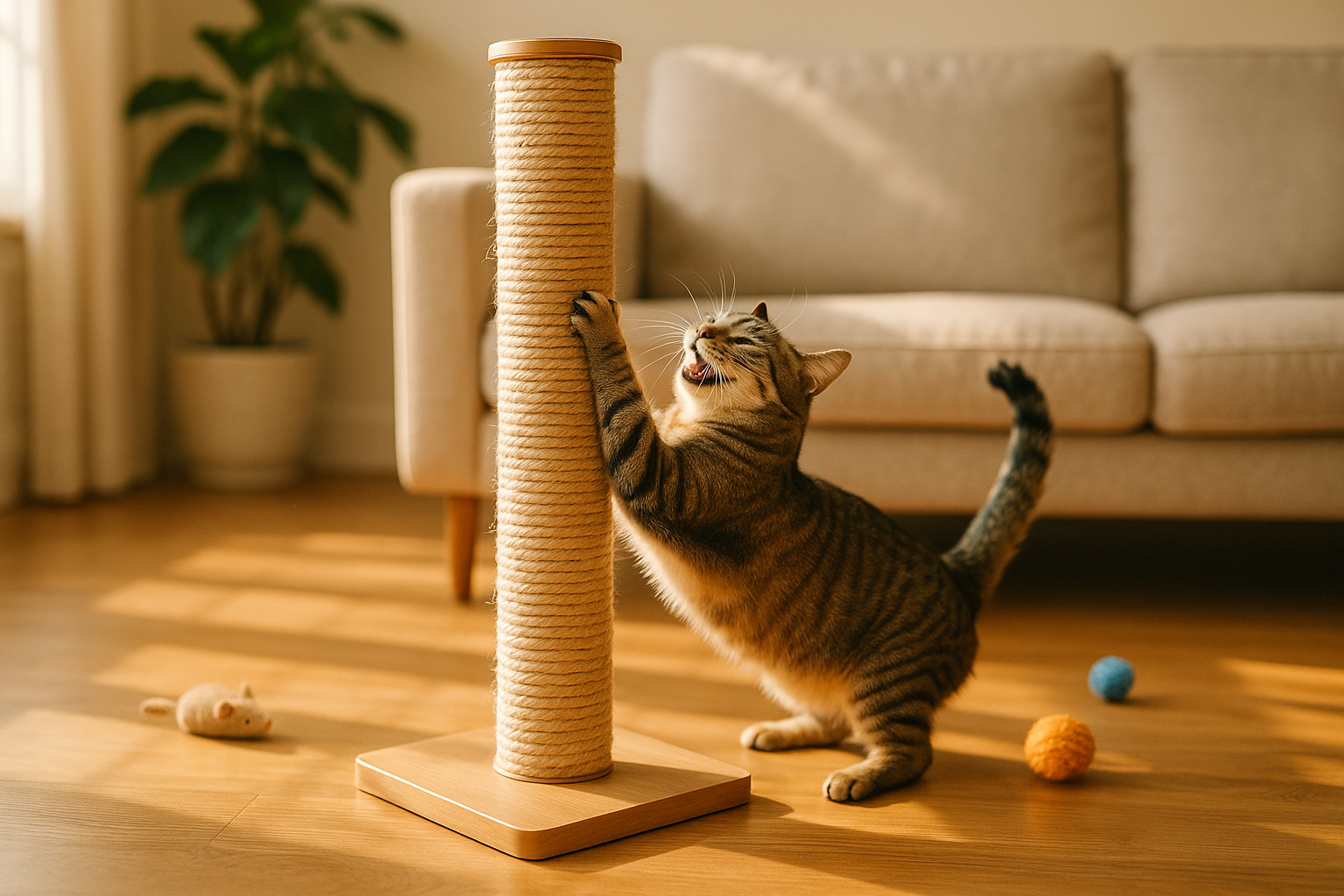
2. How tall should a scratching post be?
It should be tall enough for your cat to stretch fully. For most adult cats, at least 30 inches is a good starting point.
3. Why does your cat still scratch the couch?
Your cat may like the couch texture, location, or shape more than the current scratching post. Try placing a tall stable post right next to the couch and make the couch less tempting.
4. Are cardboard scratchers good enough?
Yes, for many cats they are excellent. They work especially well for horizontal scratchers, kittens, and older cats.
5. How many scratching posts does your cat need?
One may work in a small home, but many cats do better with two or more. If your cat scratches in several rooms, place scratchers in those areas.
6. Can kittens use scratching posts?
Yes, kittens should have scratching posts early. This helps them learn good habits before furniture scratching becomes a routine.
7. Should you trim your cat’s nails too?
Yes, regular nail trims can help reduce damage. Nail trimming does not replace a scratching post, but it can support better claw care.
8. What if your cat ignores a new scratching post?
Try catnip, toys, treats, and better placement. Also think about whether the post is tall enough, stable enough, and the right shape for your cat’s style.
9. Are cat trees better than regular scratching posts?
They can be, especially for active indoor cats. A cat tree gives climbing, resting, and scratching in one place. Still, some cats also need a separate floor scratcher.
10. How do you protect furniture while training your cat?
Use pet safe furniture tape, covers, and well placed scratching posts. Reward your cat for using the post and stay consistent every day.
Final thoughts on choosing the right scratching post
You do not need to choose between a happy cat and nice furniture. You can have both. The secret is giving your cat a scratching option that feels better than your couch.
The best scratching posts for indoor cats are tall, stable, and made from materials cats enjoy. They are also placed in the right spot and matched to your cat’s natural scratching style. If you pay attention to what your cat likes, you will have a much better chance of success.
Start simple. Put one good scratching post near the place your cat scratches most. Add a cardboard scratcher if needed. Praise every good choice your cat makes. With a little patience, your home can feel calmer, your furniture can stay safer, and your indoor cat can stay healthy and happy.