
Have you ever put your kitten in a carrier and then heard crying, scratching, or frantic little paws thumping against the sides?
If yes, you are not doing anything wrong. Many first time kitten owners go through this. A carrier can feel scary to a kitten because it is small, unfamiliar, and often linked with something stressful like a car ride or a vet visit. The good news is that you can learn how to train a kitten to stay calm in a carrier with simple steps, patience, and practice.
When your kitten feels calm in a carrier, life gets easier for both of you. Vet visits are less stressful. Travel feels safer. And you stop worrying every time you need to take your kitten somewhere. If you are feeling confused, tired, or stressed about carrier training, you are not alone. Your kitten is not being “bad.” Your kitten is just scared and needs help learning that the carrier is a safe place.
Why your kitten gets upset in a carrier
Before you start training, it helps to understand what your kitten may be feeling. Kittens do not automatically know that a carrier is safe. To them, it can seem like a trap.
Your kitten may cry or fight the carrier because:
- The carrier smells strange
- It only comes out before a vet trip
- The inside feels dark or closed in
- The car ride adds noise and movement
- Your kitten feels separated from you
- Past trips felt scary
This is important to remember because it changes how you train. You are not forcing your kitten to “behave.” You are helping your kitten build trust.
Signs your kitten is stressed in the carrier
You can train better when you notice stress early. Some signs are obvious, while others are small.
Watch for these signs:
- Crying or loud meowing
- Scratching at the door or walls
- Heavy breathing
- Drooling
- Trying to hide or run away when the carrier appears
- Ears pulled back
- Wide eyes
- Refusing treats
If you see these signs, slow down. Training works best when your kitten feels only a little nervous, not fully panicked.
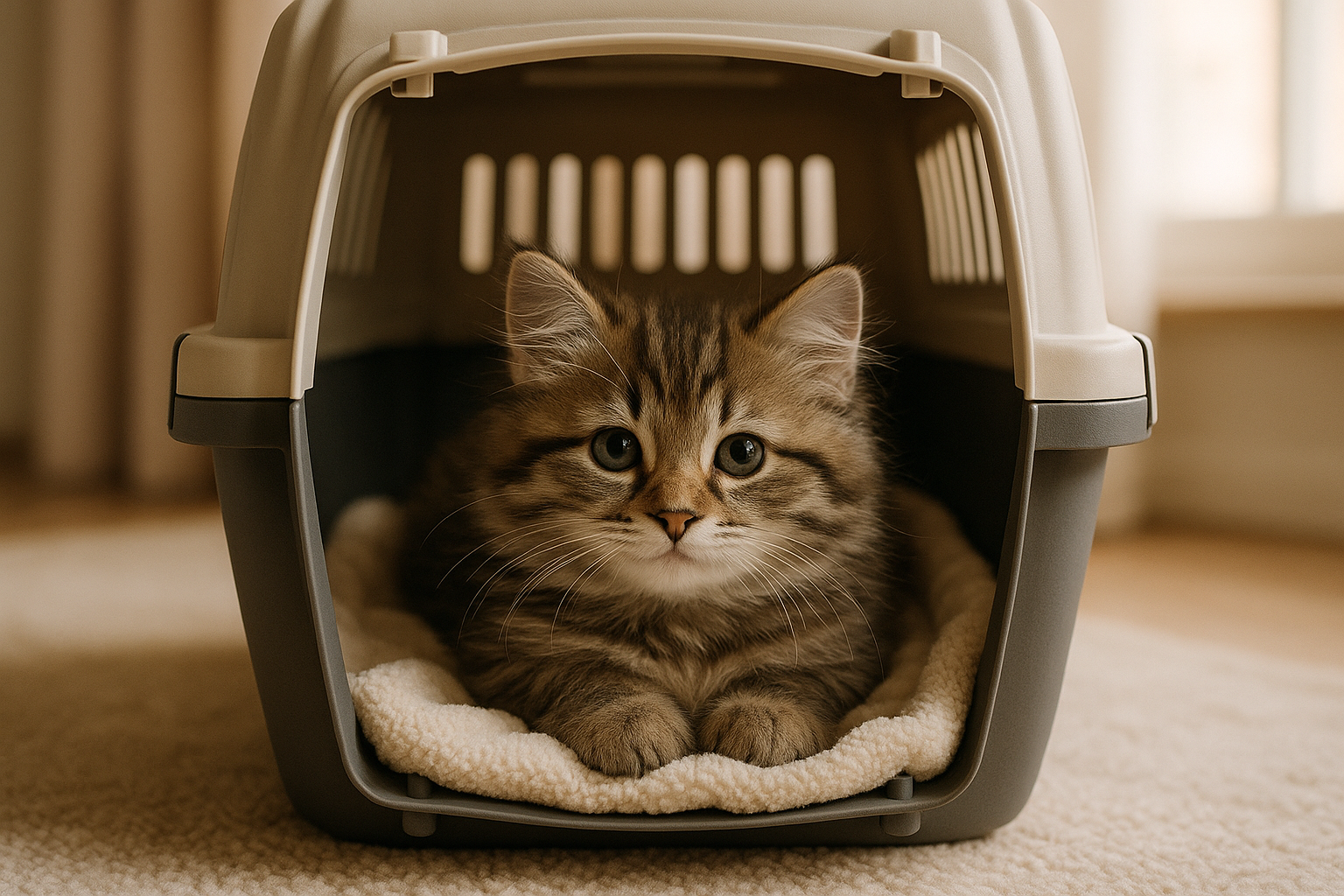
What you need before you start carrier training
You do not need fancy tools. A few simple things can make a big difference.
| Item | Why it helps |
|---|---|
| Hard or soft carrier | Gives your kitten a safe travel space |
| Soft blanket or towel | Adds comfort and familiar smell |
| Treats | Helps your kitten connect the carrier with good things |
| Favorite toy | Makes the space feel more normal |
| Pheromone spray for cats | Can help lower stress for some kittens |
| Calm voice and patience | The most important part of training |
Try to pick a carrier that is easy to open. A top opening carrier can be very helpful because it is less stressful when you need to place your kitten inside.
Choose the right carrier for your kitten
Not all carriers feel the same to a kitten. If the carrier is too small, too shaky, or hard to get in and out of, training can be tougher.
Look for a carrier that:
- Has enough room for your kitten to stand and turn around
- Feels sturdy and secure
- Has good airflow
- Opens easily
- Is simple to clean
A hard carrier is often a good choice for first time owners because it is stable and easy to wipe clean. A soft carrier can work too, but some kittens scratch and chew at soft sides more often.
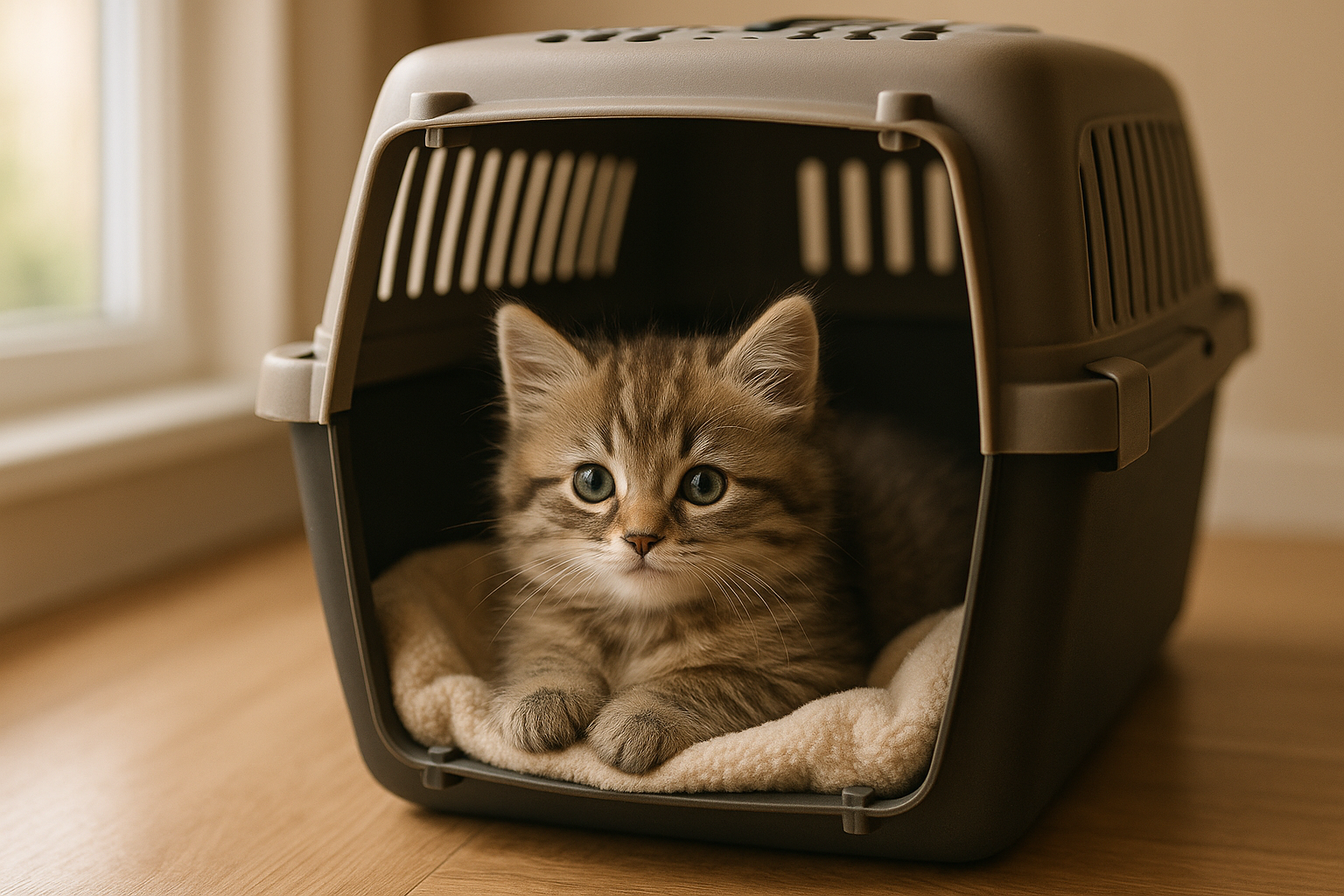
How to train a kitten to stay calm in a carrier step by step
This is the heart of the process. Go slowly. Some kittens learn in a few days. Others need a few weeks. That is normal.
Step 1: Leave the carrier out all the time
Do not hide the carrier in a closet and only bring it out on stressful days. That teaches your kitten that the carrier means something bad is about to happen.
Instead, place the carrier in a quiet part of your home and leave the door open. Let it become part of normal life. Your kitten should be able to sniff it, walk past it, and check it out without pressure.
This simple step is powerful. It takes away the “sudden scary object” feeling.
Step 2: Make the carrier soft and inviting
Put a blanket, small bed, or towel inside. If possible, use something with your kitten’s smell on it. Familiar scents help kittens feel safer.
You can also place a toy inside. Some kittens love crinkly toys, soft mice, or anything they already sleep beside.
The goal is to make the carrier feel like a cozy resting spot, not a cage.
Step 3: Let your kitten investigate on their own
Do not push your kitten inside. Do not shut the door right away. Let your kitten take the lead.
You can encourage curiosity by tossing a treat near the carrier, then just inside the doorway, then farther in. Keep it easy and low pressure.
If your kitten only sniffs the outside at first, that is still progress.
Step 4: Feed treats and meals near the carrier
Food builds positive feelings fast. Start by giving treats near the carrier. Then place treats at the entrance. Later, place them inside.
If your kitten is comfortable, you can also feed part of a meal inside the carrier with the door open. This helps your kitten think, “Good things happen here.”
Do not rush this step. A calm kitten learns better than a scared kitten.
Step 5: Reward calm behavior inside the carrier
When your kitten steps into the carrier, stay calm and praise softly. Offer a treat right away. If your kitten sits or lies down in the carrier, reward that too.
You are teaching your kitten that being inside the carrier leads to comfort and rewards.
Keep sessions short. One or two minutes is enough in the beginning.
Step 6: Practice closing the door for a few seconds
Once your kitten is happy going inside, gently close the door for just a few seconds. Then open it before your kitten gets upset.
This part matters a lot. If you wait until your kitten panics, the carrier will feel scary again.
Try this pattern:
- Kitten goes in
- Give a treat
- Close the door for 3 to 5 seconds
- Open the door
- Give another treat
Do this a few times over several days. Slowly increase the time.
Step 7: Lift the carrier briefly
After your kitten can stay calm with the door closed, pick up the carrier for a second or two, then set it down. Reward your kitten right away.
Later, carry your kitten around one room. Then another room. Keep the movement gentle.
This helps your kitten get used to the feeling of being transported without adding the stress of a car ride too soon.
Step 8: Practice short car training sessions
The car is often the hardest part. Even kittens that accept the carrier may still dislike the motion and sound of travel.
Start small:
- Place your kitten in the carrier
- Carry the carrier to the parked car
- Sit in the car for a minute
- Give treats if your kitten will take them
- Go back inside
Next, turn the engine on for a few seconds. Later, try a very short drive around the block.
Keep these first trips short and calm. Do not make the first real carrier training trip a long drive or a stressful appointment if you can avoid it.
Best tips to help your kitten stay calm in a carrier
Some little changes can make training easier.
Use familiar smells
Cats and kittens trust scent more than many people realize. Put in a blanket your kitten sleeps on. You can also rub a soft cloth on your kitten’s cheeks and place it in the carrier.
That familiar smell can lower fear.
Stay calm yourself
Your kitten notices your body language and voice. If you are rushed, worried, or frustrated, your kitten may feel that too.
Move slowly. Speak gently. Keep your hands soft and steady.
Cover the carrier with a light towel
Some kittens calm down when visual stimulation is reduced. A light towel over part of the carrier can help block scary sights and make the space feel den-like.
Make sure airflow stays good.
Train when your kitten is relaxed
Do not start carrier practice during zoomies or right after a stressful moment. Choose a quiet time, like after play or after eating.
A sleepy kitten often learns more easily than a wild, energetic one.
Keep sessions short
Five calm minutes is better than twenty stressful minutes. End on a good note whenever possible.
Common mistakes that make carrier training harder
Even loving kitten owners can accidentally make the carrier worse. Here are some things to avoid.
Only using the carrier for vet visits
This is one of the biggest mistakes. If every carrier trip ends with needles, strange smells, and nervous feelings, your kitten will quickly learn to fear it.
Use the carrier during normal life too.
Forcing your kitten inside
Shoving a kitten into the carrier creates panic. It may work in the moment, but it makes future training harder.
Use treats, toys, and gentle guidance instead.
Moving too fast
If your kitten is still scared to step inside, do not jump to car rides. Build one small success at a time.
Rewarding panic by ending too late
You do want to stop if your kitten is overwhelmed. But in training, try to end before panic begins. That helps your kitten remember a calmer experience.
What to do if your kitten cries in the carrier
Crying is common, especially at first. It does not always mean something is wrong. Your kitten may be calling for comfort.
Here is what you can do:
- Check that the carrier is not too hot or uncomfortable
- Speak softly
- Avoid opening the carrier during a moving car unless it is an emergency
- Keep practicing with short sessions at home
- Use a familiar blanket
- Ask your vet for advice if the fear seems extreme
Do not punish crying. Your kitten is scared, not naughty.
How long does carrier training take?
Every kitten is different. Some kittens adjust in a few days. Some take two to four weeks. A shy kitten may need even longer.
The most important thing is consistency. Small daily practice sessions usually work better than one big session once a week.
If your kitten shows even tiny signs of progress, that counts. Maybe today your kitten only sniffs the carrier. Tomorrow your kitten puts one paw inside. That is how trust grows.
When to ask your vet for help
Sometimes fear is stronger than normal nervousness. Talk to your vet if your kitten:
- Panics every time the carrier appears
- Drools heavily or vomits during travel
- Hurts themselves trying to escape
- Refuses all food and treats near the carrier
- Seems sick or in pain during travel
Your vet may suggest extra training tips, calming products, or other support.
FAQ
1. At what age should you start carrier training a kitten?
You can start as soon as your kitten comes home. Young kittens often learn faster because everything is new already. Short, gentle practice works best.
2. How do you get your kitten into a carrier without a fight?
Use treats, toys, and patience. Leave the carrier open, make it cozy, and reward your kitten for going inside on their own. If you rush or force, your kitten may resist more next time.
3. Why does your kitten cry in the carrier?
Your kitten may feel scared, trapped, confused, or overstimulated. The carrier may also be linked with stressful trips. Crying is a normal fear response for many kittens.
4. Is it okay to put toys in the carrier?
Yes, if they are safe and familiar. A small soft toy can help your kitten feel more secure. Do not overcrowd the space.
5. Should you cover the carrier with a blanket?
Sometimes yes. Many kittens feel calmer when the carrier is partly covered because it blocks scary sights. Just make sure air can still flow well.
6. How long should carrier training sessions be?
Keep them short, especially at first. A few minutes is enough. You want calm practice, not long stressful sessions.
7. Can you feed your kitten in the carrier?
Yes. Feeding treats or even meals in the carrier with the door open is a great way to build positive feelings. It teaches your kitten that the carrier is a safe place.
8. What if your kitten hates the carrier no matter what?
Slow down and go back to easier steps. Some kittens need more time. If fear stays very strong, ask your vet for help. There may be ways to reduce stress further.
9. Is a hard carrier or soft carrier better for kittens?
Both can work, but a hard carrier is often easier for training and cleaning. It also feels steadier to many kittens. The best carrier is one that is secure, roomy enough, and easy to open.
10. How do you keep your kitten calm during a car ride?
Practice first in a parked car, then on very short drives. Use a familiar blanket, keep the carrier steady, speak softly, and avoid loud music or sudden movement.
Conclusion
If you want to know how to train a kitten to stay calm in a carrier, the biggest secret is this: go slow and make the carrier part of everyday life. Your kitten is not trying to make things hard for you. Your kitten is just learning what is safe.
Start with a cozy open carrier in your home. Add treats, soft bedding, and short calm practice. Then slowly build up to closing the door, carrying the carrier, and taking short car rides. Little steps really do work.
You do not need to be perfect. You just need to be patient and kind. Over time, your kitten can learn that the carrier is not something to fear. And when that happens, both of you will feel much calmer every time you need to travel.