
Does your cat look you right in the eye, lift a paw, and push your things off the table like it is a game?
If that keeps happening in your home, you are not alone. Many cat owners feel confused, annoyed, and even a little helpless when they see their cat knock cups, pens, glasses, remotes, or decorations onto the floor. It can feel like your cat is being naughty on purpose. But most of the time, that is not what is really going on.
If you want to know how to stop cat knocking things off table, the first step is understanding why your cat does it. Cats are smart, curious, playful, and sometimes bored. They also learn very fast. If knocking something down gets your attention, your cat may keep doing it again and again.
The good news is that you can change this behavior. You do not need to yell, scare, or punish your cat. In fact, punishment often makes things worse. What helps most is making the table less interesting, giving your cat better choices, and rewarding the behavior you want.
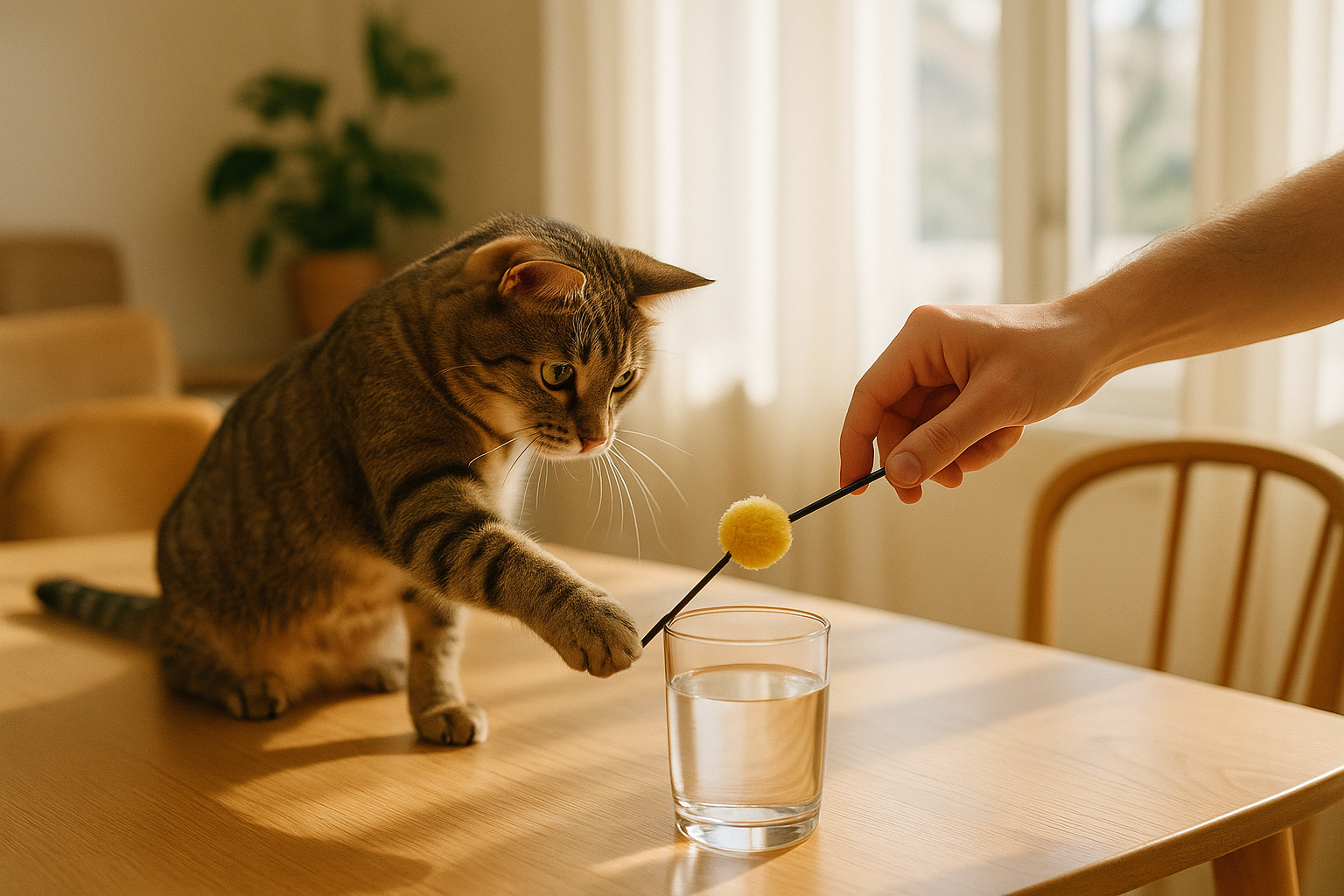
Why your cat knocks things off the table
This behavior may look silly or mean, but it usually has a reason behind it. Your cat is not trying to ruin your day. Your cat is acting like a cat.
Your cat is curious
Cats love to test things with their paws. A table full of small objects is like a puzzle. Your cat sees something new, taps it, and watches what happens. If it moves, falls, rolls, or makes a sound, that is exciting.
To your cat, this can feel like a fun science project.
Your cat is bored
A bored cat will often make its own entertainment. If your cat does not have enough playtime, climbing space, toys, or mental activity, the table may become the most interesting thing in the room.
This is very common in indoor cats, especially young cats and kittens.
Your cat wants attention
Sometimes your cat learns that pushing things off the table makes you react fast. You may shout, run over, or talk to your cat. Even negative attention can still feel rewarding to a cat.
If your cat feels ignored, this behavior can become a reliable way to get you to notice.
Your cat likes the movement
Things falling off tables move in fun and unpredictable ways. Pens roll. Keys clatter. Paper flutters. Cats are hunters by nature, so moving objects wake up their instinct to chase and bat.
Your cat is claiming space
Cats often like high places. Tables, counters, and shelves give them a better view of their home. Once your cat jumps up there, the objects on the surface may simply get in the way.
Some cats knock things down while they are walking around, sniffing, or making room to sit.
Your cat has too much energy
If your cat has bursts of energy and no good place to use it, the table may become a playground. This is especially true in the early morning, late evening, or during zoomies.
Why punishment does not work
It is tempting to clap, yell, spray water, or chase your cat away. But this usually does not solve the problem for long.
Punishment can do a few harmful things:
- It can make your cat scared of you
- It can increase stress
- It can make sneaky behavior worse
- It does not teach your cat what to do instead
Your cat may stop for a moment, but the reason behind the behavior is still there. A better plan is to prevent the habit, meet your cat’s needs, and reward better choices.
How to stop cat knocking things off table
You can lower this behavior a lot by using a few simple steps together. One trick alone may not fix it, but a full plan often works very well.
Clear the table as much as you can
This is the easiest first step. If the table is full of tempting objects, your cat has a built-in game. If the table is mostly empty, the game becomes boring.
Try removing:
- Pens
- Coins
- Hair ties
- Paper clips
- Decorations
- Cords
- Glasses
- Cups
- Small boxes
Keep breakable items safely out of reach. This does not mean your cat has won. It just means you are removing the reward while you teach better habits.
Give your cat a better place to climb
Cats often want height, not your table itself. If your cat likes being above the floor, give a better option nearby.
Good choices include:
- A cat tree
- A window perch
- Wall shelves made for cats
- A sturdy chair with a blanket
- A resting spot near where you sit
If your cat has a safe, comfy high place, the table may become less appealing.
Make the good spot more attractive
Do not just buy a cat tree and hope for the best. Help your cat love it.
You can make it more attractive by adding:
- A soft blanket
- Catnip
- Treats
- Toys
- Praise
- A view from the window
When your cat chooses that spot, reward it right away. That helps your cat learn, “This is where good things happen.”
Play with your cat every day
Many behavior problems improve when a cat gets more playtime. If your cat knocks things off the table from boredom or energy, daily play can make a big difference.
Try short play sessions 2 to 3 times a day, about 10 to 15 minutes each.
Use toys that mimic prey, such as:
- Wand toys
- Feather toys
- Toy mice
- Crinkle balls
- Small chase toys
Let your cat stalk, chase, pounce, and catch. End play with a small treat or meal if possible. This helps your cat feel satisfied.
Do not reward the behavior with big reactions
If your cat pushes something and you instantly rush over, speak loudly, or stare, your cat may see that as a success.
Try to stay calm. Quietly remove your cat from the table if needed, or redirect your cat to a better activity. Then give attention when your cat is doing something you like.
This is a big part of learning how to stop cat knocking things off table. You want to stop feeding the habit with attention.
Teach an off cue
You can teach your cat a simple cue like “off.” This takes patience, but it works better than scolding.
How to teach it
- Wait until your cat is on a low surface you can manage safely.
- Hold a treat near your cat’s nose.
- Move the treat down toward the floor or a stool.
- When your cat steps down, say “off.”
- Give the treat right away.
- Repeat often.
Soon your cat will connect the word with getting down. Then you can use the cue more easily in real life.
Reward calm behavior
Cats repeat what works. If your cat sits nicely nearby, rests on the cat tree, or ignores the table, reward that.
Rewards can include:
- A treat
- Gentle petting
- Praise
- A play session
- Attention
This helps your cat learn what you do want, not just what you do not want.
Use food puzzles and enrichment
If your cat is smart and active, mental exercise matters too. Food puzzles, treat balls, and hide-and-seek feeding games can keep your cat busy in a healthy way.
You can also rotate toys every few days so they feel new again.
Simple enrichment ideas
- Put treats inside a puzzle toy
- Hide kibble in safe spots around one room
- Place a bird feeder outside a window for cat watching
- Offer cardboard boxes
- Use paper bags with handles removed
- Give climbing and scratching choices
A busy cat often causes less trouble.
Block access during problem times
If your cat always knocks things off the table early in the morning or during dinner, try managing the environment during those times.
You can:
- Close the room
- Use baby gates if helpful
- Feed your cat before your meal
- Set up a perch near the family table
- Give a puzzle feeder while you eat
Management is not cheating. It is a smart way to stop the habit from growing.
Check for stress or changes at home
Cats may act out more when they are stressed. If this behavior started suddenly, think about what changed.
Possible stress triggers include:
- A new pet
- A new baby
- Moving house
- Visitors
- Loud noises
- Changes in routine
- Not enough litter boxes
- Conflict with another cat
A stressed cat may seek control, stimulation, or attention in odd ways. Fixing the stress can reduce the behavior.
Make sure your cat is healthy
Sometimes behavior changes can have a medical side. If your cat suddenly becomes more restless, clingy, demanding, or destructive, a vet visit is a good idea.
Pain, aging, vision changes, thyroid issues, or other health problems can affect behavior.
If this habit is new, intense, or paired with other changes, do not ignore that.
What works best for different causes
Here is a simple guide to help you match the cause with the best fix.
| Possible reason | What it looks like | What helps most |
|---|---|---|
| Boredom | Your cat does it often when alone | More play, toys, puzzle feeders |
| Attention seeking | Your cat does it when you are busy | Ignore drama, reward calm behavior |
| Curiosity | Your cat taps new objects | Clear surfaces, offer toy alternatives |
| Need for height | Your cat loves tables and counters | Cat tree, shelves, window perch |
| Too much energy | Your cat seems wild at certain times | Daily play routine, feeding after play |
| Stress | Behavior started after a change | Reduce stress, improve routine, vet check |
Common mistakes that keep the behavior going
Sometimes loving cat owners accidentally train the habit without knowing it.
Leaving tempting items out
Small shiny objects are hard for cats to resist. If you keep putting them on the table, your cat gets more chances to practice.
Giving attention at the wrong time
If your cat knocks over a pen and you react every single time, your cat may think, “Great, that worked.”
Not giving enough playtime
A cat with no outlet will make one. Often, that outlet is your stuff.
Being inconsistent
If one day you allow the table and the next day you get upset, your cat gets mixed messages. Try to be steady with your rules.
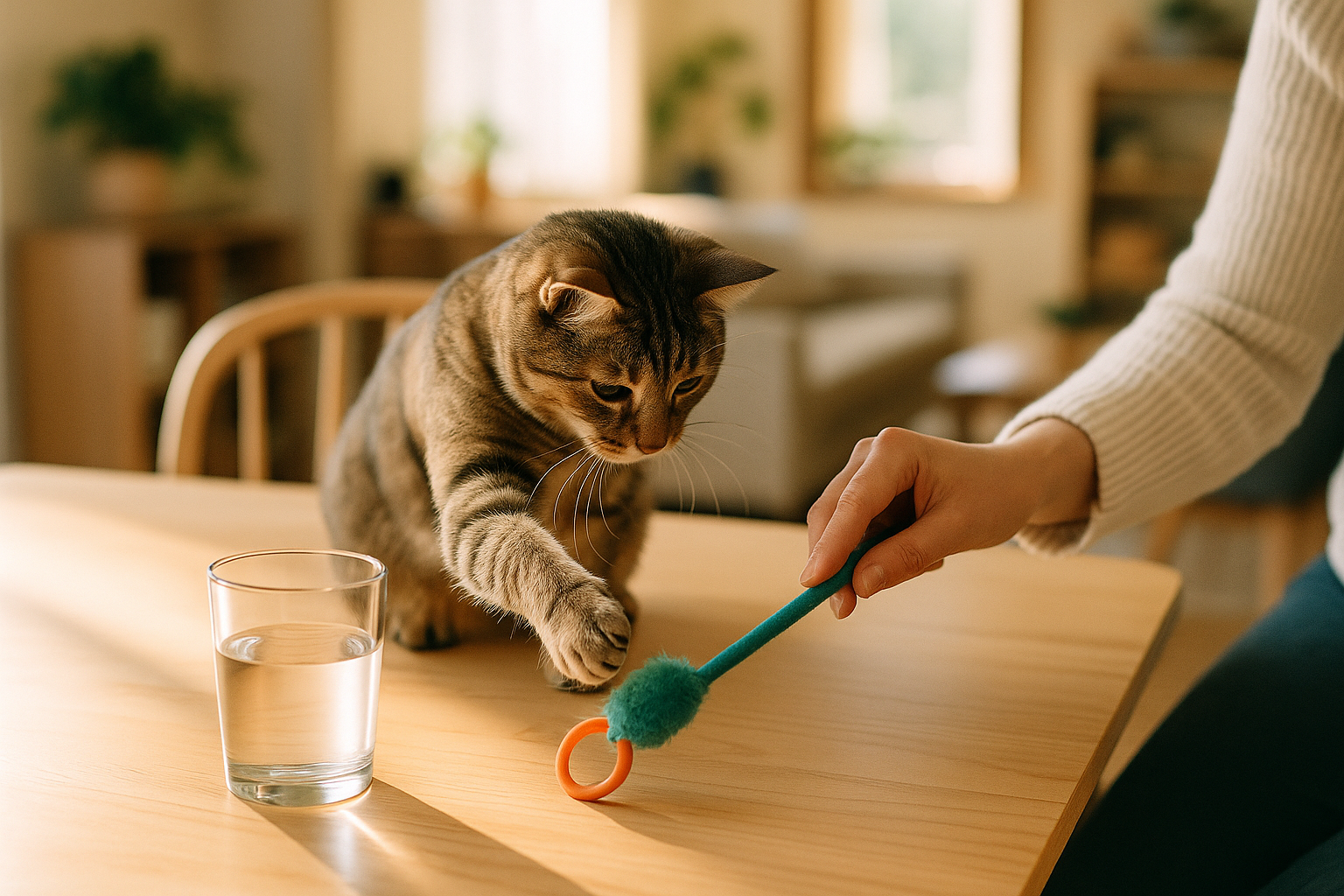
When kittens do this
Kittens are even more likely to knock things off tables. They are learning how the world works, and everything feels like a toy.
If you have a kitten, focus on:
- Safe play every day
- Lots of toys
- Short training sessions
- Redirecting, not punishing
- Keeping surfaces clear
Most kittens improve with maturity, but good habits still need to be taught early.
FAQ
1. Why does your cat knock things off the table while looking at you?
Your cat may be seeking attention. If your cat has learned that this gets a fast reaction from you, eye contact may be part of the pattern. Your cat is checking if you are watching.
2. Is your cat being spiteful?
No, cats do not usually act out of spite the way people imagine. Your cat is more likely curious, bored, playful, stressed, or attention seeking.
3. Should you spray your cat with water?
It is better not to. Spray bottles may scare your cat, hurt trust, and fail to solve the real reason behind the behavior.
4. How long does it take to stop this habit?
It depends on your cat and the cause. Some cats improve in a few days with better play and fewer objects on the table. Others need a few weeks of steady training.
5. Do cats grow out of knocking things over?
Some do calm down with age, especially kittens. But many cats keep doing it if it stays rewarding. Teaching better habits matters.
6. What if your cat only does it at night?
Your cat may have extra energy at night or want attention. Try an evening play session, followed by food, and remove tempting items before bed.
7. Can boredom really cause this much trouble?
Yes. Boredom is a huge reason for problem behavior in cats. A smart cat with nothing to do will often invent games that you do not enjoy.
8. Will a cat tree really help?
For many cats, yes. If your cat wants height and a good view, a cat tree or perch can make a big difference, especially if you reward your cat for using it.
9. What if your cat ignores toys?
Not every cat likes the same kind of toy. Try different textures, sounds, and movements. Many cats prefer wand toys because they move like prey.
10. When should you call a vet or cat behavior expert?
If the behavior starts suddenly, gets intense, comes with other changes, or does not improve after consistent effort, ask a vet or qualified cat behavior expert for help.
Conclusion
If you are tired of hearing things crash onto the floor, you are not a bad cat owner, and your cat is not a bad cat. This is a common problem, and it usually happens because your cat is curious, bored, energetic, stressed, or trying to get your attention.
The best answer to how to stop cat knocking things off table is not punishment. It is understanding, setup, and training. Clear the table, give your cat better places to climb, add more play and enrichment, and reward the behavior you want to see.
Be patient with yourself too. Cat behavior can feel confusing when you are living in the middle of it. But once you understand the reason behind the mess, the solution gets much easier. Small changes, done every day, can turn your home from crash zone to calm space. And that is better for both you and your cat.