
Have you ever looked at your indoor cat racing through the house at midnight and wondered if they are bored all day?
If you have, you are not alone. Many cat owners ask how much playtime does an indoor cat need, especially when their cat starts biting, crying, scratching furniture, or acting wild at night. When your cat lives indoors, you are their whole world. You are not just giving food and a cozy bed. You are also helping your cat burn energy, use their hunting instincts, and stay calm and happy.
The good news is that indoor cats do not need constant entertainment all day. But they do need regular, active play that fits their age, energy level, and personality. A few short play sessions each day can make a huge difference. It can help with behavior problems, stress, weight gain, and even sleep.
In this guide, you will learn how much playtime your indoor cat needs, how to tell if it is not enough, and simple ways to make daily play easier for both of you.
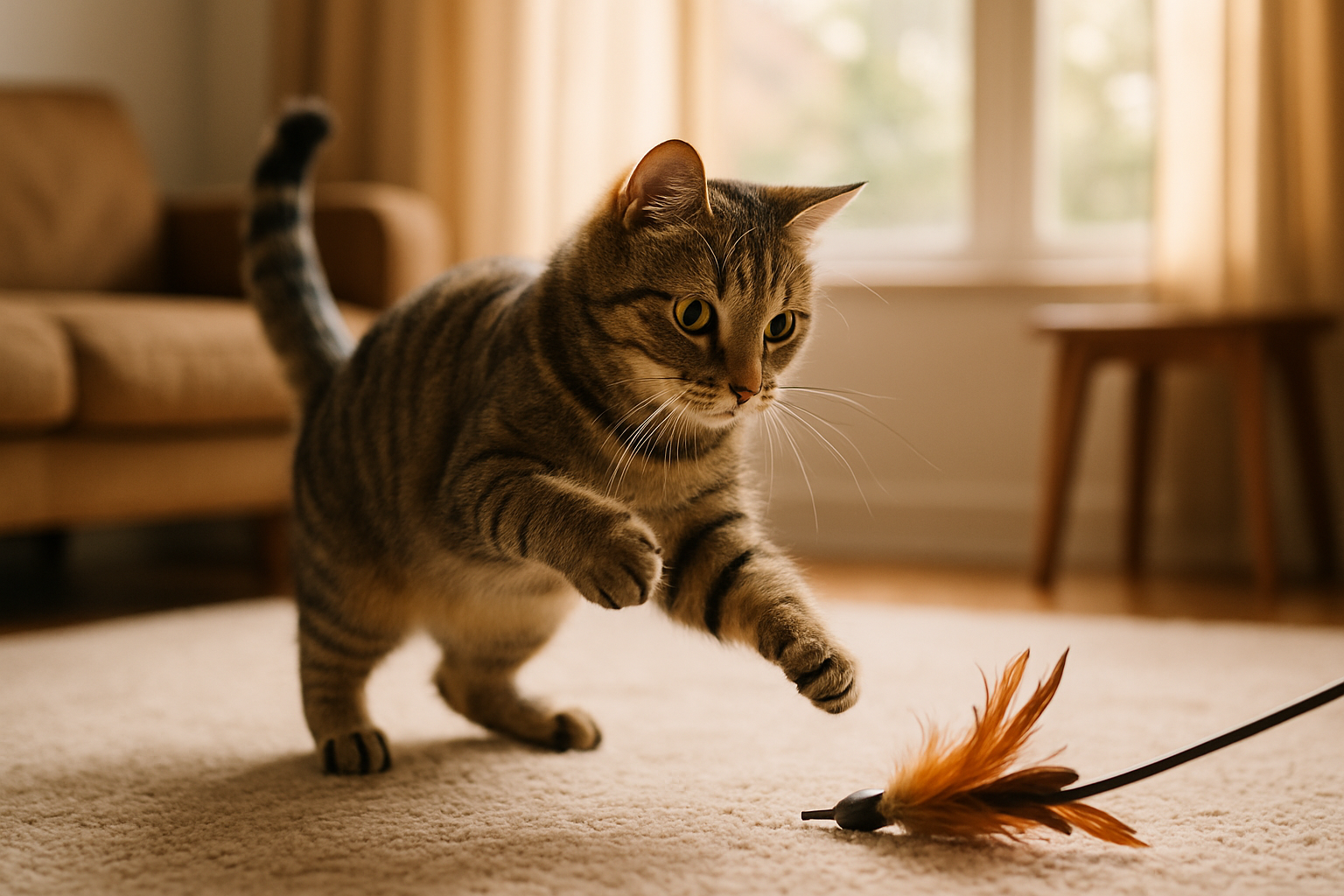
Why playtime matters for an indoor cat
Your indoor cat may look relaxed while napping in a sunny spot, but cats are natural hunters. Even the sweetest house cat has a strong need to chase, pounce, stalk, and catch. In the wild, cats use these skills every day. Indoors, they still need a healthy way to use that energy.
When your cat does not get enough play, that energy often comes out in ways you do not like. Your cat may scratch the couch, bite your hands, cry at night, attack your ankles, or zoom around the house. These are not signs that your cat is bad. They are often signs that your cat needs more activity and mental stimulation.
Play helps your cat in many ways:
- Burns off extra energy
- Supports a healthy weight
- Reduces boredom
- Helps prevent behavior problems
- Builds confidence
- Strengthens your bond with your cat
- Gives your cat a safe way to practice hunting behavior
For kittens, play is even more important. It teaches them how to move their body, control their bite, and interact with the world around them.
So, how much playtime does an indoor cat need?
A good goal for most indoor cats is 20 to 60 minutes of play each day, broken into short sessions. Most cats do better with 2 to 4 play sessions a day, not one long session.
That is because cats naturally like short bursts of activity. They often stalk, chase, catch, then rest. So a 10 to 15 minute play session can be more useful than one long hour of trying to keep your cat busy.
Here is a simple guide:
| Cat age or type | Daily playtime goal | Best session length |
|---|---|---|
| Young kitten | 30 to 90 minutes | 10 to 15 minutes |
| Older kitten | 30 to 60 minutes | 10 to 20 minutes |
| Adult indoor cat | 20 to 45 minutes | 10 to 15 minutes |
| Very active adult cat | 40 to 60 minutes | 10 to 20 minutes |
| Senior cat | 10 to 30 minutes | 5 to 10 minutes |
These numbers are guides, not strict rules. Some cats are full of energy and want lots of action. Others are calmer and enjoy shorter sessions.
How to tell if your cat needs more playtime
Your cat may not be able to say, “I am bored,” but their behavior often tells you clearly.
Common signs of not enough play
If your cat is not getting enough daily activity, you may notice:
- Nighttime zoomies
- Crying or meowing for attention
- Biting hands or feet
- Pouncing on you when you walk by
- Scratching furniture more than usual
- Chasing other pets
- Restless behavior
- Weight gain
- Overgrooming from stress
- Knocking things off shelves often
Some of these behaviors can also happen for medical reasons, so it is always smart to talk to your vet if something changes suddenly. But in many indoor cats, extra play helps a lot.
Signs your cat is getting enough exercise and stimulation
You will often see a happier rhythm in your cat when play needs are being met:
- More relaxed naps
- Less biting and ambushing
- Better sleep at night
- More interest in toys
- A healthy appetite
- A calmer mood after play
- Less destructive scratching
A cat that gets enough play is not lazy. They are more balanced.
Kittens need more play than adult cats
If you have a kitten, you may feel shocked by how much energy such a tiny body can hold. Kittens often seem to charge up again right after a nap.
That is normal. Kittens are learning how to hunt, jump, balance, and interact. They need more play than adult cats, and they need it often. If your kitten bites, attacks toes under blankets, or cries for attention, extra play may help.
A simple kitten play plan
Try this:
- Morning play before breakfast
- A short session around midday
- Play in the evening
- A final play session before bedtime
This routine can help your kitten sleep better at night and bother you less while you are trying to rest.
Adult cats still need daily play
Some people think adult cats can entertain themselves. While some cats do fine alone for parts of the day, most indoor cats still need active play with you.
Window watching, climbing a cat tree, or batting a toy mouse around is helpful, but it may not fully replace interactive play. Toys that move because you control them often work best because they wake up your cat’s hunting instincts.
If your adult cat seems moody, lazy, or naughty, regular play can be one of the best changes you make.
Senior cats need gentle play too
Older cats may sleep more and move more slowly, but that does not mean they should stop playing. Gentle play helps senior cats stay mobile, mentally sharp, and less bored.
You may just need shorter sessions and softer movements. A feather wand dragged slowly across a rug or a lightweight toy rolled nearby can be enough.
If your senior cat seems stiff or sore, ask your vet for advice. Sometimes pain keeps older cats from playing, and simple treatment can help them enjoy activity again.
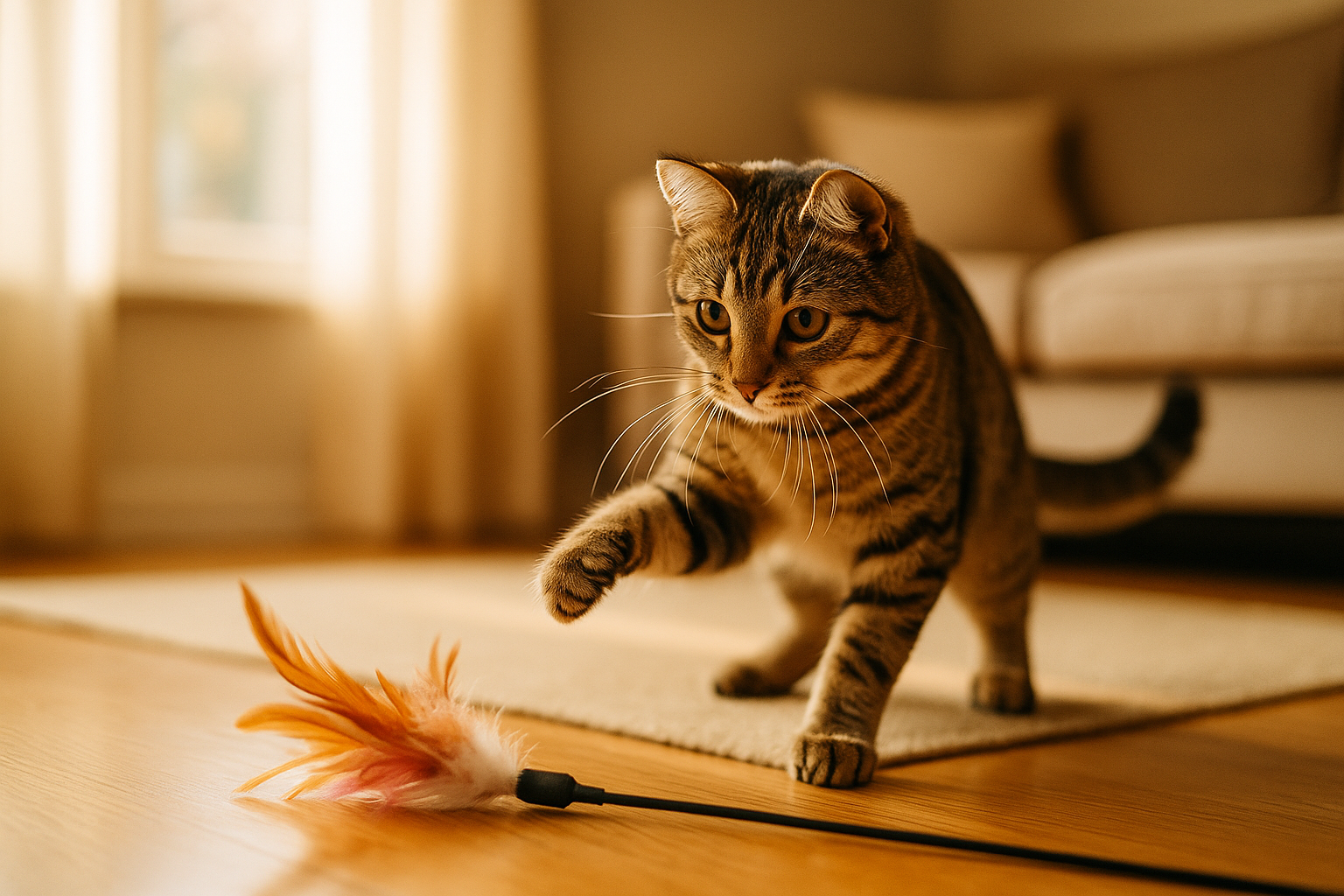
The best types of play for indoor cats
Not all toys work the same way. The best play usually copies real hunting.
Interactive play is the most important
Interactive toys let you move the toy and make it act like prey. This type of play often gives the best results.
Good choices include:
- Wand toys
- Feather teasers
- String toys used with supervision
- Small toy mice you toss
- Crinkle toys
- Soft balls
- Battery toys used in short sessions
Move the toy like a bug, bird, or mouse. Let it hide, dart, stop, and run again. Your cat will usually enjoy the game more if it feels real.
Independent toys are helpful too
These toys can keep your cat busy when you are not free:
- Puzzle feeders
- Track ball toys
- Cat tunnels
- Kick toys
- Catnip toys
- Scratching posts
- Window perches
These should support play, not replace all human interaction.
How to make play more effective
You do not need to wear your cat out with chaos. A smart play session often works better than a random one.
Follow the hunt pattern
Cats enjoy a pattern like this:
- Stalk
- Chase
- Pounce
- Catch
- Eat
- Rest
Try to end play with a small treat or meal. This can help your cat feel satisfied and calm. It is especially useful before bedtime.
Keep sessions short and focused
Most cats lose interest if play goes on too long. Ten good minutes can be plenty. Watch your cat’s body language. If they are engaged, keep going a little longer. If they walk away, stop and try again later.
Rotate toys
Cats often get bored if the same toys are always out. Put some away and switch them every few days. This makes old toys feel new again.
Use your home as part of the game
You can make play richer by using what you already have:
- Drag a toy around corners
- Toss toys up a cat tree
- Hide treats in safe spots
- Let your cat chase a toy through a tunnel
- Create climbing spaces
This gives your cat both exercise and mental work.
Best times of day to play with your cat
Cats are often most active in the early morning and evening. These are great times for short, active play sessions.
If your cat wakes you up at dawn or runs wild at night, try this:
Morning routine
Play with your cat for 10 to 15 minutes, then offer breakfast. This can help your cat settle instead of begging or crying.
Evening routine
Play before dinner or before your own bedtime. A strong play session followed by food can reduce nighttime energy and help everyone sleep better.
Common indoor cat problems that play can help
Many daily struggles get better when your cat has a better play routine.
Biting and ankle attacks
if your cat bites your hands or jumps on your feet, they may be trying to play the wrong way. Use toys instead of hands during play. This teaches your cat what is okay to chase.
Crying and attention seeking
A bored cat may cry simply because they need activity. More play, especially at the same times each day, can reduce this.
Scratching furniture
cats scratch for many reasons, but boredom can make it worse. Pair daily play with good scratching posts near favorite furniture spots.
Weight gain
Indoor cats can gain weight easily. Regular play helps burn calories and keeps your cat moving.
Stress and bad habits
A cat with no outlet may lick too much, act grumpy, or bother other pets. Play is a healthy way to lower stress.
A simple daily play schedule you can try
If you feel confused, start with something easy. You do not need a perfect routine. You just need a doable one.
| Time | Activity | Length |
|---|---|---|
| Morning | Wand toy chase before breakfast | 10 minutes |
| Afternoon | Puzzle toy or ball track | 10 minutes |
| Evening | Active chase and pounce game | 15 minutes |
| Before bed | Gentle play and small treat | 5 to 10 minutes |
That is enough for many adult indoor cats. Kittens may need more short sessions.
FAQ: How much playtime does an indoor cat need?
1. Is 10 minutes of play enough for an indoor cat?
Sometimes, but usually not for the whole day. Ten minutes can be a great session, but most indoor cats need more than one session daily.
2. Do kittens need more play than adult cats?
Yes. Kittens usually need much more play because they are growing, learning, and full of energy.
3. Can indoor cats get enough exercise without play?
Usually no. Climbing and walking around help, but most indoor cats still need active play to stay mentally and physically healthy.
4. Why does your cat act crazy at night?
Your cat may have built-up energy from the day. Evening play followed by food often helps reduce nighttime zoomies.
5. What if your cat gets bored with toys quickly?
Rotate toys every few days and use interactive toys that move in different ways. Many cats lose interest when toys stay the same.
6. Should you let your cat play alone with string toys?
No. String-like toys can be dangerous if swallowed. Use them only when you are watching.
7. Is laser play okay for cats?
It can be fun, but always finish by letting your cat catch a real toy or get a treat. Cats need that feeling of success.
8. How do you play with a lazy indoor cat?
Start small. Try 5 minute sessions, use toys that match prey movement, and test different textures and sounds. Some cats need time to learn to play again.
9. Can too much play overstimulate your cat?
Yes, especially kittens or sensitive cats. If your cat starts swishing their tail hard, biting, or getting too rough, end the session calmly.
10. What is the best toy for indoor cats?
There is no single best toy for every cat, but wand toys are often one of the most effective because they copy hunting behavior well.
Conclusion
So, how much playtime does an indoor cat need? For most indoor cats, 20 to 60 minutes a day, split into short sessions, is a smart goal. Kittens usually need more. Senior cats usually need less, but they still benefit from gentle activity.
If your cat is biting, crying, scratching furniture, or running wild at night, do not assume they are just being difficult. They may be asking for more movement, more stimulation, and more connection with you.
Start small. Try two short play sessions a day. Watch what your cat enjoys. Keep it simple, stay consistent, and do not worry about being perfect. When you give your cat a healthy way to use their energy, you often get the thing you want most too, a calmer, happier cat and a more peaceful home.