
Why is your cat scratching the walls when you gave them toys, a bed, and maybe even a scratching post too?
If you feel confused, annoyed, or worried, you are not alone. Wall scratching is one of those cat habits that can make you feel like you are doing something wrong. You fix one spot, and your cat picks another. You tell them no, and they do it again five minutes later. It can feel endless.
The good news is this: your cat is not trying to be naughty. In most cases, your cat is doing something normal, but in the wrong place. Once you understand how to stop cat scratching walls, the problem gets much easier to handle.
This guide will help you understand why your cat scratches walls, what mistakes make it worse, and what simple steps can help your cat scratch the right things instead.
Why your cat scratches walls
Scratching is a normal cat behavior. Your cat is not doing it to upset you. Scratching helps your cat in several important ways.
Your cat is caring for their claws
When your cat scratches, they remove old layers from their claws. This helps keep their claws healthy and sharp. It is like a little claw care routine built into their day.
If your cat does not have a good place to do this, the wall may become the next best thing.
Your cat is stretching their body
Scratching is also a full body stretch. Your cat reaches forward, pulls down, and stretches their legs, shoulders, and back. It feels good to them.
That is why many cats scratch after a nap. They wake up, stretch, and scratch.
Your cat is marking territory
Cats have scent glands in their paws. When they scratch, they leave both a mark you can see and a scent you cannot. This tells the world, “This spot is mine.”
If your cat scratches near doors, windows, or busy parts of your home, they may be marking an area that feels important.
Your cat feels bored, stressed, or overstimulated
Sometimes wall scratching happens more when a cat has too much energy or feels nervous. A bored cat may make their own fun. A stressed cat may scratch to calm themselves.
Changes in the home can trigger this, such as:
- A new pet
- A new baby
- Moving house
- Loud outdoor cats near the window
- Less playtime than usual
Your cat likes the texture
This part surprises many cat owners. Your cat may simply love how the wall feels under their claws. Some painted walls, wallpaper, corners, and rough surfaces are very satisfying to scratch.
If your scratching post feels flimsy, too soft, too short, or placed in the wrong spot, your cat may choose the wall instead.
How to tell what kind of scratching problem you have
Before you fix the behavior, it helps to look at the pattern. This can show you what your cat is trying to tell you.
Watch where your cat scratches
Ask yourself:
- Is it one wall or many?
- Is it near a sleeping spot?
- Is it near a window or door?
- Is it in a busy family area?
- Is it near their food, litter box, or favorite path?
This gives you clues. A wall near a bed may mean stretch scratching. A wall near a window may mean territory stress.
Notice when your cat scratches
Try to see if it happens:
- After waking up
- During zoomies
- When left alone
- When another cat is outside
- At night
- When you are busy and not paying attention
Timing matters. It can show you if your cat needs more play, more comfort, or a better scratching setup.
How to stop cat scratching walls
You usually cannot stop scratching completely, because scratching is natural. What you can do is teach your cat where to scratch instead.
The goal is simple: make the wall less appealing and the right scratching spots much better.
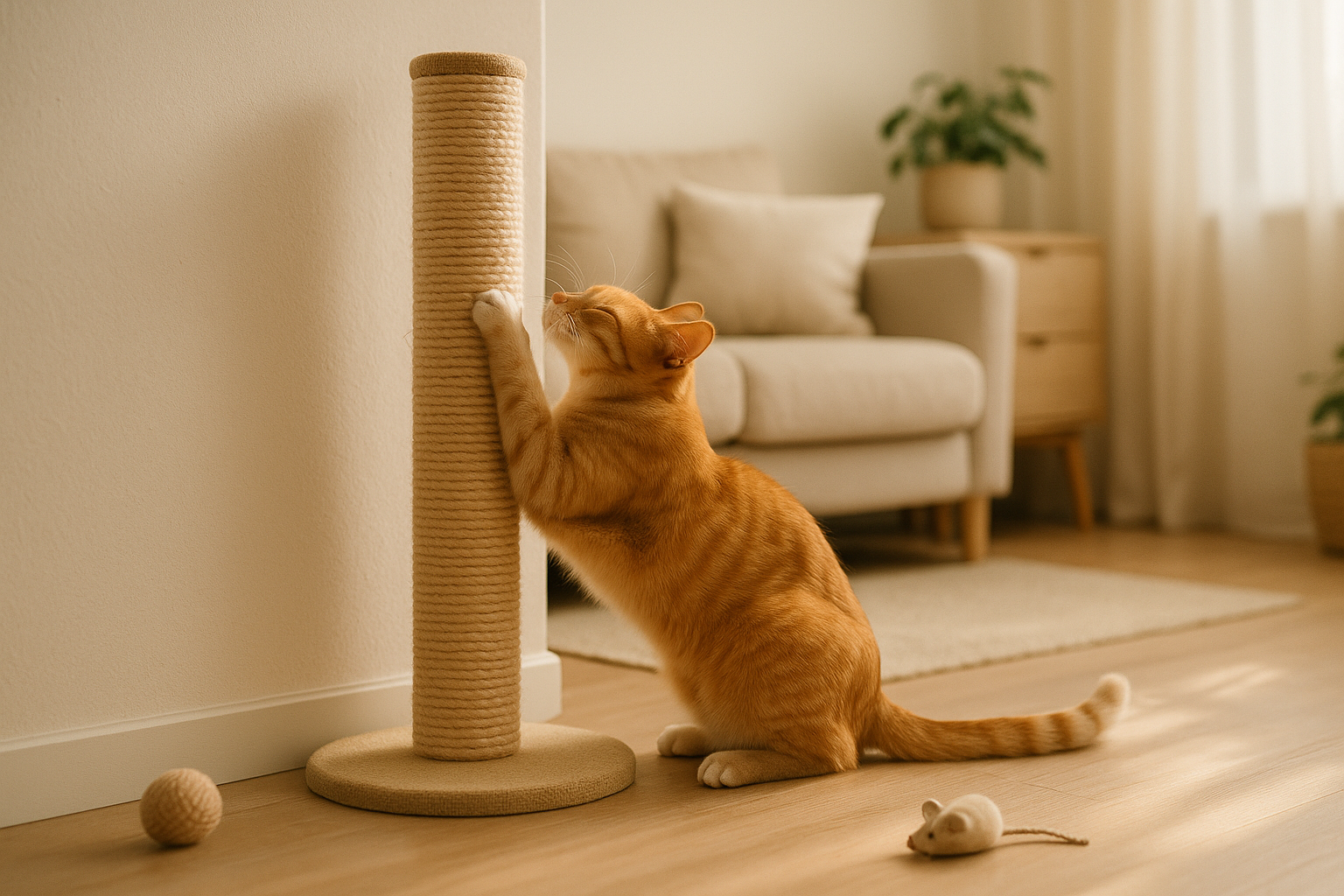
Give your cat the right scratching posts
This is the most important step. Many scratching problems happen because the post is wrong for the cat.
Choose the right type of scratcher
Cats have preferences. Some like vertical scratching. Some like horizontal scratching. Some like cardboard. Some like sisal. Some like carpet-like textures.
Try more than one kind if needed.
Here is a simple guide:
| Scratcher Type | Best For | Why Your Cat May Like It |
|---|---|---|
| Tall vertical post | Cats who stretch upward | Lets your cat fully extend their body |
| Horizontal cardboard pad | Cats who scratch floors or low wall areas | Easy to use and often very appealing |
| Angled scratcher | Cats who want something in between | Good for cats with mixed habits |
| Sisal post | Cats who like rough texture | Strong and satisfying under claws |
| Scratching tree or cat tower | Active cats | Adds climbing and play too |
Make sure the scratching post is tall and sturdy
A scratching post should not wobble. If it shakes, your cat may not trust it.
A good vertical post should be tall enough for your cat to stretch fully. For many cats, that means at least 30 inches tall. Bigger cats may need even more.
Put scratching posts in the right places
This part matters a lot. If your cat scratches the wall by the hallway, put a scratching post right there. If they scratch after waking up, place one near their sleeping area.
Do not hide the scratcher in a corner and hope your cat finds it. Put it where the scratching is already happening.
Good places include:
- Next to the scratched wall
- Near your cat’s bed
- Near entrances
- Near windows
- In rooms where your family spends time
Make the wall less rewarding to scratch
While you teach your cat better habits, make the wall harder and less fun to scratch.
Block access if you can
If possible, place furniture in front of the scratched area for a while. Even a simple change can interrupt the habit.
Cover the wall temporarily
You can use safe temporary barriers such as:
- Plastic wall protectors
- Double sided tape made for pets
- A smooth plastic sheet
- Furniture panels placed against the wall
Cats often dislike sticky or slippery surfaces. This helps make the wall less enjoyable.
Clean the area
If your cat has scratched there many times, the scent may keep pulling them back. Clean the wall gently with a pet safe cleaner if possible.
This does not always remove all scent, but it can help reduce the urge to return.
Make the scratching post more exciting
Now that the wall is less fun, you want the scratcher to feel amazing.
Use catnip or silvervine
Sprinkle a little catnip on the scratching post or rub it into the material. Some cats respond even better to silvervine.
Not all cats react to catnip, but many do.
Reward your cat right away
Any time you see your cat use the scratching post, praise them in a calm happy voice and offer a treat. Fast rewards help your cat connect the action with something good.
This works much better than punishment.
Play near the scratching post
Use a wand toy around the post so your cat interacts with it. Sometimes cats start scratching naturally during or after play.
Gently guide, but do not force
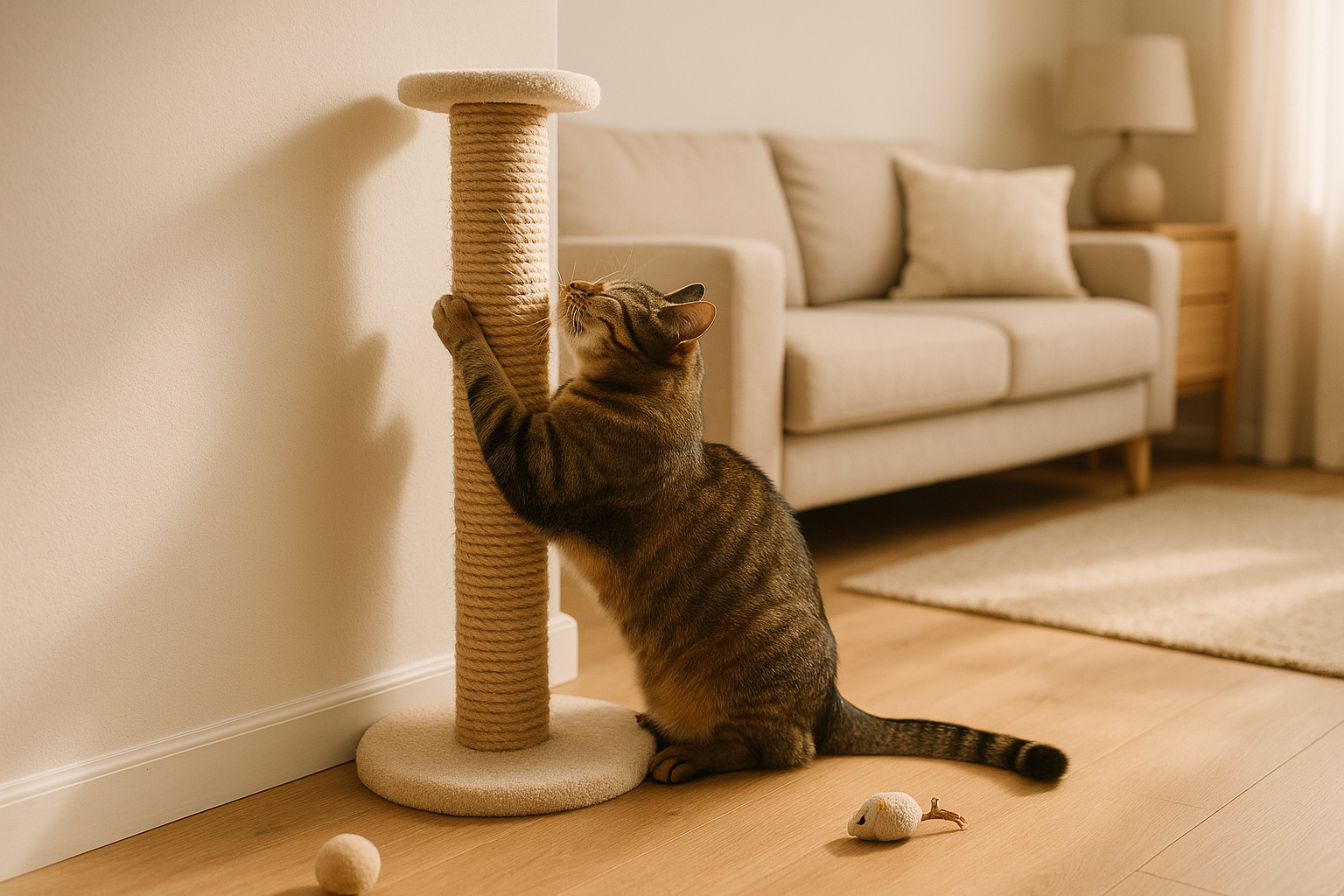
If you catch your cat near the wall, you can calmly redirect them to the scratcher nearby. But do not grab their paws and drag them on the post. Many cats hate that and may avoid the post after.
What not to do
Some common reactions can make the problem worse.
Do not punish your cat
Yelling, spraying water, or scaring your cat may stop the scratching for a moment, but it does not teach the right behavior. It can also make your cat feel afraid of you or more stressed, which may lead to even more scratching.
Do not remove all scratching chances
Your cat needs to scratch. If you only try to block the wall without giving better options, your cat will likely find a new wrong place.
Do not expect one scratching post to solve everything
Some cats need several scratchers in different rooms. This is very normal.
Help a bored or stressed cat feel better
If your cat is scratching walls because of stress or extra energy, you need to help with that too.
Give your cat daily play sessions
Short play sessions can make a huge difference. Try 10 to 15 minutes, two or three times a day if you can.
Use toys that let your cat chase, jump, and pounce. Wand toys are great for this.
Add more climbing and resting spaces
Cats feel safer when they can get up high. A cat tree, window perch, or shelf can help your cat feel more in control of their space.
Keep a simple routine
Cats like knowing what happens next. Feeding, playtime, and quiet rest at similar times each day can help reduce stress.
Reduce outside triggers
If outdoor cats are upsetting your cat, close the blinds partway or use window film. If one room is stressful, try giving your cat a calmer area to relax.
Should you trim your cat’s claws?
Claw trimming can help reduce damage, but it will not solve the reason your cat scratches. It is a helpful extra step, not the whole answer.
If you are comfortable trimming your cat’s claws, do it carefully and only remove the clear tip. If you are unsure, ask your vet or groomer to show you how.
Never choose declawing. It is not a simple nail removal. It is a painful surgery that can lead to long term behavior and health problems.
When wall scratching might be a bigger issue
Sometimes scratching becomes much worse because something deeper is going on.
Talk to your vet or a cat behavior expert if:
- Your cat suddenly starts scratching walls a lot more
- Your cat seems anxious, jumpy, or aggressive
- Your cat overgrooms or hides often
- Your cat is not using the litter box properly
- Your cat seems to be in pain
- Nothing helps after several weeks of consistent work
Pain, stress, and medical issues can sometimes change behavior in ways that look like simple bad habits.
A simple step by step plan you can start today
If you feel overwhelmed, keep it simple. You do not need to do everything at once.
Step 1: Identify the main scratching spots
Pick the top one or two wall areas your cat uses most.
Step 2: Put a scratcher right next to each spot
Choose a sturdy scratcher that matches how your cat likes to scratch.
Step 3: Protect the wall
Use a temporary safe barrier so the wall is less rewarding.
Step 4: Reward every good scratch
Treats, praise, and play help your cat learn faster.
Step 5: Add daily play and calm routine
This helps if boredom or stress is part of the problem.
Step 6: Be patient and consistent
Most cats do not change overnight. Small daily wins matter.
FAQ
1. Why does your cat scratch the wall instead of the scratching post?
Your cat may not like the post’s texture, height, or location. They may also have a strong habit tied to that wall. Try a different type of scratcher and place it exactly where your cat scratches.
2. Can your cat be trained to stop scratching walls completely?
You can train your cat to stop scratching the walls, but not to stop scratching altogether. Scratching is natural and healthy. Your goal is to redirect it to better places.
3. What is the best scratching post for wall scratching cats?
A tall sturdy vertical scratching post is often the best choice, especially if your cat scratches upright wall corners. But some cats prefer cardboard, sisal, or angled scratchers, so you may need to test a few options.
4. Does catnip help with scratching training?
Yes, it can. Catnip or silvervine can make a scratching post more attractive. It is not magic, but it can be a useful tool.
5. Should you tell your cat no when they scratch the wall?
A calm interruption is okay, but loud scolding usually does not help. It can make your cat stressed or confused. Redirect your cat to the scratcher and reward them there.
6. Why does your cat scratch walls at night?
Night scratching can happen because your cat has extra energy, wants attention, or follows a habit after waking up. More evening play and a scratcher near sleeping areas can help.
7. Will trimming claws stop wall scratching?
It may reduce damage, but it will not stop the urge to scratch. You still need to provide good scratching options and address the reason behind the behavior.
8. Is wall scratching a sign of stress?
Sometimes, yes. If your cat also hides, startles easily, or scratches more after changes in the home, stress may be part of the problem.
9. How long does it take to change this behavior?
Some cats improve in a few days, while others take several weeks. Consistency matters more than speed. Keep making the right place easy and rewarding.
10. When should you ask for professional help?
If the scratching is sudden, intense, linked with other behavior changes, or not improving after a few weeks, contact your vet or a qualified cat behavior professional.
Conclusion
If your cat is tearing up your walls, you are not dealing with a bad cat. You are dealing with a cat who has a normal need and has picked the wrong place to meet it.
Once you understand how to stop cat scratching walls, the path gets clearer. Give your cat a scratching setup they truly like, place it where they already want to scratch, protect the wall, and reward the behavior you want. Add play, reduce stress, and stay patient.
Your cat is not trying to make your life harder. Your cat is communicating the best way they know how. When you respond with the right tools, you can protect your home and help your cat feel happier too.
And if progress feels slow, that is okay. Small changes add up. Your cat can learn, and you can absolutely make your home calmer again.