
Are you feeling tired of scratching, biting, late night zoomies, and a cat that just will not listen?
If you are trying to learn how to train indoor cat to behave properly, you are not alone. Many indoor cat owners feel confused, stressed, and even a little guilty when their cat keeps doing things like scratching the couch, jumping on counters, crying at night, or biting during play.
The good news is this. Your cat is not being “bad” on purpose. In most cases, your cat is trying to tell you something. Your cat may be bored, full of energy, scared, overstimulated, or simply unsure of the rules in your home.
When you understand why your cat behaves a certain way, training gets much easier. You do not need to be harsh. You do not need to yell. You just need the right steps, patience, and a daily routine that helps your indoor cat feel safe, active, and happy.
In this guide, you will learn practical ways to train your indoor cat, fix common behavior problems, and build a calm home for both of you.
Why indoor cats need training
Indoor cats live in a smaller world than outdoor cats. They eat, sleep, play, and use the litter box in the same home every day. Because of that, small problems can quickly turn into big habits.
If your cat has too much energy and not enough to do, you may see:
- Furniture scratching
- Biting and pouncing
- Nighttime crying
- Counter jumping
- Litter box problems
- Attention seeking behavior
Training helps your cat learn what is okay and what is not okay. It also gives your cat something just as important, which is mental and physical activity. A trained indoor cat is often a calmer cat.
Start with realistic expectations
Before you begin, it helps to remember that cats do not learn the same way dogs do. Your cat is not likely to obey every command just to please you. Your cat learns best when behavior brings a reward.
That means your job is simple:
- Reward the behavior you want.
- Make unwanted behavior less rewarding.
- Give better choices.
If you stay consistent, your cat can learn.
Understand why your cat is acting out
Bad behavior often has a reason behind it. If you only react to the behavior, you may miss the real problem.
Scratching furniture
Your cat scratches to stretch, mark territory, and keep nails healthy. Scratching is normal. The goal is not to stop scratching. The goal is to teach your cat where to scratch.
Biting and rough play
Kittens and young cats often bite during play. They are practicing hunting skills. If hands become toys, biting gets worse.
Crying at night
Night crying can happen because your cat is bored, hungry, lonely, or active at the wrong time of day.
Jumping on counters
Cats love high places. Counters also smell like food, which makes them extra tempting.
Litter box mistakes
This can happen because of stress, a dirty litter box, the wrong litter, or even a health problem. If your cat suddenly stops using the litter box, a vet visit is a smart first step.
Rule out health problems first
Before you focus only on training, make sure your cat is healthy. Pain, dental problems, urinary issues, stomach trouble, and stress can all look like behavior problems.
Talk to your vet if your cat suddenly:
- Starts biting more than usual
- Stops using the litter box
- Cries often
- Hides a lot
- Becomes aggressive
- Stops eating
- Overgrooms or pulls out fur
Training works best when your cat feels well.
Build a daily routine your cat can trust
Cats feel safer when life is predictable. A simple routine can lower stress and improve behavior fast.
Try to keep these things at about the same times each day:
- Meals
- Play sessions
- Quiet rest time
- Litter box cleaning
- Bedtime routine
A cat that knows what comes next is often calmer and easier to train.
Use positive reinforcement
Positive reinforcement means you reward good behavior so your cat wants to do it again. This is the best way to train an indoor cat.
You can use:
- Small treats
- Praise in a gentle voice
- Petting, if your cat likes it
- A favorite toy
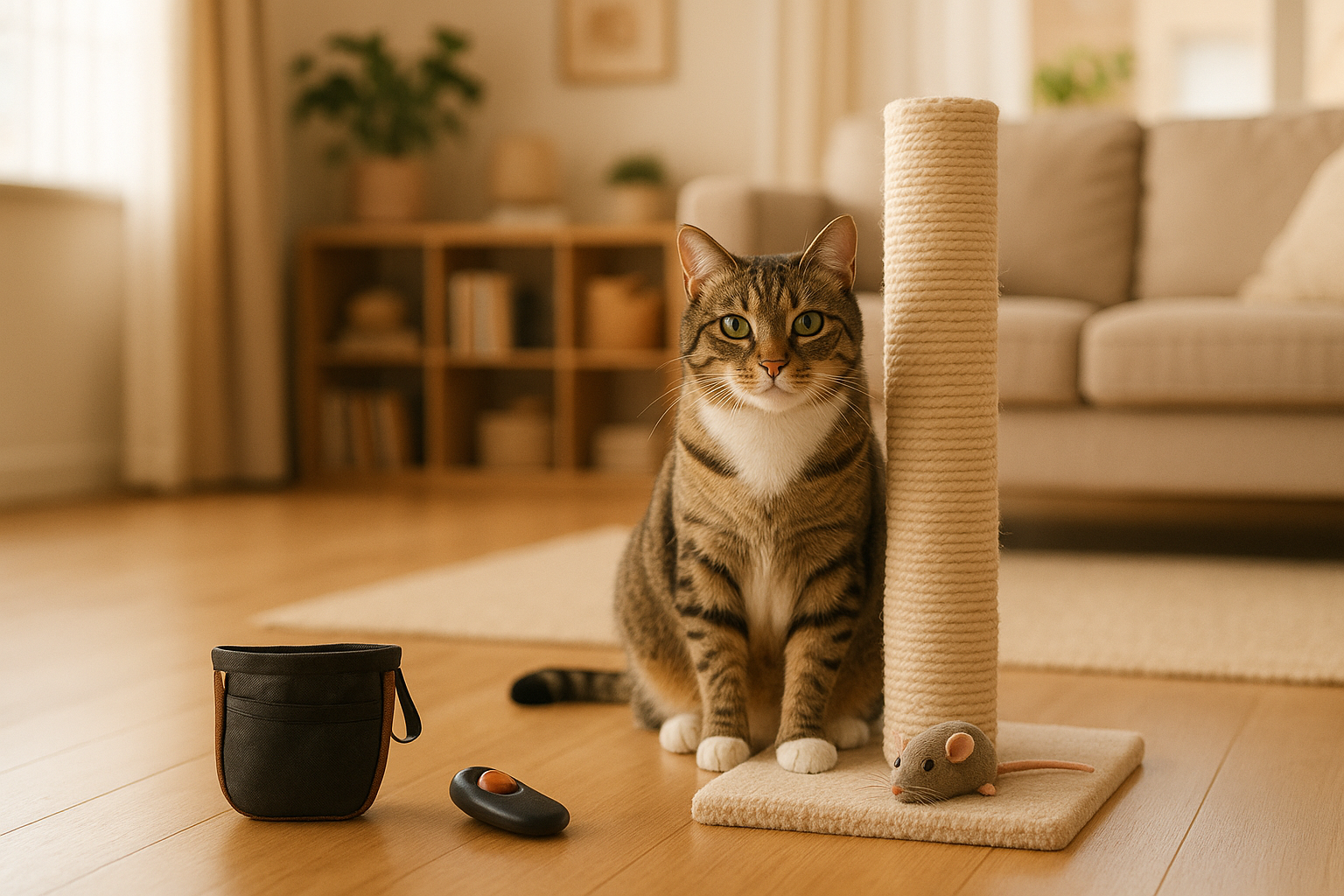
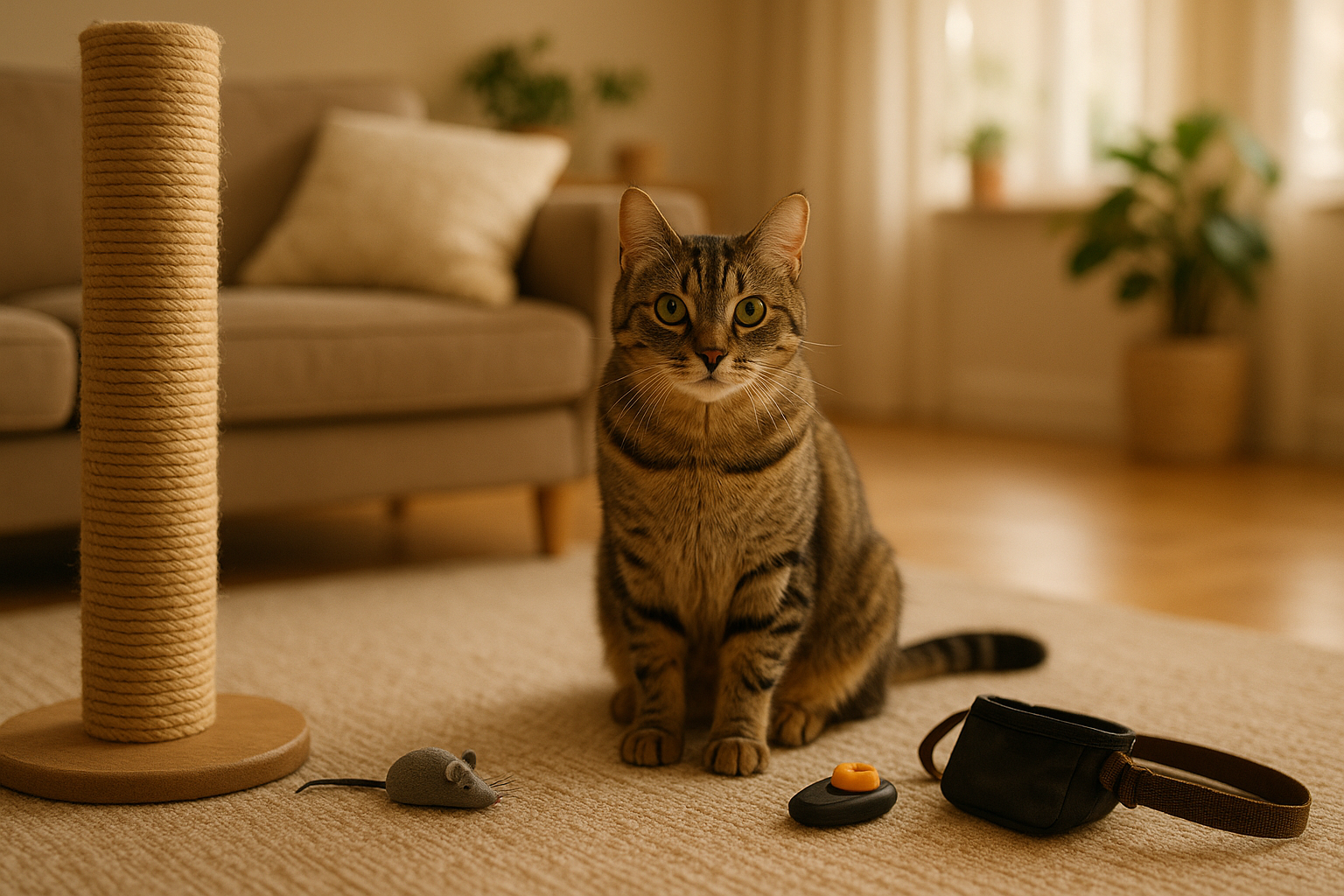
- Clicker training, if you want to be more exact
For example, if your cat uses the scratching post, give a treat right away. If your cat sits calmly instead of biting, reward that too.
Why punishment does not work well
Yelling, spraying water, or hitting only teaches fear. Your cat may become nervous around you, but still keep the bad habit when you are not there.
Instead of punishment, redirect your cat to a better choice.
Teach your cat what to scratch
If your cat scratches the sofa, do not just say no. Give your cat a place that feels better to scratch.
How to train scratching habits
- Put scratching posts near the furniture your cat scratches
- Try both vertical and horizontal scratchers
- Sprinkle catnip on the post if your cat likes it
- Praise and reward every time your cat uses it
- Cover the sofa corner with a texture your cat does not enjoy for a while
Some cats like tall sturdy posts. Others like flat cardboard scratchers. You may need to test a few types.
Best places for scratching posts
Your cat may ignore a post hidden in a corner. Put scratchers where your cat already spends time, such as:
- Near sleeping spots
- Close to the couch
- By a window
- Near entryways
Stop biting and teach gentle play
If your kitten or cat bites your hands, it does not mean your cat is mean. It often means play has been taught the wrong way.
What to do
- Never use your hands as toys
- Use wand toys, balls, and soft kick toys
- If biting starts, stop play right away
- Stay still and calm
- Resume play only when your cat settles down
- Reward calm behavior
This teaches your cat that biting makes the fun stop, while gentle play keeps the fun going.
How much play your cat needs
Many indoor cats need at least two or three play sessions a day, especially kittens and young cats. Even 10 to 15 minutes at a time can help.
Try to make play feel like a hunt:
- Stalk
- Chase
- Pounce
- Catch
- Small meal or treat
That pattern can reduce biting, frustration, and nighttime energy.
Help your cat stop crying at night
Night crying can be exhausting. You want sleep, and your cat wants something too.
Try this bedtime plan
- Give an active play session in the evening
- Feed a small meal after play
- Clean the litter box before bed
- Make sure your cat has water
- Leave a cozy sleeping spot in a quiet area
- Avoid giving attention for every nighttime cry if your cat is healthy
If your cat learns that crying gets food or play at 3 a.m., the habit may continue. Try to meet your cat’s needs before bed instead.
Keep your cat off counters
Counter jumping is common because cats enjoy height and food smells.
How to reduce counter jumping
- Clean counters so there are no food crumbs
- Keep food out of sight
- Give your cat a cat tree or shelf nearby
- Reward your cat for using the allowed high spot
- Gently place your cat on the approved perch when needed
Your cat does not just want to be “bad.” Your cat wants a better seat. Give one.
Make your home enriching
A bored cat often becomes a naughty cat. Enrichment is one of the best tools for indoor cat care and training.
Easy enrichment ideas
- Cat trees
- Window perches
- Puzzle feeders
- Treat hunts
- Rotating toys
- Paper bags without handles
- Cardboard boxes
- Training sessions with treats
You do not need expensive things. What matters is giving your cat ways to climb, hide, chase, and think.
Train basic useful behaviors
You can teach your cat simple skills that make daily life easier.
Sit
Hold a treat above your cat’s head. As your cat looks up, the bottom may lower naturally. Say “sit” and reward.
Come when called
Say your cat’s name in a cheerful voice, then reward when your cat comes to you. Practice often in a quiet room first.
Go to a mat or bed
Toss a treat onto a mat. When your cat steps on it, reward. Soon your cat will learn that the mat is a good place to settle.
These small skills can help during guests, feeding time, and busy moments.
Fix litter box behavior the right way
Litter box problems are one of the biggest indoor cat stress points.
First, check these basics
| Problem | What to check |
||—|
| Cat pees outside box | Vet visit, stress, dirty box, location |
| Cat avoids box | Litter type, box size, painful movement |
| Cat uses box sometimes | Too few boxes, noise, conflict with other pets |
Litter box tips
- Have one box per cat, plus one extra
- Scoop daily
- Use unscented litter if possible
- Keep boxes in quiet easy to reach places
- Avoid trapping your cat in a tight scary spot
If the problem starts suddenly, speak to your vet.
Handle kitten behavior with patience
Kittens are adorable, but they can also be wild. They bite toes, climb curtains, attack moving hands, and cry when they want attention.
This is normal, but it still needs direction.
What your kitten needs most
- Short play sessions many times a day
- Safe chew and kick toys
- A calm sleep routine
- Gentle handling
- Consistent rules
If you let your kitten do something one day and punish it the next day, your kitten gets confused. Be clear and steady.
Common mistakes that make training harder
Sometimes loving cat owners accidentally teach the wrong lesson.
Watch out for these mistakes
- Giving attention after bad behavior
- Being inconsistent with rules
- Playing with hands
- Not giving enough exercise
- Expecting too much too fast
- Using punishment instead of redirection
Training takes repetition. Your cat learns from what happens every day, not from one big lesson.
A simple training plan you can start today
If you feel overwhelmed, keep it simple. Start with these steps.
7 day beginner plan
| Day | Focus |
||—|
| Day 1 | Set feeding and play times |
| Day 2 | Add a scratching post near problem area |
| Day 3 | Stop hand play and use toys only |
| Day 4 | Add evening play before bed |
| Day 5 | Reward one good behavior often |
| Day 6 | Create one climbing spot or window perch |
| Day 7 | Review what improved and stay consistent |
Small changes can bring big results over time.
FAQ
1. How long does it take to train an indoor cat?
It depends on your cat’s age, personality, and the habit you want to change. Some cats improve in a few days, while others need a few weeks or more. Consistency matters most.
2. Can you train an older indoor cat?
Yes, you can. Older cats can learn new habits, especially with treats, praise, and a steady routine. It may take a little longer, but it is possible.
3. Why does your indoor cat bite you during play?
Your cat may be overstimulated or may have learned that hands are toys. Use wand toys and stop the game when biting starts. Reward gentle play.
4. How do you stop your cat from scratching furniture?
Give your cat scratching posts in the right places and reward their use. Make the furniture less attractive for a while and keep trimming your cat’s nails if needed.
5. Why does your cat cry at night?
Your cat may be bored, hungry, lonely, or active at the wrong time. Evening play, a small bedtime meal, and a calm routine can help.
6. Should you punish your cat for bad behavior?
No. Punishment often causes fear and stress. It does not teach your cat what to do instead. Redirection and rewards work better.
7. What if your cat ignores treats during training?
Try a different reward. Some cats prefer toys, petting, or a favorite food. Train when your cat is calm and a little hungry for better results.
8. How many times a day should you play with your indoor cat?
Most indoor cats do well with two or three play sessions each day. Kittens may need more. Short active sessions are often enough.
9. Why is your cat not using the litter box?
There could be a health issue, stress, box location problem, dirty litter, or dislike of the litter type. A vet check is important if this starts suddenly.
10. What is the best age to start cat training?
The best age is as early as possible, but any age can work. Kittens learn fast, yet adult cats can also build great habits with patience.
Conclusion
Training your cat is not about control. It is about communication. When you learn how to train indoor cat to behave properly, you start seeing behavior in a new way. Your cat is not trying to make life hard for you. Your cat is responding to needs, habits, and the environment you share.
If you stay calm, reward the good, and give your cat better options, real change can happen. Start with one problem at a time. Add more play. Create a routine. Use scratching posts, climbing spots, and gentle training every day.
You do not need a perfect cat. You just need progress. With patience and kindness, you can help your indoor cat become calmer, happier, and much easier to live with.