
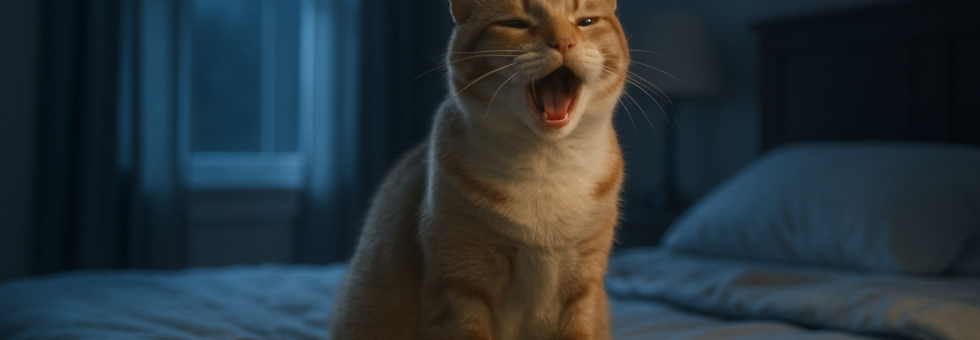
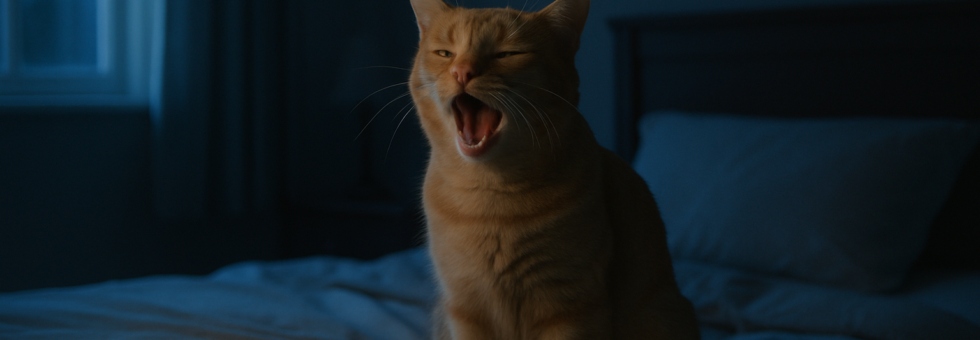
Does your cat start meowing loudly at night just when you are finally ready to sleep?
If that keeps happening, you are not alone. Many cat owners lie awake wondering, why does my cat meow loudly at night, and more importantly, how can they make it stop. It can feel upsetting, confusing, and exhausting. You may worry that your cat is sick, lonely, hungry, bored, or just forming a bad habit. When you lose sleep night after night, even a cat you love deeply can start to test your patience.
The good news is this: nighttime meowing usually happens for a reason. Your cat is trying to tell you something. Sometimes the reason is simple, like extra energy before bed. Sometimes it is more serious, like pain, stress, or changes in the brain in older cats. Once you understand the cause, you can choose the right fix instead of guessing.
In this guide, you will learn the most common reasons cats cry at night, how to tell which one fits your cat, and what you can do to help your cat settle down and let you sleep again.
Why your cat meows loudly at night
Cats do not meow loudly at night just to annoy you. Meowing is one of the main ways cats communicate with people. If your cat keeps crying after dark, there is usually a need behind it.
Some causes are physical. Some are emotional. Some are simply habit. The trick is figuring out which one is driving your cat’s behavior.
Your cat has extra energy
Many cats sleep a lot during the day. If your cat spends hours resting while you are busy, they may feel wide awake at night. That can lead to running, jumping, scratching, and loud meowing.
Cats are often most active in the evening and early morning. This natural pattern can make nighttime noise more common, especially if your cat does not get enough playtime during the day.
Your cat is hungry
A hungry cat can be very vocal. If your cat expects food late at night or very early in the morning, they may meow to remind you. Cats are smart. If meowing once got them a meal, they may repeat it every night.
Sometimes the issue is not just hunger. It may be a feeding schedule problem. If dinner is too early, your cat may wake up hungry in the middle of the night.
Your cat wants attention
Some cats simply want you. If your cat feels lonely, bored, or left out, they may cry at your bedroom door or wander the house calling for company.
This often happens if your cat learned that nighttime meowing brings a response. If you get up, talk, pet, feed, or even scold your cat, your cat may see that as attention. To a cat, even negative attention can still feel rewarding.
Your cat is stressed or anxious
Cats are sensitive to change. A new home, a new baby, a new pet, loud noises, guests, moving furniture, or even a changed work schedule can upset them. Some cats react to stress by hiding. Others become more vocal.
Night can make stress feel worse. The house is quieter, darker, and less busy. A nervous cat may start meowing more once everything settles down.
Your cat sees or hears something at night
Your cat may be reacting to something you do not notice. Another cat outside the window, animals in the yard, strange sounds in the walls, lights, or movement can all trigger nighttime meowing.
Some cats become very focused on outdoor activity after dark. If they see a stray cat passing by, they may yowl, pace, and act upset.
Your cat is in heat
If your female cat is not spayed, heat is a very common reason for loud nighttime crying. Cats in heat often yowl in a way that sounds intense, sad, or urgent. They may rub on things, roll on the floor, become extra restless, and try to get outside.
Male cats can also become loud if they smell a female cat in heat nearby. If your cat is not neutered or spayed, hormones may be a big part of the problem.
Your cat may be aging
Older cats sometimes meow more at night because of confusion, hearing loss, poor vision, or age related brain changes. Senior cats may wake up disoriented and call out because they feel unsure or scared.
If your older cat has started nighttime vocalizing out of nowhere, this is important to take seriously. Aging can change behavior in ways that need support and sometimes medical care.
Your cat could be sick or in pain
This is one of the most important reasons to consider. Cats may meow loudly at night if they are uncomfortable. Pain, thyroid problems, high blood pressure, kidney disease, arthritis, stomach trouble, or urinary issues can all change how a cat behaves.
If your cat suddenly starts crying at night, especially if the behavior is new, intense, or paired with other symptoms, a vet visit is a smart next step.
How to tell why your cat is meowing
Before you can stop the behavior, you need clues. Try to notice exactly what your cat is doing and when it happens.
Watch patterns for a few nights. You do not need to guess blindly. A few small details can tell you a lot.
Ask yourself these questions
- Does your cat meow at the same time every night?
- Does it happen before food time?
- Does your cat calm down if you play with them?
- Is your cat pacing, scratching, or staring out the window?
- Is your cat an older cat?
- Has anything changed at home recently?
- Is your cat eating, drinking, and using the litter box normally?
- Is your cat fixed or not fixed?
- Does the meowing sound different than usual?
If you write these things down, you may start to see a pattern.
Signs that your cat needs a vet visit
Sometimes nighttime meowing is just a behavior issue. Sometimes it is a health warning. You should contact your vet if your cat has any of these signs:
| Sign | Why it matters |
|---|---|
| Sudden increase in meowing | A sudden change can signal pain, illness, or stress |
| Meowing with restlessness | Can happen with pain, thyroid issues, or anxiety |
| Changes in appetite or thirst | May point to kidney disease, diabetes, or other illness |
| Litter box changes | Could mean urinary pain, constipation, or digestive problems |
| Weight loss | Can happen with hyperthyroidism and other health issues |
| Hiding or acting withdrawn | Often a sign your cat does not feel well |
| Meowing in an older cat | Could be confusion, hearing loss, or age related changes |
| Trouble jumping or walking | Arthritis or injury may be causing pain |
If your gut says something feels off, trust it. You know your cat best.
How to stop your cat from meowing loudly at night
Once you have a better idea of the cause, you can choose the best solution. In many homes, it takes a mix of routine, activity, and patience.
Give your cat more playtime before bed
This is one of the most effective fixes for many cats. A bored cat with stored up energy is much more likely to meow all night.
Try a 15 to 20 minute play session in the evening. Use toys that let your cat chase, pounce, and “hunt.” Feather wands, toy mice, and balls can work well. Let your cat really move.
After the play session, give a small meal or snack. This follows a natural hunt, eat, groom, sleep rhythm that helps many cats settle down.
Adjust your feeding schedule
If your cat wakes you because they are hungry, moving dinner later can help. You can also try a bedtime snack.
Some owners do well with an automatic feeder. If your cat cries for food at 4 a.m., an automatic feeder can give a small meal before your cat starts yelling at you. This helps break the pattern where your cat sees you as the food machine.
Do not reward the meowing
This part is hard, especially when you are tired. But if your cat meows and you respond every time, the behavior can grow stronger.
If you know your cat is healthy and their needs are met, try not to feed, pet, talk to, or get up for nighttime meowing. Even one response can keep the habit going.
This does not mean being unkind. It means being clear and consistent. If the meowing is a learned behavior, you have to stop teaching that it works.
Make the nighttime space calm and comfortable
Your cat may settle better if the environment feels safe and interesting.
You can try:
- A cozy bed in a quiet place
- A clean litter box
- Fresh water
- A little food if needed
- A night light for older cats
- Soft music or white noise
- A warm blanket or heated cat bed if your cat likes warmth
If your cat cries because they feel alone, a sleeping area near you may help. If your cat gets more excited near your room, a separate cozy space may work better.
Block outside triggers
If your cat gets upset by outdoor animals, close the curtains at night. You can also use window film to block the lower part of the window if a neighborhood cat keeps visiting.
If sounds are the problem, white noise can help cover small outside noises that your cat notices before you do.
Help your cat feel safe if stress is the cause
Cats love routine. If your cat is anxious, try to keep meals, play, and bedtime at the same time each day.
You can also add comfort in small ways:
- Keep favorite resting spots available
- Give hiding spaces
- Avoid loud nighttime activity
- Use calming cat pheromone products if your vet recommends them
- Introduce changes slowly when possible
A stressed cat does not need punishment. They need help feeling secure again.
Get your cat spayed or neutered
If hormones are causing the noise, this is often the best long term solution. Cats in heat can be extremely loud, and the behavior often continues until the cycle changes or the cat is spayed.
Neutering male cats can also reduce hormone driven vocalizing and roaming behavior.
Support your senior cat
Older cats may need extra help at night. Keep furniture and litter boxes easy to reach. Use a small light so the room is not fully dark. Avoid changing the layout of the home too often.
If your senior cat seems confused, your vet may suggest ways to support brain health, pain control, or sleep quality.
A simple nighttime routine that helps many cats
A steady routine can make a big difference. Cats often calm down when they know what to expect.
Here is a sample evening plan you can try:
| Time | What to do | Why it helps |
|---|---|---|
| Early evening | Short play session | Burns energy and prevents boredom |
| Dinner time | Feed your cat | Helps satisfy hunger before bedtime |
| 1 hour before bed | Gentle play or attention | Gives connection and activity |
| Right before bed | Small snack or timed feeder setup | Can prevent early morning hunger |
| Bedtime | Keep lights low and house quiet | Signals that the active part of the day is over |
You do not need a perfect routine. You just need a simple pattern you can repeat most nights.
Things you should not do
When you are tired, it is easy to react in ways that seem helpful in the moment but make the problem worse later.
Do not punish your cat
Yelling, spraying water, or chasing your cat can increase stress and confusion. Your cat will not understand why you are upset. Punishment often makes nighttime behavior worse, not better.
Do not assume it is always “just a habit”
If your cat’s behavior changes suddenly, or if the meowing sounds distressed, do not ignore the chance of illness. Behavior is often the first sign that something is wrong.
Do not change your plan every night
If one night you ignore the meowing and the next night you feed your cat at 3 a.m., your cat learns to keep trying. Mixed signals make habits stronger. Be consistent.
How long does it take to stop nighttime meowing?
This depends on the cause.
If hunger is the issue, changing the feeding schedule may help within days. If your cat is bored, more evening play may help quickly too. If the meowing has become a habit, it can take a couple of weeks of steady routine and no reward before you notice real progress.
If stress is involved, your cat may need more time. If illness or pain is the cause, the timeline depends on treatment.
It is normal for behavior to get a little worse before it gets better. This can happen when your cat realizes the old trick is no longer working. Stay calm and stick with your plan.
What if your kitten meows loudly at night?
Kittens are a little different from adult cats. If your kitten cries at night, they may be scared, lonely, hungry, or not ready to sleep on your schedule yet.
A very young kitten may have just left their mother and littermates. Night can feel big and scary. In that case, comfort matters a lot.
How to help a kitten at night
- Give your kitten a warm, soft sleeping space
- Keep the bed area close to you at first
- Feed on a steady schedule
- Play before bedtime
- Make sure the litter box is easy to reach
- Use safe comfort items like a soft blanket
- Check with a vet if your kitten seems unwell
A tiny kitten should not just be ignored if they are crying a lot. Young kittens have different needs than healthy adult cats.
When behavior training works best
Training works best when your cat’s needs are already met. Think of it like this: if your cat is hungry, scared, or hurting, training alone will not fix the problem.
Training is most useful when your cat is healthy, safe, fed, and still meowing for attention or out of habit.
A gentle training approach
- Play with your cat before bed.
- Feed a meal or snack after play.
- Make sure litter, water, and sleeping space are ready.
- Turn off the lights and keep things quiet.
- If your cat meows for attention, do not respond.
- In the morning, give attention when your cat is calm.
This teaches your cat that quiet behavior gets rewards, not nighttime yelling.
If you have more than one cat
In multi cat homes, nighttime meowing can be harder to understand. One cat may be calling for another. There may also be tension between cats that shows up more at night.
Watch for signs like blocking doorways, staring, chasing, or guarding food and litter boxes. A cat who feels uneasy around another cat may meow more once the house gets quiet.
Make sure you have enough resources for all cats:
- More than one litter box
- Separate food and water spots
- Multiple sleeping areas
- Hiding spots
- Vertical spaces like cat trees or shelves
Cats often feel calmer when they do not have to compete so much.
The emotional side of this problem
Losing sleep because of your cat can make you feel guilty and frustrated at the same time. You may love your cat but still feel upset when the crying starts night after night. That is normal.
It does not make you a bad pet owner. It means you are tired.
Try to remember that your cat is not trying to ruin your sleep. Your cat is communicating the only way they know how. When you look at the behavior as a message instead of a battle, it becomes easier to solve.
FAQ
1. Why does my cat meow loudly at night all of a sudden?
A sudden change often means something new is going on. Your cat may be sick, in pain, stressed, hungry, or reacting to a change in the home. If the behavior started out of nowhere, a vet check is a good idea.
2. Should you ignore your cat meowing at night?
If your cat is healthy and the meowing is for attention, ignoring it can help stop the habit. But you should not ignore it if your cat might be sick, scared, very young, or showing other unusual symptoms.
3. Why does your older cat cry at night?
Older cats may cry at night because of confusion, poor eyesight, hearing loss, pain, or age related brain changes. Senior cats often need a vet visit when this starts.
4. Can hunger make your cat meow at night?
Yes. Many cats meow because they are hungry or because they expect food at a certain time. A later dinner, bedtime snack, or automatic feeder can help.
5. Why does your cat meow at your bedroom door?
Your cat may want attention, company, warmth, or access to your room. Some cats simply do not like being separated from you at night.
6. Will playing with your cat before bed really help?
Yes, for many cats it helps a lot. Evening play burns energy, reduces boredom, and follows your cat’s natural hunting instincts. It is one of the simplest and best tools you can use.
7. Do cats meow more at night when they are in heat?
Yes. Cats in heat often yowl loudly, especially at night. Spaying or neutering is usually the most effective long term solution for hormone related crying.
8. Why does your indoor cat meow at night if they have everything they need?
Even indoor cats can get bored, lonely, stressed, or overstimulated by outdoor sights and sounds. “Everything” may still not include enough mental activity, routine, or comfort.
9. How long will it take for your cat to stop meowing at night?
It depends on the cause. Some cats improve in a few days with better play and feeding routines. Others need a few weeks of steady, consistent training. Medical causes need treatment first.
10. When should you call the vet about nighttime meowing?
You should call the vet if the meowing is sudden, intense, unusual, or happens with changes in appetite, litter box use, weight, movement, or behavior. If your cat seems uncomfortable, do not wait too long.
Conclusion
If you keep asking, why does my cat meow loudly at night, the answer is usually not just one thing. Your cat may be hungry, bored, lonely, stressed, aging, hormonal, or uncomfortable. The key is to look for patterns, rule out health problems, and then build a simple nighttime routine that helps your cat feel settled.
Start with the basics. Make sure your cat is healthy. Give more play before bed. Adjust meals if needed. Keep nights calm and predictable. Do not reward attention seeking meowing if you are sure your cat is okay. Most of all, be patient with yourself and your cat.
You do not need to fix everything in one night. Small changes done consistently often work better than big dramatic ones. With time, you can help your cat feel safer, calmer, and quieter at night, and you can finally get some rest too.