
Are your hands and feet starting to feel like your kitten’s favorite chew toys?
If you are dealing with tiny teeth attacking your fingers under the blanket or your ankles while you walk through the house, you are not alone. Many first time kitten owners go through this. It can feel cute at first, then painful, frustrating, and honestly a little stressful. You might start to worry that your kitten is becoming aggressive or that you are doing something wrong.
The good news is this: you can learn how to train a kitten not to bite hands and feet, and you do not need harsh punishment to do it. In most cases, your kitten is not trying to be mean. Your kitten is acting like a baby hunter who does not yet understand the rules of living with people.
This guide will help you understand why kittens bite, what makes the behavior worse, and what you can do step by step to teach better habits. If you want a calm, sweet, well behaved kitten, you can start building that today.
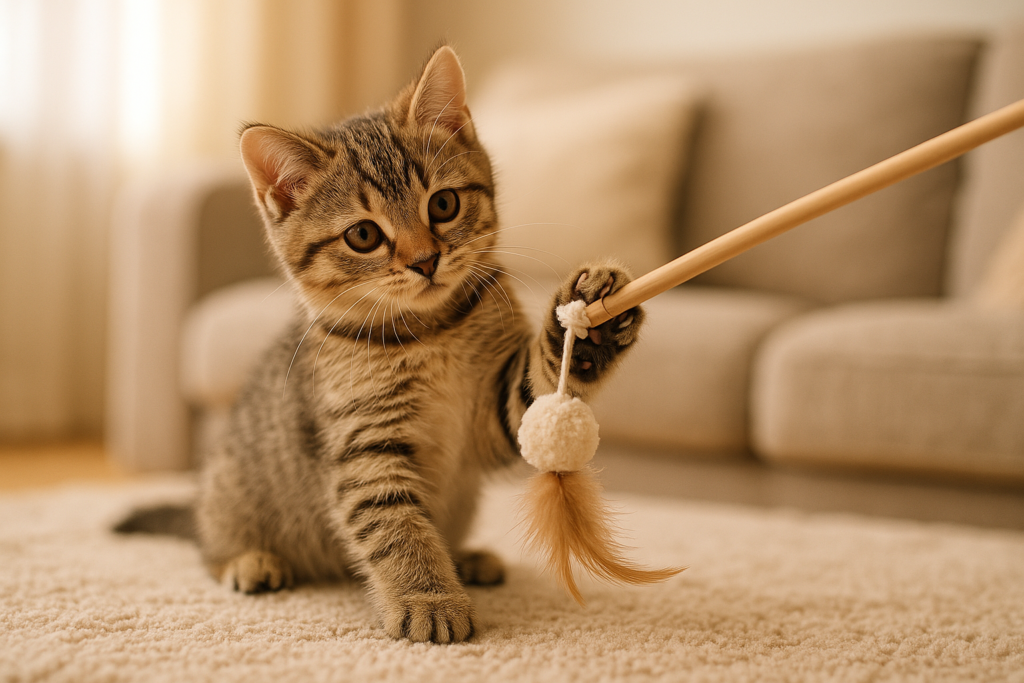
Why your kitten bites hands and feet
Before you can stop the biting, it helps to know why it is happening. Kittens are not little adults. They are learning every day through play, movement, and trial and error.
When your kitten bites your hands or feet, it usually means one or more of these things are going on:
- Your kitten wants to play
- Your kitten is practicing hunting
- Your kitten has too much energy
- Your kitten was taught that hands are toys
- Your kitten is teething
- Your kitten is overstimulated
- Your kitten does not know bite limits yet
A lot of first time owners accidentally train biting without meaning to. If you wiggle your fingers in front of your kitten, let your kitten chase your toes, or laugh when your kitten pounces on your ankle, your kitten learns that human body parts are part of the game.
That is why this habit can grow quickly if you do not change the pattern early.
Is kitten biting normal?
Yes, kitten biting is very normal. That does not mean you should ignore it, but it does mean you should not panic.
Kittens learn important skills through rough play. In a litter, they chase, wrestle, pounce, and bite each other. They also learn what is too hard. If one kitten bites too much, the other kitten may cry out, stop playing, or walk away. That is part of how they learn bite control.
When your kitten lives with you, you become a big part of that learning process. Your job is to teach, in a calm and clear way, that biting hands and feet never leads to fun.
Signs your kitten is playing vs being truly aggressive
Many owners worry that biting means their kitten is mean. Most of the time, that is not true.
Here is a simple way to tell the difference:
| Behavior | Playful kitten | Truly aggressive kitten |
|---|---|---|
| Body language | Bouncy, active, silly | Stiff, tense, defensive |
| Tail | Moving, twitching during play | Puffing up or lashing hard |
| Ears | Usually forward or changing quickly | Flattened back |
| Eyes | Wide and alert | Hard stare, fearful look |
| Sounds | Little chirps or no sound | Growling, hissing, spitting |
| Triggers | Movement, toys, feet, hands | Fear, pain, stress, being cornered |
If your kitten is hissing, hiding, acting fearful, or biting out of nowhere with a stiff body, there may be fear or pain involved. In that case, training alone may not be enough. A vet visit can help rule out health problems.
Why hands and feet are such a big target
Your hands and feet move in fast, exciting ways. To a kitten, that can look just like prey.
Think about what your feet do:
- Move suddenly across the room
- Wiggle under blankets
- Step near the kitten without warning
Think about what your hands do:
- Reach down from above
- Wiggle fingers
- Touch the kitten during play
- Move toys around
To a playful kitten, all of this can look like an invitation to chase and pounce. If biting gets attention, movement, or playtime, the habit becomes stronger.
The most important rule: never use your hands as toys
If you remember only one thing from this article, remember this.
Never play with your kitten using bare hands or feet.
That means:
- Do not wiggle your fingers for your kitten to attack
- Do not let your kitten grab and kick your hand
- Do not tease with your toes under the blanket
- Do not laugh and continue when your kitten bites
Even if your kitten is tiny now, the behavior will not stay tiny. A small playful bite can turn into a painful habit in a few weeks.
Use toys that create distance between your skin and your kitten, like wand toys, soft balls, toy mice, and kicker toys.
How to train a kitten not to bite hands and feet step by step
This is the part you need most. If you follow these steps every day, you will give your kitten a much clearer message.
Step 1: Stop the game the second biting starts
Your kitten needs to learn that biting makes fun end immediately.
The moment your kitten bites your hand or foot:
- Stop moving
- Stay calm
- Say a short phrase like “no bite” or “too bad” in a gentle but firm voice
- Slowly remove your hand or foot
- End the interaction for a short moment
Do not keep playing. Do not pull away fast like prey. Do not push your hand back into your kitten’s face. The goal is to make biting boring and unhelpful.
If your kitten is hanging onto your hand, stay as calm as you can and gently redirect with a toy or carefully detach without turning it into a struggle.
Step 2: Redirect to a toy every time
Your kitten still needs an outlet for hunting and chewing. So do not just stop the behavior. Show a better choice.
Good redirection toys include:
- Wand toys
- Small stuffed toys
- Soft kicker toys
- Toy mice
- Balls that roll
- Safe chew toys for kittens
If your kitten attacks your ankle while you walk, keep a toy nearby and toss it away from your body. If your kitten grabs your hand during petting, offer a toy before your kitten gets too excited.
This teaches your kitten, “You can bite this, not me.”
Step 3: Make a daily play routine
A lot of kitten biting comes from energy that has nowhere to go.
Kittens need active play every day, often several times a day. Short sessions usually work better than one long session.
Try this simple plan:
| Time of Day | What to Do | How Long |
|---|---|---|
| Morning | Wand toy chase game | 10 to 15 minutes |
| Afternoon | Ball or toy mouse play | 10 minutes |
| Evening | Active hunting style play | 15 minutes |
| Before bed | Calm play then food | 10 minutes |
Play in a way that lets your kitten stalk, chase, pounce, and “catch” something. This is important because it matches your kitten’s natural hunting pattern.
A tired kitten is much less likely to bite your hands and feet all evening.
Step 4: Watch for overstimulation
Sometimes your kitten bites during petting, cuddling, or being held. This can happen when your kitten gets too excited or annoyed.
Signs of overstimulation can include:
- Tail flicking
- Skin twitching on the back
- Ears turning sideways
- Fast head turns toward your hand
- Sudden grabbing or bunny kicking
If you see these signs, stop petting before the bite happens. Give your kitten space. Some kittens love affection in short doses, not long sessions.
You do not need to force cuddles to create a loving bond. Respect helps trust grow.
Step 5: Reward calm, gentle behavior
Training is not only about stopping bad habits. It is also about showing your kitten what works.
When your kitten:
- Plays with toys instead of your hands
- Sits calmly near your feet
- Accepts petting without biting
- Walks past your ankles without pouncing
Reward that behavior right away.
You can use:
- Praise in a soft happy voice
- A small treat
- Gentle petting if your kitten likes it
- Another round of toy play
This helps your kitten learn, “Good things happen when I stay gentle.”
Step 6: Use short time-outs the right way
A time-out is not punishment. It is just a calm pause that removes attention and excitement.
If your kitten keeps biting after redirection, you can:
- Quietly stand up and leave the room for 30 to 60 seconds
- Or place your kitten in a safe kitten-proof area with toys for a short reset
Do not yell. Do not chase your kitten. Do not use the crate as a scary place.
The point is simple. Biting makes the fun stop.
Step 7: Protect your feet during the training stage
While your kitten is learning, make it easier for both of you.
Helpful ideas:
- Wear slippers or thick socks
- Avoid walking fast past your kitten during crazy play times
- Do not wiggle your feet under blankets
- Keep toys nearby in rooms where attacks happen often
This is not giving up. It is setting your kitten up for success while the lesson is still new.
Step 8: Be consistent every single day
Consistency matters more than perfection.
If one day you stop play when your kitten bites, but the next day you laugh and continue, your kitten gets mixed signals. That slows training down.
Make sure everyone in your home follows the same rules:
- No hand play
- No foot teasing
- Redirect to toys
- End interaction after biting
- Reward gentle behavior
Kittens learn faster when the message stays the same.
Common mistakes that make kitten biting worse
Even loving owners can accidentally feed the problem. Here are some common mistakes to avoid.
Wiggling fingers or toes during play
This teaches your kitten exactly what you do not want. Your body parts should never be the target.
Pulling away too fast
Fast movement can trigger your kitten’s chase instinct. Slow, calm movement works better.
Yelling or hitting
This can create fear, stress, and worse behavior. Your kitten may become more defensive or confused. Fear does not teach gentle play.
Using spray bottles
Spraying can scare your kitten, but it does not clearly teach what to do instead. It can also hurt trust.
Being inconsistent
If biting sometimes leads to attention and other times leads to a stop, your kitten may keep trying.
Not giving enough playtime
A bored kitten often creates their own fun, and that fun may involve your ankles.
Best toys to help stop biting
Some toys work especially well because they satisfy the urge to chase, grab, and bite in a safe way.
Wand toys
These are one of the best tools you can use. They let your kitten chase and pounce while keeping your hands far away.
Try to move the toy like prey:
- Quick little movements
- Hiding behind furniture
- Short stops and starts
- Letting your kitten catch it sometimes
Kicker toys
These are long soft toys your kitten can grab with front paws and kick with back legs. They are great for rough play energy.
If your kitten likes to grab your arm and bunny kick, a kicker toy can be a big help.
Small plush toys and toy mice
These are good for pouncing, carrying, and batting around. Keep a few in different rooms for fast redirection.
Puzzle toys and treat toys
These help with boredom and mental energy. A kitten who is mentally busy may be less likely to stalk your feet out of frustration.
Chew-safe kitten toys
If teething is part of the problem, ask your vet what chew-safe options are okay for your kitten’s age.
A simple daily training plan you can follow
If you feel confused, this easy routine can help you stay on track.
Morning
Start with active wand play for 10 to 15 minutes. Let your kitten chase, jump, and catch the toy. End with breakfast.
This helps burn energy and satisfy the hunt-eat pattern.
During the day
Keep a few small toys around the house. Any time your kitten starts stalking your feet or grabbing your hands, redirect right away.
Reward calm choices when you notice them.
Evening
Do another active play session. Many kittens get wild in the evening, so this is a key time.
Use toys that encourage running and pouncing.
Before bed
Give one last play session, then a meal or snack if your feeding plan allows it. This can help your kitten settle better at night.
What if your kitten bites during petting?
This is a little different from play attacks on hands and feet. Petting bites often happen because your kitten has had enough.
To help:
- Pet for shorter times
- Focus on areas many cats prefer, like cheeks or under the chin
- Stop if you see tail flicking or tense body language
- Let your kitten come back for more instead of forcing contact
You can think of it like this: affection should feel safe, not trapping.
What if your kitten attacks your feet at night?
This is very common. Your feet move under blankets, and your kitten is full of energy.
Try these tips:
- Schedule a strong play session before bedtime
- Feed after play if possible
- Do not move your feet to tease your kitten
- Use thicker bedding for a while
- Put bedtime toys outside the bed area
- If needed, close the bedroom door and create a cozy sleep space for your kitten elsewhere
If your kitten cries at night, make sure basic needs are met first:
- Food and water
- Clean litter box
- Warm safe sleeping area
- Enough daytime play
- Comfort and routine
A tired, secure kitten usually sleeps better.
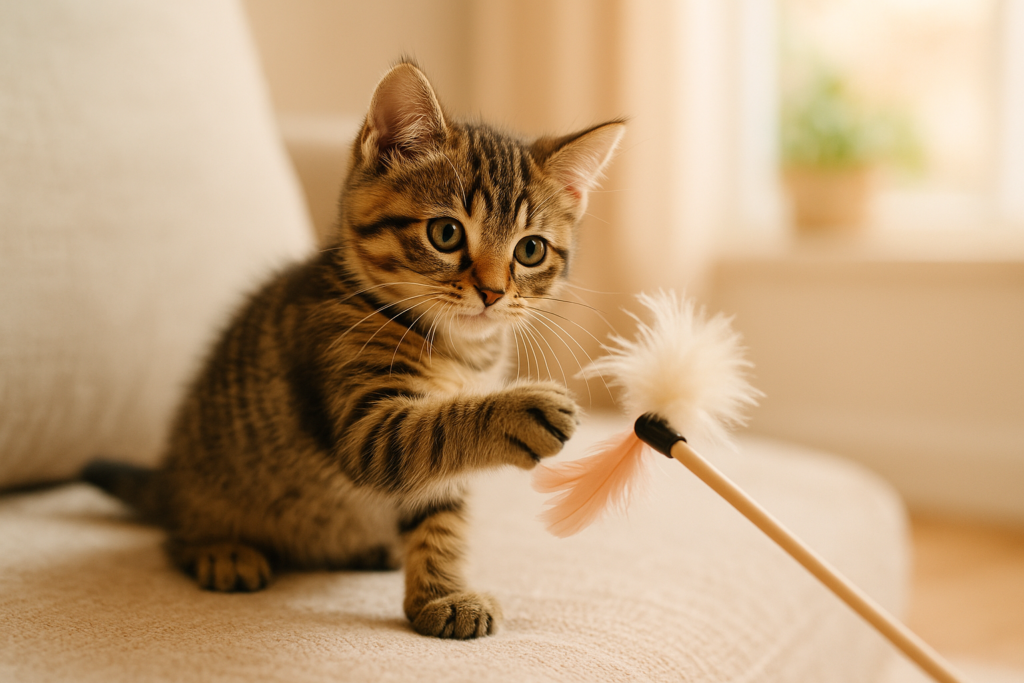
What if you adopted a single kitten?
Single kittens can be more likely to bite because they do not have another kitten to help teach bite limits through play. That does not mean you did anything wrong. It just means you may need to be extra intentional with training and play.
For a single kitten:
- Increase interactive play
- Use kicker toys often
- Give climbing spaces and enrichment
- Teach consistent boundaries
- Reward gentle behavior often
You are filling in some of the lessons that littermates sometimes teach each other.
When teething may be part of the problem
Kittens go through teething as they grow, and this can make them want to chew more.
Signs may include:
- Increased chewing
- Mild gum discomfort
- Biting more than usual
- Interest in chewing objects
If you think teething is adding to the biting, give safe alternatives and make sure your kitten has enough play and chew options. If your kitten seems in pain, is not eating well, or has mouth bleeding or swelling, call your vet.
When to talk to a vet or cat behavior expert
Most kitten biting improves with consistent training. But sometimes extra help is a good idea.
Talk to a vet if:
- Biting seems sudden or unusual
- Your kitten seems painful when touched
- Your kitten is hissing, hiding, or acting fearful often
- There are other signs like not eating, low energy, or bathroom changes
- The biting is severe and not improving
Talk to a qualified cat behavior professional if:
- You feel overwhelmed
- The behavior is getting stronger
- Your kitten attacks without clear triggers
- You need a plan for your specific home setup
Asking for help early can save you a lot of stress.
How long does it take to train a kitten not to bite?
This depends on your kitten’s age, energy level, history, and how consistent you are.
Some kittens improve in a few days once hand play stops. Others take a few weeks or longer. Progress is rarely perfect and straight. Your kitten may do better, then have a very wild day. That is normal.
What matters is the overall pattern. If biting becomes less frequent, less intense, and easier to redirect, you are moving in the right direction.
Signs your training is working
You may notice small wins before the problem fully goes away.
Look for signs like:
- Your kitten goes for toys more often than hands
- Foot attacks happen less often
- Bites are softer and shorter
- Your kitten calms down faster
- Your kitten walks away instead of grabbing
- Petting sessions become easier
These little changes matter. They show your kitten is learning.
FAQ: how to train a kitten not to bite hands and feet
1. Why does your kitten bite your hands when you try to play?
Your kitten may think your hands are toys if hand play happened before. Your kitten may also be trying to hunt moving fingers. Use wand toys and small plush toys instead so your hands are never part of the game.
2. Should you say “no” when your kitten bites?
Yes, you can use a short calm phrase like “no bite” or “too bad.” Keep your voice gentle and firm, not loud or scary. The most important part is ending the fun and redirecting to a toy.
3. Is it okay to tap your kitten on the nose for biting?
No. Tapping can scare your kitten and may damage trust. It does not clearly teach what you want instead. Calm redirection and stopping play work much better.
4. Why does your kitten attack your feet when you walk?
Moving feet look like prey to a playful kitten. This often happens when your kitten has extra energy or has learned that ankles are exciting. More active play and fast redirection can help a lot.
5. Can kittens grow out of biting on their own?
Some mild biting may lessen with age, but many kittens do not simply stop without guidance. If your kitten keeps practicing the habit, it can become stronger. Training early is the best choice.
6. What toys help most with kitten biting?
Wand toys, kicker toys, toy mice, soft plush toys, and puzzle toys can all help. The best toys let your kitten chase, grab, bite, and kick without using your skin.
7. How do you stop your kitten from biting feet under blankets?
Stop wiggling your feet under the blanket, give a play session before bed, and keep bedtime toys nearby but away from your body. If needed, block bedroom access for a while as your kitten learns.
8. Why does your kitten bite during petting?
Your kitten may be overstimulated, annoyed, or done with contact. Watch body language like tail flicking, skin twitching, or turning toward your hand. Stop petting sooner and keep affection sessions short.
9. Is biting a sign that your kitten is aggressive?
Usually no. Most kitten biting is normal play, hunting practice, or overstimulation. True aggression usually comes with fear signals like hissing, growling, stiff posture, and flattened ears.
10. What should you do if your kitten keeps biting no matter what?
Check for enough daily play, stop all hand play, stay consistent, and make sure everyone in your home follows the same rules. If the behavior is intense, sudden, or not improving, talk to your vet or a cat behavior expert.
Conclusion
If you are trying to figure out how to train a kitten not to bite hands and feet, the biggest thing to remember is this: your kitten needs teaching, not punishment.
Your kitten is not trying to make your life hard. Your kitten is learning how to play, how to use all that baby energy, and how to live safely with people. When you stop using hands as toys, redirect to the right toys, give daily play, and stay consistent, the biting habit usually gets much better.
Be patient with yourself too. First time kitten owners often feel confused and stressed by biting, crying, scratching, and wild zoomies. That does not mean you are failing. It means you are raising a baby animal who needs guidance.
Keep your rules clear. Keep your responses calm. Reward the behavior you want more of.
With time, practice, and a little patience, you can help your kitten grow into the happy, gentle companion you hoped for.