
Does your kitten turn playtime into scratch time and leave your hands and arms covered in tiny marks?
If yes, you are not alone. Many new cat owners worry about this in the first few weeks or months. You want your kitten to be sweet, gentle, and fun to cuddle. But instead, your little fluff ball may swat, grab, bite, and scratch when you try to play, pet, or pick them up.
The good news is this: you can learn how to train kitten not to scratch people with calm, simple steps. Your kitten is not trying to be mean. In most cases, your kitten is acting like a normal baby cat who does not yet know the rules.
When you understand why scratching happens, training gets much easier. You can teach better habits, protect your skin, and help your kitten grow into a calmer and better behaved cat.
Why your kitten scratches people
Before you fix the behavior, it helps to know why it happens. Kittens scratch for a few common reasons, and most of them are normal.
Your kitten is playing like a kitten
Kittens learn by playing. In their mind, your fingers, toes, sleeves, and moving hands can look like toys. If your kitten jumps, grabs, and scratches, they may think they are hunting.
This is very common in young kittens, especially if they do not have another kitten to play with.
Your kitten has too much energy
A bored kitten often becomes a rough kitten. If your kitten does not get enough active play, that energy comes out in fast attacks on people, feet, or hands.
This is one reason scratching often gets worse at night or early in the morning.
Your kitten did not learn limits yet
Kittens usually learn bite and claw control from their mother and littermates. If a kitten plays too rough, the other kitten cries or stops playing. That teaches them to be gentler.
If your kitten was separated early or has had little social learning, they may not understand that scratching hurts you.
Your kitten feels scared or overstimulated
Not all scratching is play. Sometimes your kitten scratches because they feel nervous, trapped, or upset. This can happen if you hold them too long, pet them in a way they do not like, or surprise them while they are resting.
A scared kitten needs safety, not punishment.
Your kitten is teething and growing
Young kittens go through changes as they grow. They may become more mouthy, more active, and more reactive for a while. Their claws also get sharper as they develop.
This stage can be frustrating, but it does get better with consistent training.
What not to do when your kitten scratches
When you feel frustrated, it is easy to react fast. But some reactions can make the problem worse.
Do not hit, yell, or scare your kitten
Harsh punishment does not teach your kitten what to do instead. It can make your kitten fearful, stressed, or even more aggressive.
Your goal is not to scare your kitten. Your goal is to teach gentle behavior.
Do not use your hands as toys
This is one of the biggest mistakes new kitten owners make. If you wiggle your fingers, wrestle with your kitten using your hands, or let them attack your arms during play, your kitten learns that people are for pouncing.
That habit can become hard to break later.
Do not keep playing after scratching starts
If your kitten scratches and you keep moving your hands around, your kitten may think the game is still going. This can reward the behavior by accident.
Do not expect instant results
Kitten training takes time. Your kitten is still learning. If you stay calm and consistent, you will usually see progress.
How to train kitten not to scratch people step by step
This is the part you really need. The steps below are simple, practical, and easy to follow at home.
Step 1: Stop using your body as a toy
If your kitten scratches your hands during play, switch to proper toys right away. Use a wand toy, feather toy, ball, or soft kicker toy.
This teaches your kitten an important rule: toys are for attacking, not people.
Best toy choices for rough kittens
| Toy type | Why it helps | Best use |
|---|---|---|
| Wand toy | Keeps distance between claws and skin | Daily active play |
| Soft ball | Good for chasing and pouncing | Solo or interactive play |
| Kicker toy | Gives kitten something safe to grab and kick | Rough play moments |
| Puzzle toy | Reduces boredom | Quiet indoor time |
Try to keep toys in easy reach, especially in rooms where your kitten usually attacks your hands or feet.
Step 2: End play right away when scratching happens
The moment your kitten scratches you, stop moving. You can say a short phrase like “no” or “gentle” in a calm voice. Then slowly pull away and end the game for a short time.
This teaches your kitten that scratching makes fun stop.
Why this works
Kittens want play, movement, and attention. If rough behavior makes those things go away, they slowly learn that gentler behavior works better.
Keep your response short and calm. Long reactions can feel like extra excitement to your kitten.
Step 3: Reward gentle play
Training works faster when you show your kitten what you do want.
If your kitten plays with a toy without scratching your skin, praise them softly. If they sit calmly near you, give a treat or gentle attention. If they touch your hand without claws, reward that too.
Your kitten learns through patterns. Gentle behavior should lead to good things.
Easy rewards you can use
- Small kitten treats
- Soft praise
- Gentle petting if your kitten enjoys it
- A favorite toy
- Short play sessions
Step 4: Watch for attack times
Many kittens scratch in patterns. Maybe your kitten attacks your feet in the morning. Maybe they go wild before dinner. Maybe they scratch most when they are overtired.
When you notice the pattern, you can act before the scratching starts.
Common signs your kitten is about to scratch
- Crouching low
- Staring at your hands or feet
- Tail twitching
- Ears turning sideways
- Fast body wiggles
- Sudden pouncing
If you see these signs, redirect your kitten to a toy before they launch at you.
Step 5: Give your kitten enough daily play
A tired kitten is often a calmer kitten. Many scratching problems happen because your kitten has extra energy and nowhere to put it.
Try short play sessions several times a day instead of one long session.
A simple daily play plan
| Time | Activity | Length |
|---|---|---|
| Morning | Wand toy chase | 10 minutes |
| Afternoon | Ball or kicker toy | 10 minutes |
| Evening | Active hunting style play | 15 minutes |
| Before bed | Calm play then food | 10 minutes |
This routine can help with more than scratching. It can also reduce kitten biting, crying at night, and zoomies.
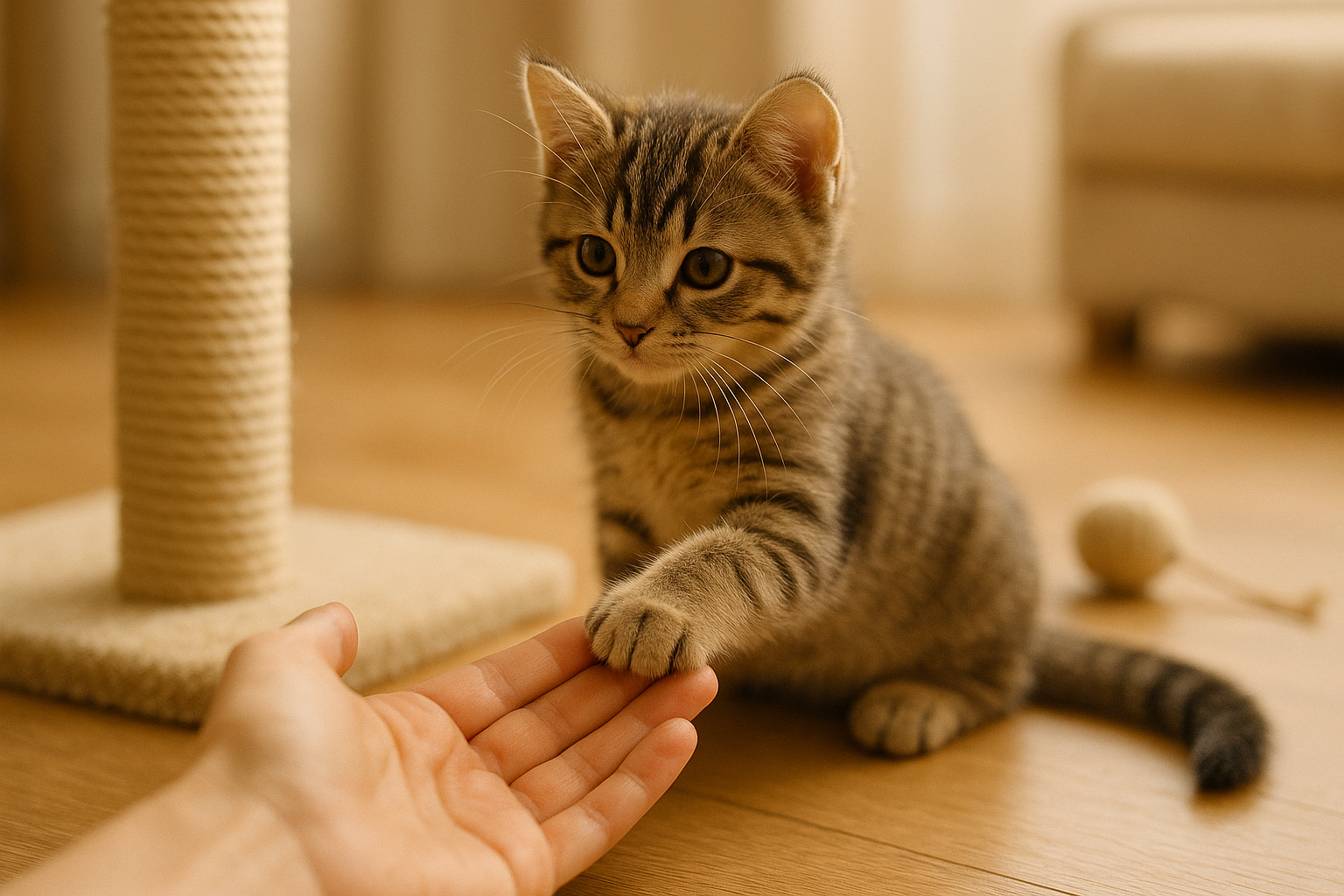
Step 6: Teach people to interact the same way
If one person uses toys but another person lets the kitten wrestle their hands, your kitten gets mixed messages.
Everyone in your home should follow the same rules.
House rules that help
- No hand wrestling
- No teasing with fingers or toes
- Stop play after scratching
- Redirect to toys
- Reward calm behavior
Consistency makes training much easier.
Step 7: Use a calm timeout only if needed
A short break can help if your kitten gets too wild. This is not punishment. It is just a reset.
If your kitten keeps scratching after redirection, calmly place them in a safe kitten-proof space with toys, water, and a cozy bed for a few minutes.
This helps them settle down without more excitement.
Important note about timeouts
Do not lock your kitten away for long periods. A timeout should be brief and calm, not scary.
Step 8: Trim your kitten’s nails safely
Training is the main fix, but nail trimming can reduce the damage while your kitten learns.
If you are new to this, ask your vet or groomer to show you how to trim only the sharp tip. You can also ask them how often your kitten needs it.
Tips for easier nail trimming
- Start when your kitten is sleepy
- Touch paws gently every day first
- Give treats after each paw
- Do only one or two nails if needed
- Stay calm and patient
Never force a frightened kitten too hard. Slow progress is still progress.
Step 9: Make your home scratching-friendly
Kittens need to scratch. It is a natural behavior. If they do not have enough good places to scratch, they may use furniture or grab onto you during play.
Give your kitten safe scratching options.
Good scratching choices
- Vertical scratching posts
- Cardboard scratchers
- Cat trees
- Scratching pads near sleeping spots
- Scratchers near rooms where your kitten plays a lot
If your kitten likes to scratch after waking up, put a scratching post close to their bed.
Step 10: Learn your kitten’s petting limits
Some kittens enjoy cuddles. Others get overstimulated quickly. If your kitten scratches during petting, the issue may not be play at all.
Watch your kitten closely.
Signs your kitten has had enough petting
- Skin twitching
- Tail flicking
- Turning head toward your hand
- Flattened ears
- Sudden tense body
- Swatting
Stop petting before your kitten reaches that point. This builds trust and prevents scratching.
How long does it take to stop scratching?
Every kitten is different. Some learn in a few weeks. Others take longer, especially if the scratching habit is strong or if different people are reacting in different ways.
The most important thing is consistency. If you keep teaching the same lesson every day, your kitten will start to understand.
You are not trying to create a perfect kitten overnight. You are helping a baby animal learn how to live peacefully with people.
Common mistakes first-time kitten owners make
You may be doing your best and still making a few normal mistakes. That is okay. Many new owners do.
Mistake 1: Moving your hand away too fast
Fast movement can trigger chasing and pouncing. If your kitten grabs your hand, try to go still first, then gently remove yourself.
Mistake 2: Laughing during rough play
Even if it seems cute at first, rough play can turn into a bad habit. What is funny at eight weeks may be painful at six months.
Mistake 3: Not giving enough enrichment
Kittens need more than food and a bed. They need play, climbing, chasing, scratching, and mental activity.
Mistake 4: Being inconsistent
If scratching is allowed sometimes, your kitten gets confused. Clear rules help your kitten feel secure.
When scratching may be a bigger problem
Most kitten scratching is normal. But sometimes there may be more going on.
Talk to your vet if:
- Your kitten seems in pain when touched
- Scratching is sudden and extreme
- Your kitten also hisses, hides, or seems very fearful
- There are signs of illness
- Your kitten is hard to handle in every situation
- The behavior gets worse instead of better
A vet can check for pain, stress, or health issues. If needed, they may suggest a cat behavior expert.
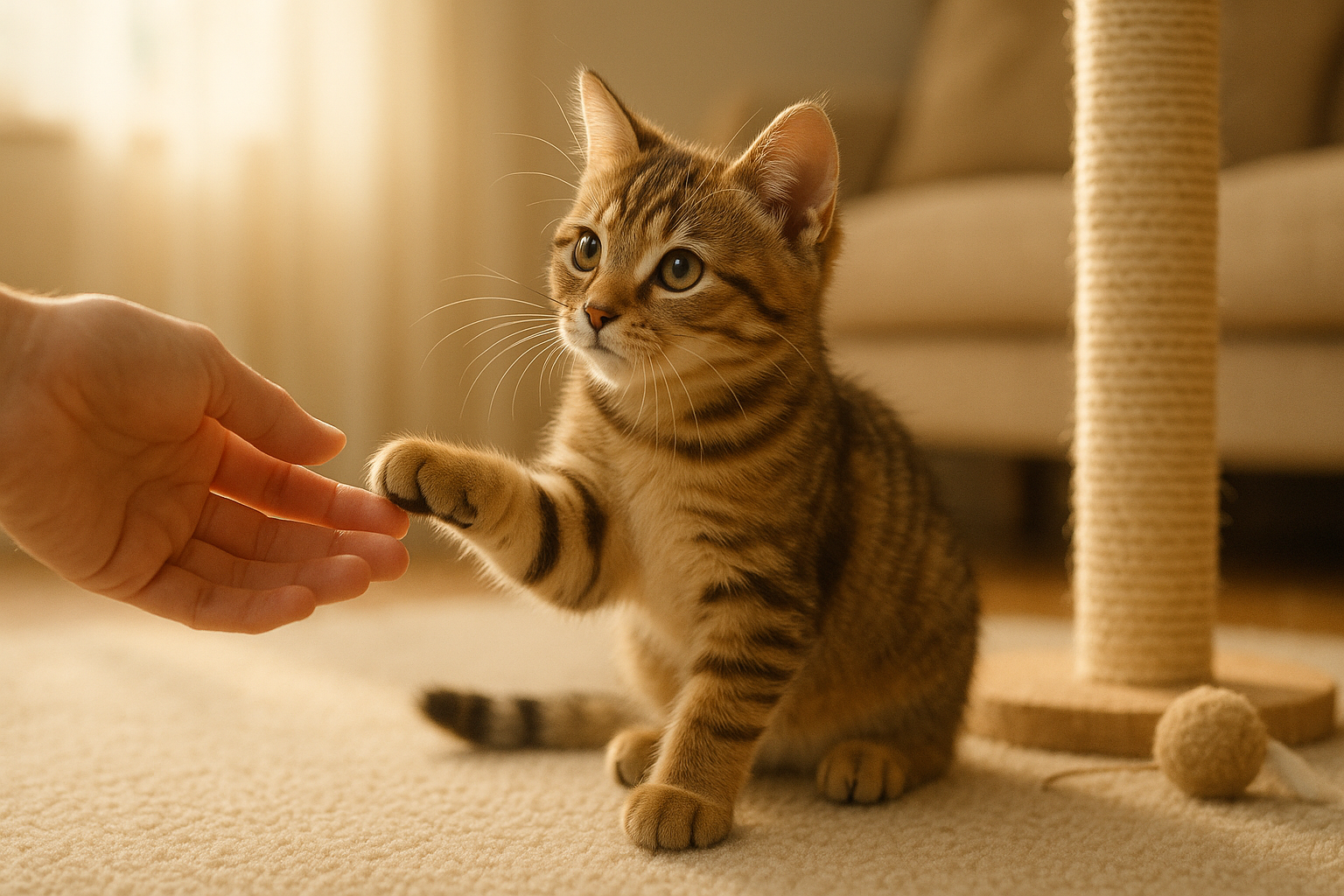
FAQ: How to train kitten not to scratch people
1. Why does your kitten scratch you when playing?
Your kitten usually sees your moving hands or feet as prey. They are playing the way kittens naturally play. Use toys instead of hands so your kitten learns what is okay to chase.
2. Should you say no when your kitten scratches?
Yes, but keep it calm and short. A simple “no” or “gentle” is enough. Then stop the play and redirect your kitten to a toy.
3. Can your kitten grow out of scratching people?
Some kittens get calmer with age, but habits do not always disappear on their own. Training helps your kitten learn faster and prevents the behavior from becoming stronger.
4. Is it okay to scruff your kitten to stop scratching?
No, that is not the best way to train. It can frighten your kitten and hurt trust. Calm redirection and consistent play rules work better.
5. How do you stop your kitten from scratching your feet?
Wear slippers if needed, move less when attacked, and toss a toy away from your body. Also give more active play before times when your kitten usually targets feet.
6. Why does your kitten scratch when you pick them up?
Your kitten may feel unsafe, overstimulated, or simply not like being held that way. Support their body well, keep holds short, and respect their comfort level.
7. Should you let your kitten play with your hands if they are gentle?
It is better not to. Even gentle hand play can teach your kitten that skin is part of the game. Toys create clearer boundaries.
8. Do nail caps or trimming solve the scratching problem?
They can reduce injuries, but they do not teach behavior. Training is still needed so your kitten learns not to scratch people.
9. How many times a day should you play with your kitten?
Most kittens need several short sessions each day. Aim for at least two to four active play times, depending on your kitten’s age and energy level.
10. What if your kitten scratches and bites at the same time?
That usually means your kitten is very excited, overstimulated, or playing too roughly. Stop the interaction, redirect to a toy, and give structured play every day.
A simple training plan you can start today
If you feel overwhelmed, keep it simple. Start with this:
- Put away hand wrestling games.
- Use a wand toy every day.
- Stop play right after scratching.
- Reward gentle behavior.
- Trim nails safely.
- Give your kitten scratching posts.
- Watch for signs of overstimulation.
- Stay consistent.
That is enough to start making real progress.
Conclusion
Learning how to train kitten not to scratch people can feel stressful at first, especially when you are tired, confused, and covered in little claw marks. But your kitten is not trying to be bad. Your kitten is learning, growing, and looking to you for guidance.
If you stay calm, use toys instead of hands, reward gentle behavior, and give your kitten enough play and scratching outlets, things usually improve a lot. Small daily habits make a big difference over time.
Be patient with your kitten, and be patient with yourself too. You are learning together. With steady practice, you can help your kitten become the happy, well behaved companion you hoped for.