
Why does your tiny kitten seem to love the table more than the floor?
If you are trying to figure out how to train kitten not to jump on table, you are not alone. Many first time kitten owners feel tired, confused, and a little stressed when their cute little pet keeps hopping onto the dining table, kitchen counter, or desk. One minute your kitten is playing on the floor. The next minute, your sandwich is gone and your kitten is standing in the middle of the table like it owns the house.
The good news is that this is a very normal kitten behavior. Your kitten is not being naughty on purpose. Your kitten is curious, full of energy, and naturally drawn to high places. That means you can teach better habits with patience, clear steps, and the right setup at home.
In this guide, you will learn why kittens jump on tables, what mistakes to avoid, and the exact steps you can use to stop the habit in a kind and effective way.
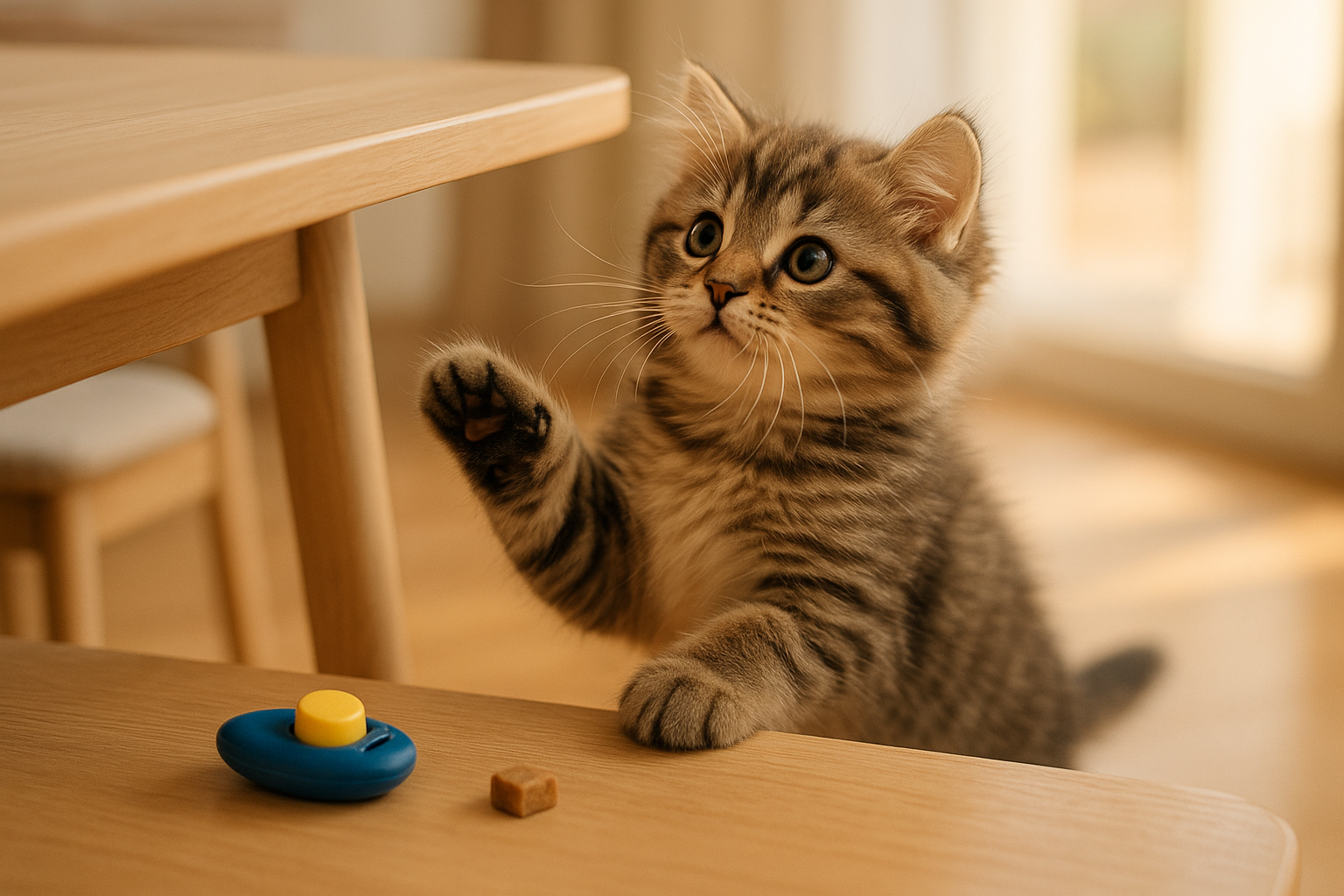
Why your kitten jumps on the table
Before you can change the behavior, it helps to understand why it happens.
Kittens love high places because being up high helps them feel safe and powerful. In nature, cats often look for spots where they can watch everything around them. Your table gives your kitten a perfect view of the room.
Your kitten may also jump on the table because:
- There is food there
- It smells interesting
- You react every time, which becomes fun attention
- The table is warm or comfortable
- There is boredom and too much extra energy
- There is no better climbing space nearby
This matters because training works best when you give your kitten a better choice, not just a punishment.
Can you train a kitten not to jump on the table?
Yes, you can. But you need to be realistic.
You are not teaching your kitten to stop liking high places. You are teaching your kitten that the table is not the right place, and that other places are better. This takes repetition, calm correction, and consistency every single day.
If one day the table is allowed and the next day it is not, your kitten will stay confused. Clear rules help your kitten learn faster.
What not to do
Many kitten owners try things that make the problem worse. If you avoid these mistakes, training will go more smoothly.
Do not yell at your kitten
Yelling may scare your kitten, but it does not teach the right behavior. Your kitten may simply learn to jump on the table when you are not around.
Do not hit, spray, or scare
Physical punishment can damage trust. It can also create fear, stress, and more unwanted behavior.
Do not reward by accident
If your kitten jumps on the table and you pick it up, talk sweetly, or offer food to get it down, your kitten may see that as a reward.
Do not leave tempting things on the table
If your kitten finds crumbs, food, toys, or fun objects there, the table becomes exciting. That makes training much harder.
Step by step: how to train kitten not to jump on table
This is the part you can start using today.
Step 1: Make the table boring
Your kitten is more likely to keep jumping on the table if something fun happens there.
Clear the table as much as possible. Remove food, wrappers, napkins, strings, cups, and anything your kitten likes to bat around. Wipe the surface so food smells are gone.
If your kitten jumps up and finds nothing interesting, the table becomes less rewarding.
Step 2: Give your kitten a better high place
This is one of the most important steps.
If you only say “no table” without giving another climbing spot, your kitten will keep trying. Put a cat tree, window perch, sturdy shelf, or kitten-safe stool near the room where your kitten likes to hang out.
When your kitten wants to climb, you want there to be a better answer ready.
Good alternatives to the table
| Better option | Why it helps |
|---|---|
| Cat tree | Gives height, scratching, and play in one place |
| Window perch | Lets your kitten watch outside |
| Cat shelf | Creates a safe high resting spot |
| Small climbing tower | Good for active kittens with lots of energy |
| Chair with blanket | A simple step up from the floor |
Make the approved spot more exciting than the table. Add a soft blanket, a toy, or treats.
Step 3: Move your kitten calmly every time
When your kitten jumps on the table, stay calm. Gently pick your kitten up or guide it down, then place it on the approved spot.
Do not turn this into a game. Keep your voice soft and neutral. You want to send a clear message: table means down, cat tree means yes.
This step only works if you do it every time.
Step 4: Reward the behavior you want
Positive reinforcement is a big part of kitten training.
When your kitten uses the cat tree, perches on the shelf, or stays off the table, reward that behavior. You can use:
- A small treat
- Gentle petting
- Praise in a calm happy voice
- A short play session
Your kitten learns faster when good choices bring good things.
A simple training pattern
- Kitten jumps on table
- You calmly place kitten on cat tree
- Kitten stays there for a moment
- You reward the cat tree choice
This teaches your kitten what to do instead.
Step 5: Use play to reduce extra energy
A kitten with too much energy will often create its own fun, and that usually means climbing, biting, scratching, or zooming around at the worst times.
Try at least two to three active play sessions each day. Use wand toys, small balls, toy mice, or chase games. Let your kitten stalk, chase, pounce, and “catch” the toy.
After play, many kittens are more relaxed and less likely to go table hunting.
Best times to play
- Before meals
- In the evening
- Before times when your kitten usually jumps up
- When your kitten starts getting wild and restless
A tired kitten is often a better behaved kitten.
Step 6: Manage food very carefully
Tables and counters often mean food. For many kittens, food is the biggest reward of all.
Never leave plates, crumbs, meat, bread, milk, or snacks where your kitten can reach them. Even one lucky food find can keep the habit going for days.
If your kitten has learned that the table sometimes offers a snack, it will keep checking.
Food habits that help training
- Feed your kitten on a regular schedule
- Put human food away right after meals
- Clean spills quickly
- Keep kitchen chairs pushed in if they help your kitten climb up
Step 7: Make access harder
Management is not the same as punishment. It simply makes the unwanted behavior less easy.
You can:
- Push chairs under the table so they cannot be used as steps
- Block access to the room when you cannot watch your kitten
- Keep counters and tables clear
- Use a kitten playpen or safe room for short unsupervised times if needed
These small changes can make a big difference, especially while your kitten is still learning.
Step 8: Be consistent with everyone in your home
If you live with family, roommates, or children, everyone needs to follow the same rule.
If one person laughs when the kitten jumps on the table, another person gives treats there, and another person says no, your kitten will stay confused.
Talk about the plan together. Make it simple:
- Table is always off limits
- Approved climbing spots are always allowed
- Reward good choices
- No mixed messages
Step 9: Train during the times your kitten usually jumps
Patterns matter. Many kittens jump on tables at certain times, such as:
- When you are eating
- When food is being cooked
- Early in the morning
- During evening zoomies
- When they want attention
Watch when it happens most. Then act before the jump. Start a play session, guide your kitten to the cat tree, or offer a puzzle toy.
It is easier to prevent the habit than to correct it after it starts.
Step 10: Be patient because kittens learn in stages
Your kitten will not become perfect in one day. Some days will feel easy. Some days will feel like you are starting over. That is normal.
Kittens are babies. They test, repeat, forget, and try again. If you stay calm and consistent, most kittens improve a lot over time.
Helpful tools that can make training easier
You do not need fancy products, but a few simple things can help.
Useful items for table jumping problems
| Tool | How it helps |
|---|---|
| Cat tree | Gives your kitten a legal climbing area |
| Wand toy | Burns energy before bad habits begin |
| Treats | Rewards the behavior you want |
| Window perch | Keeps your kitten busy and happy |
| Puzzle feeder | Fights boredom |
| Soft bed on a shelf | Creates an appealing resting place |
Try not to buy everything at once. Start with one climbing option and one interactive toy.
Why punishment usually fails
It may feel tempting to stop the behavior quickly with harsh methods. But punishment often teaches the wrong lesson.
Your kitten may learn:
- To fear you
- To jump on the table only when you are gone
- To become more anxious
- To hide or act out in other ways
Training works best when your kitten feels safe, knows the rules, and has better options.
What if your kitten only jumps on the table when you eat?
This is very common. Your food smells stronger and looks more exciting than anything else in the room.
Here is what you can do:
Before your meal
Play with your kitten for 10 to 15 minutes. Then offer your kitten its own meal or a small safe treat in another spot.
During your meal
Place your kitten on a cat tree, bed, or perch nearby. If your kitten stays there, reward after the meal.
If your kitten jumps up
Calmly place your kitten back down every single time. Do not give scraps. Even one bite from your plate can keep the begging habit alive.
What if your kitten jumps up for attention?
Sometimes the table is not about food. It is about getting you to look, talk, chase, or pick up.
In that case, try giving attention before the behavior starts. Spend a few minutes playing, petting, or sitting with your kitten. Then reward calm behavior on the floor or on the cat tree.
If your kitten learns that polite behavior gets your attention faster than table jumping, the habit often fades.
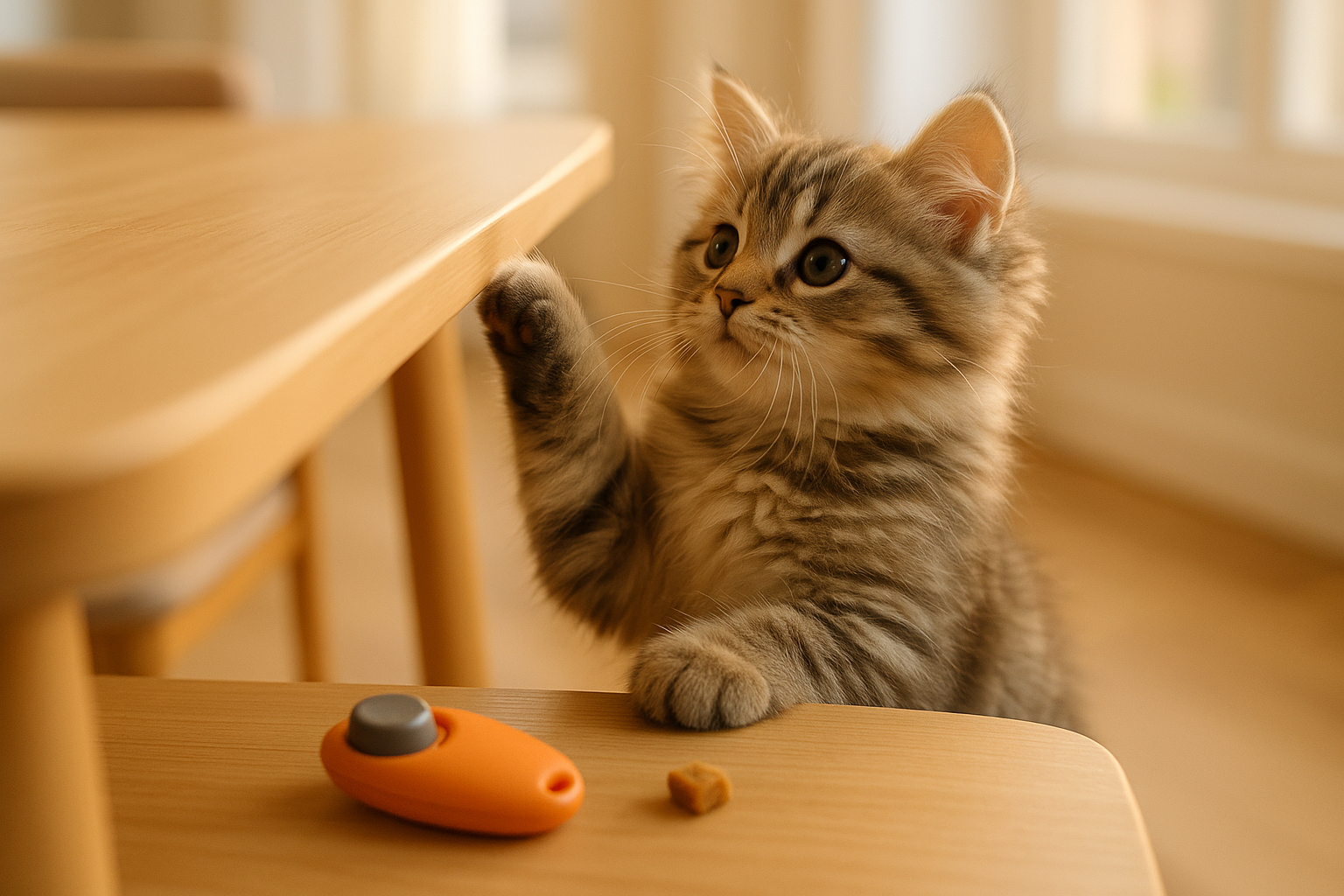
How long does it take to train a kitten not to jump on the table?
It depends on your kitten’s age, personality, and how consistent you are.
Some kittens improve within a week or two. Others take a month or longer. If the habit has been rewarded many times, it may take longer to change.
The most important thing is not speed. It is consistency.
Signs your training is working
Look for small wins, not perfection.
You may notice:
- Your kitten pauses before jumping
- Your kitten chooses the cat tree more often
- Your kitten responds when you redirect
- The jumping happens less often
- Mealtime becomes calmer
These are real signs of progress.
When table jumping may be part of a bigger problem
Sometimes the jumping is just normal kitten behavior. But in some cases, your kitten may need more support.
Think about your kitten’s full behavior. Is your kitten also:
- Biting a lot
- Crying at night
- Scratching furniture nonstop
- Acting restless all day
- Seeming lonely or bored
If yes, your kitten may need more play, enrichment, routine, and attention. Many “bad habits” improve when your kitten’s needs are met in a better way.
FAQ
1. Why does your kitten keep jumping on the table after being told no?
Your kitten does not understand “no” the way you do. Your kitten learns through repeated actions and rewards. If the table is fun, smells like food, or gets attention, your kitten will keep trying.
2. Can you use foil or sticky surfaces to stop table jumping?
Some people try these tools, but results are mixed. They may scare your kitten for a moment, but they do not teach a better behavior. It is usually more helpful to give a better climbing spot and reward it.
3. Should you let your kitten on some tables but not others?
It is better to keep the rule simple. If one table is allowed and another is not, your kitten may get confused. Clear and consistent rules help training go faster.
4. Is table jumping a sign of a badly behaved kitten?
No. Most of the time, it just means your kitten is curious, playful, and looking for height or food. This is normal cat behavior, not a sign that your kitten is mean or stubborn.
5. At what age should you start training your kitten?
You can start right away. The earlier you teach good habits, the easier it is. Young kittens learn quickly when training is gentle and consistent.
6. What is the fastest way to train a kitten not to jump on the table?
The fastest method is a mix of management and rewards. Clear the table, give a cat tree, redirect every time, and reward the approved spot. Doing all of these together works better than using only one step.
7. What if your kitten jumps on the table when you are not home?
Focus on prevention. Keep the room closed if possible, remove food, block easy climbing routes, and make other high spots more appealing. You can also set up a safe room with toys and a bed when you are away.
8. Will your kitten grow out of this behavior?
Some kittens calm down with age, but many cats still like high places as adults. If you do not train now, the habit may stay. It is better to teach the rule while your kitten is still young.
9. Can hunger make your kitten jump on the table?
Yes, sometimes. If your kitten is hungry or smells food, jumping may happen more often. A regular feeding schedule can help, but you still need to teach table manners.
10. When should you ask a vet or behavior expert for help?
Ask for help if your kitten seems extremely restless, anxious, aggressive, or impossible to redirect, or if the behavior suddenly gets much worse. A vet can rule out health issues and a behavior expert can help with a plan.
Conclusion
Are you expecting your kitten to stop overnight, or are you ready to teach one small step at a time?
Learning how to train kitten not to jump on table is really about teaching better choices. Your kitten is not trying to upset you. Your kitten is following natural instincts to climb, search, play, and investigate. When you understand that, training becomes much easier.
Keep the table boring. Give your kitten a better place to climb. Reward the behavior you want. Stay calm, stay consistent, and try not to lose heart on the messy days.
You do not need a perfect kitten. You just need progress.
With time, patience, and a simple routine, you can help your kitten grow into the calm, happy, well behaved companion you want.