
Are you tired of turning around for one second and finding your kitten standing on the kitchen counter like they own the place?
If you want to learn how to train a kitten to stay off kitchen counter spaces, you are not alone. Many first-time kitten owners deal with this. One day your kitten is tiny and sleepy, and the next day they are climbing chairs, jumping onto counters, sniffing your food, and knocking things over. It can feel funny at first, but it quickly becomes stressful.
You may worry about germs on the counter, hot pans, sharp knives, or your kitten getting hurt. You may also feel scared that if you do not stop this now, it will turn into a long-term habit. That fear makes sense. Kittens learn fast, and they repeat what works for them.
The good news is that you can teach your kitten to stay off the counter in a kind and simple way. You do not need to yell. You do not need to scare your kitten. You just need to understand why your kitten is doing it and give better choices every single day.
Why your kitten jumps on the kitchen counter
Before you can fix the problem, it helps to know why it keeps happening. Your kitten is not trying to be naughty. Your kitten is acting like a kitten.
Kittens love high places because being up high helps them feel safe. In nature, cats like to watch from above. A kitchen counter gives your kitten a high view, interesting smells, and often little bits of food.
Your kitten may also jump on the counter because:
- They smell food
- They are curious
- They want attention
- They are bored
- They like climbing
- The counter gives them a great view
- They have learned it leads to something fun
If your kitten gets food crumbs, sees birds through a nearby window, or gets your attention every time they jump up, the counter becomes very rewarding.
Why you should stop this habit early
A tiny kitten on the counter may seem harmless, but it can become a bigger issue fast. Kittens grow, jump higher, and become more confident.
Here is why it matters to train early:
| Problem | Why it matters |
|---|---|
| Food safety | Paws from the litter box on food prep spaces can spread germs |
| Injury risk | Hot stoves, boiling water, and sharp tools can hurt your kitten |
| Bad habits | The longer your kitten practices it, the harder it is to change |
| Stress | Constantly removing your kitten gets tiring and frustrating |
When you teach good habits early, you help your kitten stay safe and make daily life calmer for both of you.
The biggest mistake many kitten owners make
Many first-time owners use punishment. They clap loudly, spray water, shout, or chase the kitten off. This may stop the behavior for a moment, but it usually does not teach the lesson you want.
Your kitten may just learn to avoid the counter when you are watching. Or they may become scared of you, not scared of the counter. That hurts trust, and trust matters in training.
Instead of punishment, your goal is this:
- Make the counter boring and unrewarding
- Make allowed places more fun and rewarding
- Stay consistent every day
That is how real kitten training works.
Step-by-step: how to train a kitten to stay off kitchen counter
This training works best when you use all the steps together. Think of it as a full plan, not one magic trick.
1. Clear the counters completely
Your kitten is more likely to jump up if there is something exciting there. Even one crumb can be a reward.
Take these things off the counter:
- Food
- Dirty dishes
- Bread bags
- Cooking grease
- Treats
- Plants
- Interesting wrappers
Wipe counters often so smells do not stay behind. If your kitten jumps up and finds nothing fun, the counter becomes less exciting over time.
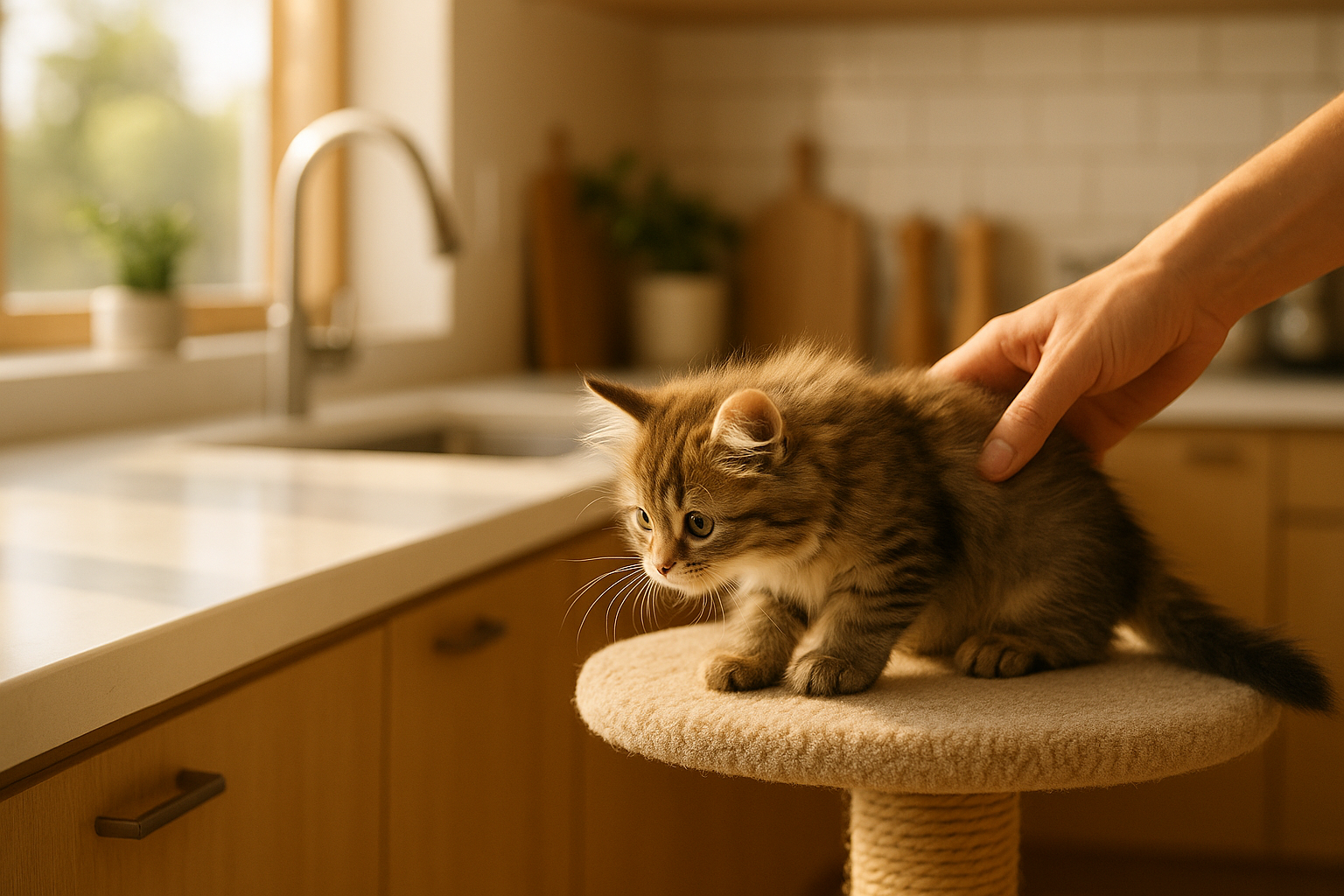
2. Give your kitten a better climbing spot
You cannot just say no. You need to say no to one place and yes to another.
Give your kitten an approved high spot nearby, such as:
- A cat tree
- A sturdy window perch
- A shelf made for cats
- A chair with a blanket if you are in the room
Cats love height. If your kitten wants to watch you cook, a cat tree in or near the kitchen can help a lot. Then your kitten can still be close to you without being on the counter.
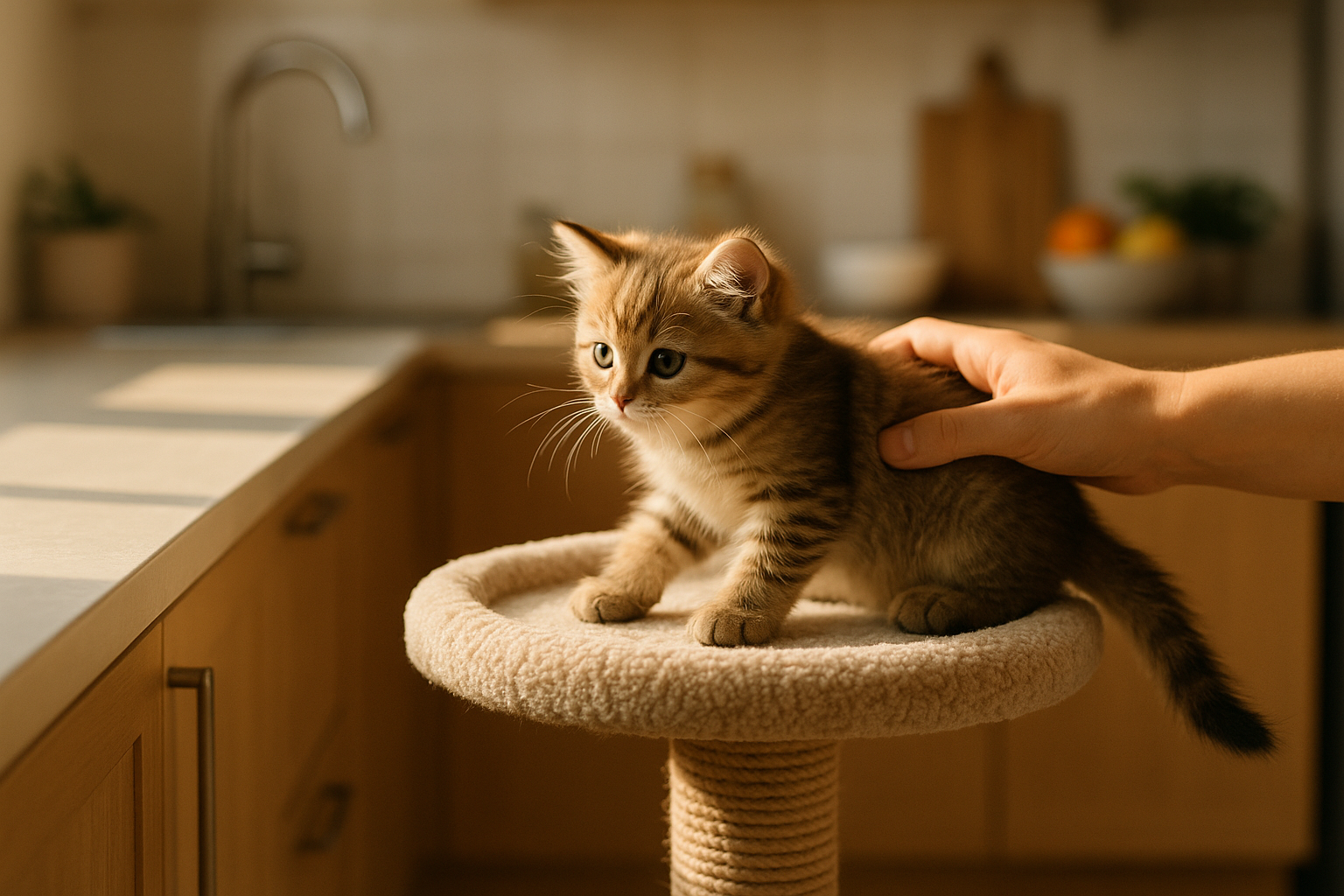
3. Reward the right place right away
When your kitten chooses the cat tree, perch, or mat instead of the counter, reward it fast.
You can use:
- Praise in a gentle voice
- A small treat
- Petting if your kitten likes touch
- A toy session
This teaches your kitten, “Good things happen when I stay here.”
Timing matters. Reward within a few seconds so your kitten connects the reward to the right action.
4. Interrupt calmly if your kitten jumps up
If you catch your kitten on the counter, stay calm. Do not yell. Do not chase.
Instead:
- Walk over quietly
- Lift your kitten down or guide them off
- Place them on the approved spot
- Reward them when they stay there
This is simple redirection. Over time, your kitten learns where you want them to be.
5. Train a “go to your spot” cue
This is one of the best practical tricks for kitchen training.
Pick a spot, like a cat tree, stool, or mat. Then teach your kitten to go there when you say a simple phrase such as “your spot.”
How to do it:
- Say “your spot”
- Toss a treat onto the approved place
- Let your kitten go get it
- Repeat many times
Soon your kitten starts moving to that place when they hear the words. This is very useful when you are cooking and need your kitten out of the way.
6. Make kitchen time less tempting
Many kittens jump up most when you are preparing food. The smells are strong, and your attention is on something else.
Try these simple changes:
- Feed your kitten before you cook
- Give a puzzle feeder during meal prep
- Offer a toy on their cat tree
- Place a bed near the kitchen
- Close the kitchen off for short periods if needed
If your kitten is busy and full, they are less likely to hunt for fun on the counter.
7. Use safe surface deterrents if needed
Some kittens need extra help breaking the habit. You can make the counter feel less attractive without frightening your kitten.
Safe options may include:
- Double-sided tape made for pets
- A plastic carpet runner placed upside down when the counter is not in use
- Foil in some cases if your kitten dislikes the texture
Be careful with anything you use. Never place anything that can hurt your kitten. Never use sticky products that are not pet safe. And never leave dangerous objects out.
These tools work best as a short-term helper while you teach better habits.
8. Block access points
Watch how your kitten gets up there. Most kittens do not jump straight from the floor at first. They use steps.
Common launch points include:
- Chairs
- Bar stools
- Small side tables
- Open shelving
- Trash cans
Move these away from the counter when possible. If access becomes harder, the habit becomes less easy to repeat.
A simple daily training routine
Training does not need to take all day. A few minutes here and there can make a huge difference.
Here is an easy routine you can follow:
| Time | What to do |
|---|---|
| Morning | Wipe counters and remove food items |
| Before cooking | Feed your kitten or give a puzzle feeder |
| During kitchen time | Guide your kitten to their spot and reward calm behavior |
| If kitten jumps up | Calmly place them down and redirect |
| Evening | Play for 10 to 15 minutes to burn energy |
A tired kitten is often a better behaved kitten. Play helps more than many people realize.
How play helps stop counter jumping
Kittens have a lot of energy. If they do not use it in healthy ways, they make their own fun. That can mean biting your hands, crying at night, scratching furniture, or jumping on counters.
Daily play helps lower problem behavior because it meets your kitten’s natural needs. Try two or three short play sessions each day.
Good toys include:
- Wand toys
- Soft balls
- Toy mice
- Crinkle toys
- Small tunnels
Let your kitten chase, pounce, and “catch” the toy at the end. This makes play feel complete and satisfying.
What to do if your kitten only jumps up when you are not looking
This is very common. You may think training is not working because the counter stays empty while you are there, but you find paw prints later.
This usually means your kitten has learned your presence matters. Now you need to make the counter unrewarding all the time, not just when you are in the room.
Focus on:
- Keeping counters spotless
- Never leaving food out
- Using safe deterrent surfaces when away
- Giving more approved climbing spots
- Practicing “your spot” every day
Consistency matters more than speed. It may take a few weeks before the habit weakens.
Should you keep your kitten out of the kitchen completely?
Sometimes yes, at least for short periods.
If you are cooking with hot oil, using the oven, carrying boiling water, or cutting food, it is okay to keep your kitten out of the kitchen. This is not mean. It is safe.
You can use:
- A baby gate if your kitten cannot jump over it
- A closed door
- A playpen for short supervised times
- Another room with toys and a cozy bed
This works best as a safety step, not the only training method.
Signs your training is working
You may not see perfect results right away, so it helps to notice the small wins.
Good signs include:
- Your kitten pauses before jumping
- Your kitten chooses the cat tree more often
- Your kitten responds to “your spot”
- Counter jumping happens less often
- Your kitten settles nearby while you cook
Progress is still progress, even if it is not perfect yet.
Common training mistakes to avoid
Even loving kitten owners can accidentally make the habit stronger. Try to avoid these common mistakes.
Inconsistent rules
If the counter is allowed sometimes and not allowed other times, your kitten gets confused. Make the rule clear every day.
Giving attention at the wrong time
If your kitten jumps up and you instantly talk, touch, or react in a big way, that attention can feel rewarding.
Not offering an alternative
If you only remove your kitten but never provide a better spot, the training feels incomplete.
Expecting instant results
Kittens need repetition. Think in days and weeks, not hours.
Using fear
Scaring your kitten can create anxiety and does not teach the right behavior clearly.
FAQ: how to train a kitten to stay off kitchen counter
1. Why does your kitten keep jumping on the counter?
Your kitten jumps up because the counter is high, interesting, and often smells like food. Curiosity and natural climbing instincts play a big part.
2. Is it too late to train your kitten if the habit already started?
No, it is not too late. It is easier to train early, but kittens can still learn new rules with steady practice.
3. Should you spray your kitten with water?
It is better not to. Spray bottles can make your kitten scared of you and usually do not solve the real problem.
4. How long does counter training take?
Some kittens improve in a few days, while others take a few weeks. It depends on your consistency and how rewarding the counter has been.
5. What is the best alternative to a kitchen counter?
A cat tree, window perch, or raised bed near the kitchen works well. Your kitten still gets height and can stay near you.
6. What if your kitten jumps up for food every time you cook?
Feed your kitten before cooking, clean surfaces well, and give them a puzzle feeder or toy during meal prep.
7. Can you use aluminum foil on counters?
Some kittens dislike foil, so it can help for a short time. But it should not be your only method. Training and redirection matter more.
8. Why does your kitten stop when you are there but do it later?
Your kitten may have learned that the rule only applies when you are watching. Make the counter boring all the time and keep using approved alternatives.
9. Is counter jumping a sign your kitten is misbehaving on purpose?
No. Your kitten is following instincts, curiosity, and rewards. They are not trying to upset you.
10. What if nothing seems to work?
Go back to the basics. Remove rewards, add climbing options, increase play, and stay consistent. If your kitten is extremely restless or unusual in behavior, ask a vet or cat behavior expert for help.
Final thoughts
If you want to know how to train a kitten to stay off kitchen counter areas, the answer is simple but important: make the counter less rewarding, make the right spots more rewarding, and repeat the lesson with patience.
Your kitten is not trying to make your life hard. Your kitten is learning the world one jump at a time. When you stay calm and show clear choices, your kitten begins to understand what you want.
Some days will feel easy. Some days your kitten will test every rule you made. That is normal. Keep going. Small daily training steps can turn a stressful kitchen into a much calmer space.
You do not need a perfect kitten. You just need steady habits, safe routines, and a little patience. Over time, you will likely see the change you want: a happy, well-behaved kitten who knows the kitchen counter is not their place.