
Have you ever wondered why your kitten runs to hide from some people, scratches when someone tries to pet them, or seems sweet one minute and scared the next?
If you are trying to learn how to train a kitten to be friendly with people, you are not alone. Many first-time kitten owners feel confused at the start. You want a loving kitten who enjoys being around your family and guests. Instead, you may be dealing with biting, hiding, crying at night, or wild zoomies that make everything feel harder than expected.
The good news is this: most kittens can learn to feel safe and happy around people. You do not need to force your kitten to be social. You just need to teach them in a gentle, smart, step-by-step way.
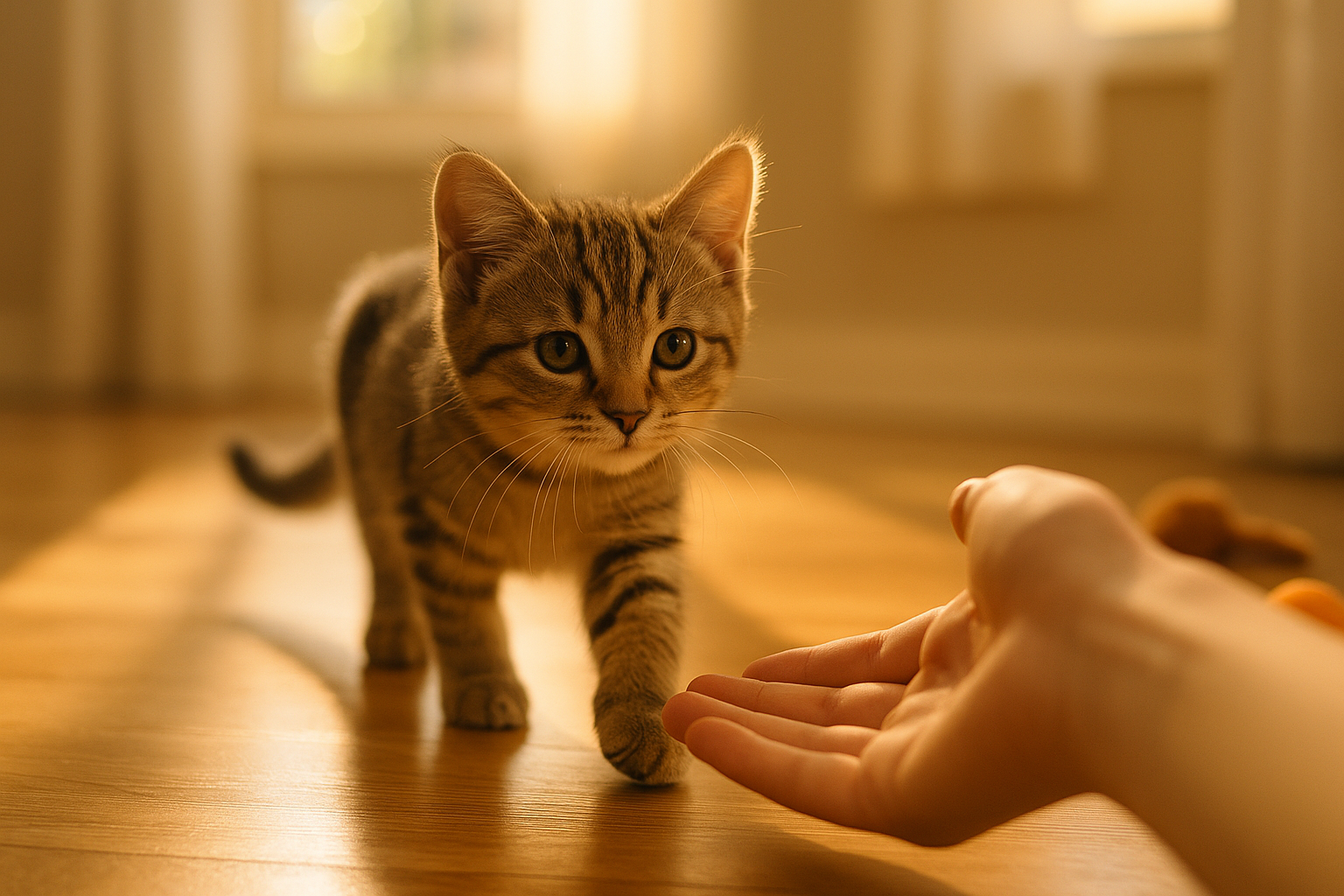
How to Train a Kitten to Be Friendly With People
When you train a kitten to like people, you are really doing two things at once. First, you are helping your kitten feel safe. Second, you are helping your kitten connect people with good experiences.
A friendly kitten is usually not born fully calm and trusting. They learn it over time. If your kitten has had little human contact, had a scary start in life, or is naturally shy, they may need more patience. That is normal.
Your goal is not to create a perfect kitten overnight. Your goal is to help your kitten slowly think, “People are safe. People are kind. People bring comfort, play, and food.”
Why Some Kittens Are Not Friendly at First
Before you start training, it helps to know why your kitten may seem nervous or grumpy.
Your kitten may be scared
A new home is a huge change. New sounds, new smells, new people, and new rules can be overwhelming. Even a healthy, playful kitten may hide at first.
Your kitten may not have enough social time yet
Kittens learn a lot about people when they are very young. If they did not spend enough safe time with humans early on, they may act shy or defensive now.
Your kitten may be overstimulated
Some kittens like a few gentle pets, then suddenly bite or swat. This does not always mean they are mean. It often means they have had enough touch and do not know how to say it calmly yet.
Your kitten may have too much energy
A kitten with extra energy may bite hands, pounce on feet, and seem wild around people. That is often a play problem, not a personality problem.
Your kitten may not feel well
If your kitten suddenly becomes unfriendly, painful handling could be the cause. Ear pain, stomach trouble, injury, or illness can make even a sweet kitten avoid people. If behavior changes fast, talk to your vet.
What a Friendly Kitten Looks Like
A friendly kitten does not have to love every person right away. That is important to remember.
Your kitten is becoming friendly if they:
- Stay in the room when people are nearby
- Come closer out of curiosity
- Eat treats near people
- Allow gentle petting
- Play with you
- Relax instead of hiding all day
- Recover faster after being startled
- Show interest in guests after some time
Some kittens become lap cats. Some stay more independent. Both can still be friendly.
Step 1: Give Your Kitten a Safe Start
If your kitten feels scared, training will not go well. Safety comes first.
Set up a quiet room or calm area with:
- Food and water
- A litter box
- A soft bed
- A hiding spot
- Toys
- A scratching post
This space lets your kitten settle in without too much pressure. If you bring your kitten straight into a loud home with children chasing them or people picking them up all day, your kitten may learn that people are stressful.
Sit quietly in the room with your kitten. Do not stare. Do not grab. Just let them notice you.
This is one of the best first lessons in how to train a kitten to be friendly with people. You show your kitten that being near you does not lead to fear.
Step 2: Let Your Kitten Come to You
This part can feel slow, but it works.
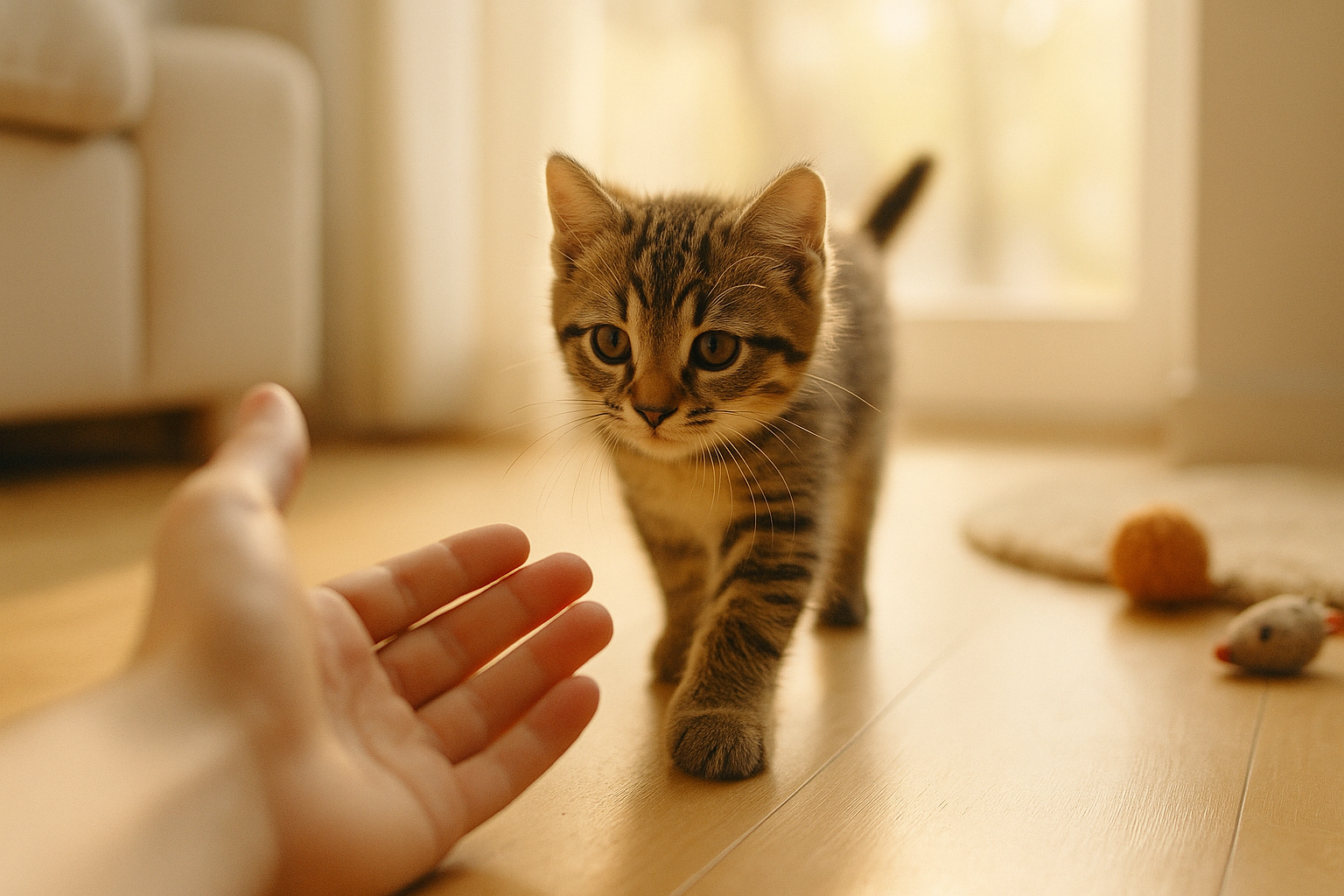
Instead of walking up and reaching for your kitten every time, let your kitten make the first move when possible. Sit on the floor. Turn your body a little to the side. Hold out one finger for them to sniff if they seem curious.
If your kitten comes near you, stay calm. Speak softly. You can offer a treat or a toy. This teaches your kitten that approaching people leads to something nice.
If your kitten backs away, do not chase them. Chasing breaks trust.
Signs your kitten is ready for contact
You can try gentle contact if your kitten:
- Walks toward you
- Sniffs your hand
- Rubs against you
- Purrs
- Keeps their body loose
- Holds their tail in a relaxed or upright way
If your kitten crouches, flattens their ears, flicks their tail hard, or hides, give them space.
Step 3: Use Food to Build Trust
Food is one of your best tools. Many kittens learn quickly when treats are part of the lesson.
Start by placing treats near your kitten while you sit nearby. Then place treats a little closer to you over time. Later, offer treats from your hand if your kitten is comfortable.
You can also use meals to create positive social time. Sit in the room while your kitten eats. Then slowly move closer over several days.
Simple trust-building food plan
| Day range | What you do | What your kitten learns |
|---|---|---|
| Days 1 to 3 | Sit quietly while kitten eats at a distance | People can be near food safely |
| Days 4 to 7 | Move a bit closer during meals | People are not a threat |
| Week 2 | Offer treats by hand if kitten is calm | People bring rewards |
| Week 3 and after | Use treats during petting and play | Human contact feels good |
Do not rush this. If your kitten stops eating because they feel nervous, you moved too fast.
Step 4: Teach Gentle Touch the Right Way
Many first-time owners make one big mistake. They pet too much, too soon.
Start with short, gentle touches on areas most kittens accept well, such as:
- The side of the face
- Under the chin
- The top of the head
- Shoulders
Avoid the belly at first. Many kittens do not like belly touches even if they roll over. That position can mean trust, play, or defense. It does not always mean “pet me here.”
Keep petting very short. One or two soft strokes can be enough. Then stop and see what your kitten does.
If your kitten leans in, purrs, or stays relaxed, that is good. If they turn their head fast, swat, bite, or move away, stop.
A simple petting rule
Think: touch, pause, watch.
That little pause helps you learn your kitten’s comfort level. It also helps your kitten feel in control.
Step 5: Play Every Day to Reduce Biting and Fear
Play is not just fun. It is training.
A kitten with no healthy play outlet is more likely to bite hands, attack ankles, scratch furniture, and act wild with people. Interactive play helps your kitten use hunting energy in the right way.
Use toys like:
- Wand toys
- Soft balls
- Toy mice
- Crinkle toys
- Puzzle feeders
Do not use your fingers as toys. Do not wiggle your hands under blankets to invite attacks. That teaches your kitten that human body parts are for biting.
Best play routine for social training
Try two to four short play sessions each day, about 10 to 15 minutes each. End with a treat or meal when possible. This follows the natural hunt, eat, rest pattern.
A tired kitten is often a friendlier kitten.
Step 6: Teach Your Kitten That Hands Are Safe
If your kitten bites or swats at hands, do not punish them. Punishment can make a kitten more fearful and less trusting.
Instead:
- Stop moving your hand.
- Calmly pull away.
- Redirect with a toy.
- End the interaction if needed.
If your kitten bites during petting, they may be overstimulated. If they bite during play, they may need better toy play. If they bite when picked up, they may not feel secure.
What to do instead of punishment
| Problem | Better response |
|---|---|
| Biting hands during play | Use wand toy, not fingers |
| Swatting during petting | Pet less, stop earlier |
| Scratching when lifted | Pick up less often, train slowly |
| Chasing feet | Increase daily play sessions |
Your kitten is not trying to be bad. Your kitten is trying to communicate.
Step 7: Help Your Kitten Get Used to Different People
A kitten may trust you but still fear strangers. That is common.
Once your kitten feels safe with you, gently introduce other people. Start with calm adults who can follow directions.
Ask visitors to:
- Sit quietly
- Avoid staring
- Speak softly
- Offer treats
- Let the kitten approach first
- Avoid grabbing or cornering the kitten
Keep early visits short and calm. A noisy group can scare a kitten and undo progress.
If you have children in the home
Children and kittens can be wonderful together, but they need guidance. Teach children to:
- Sit on the floor
- Use gentle hands
- Not pull the tail
- Not chase the kitten
- Let the kitten walk away
- Use toys for play instead of hands
Your kitten will feel friendlier with people if every person respects their space.
Step 8: Train for Handling a Little at a Time
A friendly kitten should also learn to accept normal handling. This includes being touched on the paws, ears, and mouth, and being picked up briefly if needed.
Go slowly.
Easy handling practice
- Touch one paw, then give a treat
- Lift one ear flap, then give a treat
- Touch the body gently, then give a treat
- Lift your kitten for one second, then give a treat and put them down
Do not hold your kitten too long. Build up in tiny steps.
This helps your kitten stay calmer for nail trims, vet visits, and everyday care.
Step 9: Keep a Calm Routine
Kittens learn best when life feels predictable.
Try to keep a regular pattern for:
- Meals
- Play
- Rest
- Litter box cleaning
- Quiet bonding time
A kitten who knows what comes next often feels safer. A safer kitten is more social.
If your home is loud and busy, give your kitten breaks in a quiet space. Friendly does not mean your kitten should handle stress all day long.
Step 10: Reward the Behavior You Want
When your kitten does something good, reward it right away.
Reward behaviors like:
- Coming near you
- Sitting calmly
- Letting you pet them
- Playing nicely
- Greeting a visitor
- Staying relaxed during handling
Rewards can be:
- Treats
- Soft praise
- Gentle petting
- Play
- A meal
Kittens repeat what works for them. If being near people brings good things, your kitten will want more of it.
Common Mistakes That Make a Kitten Less Friendly
Sometimes owners mean well but accidentally slow down progress.
Moving too fast
If you force petting, holding, or social visits too early, your kitten may become more nervous.
Punishing fear
Never yell, tap, spray, or scare your kitten for hiding, biting, or scratching. Fear-based behavior gets worse with harsh treatment.
Not giving enough play
Many “bad” kitten behaviors are really signs of boredom and extra energy.
Letting rough play happen
If people use hands as toys, the kitten learns bad habits quickly.
Ignoring body language
A kitten often gives warnings before biting or scratching. Learn to notice those signs early.
Signs Your Kitten Is Making Progress
Progress may be slow, but small steps matter.
You may notice that your kitten:
- Hides less often
- Comes out faster after noise
- Accepts treats from your hand
- Seeks you out for play
- Enjoys short petting sessions
- Stays calmer when guests visit
- Sleeps near you
- Follows you around the house
These are big wins. Celebrate them.
When to Get Extra Help
Some kittens need more support. Talk to your vet or a cat behavior expert if your kitten:
- Stays terrified for weeks with no improvement
- Shows extreme aggression
- Stops eating
- Has litter box problems along with fear
- Seems in pain
- Suddenly changes behavior
There may be a health issue, stress issue, or early trauma that needs special care.
FAQ About How to Train a Kitten to Be Friendly With People
1. How long does it take to make a kitten friendly?
It depends on your kitten’s age, personality, and past experiences. Some kittens warm up in days. Others need weeks or even months. Slow progress is still progress.
2. Can a shy kitten become friendly?
Yes, many shy kittens become very affectionate with patient training. Your kitten may never be the most outgoing cat, but they can still learn to trust and enjoy people.
3. Should you pick up your kitten often to make them used to it?
No, not at first. If your kitten does not like being picked up, too much lifting can make them more resistant. Start with very short lifts and reward each one.
4. Why does your kitten bite when you pet them?
Your kitten may feel overstimulated, playful, or unsure. Pet for a shorter time and watch body language. Many kittens do best with gentle, brief contact.
5. Is it too late to socialize an older kitten?
No, but it may take more time. Younger kittens often learn faster, but older kittens can still build trust through calm handling, treats, and daily routine.
6. How do you make your kitten like visitors?
Ask visitors to stay calm, sit down, and offer treats. Let your kitten choose whether to come close. Do not let guests chase or grab your kitten.
7. What if your kitten hides all the time?
Give your kitten a quiet safe space and reduce pressure. Sit nearby, offer treats, and let them come out on their own. If hiding continues for a long time, check with your vet.
8. Should you punish hissing or scratching?
No. Hissing and scratching are warning signs that your kitten feels scared or overwhelmed. Punishment can increase fear. Instead, step back and adjust your approach.
9. What toys help a kitten bond with people?
Wand toys are one of the best choices because they let your kitten play with you safely. Balls, toy mice, and puzzle toys also help build positive interaction.
10. Can treats spoil your kitten during training?
Not when used the right way. Small treats are a helpful reward. Just keep portions small and use them to teach calm, friendly behavior.
Conclusion
If you want to know how to train a kitten to be friendly with people, the answer is simple, even if the process takes time. You help your kitten feel safe. You use treats, play, and gentle touch. You respect their signals. You stay patient every day.
Your kitten does not need a harsh lesson. Your kitten needs a kind teacher.
Some days will feel easy. Some days will feel messy. Your kitten may bite, hide, cry at night, or scratch the couch while you are still figuring things out. That does not mean you are failing. It means you are learning together.
Stay calm. Keep sessions short. Reward the good moments. Protect your kitten from scary handling. Little by little, your kitten can grow into a calm, trusting companion who feels happy around you and other people.