
Are you feeling tired, confused, and a little worried because your new kitten keeps peeing outside the litter box?
If yes, you are not alone. Many first-time kitten owners go through this. You bring home a tiny, sweet kitten, and then suddenly you are cleaning puddles from the floor, washing blankets, and wondering if you are doing something wrong. The good news is this: how to litter train a kitten fast at home is usually much easier than it seems when you use the right steps.
Kittens are small, curious, and still learning. They do not always understand where to go at first. Some kittens learn in a day or two. Others need a little more practice and patience. That is normal. It does not mean your kitten is stubborn or bad. It just means your kitten is a baby.
In this guide, you will learn simple step-by-step ways to litter train your kitten at home. You will also learn why accidents happen, what mistakes to avoid, and how to help your kitten build good habits quickly. If you want a calm, clean home and a happy well-behaved kitten, this article will help you get there.
Why litter training matters so much
Litter training is one of the first and most important things your kitten needs to learn. When your kitten knows where to go, life becomes much easier for both of you.
A well litter-trained kitten helps you avoid daily stress. You do not have to keep checking corners, rugs, beds, and laundry baskets for messes. Your kitten also feels safer when there is a clear bathroom spot.
Good litter habits can also stop bigger problems later. If a kitten gets used to going anywhere in the house, the habit can become harder to fix. That is why starting early is so helpful.
Can kittens learn to use a litter box naturally?
Yes, many kittens have a natural instinct to dig and cover their waste. That means litter training often comes more naturally than people expect. In the wild, cats hide their scent to stay safe, and covering waste is part of that behavior.
But instinct alone is not always enough. Your kitten still needs the right setup. If the litter box is hard to reach, too dirty, too scary, or the litter feels strange, your kitten may choose somewhere else.
So the goal is simple. You want to make the litter box the easiest, safest, and nicest place for your kitten to use.
When should you start litter training a kitten?
You should start as soon as your kitten comes home. Even very young kittens can begin learning right away.
Most kittens are ready to use a litter box by around 3 to 4 weeks old, especially if they have started moving around on their own. If your kitten is older than that, training can still happen fast.
The earlier you begin, the easier it usually is. Young kittens are still forming habits, so this is the best time to teach them what to do.
What you need before you start
Before training begins, gather the basic things your kitten needs. The setup matters more than many people think.
Basic litter training supplies
You do not need anything fancy. You just need the right items.
| Item | Why it helps |
|---|---|
| Low-sided litter box | Easy for a small kitten to climb into |
| Unscented litter | Gentler and less confusing for kittens |
| Litter scoop | Keeps the box clean every day |
| Enzyme cleaner | Removes smell from accidents properly |
| Small mat under box | Catches litter from tiny paws |
| Treats or praise | Helps your kitten feel good after success |
Pick the right litter box
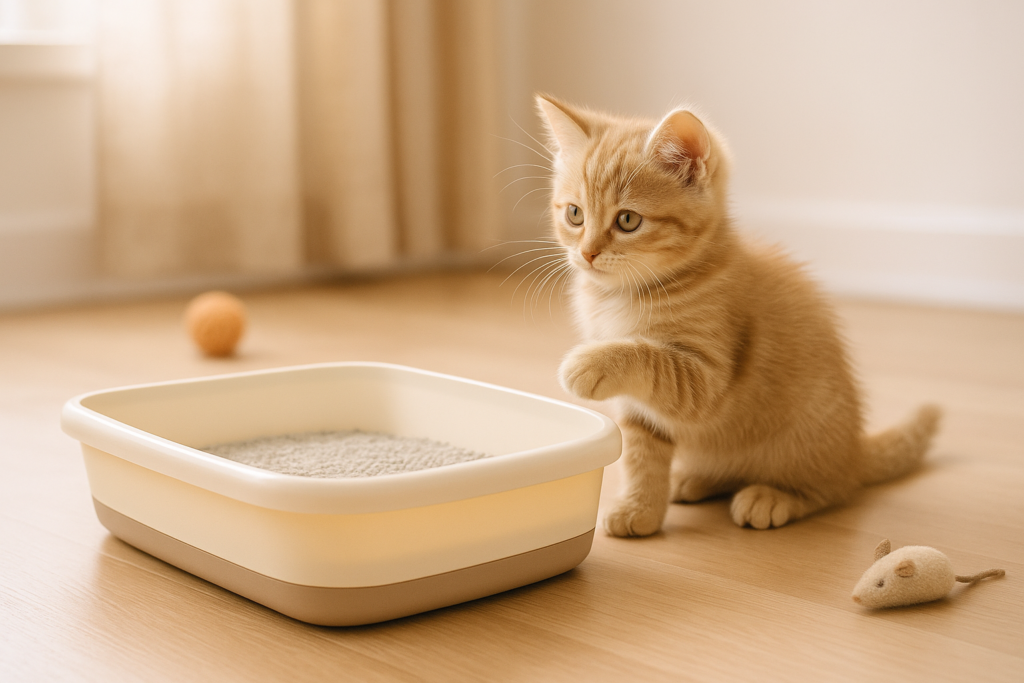
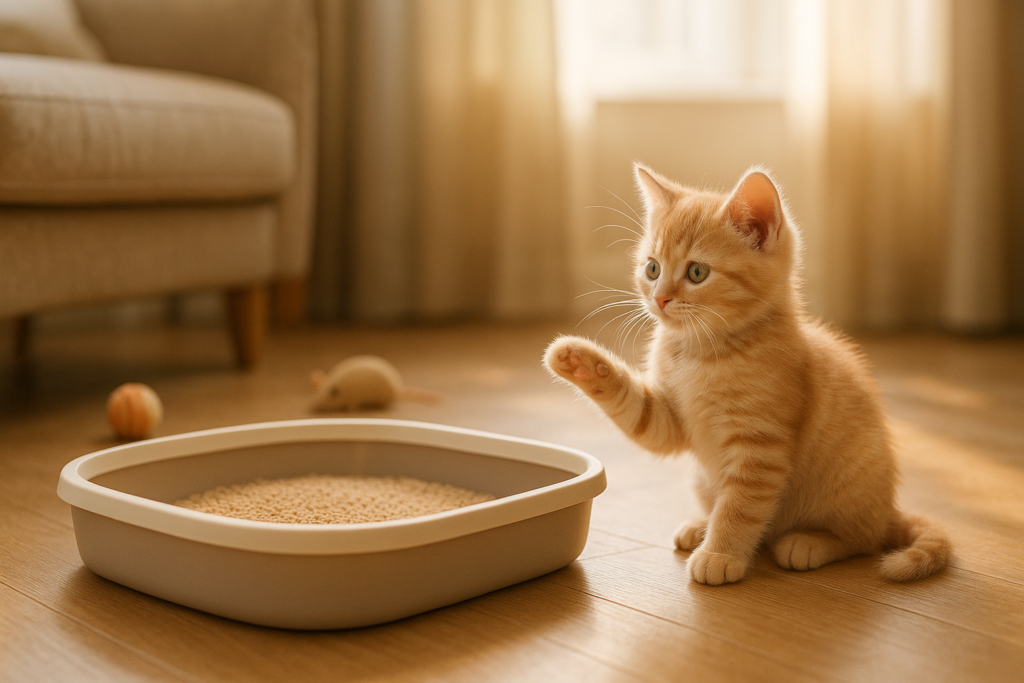
A huge box may seem better, but for a tiny kitten, it can be hard to climb into. Start with a shallow litter box that your kitten can enter without struggling.
If the sides are too high, your kitten may pee beside it instead of inside it. You want the box to feel easy and safe.
Pick the right litter
Choose unscented, soft litter. Strong smells may bother your kitten. Some kittens also dislike rough textures under their paws.
Clumping litter is common, but for very young kittens, some people prefer non-clumping litter because kittens sometimes taste things they should not. If your kitten is still very small, ask your vet what is safest.
Step-by-step: how to litter train a kitten fast at home
This is the part you really need. These steps are simple, practical, and work well for most kittens.
Step 1: Set up the litter box in the right place
Location matters a lot. Put the litter box in a quiet, easy-to-reach area. Your kitten should be able to find it quickly without walking too far.
Do not place the box near loud machines like a washer or dryer. A sudden noise can scare your kitten and make the box feel unsafe. Also keep the litter box away from food and water bowls. Cats usually do not like eating near where they go to the bathroom.
If your home is large, place more than one litter box around the house at first. A tiny kitten may not make it to one box in time.
Good litter box locations
A good place is calm, easy to access, and not crowded. Think about where your kitten spends most of the day.
Some good spots include:
- A quiet bathroom
- A laundry room if it is not noisy
- A bedroom corner
- A calm hallway
Step 2: Show your kitten the box right away
As soon as your kitten comes home, gently place your kitten in the litter box. Do not force your kitten to stay there too long. Just let your kitten sniff, step around, and look at it.
This helps your kitten connect the box with a bathroom spot. You can do this several times on the first day.
It is especially important after meals, after naps, and after playtime. Kittens often need to go during those times.
Step 3: Keep your kitten in a small area at first
If your kitten has full access to the whole house, accidents are more likely. There is just too much space, and your kitten may not remember where the box is.
Start by keeping your kitten in one small room with food, water, a bed, toys, and the litter box. This helps your kitten build the habit faster.
Once your kitten uses the litter box consistently for several days, you can slowly allow access to more rooms.
Why this works
This step lowers confusion. Your kitten learns one bathroom location before dealing with a larger home. It is like teaching one simple lesson before moving to the next one.
Step 4: Put your kitten in the box at the right times
You do not need to wait for an accident. Instead, guide your kitten to the litter box during common bathroom times.
The best times include:
- Right after waking up
- Right after eating
- Right after drinking
- Right after energetic play
- Any time your kitten starts sniffing, circling, or squatting
When you notice these signs, gently carry your kitten to the box. If your kitten uses it, praise softly.
Step 5: Praise success right away
When your kitten uses the litter box, keep your reaction calm and positive. Soft praise works well. You can say something simple like, “Good job,” in a gentle voice.
Some kittens also like a tiny treat right after. This helps your kitten connect the litter box with a good result.
Do not clap loudly or act too excited. A kitten can get startled easily. Calm praise is best.
Step 6: Clean accidents the right way
Accidents happen. Even smart kittens miss sometimes. What matters is how you clean the mess.
Use an enzyme cleaner to remove the smell fully. If you only use soap or a regular spray, your kitten may still smell urine and return to that same spot.
Do not use ammonia-based cleaners. These can smell like urine to cats and may make the problem worse.
Never punish your kitten
Do not yell. Do not tap your kitten. Do not rub your kitten’s nose in the mess. These methods do not teach the right behavior. They only create fear and stress.
A scared kitten may hide, avoid you, or become even more confused about where to go.
Step 7: Scoop the litter box every day
Cats like clean bathrooms, just like you do. If the litter box is dirty, your kitten may decide to go somewhere else.
Scoop out waste at least once or twice a day. Change the litter regularly, and wash the box with mild soap and warm water.
A clean box tells your kitten this is still the right place to use.
Step 8: Add more boxes if needed
A good rule is one litter box per cat, plus one extra. Even with one kitten, having two boxes can help, especially in a larger home.
Some kittens like to pee in one box and poop in another. Some simply want a backup if one box feels too dirty.
More boxes can speed up training because there is always one nearby.
Common reasons your kitten is not using the litter box
If training is not going well, there is usually a reason. Your kitten is not trying to upset you. Something is getting in the way.
The box is too hard to reach
If your kitten has to climb stairs or cross a big house, accidents can happen. Tiny kittens have tiny bladders. They cannot hold it long.
Keep a box close by until your kitten gets older and more confident.
The box is too dirty
This is one of the most common reasons. Many kittens will avoid a box that smells bad or has too much waste in it.
If your kitten uses the box once and then avoids it later, cleanliness may be the problem.
The litter feels wrong
Some kittens dislike certain textures or scents. If your kitten stands in the box but jumps out right away, the litter may be bothering the paws or nose.
Try a softer, unscented litter and see if behavior improves.
The box feels scary
If the box is near loud noises, busy feet, or barking dogs, your kitten may avoid it.
Kittens need a quiet place to feel safe enough to go.
Your kitten is stressed
Moving to a new home is a huge change. New smells, new people, new sounds, and maybe no mother or littermates nearby can make a kitten feel worried.
Stress can lead to accidents. Keep things calm, gentle, and predictable.
There may be a health problem
If your kitten suddenly stops using the litter box, cries while peeing, has diarrhea, strains, or pees very often, call your vet. Medical issues can affect litter habits.
A kitten with pain will not learn well until the health problem is treated.
Simple kitten behavior signs to watch
Your kitten often shows clues before needing the bathroom. Learning these signs can help you act fast.
Common signs your kitten needs the litter box
- Sniffing the floor
- Scratching at corners
- Circling one spot
- Squatting
- Suddenly stopping play and wandering off
- Meowing in a restless way
When you see these signs, calmly place your kitten in the litter box.
Best daily routine for faster litter training
Kittens do better with routine. A simple daily pattern helps your kitten know what to expect.
Here is an easy example:
| Time | What to do |
|---|---|
| Morning wake-up | Place your kitten in the litter box |
| After breakfast | Place your kitten in the litter box again |
| After playtime | Watch for signs and guide to box |
| After naps | Place your kitten in the litter box |
| Evening meal | Repeat litter box trip |
| Before bedtime | One last trip to the box |
This does not have to be perfect. You are just making bathroom chances easier.
What to do if your kitten keeps peeing on the bed, carpet, or couch
This is very frustrating, especially when you are already tired. Soft places can feel nice to a kitten because they are quiet, absorbent, and easy to dig at.
First, clean the area fully with enzyme cleaner. Then block access if possible for a while. Close the bedroom door, cover the couch, or use a playpen or small room until the litter habit is stronger.
You can also place a litter box closer to the problem area for a short time. Once your kitten is using it well, move the box slowly to the place you want it.
How long does it take to litter train a kitten?
Some kittens learn in one or two days. Many learn within a week. Others may take a few weeks, especially if they are very young, stressed, or had a rough start.
The speed depends on:
- Your kitten’s age
- The litter box setup
- How consistent you are
- Your kitten’s stress level
- Any medical issues
If you stay calm and follow the same routine every day, progress usually comes faster.
Mistakes that slow down litter training
Sometimes the problem is not the kitten. It is the setup or routine. Here are common mistakes to avoid.
Using a box that is too big or too high
A kitten should be able to enter the box without help. If not, choose a smaller or lower one.
Switching litter too often
Cats can be sensitive to change. If you keep changing brands, textures, or scents, your kitten may get confused.
Stick with one good litter at first.
Giving too much freedom too soon
A whole house can be too much for a baby kitten. Start small, then increase space slowly.
Not cleaning old accident spots fully
If the smell remains, your kitten may think that spot is still okay to use.
Punishing your kitten
Punishment creates fear, not understanding. Your kitten learns best from gentle guidance and repetition.
How to litter train a stubborn kitten
Sometimes a kitten seems stubborn, but usually the kitten is just confused, sensitive, or stressed. A “stubborn” kitten often needs a more careful setup.
Try these ideas:
- Use a smaller room for a few days
- Add a second litter box
- Try softer unscented litter
- Scoop more often
- Bring your kitten to the box more frequently
- Keep things calm and quiet
- Reward every success
Most kittens improve when the setup becomes easier for them.
How to handle nighttime accidents
Night can be hard because you are asleep and your kitten is still learning. If accidents happen overnight, keep your kitten in a safe small room at night with a litter box nearby.
Make sure the room has:
- A bed
- Water
- Toys
- A clean litter box
This helps your kitten succeed even while you sleep.
How litter training connects with other kitten problems
You may also be dealing with crying, biting, climbing, and scratching furniture. That can make everything feel like too much.
The good news is that routine helps all of it. When your kitten has regular meal times, play times, rest times, and litter box trips, your kitten usually feels calmer. A calmer kitten often cries less, learns faster, and acts out less.
Litter training is not just about the bathroom. It is part of helping your kitten feel safe and settled in your home.
When to call the vet
Sometimes litter problems are not just training problems. Contact your vet if you notice:
- Crying while using the litter box
- Blood in urine or stool
- Diarrhea lasting more than a day
- Straining with little or no pee
- Very frequent peeing
- Suddenly stopping litter box use after doing well
- Extreme tiredness or poor appetite
Your kitten may have a urinary issue, stomach issue, or another health problem that needs care.
FAQ about how to litter train a kitten fast at home
1. How do you litter train a kitten fast at home?
You litter train a kitten fast at home by using a low litter box, placing it in a quiet area, keeping your kitten in a small room at first, guiding your kitten to the box after meals and naps, and cleaning accidents with enzyme cleaner. Consistency is the key.
2. At what age should a kitten start using a litter box?
Most kittens can start learning at about 3 to 4 weeks old. If your kitten is older, you can begin right away when your kitten comes home.
3. Why is your kitten peeing outside the litter box?
Your kitten may be peeing outside the litter box because the box is dirty, too far away, too hard to enter, in a noisy spot, or because the litter feels unpleasant. Stress or illness can also be the cause.
4. Should you put your kitten in the litter box after eating?
Yes, this is a very helpful habit. Many kittens need to go soon after eating, so placing your kitten in the box after meals can speed up training.
5. What type of litter is best for a kitten?
Unscented, soft litter is usually best. Strong scents and rough textures can turn some kittens away. If your kitten is very young, ask your vet which litter is safest.
6. Is it okay to use a covered litter box for a kitten?
Usually, an open litter box is easier for a kitten at first. Covered boxes can feel dark, trapped, or confusing. Once your kitten is fully trained, you can decide if a covered box works.
7. How many litter boxes does one kitten need?
One kitten should have at least one litter box, but two is often even better. If your home is large, extra boxes can prevent accidents.
8. What should you do when your kitten has an accident?
Clean the area with enzyme cleaner and do not punish your kitten. Then think about why the accident happened and make changes, like moving the box closer or cleaning it more often.
9. How long does litter training usually take?
Many kittens learn within a few days to a week. Some need longer. It depends on age, routine, stress, and whether the litter box setup fits your kitten well.
10. When should you worry about a litter box problem?
You should worry if your kitten cries while peeing, strains, has blood in urine or stool, has ongoing diarrhea, or suddenly stops using the litter box after learning. These signs mean you should call your vet.
Final thoughts and friendly advice
Litter training can feel stressful at first, especially when you are tired and your kitten seems to have accidents at the worst times. But most kittens really can learn fast with the right help.
Keep it simple. Give your kitten a clean, easy-to-reach litter box. Show your kitten where it is often. Keep your kitten in a small area at first. Praise success. Clean accidents properly. Stay patient.
If progress feels slow, do not give up. Your kitten is still learning your home, your routine, and how to feel safe. Every little success matters. In a short time, the messy days usually start to fade, and you get what you wanted from the start: a happy kitten, a calmer home, and more confidence that you are doing a good job.
And you are doing a good job. Training a kitten takes patience, but with steady steps, you and your kitten can get there together.