
Have you ever worried that your cat feels bored, lonely, or stressed while you are away from home?
If you live with an indoor cat, this thought can stick in your mind all day. You may wonder if your cat sleeps peacefully, scratches your couch out of frustration, cries at the door, or gets into trouble because there is nothing fun to do. If you have a kitten, you may also worry that too much unused energy will turn into biting, climbing, or wild zoomies later.
The good news is that you can learn how to entertain cats when you are not home in simple, practical ways. Your cat does not need constant activity every minute. What your cat needs is a safe space, mental stimulation, chances to move, and a daily routine that feels secure. When you set up your home the right way, your cat can stay busy, calm, and much happier while you are gone.
Why indoor cats get bored when left alone
Indoor cats are safer in many ways, but they also have fewer natural challenges. Outside, a cat would watch birds, chase bugs, climb, hide, sniff new things, and patrol a bigger area. Inside, your cat may see the same walls, the same furniture, and the same quiet rooms every day.
That can lead to boredom. Boredom in cats does not always look sad. Sometimes it looks naughty. Your cat may scratch furniture, meow a lot, knock things off shelves, bite your hands, or race through the house. These behaviors can feel frustrating, but they are often signs that your cat needs more stimulation.
If your goal is a calm, well behaved cat, the answer is not punishment. The answer is better daily enrichment.
Signs your cat may need more entertainment
Before you change anything, it helps to notice your cat’s behavior. Some cats are naturally relaxed and sleep a lot. Others need much more activity and brain work.
Your cat may be bored or under stimulated if you notice:
- Scratching furniture more than usual
- Meowing or crying when you leave
- Pouncing on your feet or biting your hands
- Knocking objects off counters
- Over grooming
- Zoomies that seem extreme
- Fighting with other pets
- Sleeping all day, then becoming very active at night
- Begging for food even after eating
- Seeming clingy the second you get home
These signs do not always mean boredom, so if behavior changes suddenly, talk to your vet. But for many indoor cats, a better home setup makes a big difference.
How to entertain cats when you are not home with a better environment
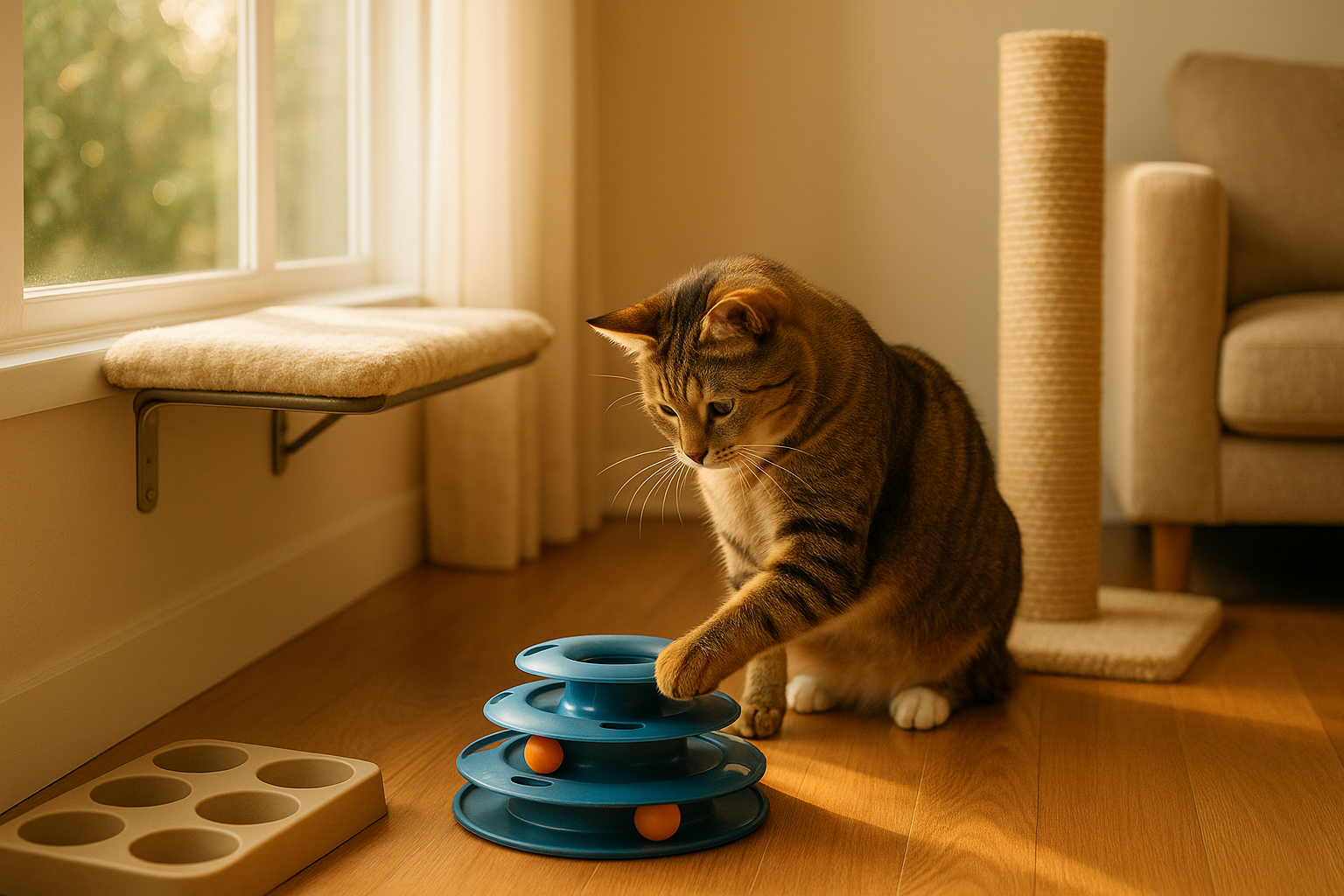
One of the best ways to help your cat is to build an indoor space that feels interesting. Think of your home as your cat’s little world. If that world has places to climb, watch, hide, scratch, and hunt, your cat will have more to do while you are away.
Create vertical space
Cats love height because it helps them feel safe and in control. A tall cat tree, window perch, sturdy shelf, or the top of a safe piece of furniture can become your cat’s favorite spot.
Vertical space helps in two ways. It gives your cat exercise, and it gives your cat a peaceful place to rest. If you have more than one cat, high spots are even more important because they give each cat room to get away and relax.
Add window entertainment
A window can be like a TV channel for your cat. Watching birds, leaves moving, people passing by, or light changes can keep your cat interested for a long time.
You can make window time better by adding:
- A cat window hammock
- A small bird feeder outside, if possible
- A safe spot with sunlight
- Curtains tied back during the day
Just make sure the window area is secure and safe.
Make hiding spots and cozy zones
Cats do not only want action. They also want safe hiding places. A cardboard box, soft bed under a chair, cat tunnel, or covered cat bed can help your cat feel protected.
When your cat feels safe, your cat is less likely to act out from stress.
Best toys to keep your cat busy alone
Not every toy works well when you are not home. You want toys that are safe, interesting, and not too easy to get bored with.
Puzzle feeders and treat toys
These are some of the best tools for indoor cat enrichment. Instead of eating from a bowl in one minute, your cat has to work to get the food.
Good choices include:
- Ball shaped treat dispensers
- Slow feeders
- Food puzzles with sliding parts
- Muffin tin games with treats hidden under toys
This taps into your cat’s hunting instinct. It also slows eating and gives your cat a job to do.
Solo play toys
Some toys are better for independent play than others. Try rotating a few safe options instead of leaving out everything at once.
Examples include:
- Soft balls
- Spring toys
- Crinkle toys
- Cat tunnels
- Kicker toys
- Small stuffed mice
Toy rotation matters because too many visible toys can become boring. Put some away and switch them every few days.
Motion toys used carefully
Battery operated toys can entertain some cats, especially energetic kittens. But choose carefully. You want something sturdy and safe, without small parts that can break off.
Some cats love motion toys that move like prey. Others get scared or lose interest quickly. Watch how your cat reacts before leaving one available during alone time.
A simple setup for cat entertainment while you are at work
You do not need to buy everything. A simple setup often works very well.
| Area | What to add | Why it helps |
|---|---|---|
| Window area | Perch or cat tree | Gives visual stimulation |
| Floor play zone | Tunnel, ball, spring toy | Encourages movement |
| Feeding area | Puzzle feeder | Adds mental work |
| Rest area | Covered bed or box | Creates comfort and security |
| Scratching zone | Scratching post or pad | Protects furniture and reduces stress |
This kind of setup gives your cat choices. Choice is important because it lets your cat control how to spend the day.
Use scratching posts to prevent bad habits
Many cat owners feel upset when furniture gets scratched. But scratching is normal, healthy, and necessary. Your cat scratches to stretch, mark territory, and care for claws.
If your cat scratches your couch, it usually means the scratcher you offered is not in the right place, not the right shape, or not sturdy enough.
Try:
- A tall vertical scratching post
- A flat cardboard scratcher
- A scratcher near sleeping spots
- A scratcher near the couch
- More than one type of scratching surface
If you want a calm and better behaved cat, giving a proper place to scratch is one of the smartest things you can do.
Play with your cat before you leave and after you return
Even if your article focus is how to entertain cats when you are not home, your time with your cat still matters most. A cat with built up energy may struggle to settle while alone.
Try a short, active play session before you leave. Use a wand toy, let your cat chase and pounce, and finish with a small meal or treat. This pattern copies the natural hunt, eat, rest cycle.
When you come home, give your cat another chance to connect and move. This can reduce crying, biting, and nighttime hyper behavior.
A good routine might look like this
- Morning play for 10 to 15 minutes
- Breakfast in a puzzle feeder
- Safe solo toys and window access during the day
- Evening play for 15 minutes
- Dinner after play
- Quiet cuddle or grooming time before bed
Cats love routine. A steady rhythm can help anxious or demanding cats feel much calmer.
Should you leave the TV or music on for your cat?
Some cats seem comforted by background noise, especially if your home becomes very quiet when you leave. Soft music, calm radio, or gentle talking can help some cats feel less alone.
But not all cats care. For some, a TV does nothing at all. For others, sudden loud sounds can be stressful.
If you try this, keep the volume low. Think of it as background comfort, not real entertainment.
Consider a companion cat carefully
People often wonder if getting another cat will fix boredom. Sometimes it helps. Sometimes it creates more stress.
A second cat may be a great idea if your cat is social, playful, and has a history of enjoying other cats. But if your cat prefers being alone, a new cat can lead to fear, fighting, and territory issues.
Do not get another cat only to solve a boredom problem unless you are ready for a careful introduction and the chance that they may never become close friends.
Safety tips for leaving your cat home alone
Entertainment should never risk your cat’s safety. Before you leave home, check the space from your cat’s point of view.
Make sure you:
- Remove strings, rubber bands, and hair ties
- Put away plastic bags
- Keep toxic plants out of reach
- Secure breakable objects
- Cover electrical cords if needed
- Check that windows and screens are secure
- Leave fresh water in more than one place
- Keep litter boxes clean and easy to access
A fun environment only works if it is also safe.
When boredom is really anxiety
Sometimes the problem is not just boredom. Some cats become distressed when left alone. This may happen more with kittens, newly adopted cats, or cats that went through stressful changes.
Signs of anxiety may include:
- Loud crying after you leave
- Refusing food when alone
- Accidents outside the litter box
- Over grooming
- Destructive behavior focused near doors or windows
In these cases, enrichment still helps, but you may also need to work on gradual separation, stronger routines, and help from your vet if the anxiety is severe.
FAQ about how to entertain cats when you are not home
1. How long can your cat stay alone indoors?
Most healthy adult cats can stay alone for a workday without a problem, as long as they have food, water, a clean litter box, and enrichment. Kittens and cats with medical needs usually need more attention and should not be left alone too long.
2. Do cats get lonely when you leave?
Some do, and some do not. Many cats enjoy quiet time, but social cats may miss your company. If your cat seems clingy, cries often, or acts stressed, your cat may need more support and stimulation.
3. What are the best toys for cats home alone?
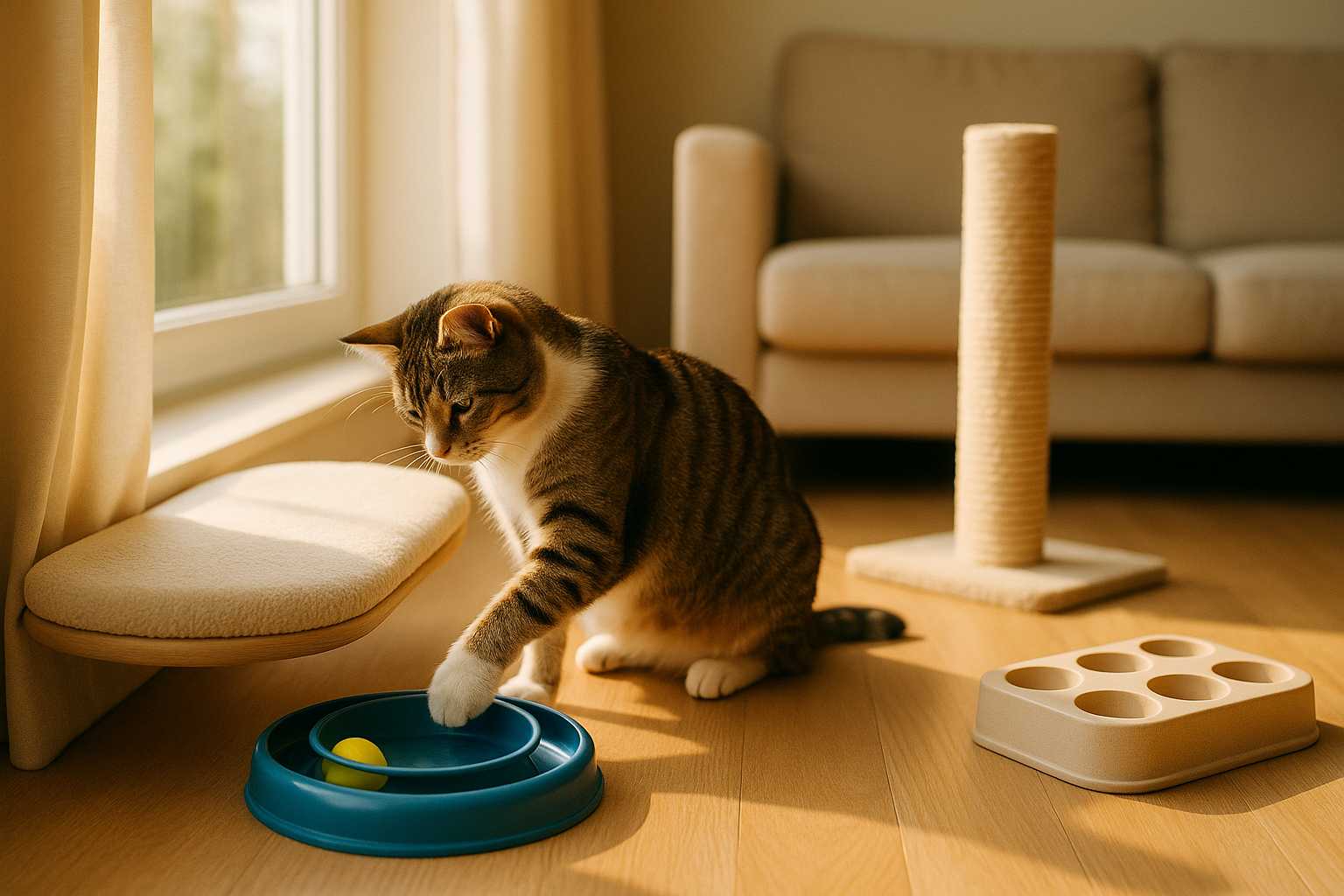
Puzzle feeders, spring toys, tunnels, soft balls, and sturdy kicker toys are great choices. The best toy depends on your cat’s age, play style, and safety needs.
4. Should you leave food out all day?
That depends on your cat. Free feeding works for some cats, but many do better with measured meals or puzzle feeders. If your cat overeats, use timed feeders or food puzzles instead of a full bowl.
5. Is it okay to leave catnip toys out?
Yes, but not all the time. If catnip toys are always available, they can become less exciting. Rotate them in and out to keep them interesting.
6. Can a window really entertain your cat?
Yes. Many cats love to watch outdoor movement. A window perch can give your cat mental stimulation and a peaceful place to rest during the day.
7. Why does your cat act wild when you get home?
Your cat may have stored up energy all day. This is common in indoor cats, especially kittens. A play session after you get home can help release that energy in a healthy way.
8. Will another cat keep your cat entertained?
Maybe, but not always. Some cats enjoy feline company, while others become stressed. A second cat should be a thoughtful choice, not a quick fix.
9. How can you stop your cat from scratching furniture while you are away?
Give your cat better scratching options near the furniture, use sturdy scratchers, and make the scratchers more attractive than the couch. Daily play and enrichment also reduce stress scratching.
10. What if your cat ignores all the toys?
Some cats need help learning how to play. Try different textures, movement styles, and food puzzles. Also, rotate toys often. If your cat seems unusually inactive, ask your vet about possible health issues.
Final thoughts for a happier indoor cat
If you want to know how to entertain cats when you are not home, the answer is not one magic toy. It is a mix of routine, safe enrichment, play, comfort, and understanding your cat’s personality.
Your cat does not need a perfect house. Your cat needs a home that feels interesting and secure. A window perch, a puzzle feeder, a scratching post, a cozy hiding place, and a few rotated toys can change your cat’s whole day. Add short daily play sessions with you, and you will often see less biting, less crying, less scratching, and a much calmer cat.
Start small. Pick two or three ideas and test what your cat enjoys most. When you pay attention to what makes your cat feel active, safe, and relaxed, you build a better indoor life together.