
Have you ever looked at your indoor cat sleeping all day, then racing through the house at night, and wondered how to help them use that energy in a better way?
If you want to know how to exercise an indoor cat at home, you are not alone. Many cat owners worry that their indoor cat is bored, gaining weight, scratching furniture, biting ankles, crying at night, or acting wild for no clear reason. A lot of the time, the real problem is simple. Your cat needs better ways to move, play, hunt, and use their brain.
Indoor cats can live very safe lives, but they also depend on you for almost everything. Outside, a cat would climb, chase, stalk, jump, sniff, and patrol all day. Inside, your cat may only have a sofa, a hallway, and a few toys under the couch. That is why exercise matters so much.
The good news is that you do not need a huge house or expensive gear. You can help your cat stay healthy and happy with simple daily habits, fun games, climbing spaces, and smart feeding ideas. When your cat gets enough activity, you may also see fewer behavior problems like midnight zoomies, rough biting, constant meowing, and furniture scratching.
Why exercise matters for indoor cats
Exercise is not just about weight. It helps your cat’s whole life feel better.
When your cat moves their body every day, it supports healthy muscles, joints, digestion, and heart health. It also helps with mood. A bored indoor cat can become frustrated, restless, clingy, or destructive. Some cats even overgroom, hide more, or act aggressive when they do not have enough physical and mental activity.
Regular movement can help with:
- Weight control
- Better sleep patterns
- Less boredom
- Fewer bad habits
- Lower stress
- More confidence
- Better bonding with you
If your cat seems lazy, that does not always mean they want to do nothing. Many cats are willing to play, but they need the right kind of play at the right time.
Signs your indoor cat may need more exercise
Sometimes the signs are easy to miss. Your cat may not say, “I need a workout,” but their behavior often tells the story.
Look for these clues:
- Weight gain
- Short bursts of wild energy
- Attacking hands or feet
- Scratching furniture more than usual
- Knocking things over
- Crying at night
- Begging for food all day
- Sleeping all day but restless in the evening
- Chasing another pet too roughly
- Acting bored even with toys around
A lot of cat owners feel confused here. They buy toys, but the cat ignores them. That does not mean your cat does not want exercise. It often means the toy does not move like prey, or your cat needs you to make play more exciting.
How much exercise does an indoor cat need?
Most indoor cats need at least 20 to 30 minutes of active play each day, and many do better with more. It is usually best to split this into short sessions.
A good goal is:
| Cat type | Daily exercise goal |
|---|---|
| Kittens | 30 to 60 minutes or more in short bursts |
| Young adult cats | 20 to 40 minutes |
| Adult cats | 20 to 30 minutes |
| Senior cats | 10 to 20 minutes, gentle and adjusted to comfort |
Every cat is different. A playful kitten may want many fast games. A senior cat may prefer slow chasing, climbing a little, and food puzzles. If your cat is overweight or has health issues, start slowly and ask your vet what is safe.
The best time to exercise your cat at home
Cats are often most active at dawn and dusk. That means your cat may be more ready to play in the early morning and evening.
If your cat wakes you at night, one of the best things you can do is schedule an active play session before bedtime. Follow it with a small meal. This copies the natural cat pattern of hunt, eat, groom, and sleep.
A simple daily rhythm can help a lot:
- Morning play for 10 to 15 minutes
- Evening play for 10 to 15 minutes
- Extra mini sessions if your cat is young or very energetic
Short sessions usually work better than one long session because cats naturally hunt in bursts.
Use play that feels like hunting
This is one of the biggest secrets in indoor cat care. Your cat does not just want random movement. Your cat wants a game that feels like catching prey.
That means the toy should:
- Hide
- Dart
- Stop
- Change direction
- Move away
- Act like something alive
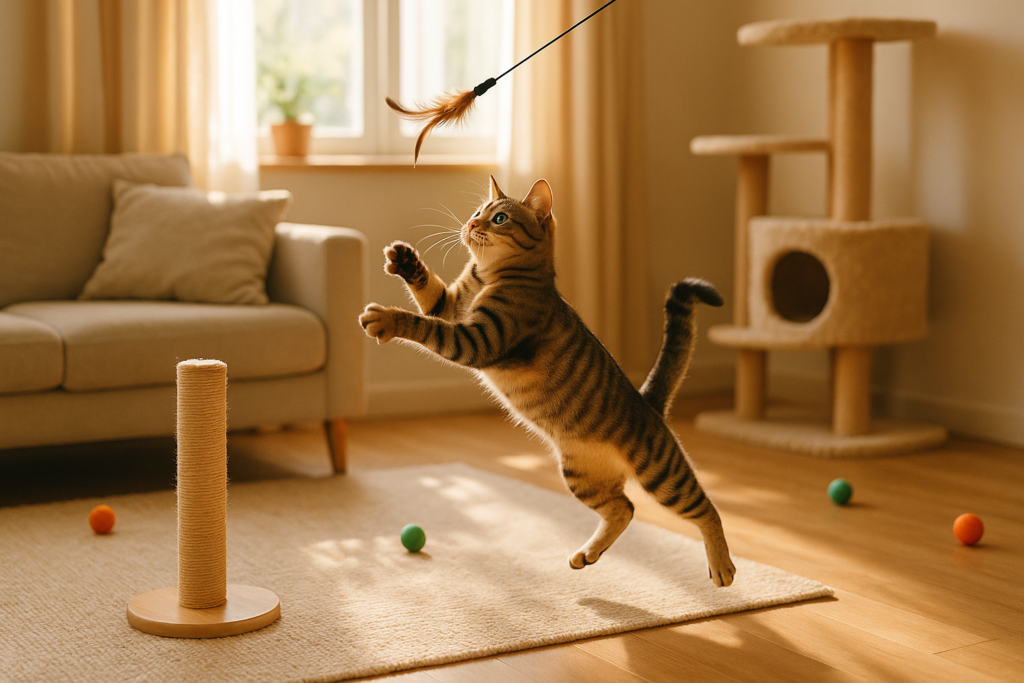
If you wave a toy right in your cat’s face over and over, your cat may lose interest. Try moving it across the floor, behind furniture, under a blanket, or around a corner. Let your cat stalk first, then chase, then pounce.
Wand toys are one of the best choices
Wand toys can be amazing because they let you move the toy like a bird, bug, or mouse. You can make the game different each day so your cat does not get bored.
Good ways to use a wand toy:
- Drag it slowly and let your cat crouch
- Make it “hide” behind a chair
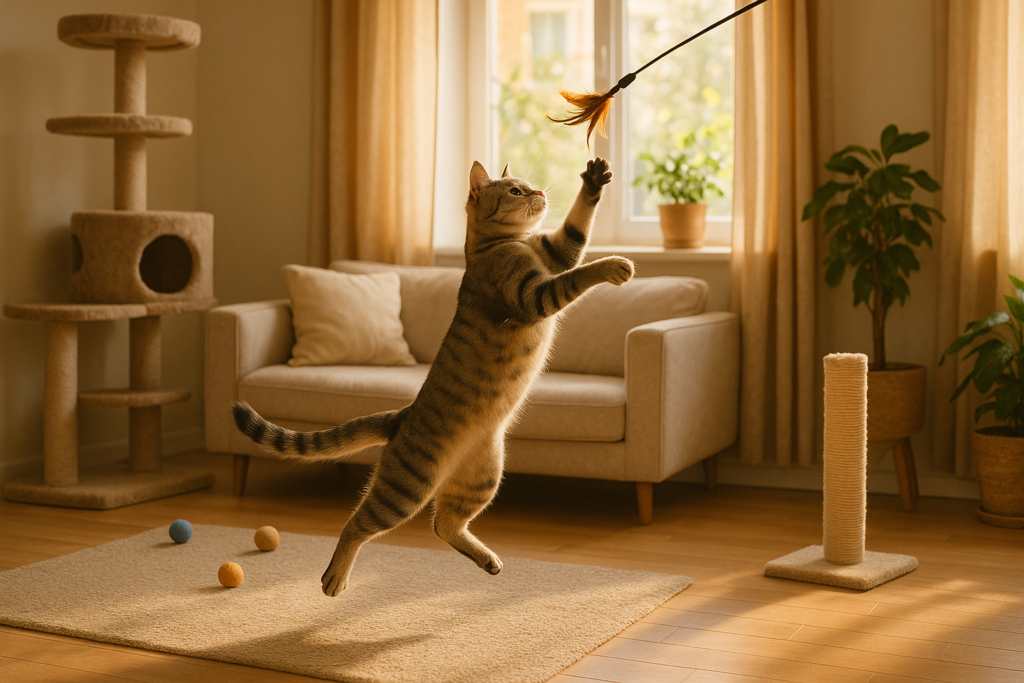
- Let it flutter in the air for jumping
- Pull it up a cat tree for climbing
- End with a catch so your cat feels successful
Always put string toys away after play so your cat does not chew or swallow parts when alone.
Toss toys can help independent play
Some cats enjoy soft mice, small balls, cat springs, or crinkle toys. These are nice for batting, carrying, and chasing down a hallway.
Try rotating toys every few days. If all toys stay out all the time, your cat may stop noticing them.
Laser pointers can work, but use them carefully
A laser pointer can make some cats run fast, which is great exercise. But there is one problem. Your cat can never truly catch the light. That can leave some cats frustrated.
If you use a laser pointer:
- Keep sessions short
- Do not shine it in your cat’s eyes
- End by guiding the light to a real toy or treat your cat can catch
That final “catch” matters.
Create a home that makes movement easy
Exercise is not only about scheduled play. Your home setup can also help your cat move more all day long.
Cats love vertical space. Climbing, jumping, balancing, and looking down from above all count as healthy activity.
Add cat trees and climbing spots
A sturdy cat tree gives your cat a place to climb, stretch, scratch, and rest. If you have space, place one near a window. That adds visual fun too.
You can also use:
- Window perches
- Wall shelves made for cats
- Safe stools or benches
- The top of a secure dresser
- Multi level cat furniture
Vertical space is especially useful in small homes. Even if floor space is limited, your cat can still move up and down.
Make a simple obstacle path
You do not need anything fancy. You can build a mini activity course using things you already have.
Try using:
- Cardboard boxes
- Paper bags without handles
- Tunnels
- Cushions
- Chairs with a blanket draped over them
- Low stools for jumping
Hide toys or treats along the path. Change the layout once in a while to keep it fun.
Give your cat a scratching area
Scratching is exercise too. It stretches the whole body and helps your cat release energy.
Offer more than one scratching option:
- Tall scratching posts for full body stretches
- Cardboard scratchers
- Horizontal scratch pads
- Scratchers near sleeping spots
- Scratchers near furniture your cat targets
If your cat scratches the couch, it often means that spot feels important, not that your cat is being bad. Place a scratching post near that area and reward your cat for using it.
Turn meals into exercise
One smart way to exercise an indoor cat at home is to stop making every meal too easy.
In nature, cats work for food. They search, stalk, catch, and eat. You can copy part of that indoors.
Use puzzle feeders
Puzzle feeders make your cat think and move before getting food. This can slow down fast eaters and reduce boredom.
You can buy puzzle feeders or make simple ones at home with safe cardboard tubes, treat balls, or muffin tins.
Benefits include:
- More movement
- Slower eating
- Better mental stimulation
- Less food obsession
- More confidence for shy cats
Scatter feeding can encourage hunting behavior
Instead of placing all food in one bowl, hide small portions in safe spots around the house. Your cat then has to sniff and search.
Easy places to try:
- On a window perch
- Near a cat tree
- Behind a chair leg
- Inside a puzzle toy
- On different levels of a shelf system
This works especially well for dry food or treats, but be sure the spots stay clean and easy to check.
Play ideas for kittens, adults, and senior cats
Not all cats need the same kind of exercise. Age matters.
Kittens need frequent short play sessions
Kittens are tiny energy machines. If they are biting your hands, climbing your legs, or attacking your feet, they may need more structured play.
Try:
- 5 to 10 minute play sessions several times a day
- Small chase toys
- Climbing areas
- Soft kick toys
- Short training sessions with treats
Do not use your hands as toys. That teaches your kitten that biting skin is part of play.
Adult cats often need motivation
Many adult cats look calm, but they still need regular activity. Some get lazy because their environment never changes.
To help adult cats stay active:
- Rotate toys
- Use wand play morning and evening
- Add climbing spots
- Try food puzzles
- Make your cat “hunt” before meals
Senior cats still need movement
Older cats may slow down, but gentle exercise helps keep them mobile and comfortable. You just need to adjust the intensity.
Good choices for senior cats:
- Short wand toy sessions
- Slow floor chasing
- Easy puzzle feeders
- Low climbing options
- Soft toys for batting
If your senior cat suddenly stops playing, seems stiff, or avoids jumping, talk to your vet. Pain can look like laziness.
How to help an overweight indoor cat exercise safely
If your cat is overweight, fast exercise may be too hard at first. Start gently. The goal is steady progress, not exhausting your cat.
Begin with:
- 3 to 5 minute play sessions
- Slow wand toy movement
- Treat tosses across a short distance
- Food puzzles
- Low step climbing
Then slowly build up over time. Even a few extra minutes a day can help.
Here are a few important tips:
- Do not crash diet your cat
- Ask your vet about healthy weight loss
- Measure food carefully
- Use play instead of extra treats
- Reward effort, not speed
Weight loss in cats must be handled carefully. Too little food too quickly can be dangerous.
Mental exercise matters too
A tired cat is not only a cat with tired legs. It is also a cat with a busy brain.
Mental stimulation helps prevent boredom and can reduce many behavior problems. If your cat seems naughty, needy, or destructive, they may simply need more to do.
Try simple training sessions
Yes, cats can learn. Many cats enjoy training when it is short and fun.
You can teach:
- Sit
- Come when called
- High five
- Touch a target stick
- Go to a mat
- Enter a carrier calmly
Training builds confidence and gives your cat a job to do. Keep sessions short, around 2 to 5 minutes.
Give your cat things to watch
A window perch can become a cat entertainment station. Birds, leaves, people, and light changes all give your cat something interesting to follow.
You can also add:
- Bird feeders outside the window if safe
- Cat safe grass pots indoors
- Cardboard forts
- New textures and safe scents
A richer environment helps your cat feel less trapped and less bored.
Common mistakes cat owners make with exercise
Many loving cat owners try hard, but a few common mistakes can make exercise less effective.
Playing too little, too rarely
One long play session once a week is not enough. Your cat needs regular chances to move and hunt.
Using hands and feet as toys
This can lead to biting and ambushing. Always use toys, not body parts, for rough play.
Leaving toys out all the time
If your cat sees the same toys every day, they can lose interest. Rotate them.
Not ending play properly
A cat often enjoys a full play cycle. That means stalk, chase, pounce, catch, then a treat or meal. If play stops too suddenly, your cat may stay wound up.
Expecting your cat to entertain themselves all day
Some cats do play alone, but many need your help. Interactive play is often the best form of exercise.
A simple daily indoor cat exercise routine
If you feel overwhelmed, start small. You do not need the perfect plan. You just need a routine you can actually do.
Here is an easy example:
| Time | Activity |
|---|---|
| Morning | 10 minutes wand toy play |
| Midday | Puzzle feeder or treat hunt |
| Evening | 10 to 15 minutes chase and pounce play |
| Before bed | Small meal after play |
On busy days, even 5 minutes of focused play can help. What matters most is being consistent.
How exercise can reduce common indoor cat problems
A lot of frustrating cat behavior gets better when your cat has enough activity and stimulation.
Night crying and zoomies
Cats often act wild at night because they slept all day and still have energy. Evening play followed by food can help them settle.
Kitten biting and ankle attacks
Young cats often bite because they are playful, overstimulated, or bored. Give them better outlets with toys, climbing, and short play sessions throughout the day.
Furniture scratching
Scratching is normal. Your job is to guide it, not stop it completely. More exercise and better scratching options can reduce damage.
Food obsession
Some indoor cats beg all day because eating is the only exciting event. Puzzle feeders and food hunts make meals last longer and feel more satisfying.
Aggression toward other pets
A bored cat may stalk or pounce on another cat or dog just to release energy. More solo play can reduce this tension.
When to be careful and call the vet
Sometimes a cat who does not exercise is not lazy or stubborn. They may be hurting or sick.
Talk to your vet if your cat:
- Pants after light play
- Suddenly stops jumping
- Seems stiff or limps
- Cries when touched
- Gains or loses weight quickly
- Hides more than usual
- Shows breathing trouble
- Stops eating
- Acts unusually aggressive or withdrawn
Exercise should make your cat feel better, not worse.
FAQ about how to exercise an indoor cat at home
1. How do you exercise an indoor cat if they are lazy?
Start with very short play sessions and try different toys. Many “lazy” cats simply have not found the kind of play they enjoy yet. Use movement that feels like prey, and play when your cat is naturally more awake, usually in the morning or evening.
2. How long should you play with your indoor cat each day?
A good general goal is 20 to 30 minutes a day, split into shorter sessions. Kittens often need more, and senior cats may need less but still benefit from daily gentle activity.
3. What is the best toy for indoor cat exercise?
Wand toys are often the best because they let you copy real hunting movements. Many cats also enjoy springs, balls, kick toys, tunnels, and puzzle feeders.
4. Can laser pointers be bad for cats?
They can be frustrating if your cat never gets to catch anything. If you use one, end the game with a real toy or treat so your cat feels the hunt is complete.
5. How do you exercise a cat in a small apartment?
Use vertical space like cat trees, shelves, and window perches. You can also do wand toy play in short hallways, make box obstacle paths, and use food puzzles to keep your cat moving.
6. Why does your indoor cat run around at night?
Your cat may have too much unused energy. Many indoor cats sleep all day and become active at night. A play session before bed, followed by a small meal, can help fix this pattern.
7. Can exercise help stop your cat from scratching furniture?
It can help, especially if boredom is part of the problem. But you also need to provide scratching posts in the right places and reward your cat for using them.
8. How do you help an overweight indoor cat get active?
Start slowly with short, gentle play sessions and food puzzles. Ask your vet for a safe weight loss plan, and avoid reducing food too fast. Small daily progress matters.
9. Is mental stimulation the same as exercise for cats?
Not exactly, but both are important. Physical exercise helps the body, and mental stimulation helps the brain. Puzzle feeders, training, and scent games work best when combined with active play.
10. Can you exercise your cat without buying expensive products?
Yes. You can use cardboard boxes, paper balls, safe homemade puzzles, and simple interactive play. Your attention and creativity often matter more than costly toys.
Final thoughts
If you have been wondering how to exercise an indoor cat at home, the best answer is simple. Help your cat act like a cat. Give them chances to chase, climb, scratch, hunt, think, and play every day.
You do not need to do everything at once. Start with one wand toy, one scratching post, one climbing spot, and two short play sessions a day. Watch what your cat enjoys, then build from there. Small changes can lead to a calmer cat, fewer bad habits, better sleep, and a stronger bond between you and your pet.
Your indoor cat depends on you to make life interesting. With a little daily effort, you can turn your home into a place where your cat feels active, safe, and truly happy.