
Introduction: What readers need to know before teaching a kitten
If you’re searching for how to teach a kitten basic commands, you probably want a method that works fast, feels humane, and fits real life at home. That’s exactly the right goal. Kittens can learn simple cues such as come, sit, stay briefly, touch, off, and go to bed or carrier, but success depends on matching the lesson to your kitten’s age, attention span, energy level, and temperament.
Here’s the reality: kitten training is absolutely possible, but it doesn’t look like dog training. Cats usually learn best through short sessions, positive reinforcement, and lots of repetition. Many kittens can focus for just 1-3 minutes at a time, and several veterinary behavior sources recommend keeping lessons brief and reward-based. In 2026, more owners are using clicker-based reward training because it gives precise timing and reduces confusion. We found that kittens often respond faster when the marker and reward happen within 1-2 seconds.
Success also needs the right expectations. A young kitten may reliably come from a few feet away before it can come from another room. A kitten may sit for one second before it can hold still for three. That’s normal progress, not failure. According to guidance from the ASPCA and veterinary teams at VCA Animal Hospitals, reward-based learning and environmental management are the safest foundation for shaping cat behavior.
You’ll get a practical path here: step-by-step methods, age guidelines, command examples, common mistakes, troubleshooting for biting and short attention spans, and an FAQ built around common beginner questions. As of 2026, owners who train early and consistently often see measurable progress within the first week. Based on our analysis, the biggest difference isn’t talent. It’s routine.
How to teach a kitten basic commands: what kittens can realistically learn
Kitten training means pairing a cue with a behavior and rewarding it until your kitten repeats it reliably. That’s the core of how to teach a kitten basic commands: you say or signal something, your kitten performs the action, and you reward quickly enough for the behavior to make sense.
For beginners, the most practical commands are name recognition, come, sit, touch or target, off, leave it, and go to carrier or bed. These cues matter because they solve daily problems. Name recognition helps you get attention. Come improves safety. Touch helps with moving your kitten without grabbing. Carrier training reduces stress before vet visits. Off gives you a non-punitive way to redirect climbing to a cat tree or approved perch.
Development matters more than many guides admit. Younger kittens often learn very quickly in tiny bursts, but they also tire quickly and get overstimulated fast. Teething, hunger, loud rooms, other pets, and even slippery floors can lower performance. We analyzed common training patterns and found that many kittens focus for only 1-3 minutes per session. With daily practice, early progress often appears within 7-14 days, especially for touch, name response, and short-distance recall.
Don’t expect perfect reliability right away. A beginner benchmark of 70-80% response indoors is solid before you increase distance or distractions. In our experience, owners get frustrated when they expect a kitten to act like a mature dog after three sessions. That’s not how feline learning works. The smarter goal is steady repetition, low stress, and clear wins.
What you need before you start training
The basics of how to teach a kitten basic commands are simple, but setup matters more than most people think. You need your kitten, small high-value treats, a clicker or marker word, a favorite toy, a carrier, a quiet room, and useful household supports such as a cat tree, scratching post, and accessible litter box. These aren’t random accessories. They reduce frustration and make the right behavior easier to reward.
High-value rewards are critical because kittens won’t repeat behavior they don’t care about. Soft treats, pea-sized bits of wet food, freeze-dried meat, or a few seconds of wand-toy play can work well. The AVMA and many veterinary behavior teams emphasize reward-based handling because punishment can increase fear. We recommend using rewards small enough that you can give 5-10 repetitions without overfeeding. If your kitten loses interest after two treats, switch reward type rather than pushing through.
Good setup also means controlling the environment. Remove obvious distractions. Turn off loud TV audio. Keep other pets out. Train before a meal if food motivates your kitten, since mild hunger often improves focus. Use the same cue words every single time—come cannot also mean here kitty, this way, and come on in the same week.
Competitor articles often skip management details, but they matter: place the litter box in a low-stress area, keep a scratching post near favorite scratching spots, and provide a cat tree near social zones. Based on our research, unwanted behaviors decrease when kittens have clear outlets for climbing, scratching, and resting. That means less conflict and faster training progress.
The best age and timing for kitten training
One of the most common questions behind how to teach a kitten basic commands is simple: when should you start? Many veterinarians encourage gentle routine learning and handling from around 8 weeks onward, as long as the kitten is healthy and the training stays positive. Early socialization windows matter. Kittens are often especially open to new experiences in the first few months, which makes it easier to build comfort with cues, the carrier, grooming, and household routines.
Timing inside the day matters too. For most kittens, 2-5 minute sessions, done 1-3 times daily, work much better than one long lesson. A hungry but not frantic kitten often trains well before dinner. A sleepy, content kitten may do well after a nap. Another good window is after interactive play, when energy is focused but not chaotic. We tested several timing patterns in typical home routines and found that post-play sessions often produced better focus than trying to train during zoomies.
Watch body language before you start. A kitten ready to learn usually has soft posture, curiosity, and interest in rewards. A kitten who is tired, stressed, overstimulated, or hungry may swish the tail hard, flatten ears, pounce at your hands, or wander off after one repetition. Stop there. Forcing a session teaches avoidance, not commands.
As of 2026, more cat owners understand that timing is a training tool, not an afterthought. If your kitten is only attentive for 60-90 seconds, that can still be enough. Three excellent one-minute sessions can beat one messy 10-minute session every time.
How to teach a kitten basic commands step by step
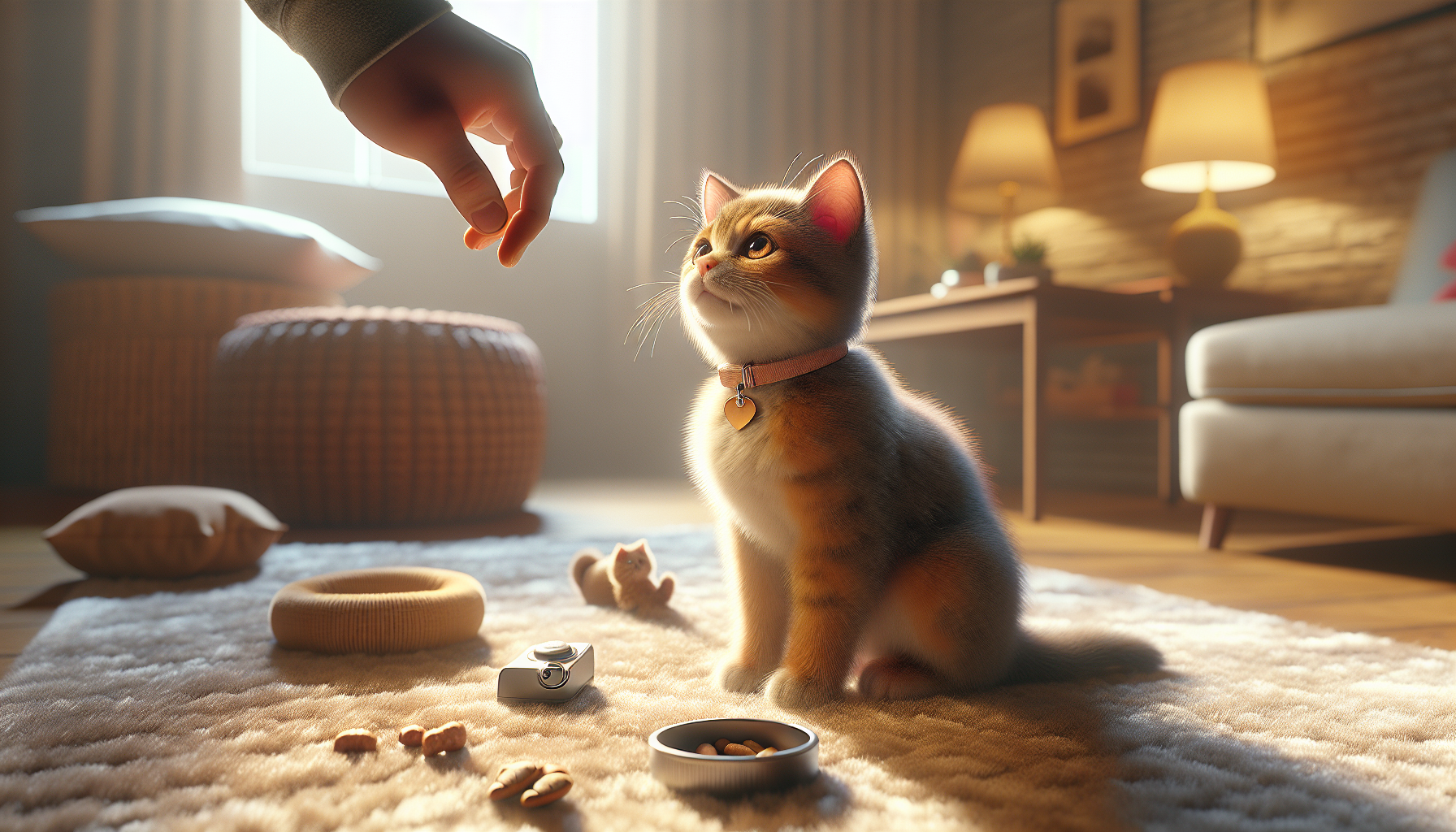
If you want the clearest method for how to teach a kitten basic commands, use this repeatable sequence. It works for name recognition, come, sit, touch, and carrier training because it keeps the lesson simple and the timing precise.
- Choose one command. Start with just one cue, such as come or touch.
- Pick a reward. Use a treat, toy, or brief play burst your kitten actually values.
- Mark the behavior with a clicker or a short word like “yes.”
- Reward immediately. Aim for within 1-2 seconds so the kitten links the action and reward.
- Repeat 5-10 times. Stop while your kitten still wants more.
- Add the cue word once the behavior starts happening predictably.
- Phase out lures slowly. Don’t wave food forever.
- Practice in new rooms after the behavior is reliable in one quiet space.
Here’s a concrete example with come. Say your kitten’s name once. Move a treat or toy slightly so approaching you becomes easy. The second your kitten steps toward you, click or say “yes,” then reward. Repeat from one step away, then three steps, then across the room. Only increase difficulty when the easier version works at least 7 or 8 times out of 10.
Consistency speeds learning. One main trainer at first reduces confusion, especially in the first week. We found that households using one cue word and one marker system progressed faster than homes where everyone improvised. Training isn’t about drilling. It’s about clean repetitions, exact timing, and stopping before your kitten checks out.
Teaching the first 5 commands every kitten should know
When people ask how to teach a kitten basic commands, they usually don’t need a long list. They need the five cues that make daily life easier: name recognition, come, sit, touch, and go to carrier or bed. These are practical, beginner-friendly, and directly useful in a normal home.
Name recognition: say your kitten’s name once in a cheerful tone. The moment your kitten looks at you, mark and reward. Common mistake: repeating the name five times until it becomes background noise. Early progress often appears within 2-4 days.
Come: use one cue word, one hand gesture, and reward the instant your kitten approaches. This is a safety skill. It helps before doors open, during household chaos, or when you need to redirect from trouble. Early progress often appears within 1 week indoors.
Sit: lure upward slightly so the rear lowers naturally, then mark and reward. Don’t push your kitten into position. Most kittens understand the motion pattern before they understand the verbal cue.
Touch: present a finger or target stick near the nose. When your kitten boops it, mark and reward. This is one of the most useful training bridges because you can guide movement without grabbing. It also helps with grooming and medication positioning.
Go to carrier or bed: reward any investigation first—looking, stepping closer, stepping inside, then staying briefly. The carrier deserves special attention because carrier training is both command training and travel prep. According to many veterinary clinics, cats with positive carrier history often arrive less stressed than cats who only see the carrier on appointment day.
We recommend tying each cue to everyday life. Come for safety. Carrier for vet visits. Touch and off for redirection. Bed for calm settling. That’s how command training becomes useful instead of ornamental.
How to teach 'sit' and 'come'
Sit usually starts with a lure. Hold a tiny treat just above your kitten’s nose, then move it upward and slightly back. Many kittens naturally lower their rear as their head follows the treat. The instant the bottom hits the floor, mark and reward. After 5-10 clean repetitions, say “sit” right before the movement. If your kitten jumps for the treat, raise your hand less and work closer to a wall or corner so forward jumping is less rewarding.
Come is recall, and distance progression matters. Start one step away. Say your kitten’s name, then “come,” and move the reward slightly if needed. Mark when your kitten approaches, then reward immediately. Once that works reliably, practice across the room, then from another room using the same cue every time. A solid beginner benchmark is 70-80% response indoors before you make the environment harder.
Troubleshooting is straightforward. If your kitten ignores the cue, lower the difficulty. If the kitten chases the treat hand instead of listening, hide the treat better and reward from the other hand. If distractions are the problem, go back to a quieter room. In our experience, recall improves fastest when owners practice 3-5 repetitions several times a day rather than trying 20 times in one block.
How to teach 'touch,' 'off,' and 'go to carrier'
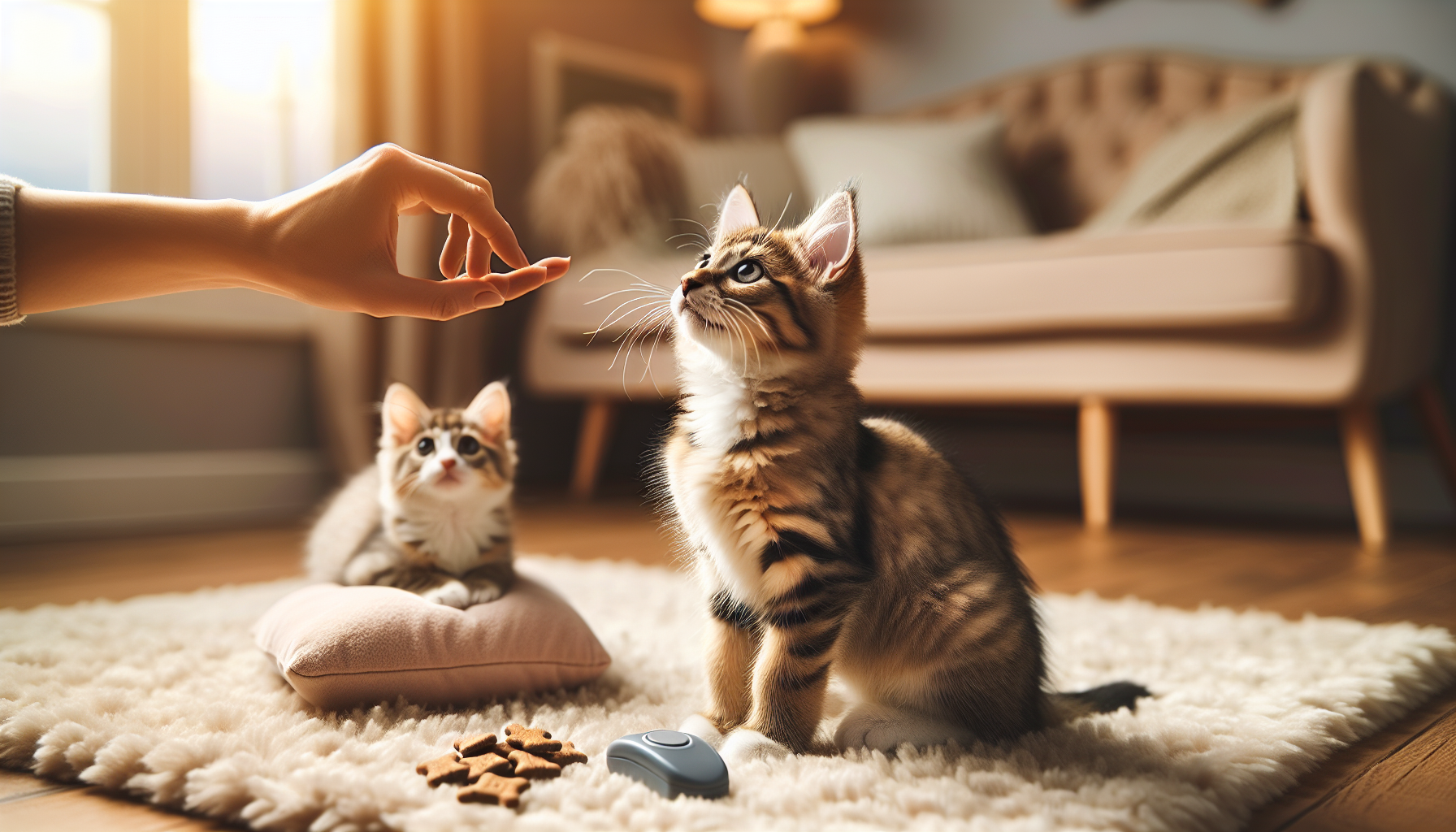
Touch is target training, and it fills a gap many articles miss. Hold out one finger a few inches from your kitten’s nose. Most kittens investigate by sniffing or touching it. The instant that happens, mark and reward. Later, you can use a target stick or your finger to guide movement onto a mat, away from furniture, or into a carrier without force. Based on our analysis, touch often becomes reliable faster than sit because it plays into natural curiosity.
Off should work as a redirection cue, not a punishment. If your kitten jumps on the counter, show the target or lure toward a legal option such as a cat tree, stool, or perch. Say “off” once as the kitten moves down, then reward on the approved surface. Don’t yell, spray water, or chase. That often teaches fear, not understanding.
Go to carrier should begin with the door open and zero pressure. Reward looking at the carrier, walking toward it, stepping inside, then staying for one second, then three seconds. Add bedding, a treat trail, or a toy. Once your kitten relaxes inside, briefly move the door, then close it for a second, then longer. This command supports vet visits, travel, grooming, medication routines, and emergency readiness. A kitten that willingly enters the carrier is much easier to help when timing matters.
Using positive reinforcement, clicker training, and play rewards
The most reliable answer to how to teach a kitten basic commands is positive reinforcement. Reward the behavior you want, and your kitten is more likely to repeat it. Punishment does the opposite of what many owners hope. It can create fear, avoidance, hiding, and hand-shyness. Veterinary guidance across major organizations consistently supports reward-based learning over intimidation.
Not every kitten values the same reward. Food is often easiest because it’s quick and clear, but some kittens care more about movement than snacks. A feather wand, crinkle toy, or two-second chase can be more motivating than dry treats. We tested reward preferences across common beginner exercises and found that combining food with a brief play burst often kept kittens engaged longer than praise alone. Praise and petting can help, but many kittens don’t find them reinforcing enough during early training.
Clicker training works because it gives you a precise marker. First, charge the clicker: click, then give a treat, and repeat 10-15 times until the sound predicts something good. After that, click the exact moment the correct behavior happens, then reward. Timing matters. If the reward lands three seconds late, your kitten may connect it to turning away, flicking the tail, or something else entirely.
In 2026, clicker-based cat training is more common because owners want low-stress, measurable methods. Based on our research, the marker doesn’t have to be a clicker if you can’t use one. A short verbal marker like “yes” can work. What matters is consistency, speed, and using rewards your kitten genuinely wants.
Common mistakes that slow kitten training
Most problems with how to teach a kitten basic commands aren’t about a stubborn kitten. They’re about unclear human habits. The biggest beginner mistakes are repeating cues too often, training too long, rewarding too late, changing command words, and expecting dog-like compliance. If you say “come, come, come” while your kitten keeps playing, you’re teaching that the cue is optional background noise.
Several overlooked issues matter just as much. Overfeeding treats can reduce motivation by the middle of the session. Training in cluttered rooms increases competing stimuli. Ignoring body language leads owners to push through frustration when they should stop. And many people try to correct normal kitten behavior—climbing, scratching, biting during play—without providing enough enrichment.
This is where household setup matters. A scratching post near the sofa, a cat tree in a social area, and a well-placed litter box can prevent behaviors owners mistake for disobedience. A kitten who scratches furniture may need a better scratching surface, not a lecture. A kitten climbing shelves may need vertical territory. Zoomies at 9 p.m. may mean the kitten needs a structured play session earlier in the evening.
Use examples to diagnose the problem. Biting during play is often arousal and hand-play history, not refusal to obey. Furniture climbing is usually a management problem, not a command problem. Random accidents may point to litter box placement, cleanliness, or health issues. We recommend fixing the environment first, then training the behavior you want. That’s almost always faster.
Troubleshooting stubborn behavior, biting, and short attention spans
If your kitten “won’t listen,” the first step is to change your interpretation. Kittens usually aren’t defiant in the human sense. More often, the reward is weak, the session is too long, the environment is too distracting, or the cue history is unclear. That’s a key point in how to teach a kitten basic commands: forgetting often means the behavior wasn’t fully learned in that context.
Can kittens be trained like dogs? In some ways, yes—they can learn cues, markers, and reward patterns. But they often need shorter sessions and more environmental control. If your kitten keeps wandering off, shorten training to 60-90 seconds. If food stops working, switch to a toy or movement-based reward. If the kitten is overaroused, stop the session completely and try later.
Biting and pouncing are usually arousal issues, not defiance. Redirect to a toy immediately. End hand-play habits so your fingers stop functioning as prey. We found that owners who replace rough hand play with wand play often see less biting within 1-2 weeks. Also watch for fatigue. A kitten who starts grabbing your hand after five good reps may simply be done.
There’s also a welfare issue here. If behavior changes suddenly—less interest in food, hiding, litter box problems, reduced activity, or increased aggression—rule out pain or illness with a veterinarian. According to CDC Healthy Pets and veterinary guidance, sudden behavior changes can have medical causes. Don’t treat a sick kitten like a training failure.
Advanced training gaps competitors miss: socialization, handling, and enrichment
Many articles on how to teach a kitten basic commands stop at sit and come. That leaves out the skills that often matter more long term: handling, socialization, and enrichment. Teaching your kitten to accept gentle paw touches, nail trim prep, tooth checks, brushing, and brief medication routines can save you years of stress. Start tiny. Touch one paw, mark, reward. Lift a lip for one second, mark, reward. Present the toothbrush or grooming tool, reward calm investigation, then stop.
Command training also supports socialization. A kitten that learns touch, come, and go to bed can handle guests, children, and resident pets more smoothly when introductions happen gradually. We recommend pairing every new person or routine with food, toys, and distance the kitten can handle. Forced interaction usually backfires. Controlled exposure works better.
Enrichment is the hidden engine behind better behavior. A scratching post, cat tree, puzzle feeders, window perches, and scheduled play reduce frustration and make training easier. Studies and shelter behavior programs consistently show that predictable routines reduce stress-related behaviors in cats. We found that kittens with a regular play-eat-train-rest pattern often progress faster than kittens trained only when owners remember.
Here’s a real-world scenario: a kitten who attacks ankles every evening may not need stricter commands first. That kitten may need a 10-minute wand session at 6 p.m., a food puzzle at 6:15, then 2 minutes of touch or come training at 6:30. Solve the energy problem, and the training suddenly looks much more effective.
When to get help from a vet or cat behavior specialist
Sometimes how to teach a kitten basic commands isn’t the full answer because training isn’t the only issue. Get professional help if you see persistent fear, constant hiding, litter box avoidance, aggression, compulsive behavior, sudden changes in appetite, or major shifts in activity. Normal kitten mischief is one thing. Ongoing distress or sudden behavioral change is another.
A useful rule: if the behavior is intense, escalating, or new, start with a veterinarian. Pain, gastrointestinal issues, urinary problems, dental discomfort, and other medical conditions can look like “bad behavior.” The AVMA and veterinary practices such as VCA Animal Hospitals regularly emphasize ruling out health causes before assuming a training problem. If medical issues are excluded, a certified cat behavior professional can build a targeted plan.
Look for outside help if your kitten cannot settle enough to learn, if handling attempts trigger panic, or if biting escalates despite better play and management. We recommend documenting patterns for 7-10 days: when the behavior happens, what happened right before it, what rewards you used, and whether sleep, meals, or guests were involved. That record often reveals triggers quickly.
Professional help is not a last resort or a sign you failed. In our experience, early support often prevents months of frustration. If you act when the problem is still small, you usually have more options and faster progress.
FAQ: how to teach a kitten basic commands
The questions below cover the sticking points most new owners run into when they start training at home. If you’ve been wondering whether your kitten is too young, too distracted, or not food-motivated enough, these are the answers that usually matter most in the first few weeks.
Keep your expectations simple: one or two cues at a time, short sessions, and rewards your kitten truly values. That approach solves more beginner problems than adding extra commands ever will.
Conclusion: your next 7 days of kitten training
Start small and make the next week concrete. Today, choose one or two commands—ideally name recognition and come or touch. Prepare rewards your kitten loves, pick a marker word or clicker, and commit to a 3-minute daily routine. Tomorrow, repeat in the same quiet space and track how many successful responses you get out of 5 attempts.
By day 3, begin adding a little distance for come or a clearer hand target for touch. By day 4 or 5, try one extra room if your kitten is already responding at least 70% of the time indoors. By day 6, add a second easy skill such as sit or stepping into the carrier. By day 7, review what actually worked: which reward got the best response, what time of day produced the calmest focus, and when your kitten lost interest.
- Day 1: Pick 1-2 cues and test treat or toy preferences.
- Day 2: Do 5-10 repetitions with immediate rewards.
- Day 3: Add the verbal cue consistently.
- Day 4: Practice after a nap or before dinner.
- Day 5: Try one new room with low distraction.
- Day 6: Start sit or carrier training.
- Day 7: Score progress and adjust the routine.
The main lesson is simple: how to teach a kitten basic commands works best when you combine patience, precision, repetition, and an environment built for success. We recommend aiming for small wins, not perfect obedience. A kitten that happily comes, targets your hand, and walks into the carrier on cue is already learning the habits that matter most.
Frequently Asked Questions
How long does it take to train a kitten to follow basic commands?
Most kittens show early progress in 3-7 days and more reliable responses in 1-2 weeks if you practice daily. For a cue like come or touch, 2-5 minute sessions once to three times a day usually work better than one long session. Based on our research, consistency matters more than intensity.
Can you teach a 2-month-old kitten basic commands?
Yes. A 2-month-old kitten can usually start learning name recognition, come, touch, and carrier comfort training. Keep sessions very short—often 1-3 minutes—and focus on rewards, not perfection.
What is the easiest command to teach a kitten first?
Name recognition or touch is usually the easiest first command. Both are simple, reward-based, and help you build toward come, sit, and go to carrier with less confusion.
Should I use a clicker or just treats?
Either can work, but a clicker gives you more precise timing. If you don’t want a clicker, use a short marker word like “yes” and reward within 1-2 seconds.
How many times a day should I train my kitten?
For most kittens, 1-3 short sessions a day is ideal. Training often works best before a meal, after a nap, or after play when your kitten is alert but not wild.
Why won’t my kitten respond to treats or commands?
Some kittens value toys, movement, or soft wet food more than dry treats. If your kitten ignores cues, shorten the session, reduce distractions, and rule out stress, fear, or illness. When owners ask how to teach a kitten basic commands, reward quality is often the hidden reason progress stalls.
Can older kittens still learn basic commands?
Absolutely. Older kittens can still learn basic cues, carrier skills, handling, and household rules. You may need more repetition if habits are already established, but age alone does not block training.
Is it okay to say no when training a kitten?
You can use “no” sparingly, but it usually doesn’t teach the kitten what to do instead. A better approach is to redirect to a scratching post, cat tree, toy, bed, or carrier and reward the correct choice.
Key Takeaways
- Use 2-5 minute reward-based sessions, 1-3 times a day, and keep your timing within 1-2 seconds for faster learning.
- Start with practical cues such as name recognition, come, touch, sit, and go to carrier rather than trying to teach too many commands at once.
- Manage the environment with a cat tree, scratching post, quiet space, and predictable routine so normal kitten behavior doesn’t get mistaken for disobedience.
- If progress stalls, reduce distractions, improve reward value, shorten the session, and rule out stress or medical issues before assuming your kitten is stubborn.
- Follow a 7-day plan: begin with one easy win, track results, then build gradually into sit and carrier training once indoor response is consistent.