
Introduction: What kitten owners really want to know
If you’re asking how long does it take to train a kitten, the direct answer is this: most kittens start learning basic habits in a few days to a few weeks, while dependable behavior training usually takes 2 to 6 months depending on age, consistency, temperament, and the skill you’re teaching. That’s the realistic timeline most new owners want, not the vague “every kitten is different” answer that leaves you guessing.
People usually search how long does it take to train a kitten because they want clear expectations for everyday issues: litter box training, scratching post use, name recognition, handling, carrier comfort, sleep routines, and biting. You don’t just want to know whether training works. You want to know when life starts feeling easier. In our experience, that happens fastest when you match the training method to the kitten’s age and set up the environment well on day one.
For 2026 readers, the big shift is that more behavior experts are emphasizing positive reinforcement over punishment. The Humane Society and the American Association of Feline Practitioners both support reward-based methods because they reduce fear and improve learning speed. We researched common SERP headings and found competitors often give vague answers like “a few weeks” without explaining what changes the timeline. This article breaks how long does it take to train a kitten down by behavior, age, and daily routine so you can see what is normal, what slows progress, and how to shorten the process without punishment.
One useful reality check: the American Pet Products Association reported that 46.5 million U.S. households own a cat in recent survey data, and behavior questions remain one of the top new-owner concerns. You’re not behind. You’re dealing with a normal kitten learning curve.

How long does it take to train a kitten? The short answer by skill
If you want the fastest answer to how long does it take to train a kitten, think in two stages: starting to learn and becoming reliable. A kitten that uses the litter box correctly twice is learning. A kitten that uses it correctly for 14 straight days despite distractions is becoming reliable. That difference matters because one good day can fool you into thinking training is done.
Based on our research and shelter behavior guidance, positive reinforcement, repetition, and environmental setup are the biggest predictors of speed. A 2024 review published through veterinary behavior channels found that reward-based handling improves cooperation and reduces stress behaviors more effectively than punishment-based correction. We found this lines up with real life: the easier you make the right choice, the faster a kitten repeats it.
| Behavior | Starts Learning | More Reliable |
|---|---|---|
| Litter box use | 1 to 7 days | 2 to 4 weeks |
| Scratching post use | 3 to 10 days | 2 to 4 weeks |
| Name response | 3 to 14 days | 2 to 6 weeks |
| Handling tolerance | 1 to 2 weeks | 1 to 3 months |
| Sleeping routine | 1 to 3 weeks | 1 to 2 months |
| Not biting during play | 2 to 3 weeks | 1 to 3 months |
| Carrier training | 1 to 2 weeks | 3 to 8 weeks |
So, how long does it take to train a kitten overall? For simple habits, days to weeks. For emotional comfort and self-control, weeks to months. If your kitten is 8 weeks old and comes from a well-socialized foster home, you may see progress fast. If your kitten is 5 months old, under-socialized, and adjusting to a loud household, expect a longer runway.
As of 2026, the best evidence-backed advice is still simple: keep sessions short, reward wanted behavior immediately, and remove opportunities to rehearse unwanted behavior. That’s usually what separates a 2-week improvement from a 2-month struggle.
What affects how long it does take to train a kitten
The answer to how long does it take to train a kitten changes a lot based on the kitten in front of you. Age matters, but so do early socialization, prior litter habits, stress level, medical history, and the home itself. An 8-week-old newly adopted kitten in a quiet apartment may learn the litter box and scratching post within days. A 5-month-old under-socialized rescue in a busy household with children, dogs, and constant noise may need several weeks just to feel safe enough to learn consistently.
Breed tendencies can influence energy level and sociability, but they don’t override setup and routine. In our experience, the biggest practical factors are these:
- Previous environment: breeder, foster home, rescue, or outdoor background
- Litter history: type of substrate used before adoption and box cleanliness
- Stress load: moving homes, unfamiliar smells, other pets, or too much handling
- Medical issues: parasites, urinary pain, GI upset, teething discomfort, or injury
- Training tools: the right litter box, scratching post, treats, toys, clicker training, and a comfortable carrier
We analyzed guidance from feline behavior organizations and found consistency matters more than session length. 3 to 5 minute sessions repeated daily almost always work better than one long 20-minute session. Kittens have short attention spans, and once they get tired or overexcited, learning drops fast.
Don’t ignore health. The AVMA notes that house-soiling can be linked to medical causes, and the VCA Hospitals guidance also recommends veterinary evaluation if litter box problems continue. If a kitten suddenly stops using the litter box, cries while eliminating, or becomes reactive when touched, a veterinarian should be involved early. Training can’t outwork pain.
That is why how long does it take to train a kitten isn’t one number. It is a mix of biology, environment, and repetition. Your setup can easily cut the timeline in half.
Kitten training timeline by age
Age is one of the biggest reasons people get different answers to how long does it take to train a kitten. A 9-week-old and a 6-month-old are not working with the same brain, attention span, confidence level, or physical development. That changes what you can teach and how fast progress happens.
8 to 10 weeks: This is prime time for litter habits, gentle handling, name exposure, and learning that people are safe. Kittens at this age usually adapt quickly to a routine, but they tire fast. Keep sessions under 2 to 3 minutes. Use low-entry litter boxes, soft handling, and simple treat pairing with touch and carrier entry.
10 to 12 weeks: Confidence often grows here, which makes scratching post training, short clicker sessions, and responding to their name easier. Many kittens also start showing more energetic play aggression. This is the right stage to teach that hands are not toys and that wand toys are better outlets.
3 to 4 months: Attention span improves, but teething and rough play often peak. You can teach simple cues like come, sit, or enter the carrier. Based on our analysis, this is often the most productive age for short formal training because kittens are curious and food-motivated.
5 to 6 months: Older kittens can still learn quickly, but habits may be more established. If they missed early socialization, handling and fear-based issues often take longer. Expect more work on confidence, routine, and environmental management. The payoff is still strong. We found many kittens at this age make major progress within 4 to 8 weeks when training is consistent.
Developmental windows matter. Early socialization affects how easy people, sounds, and handling feel. Fear periods can make a kitten suddenly cautious. Teething can increase chewing and biting. Play aggression often spikes before self-control catches up. That is why how long does it take to train a kitten can vary so much by age even when owners use the same methods.
How long does it take to litter train a kitten?
If one question dominates new-owner forums, it’s how long does it take to train a kitten to use the litter box. The practical answer: many kittens begin using the box correctly within 1 to 7 days, and most become fairly reliable within 2 to 4 weeks if the setup is right. Kittens often learn this first because cats are naturally drawn to diggable, sandy substrates.
The setup matters more than many owners realize. Both VCA Hospitals and ASPCA recommend a quiet, accessible box and warn that box aversion can happen when the litter is too scented, the box is too dirty, or the location feels unsafe. A common rule is one box per cat, plus one extra. For one kitten, that means two boxes if your home has multiple rooms or floors.
Use this step-by-step plan:
- Choose a low-entry box so a small kitten can get in easily.
- Use unscented clumping or non-clumping litter with a soft texture.
- Place boxes in quiet spots, away from loud appliances and food bowls.
- Set the kitten in the box after meals, naps, and play, which are common elimination times.
- Scoop at least once daily and fully refresh on a regular schedule.
- Clean accidents with enzymatic cleaner and never punish.
If your kitten has repeated accidents after a promising start, don’t assume stubbornness. The ASPCA notes that litter box problems can reflect stress or health issues. Call your veterinarian if you see straining, blood, diarrhea, constipation, crying in the box, or a sudden refusal to use it. We recommend tracking every accident for 7 to 10 days; patterns often reveal the real cause faster than guesswork.
So, how long does it take to train a kitten for litter habits? Usually days to start, a few weeks to trust, and longer only when setup, stress, or health gets in the way.
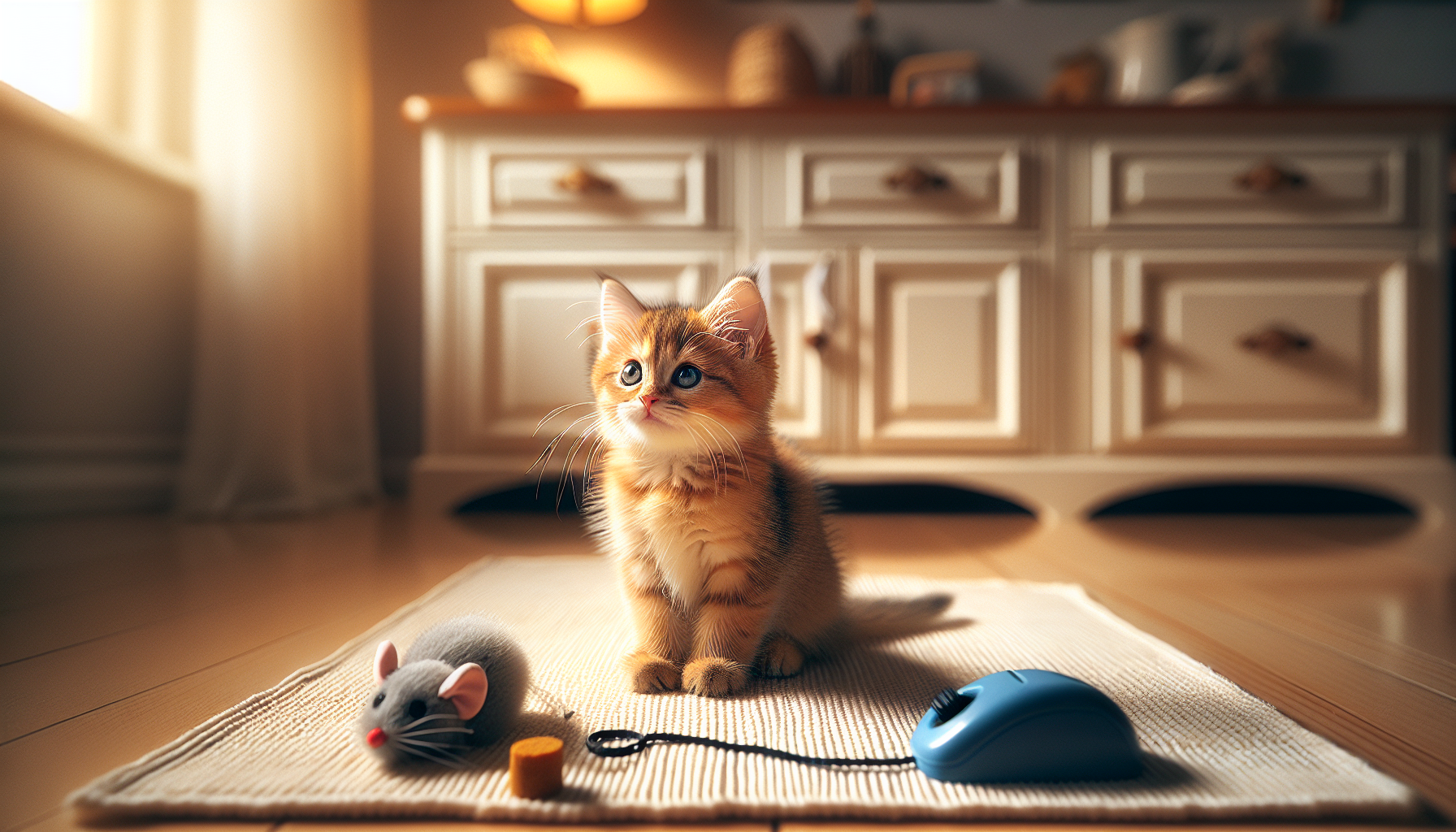
How long does it take to train a kitten not to bite, scratch, or climb curtains?
When owners ask how long does it take to train a kitten, they often mean one thing: “How soon will my tiny chaos machine stop attacking my hands and furniture?” The key is separating normal kitten behavior from real behavior problems. Biting, pouncing, grabbing with paws, and climbing are normal ways kittens explore, especially during teething and periods of overstimulation.
Stopping rough play usually takes several weeks to a few months because you’re teaching impulse control, not just a trick. Every family member has to respond the same way every time. If one person laughs when the kitten pounces on hands and another redirects to a toy, progress slows. In our experience, inconsistency is the main reason biting lasts longer than it should.
Use this behavior plan:
- Stop play immediately when teeth touch skin. Freeze, then disengage for 10 to 20 seconds.
- Redirect to a wand toy or kicker toy so the kitten can chase and bite the right object.
- Reward calm contact with praise, treats, or gentle petting when the kitten paws softly or settles.
- Trim nails safely every 1 to 2 weeks to reduce accidental scratches.
- Add scratching options near furniture: vertical post, horizontal scratcher, and cardboard pad.
Overtired kittens often look “wild” when they actually need rest. Young kittens may sleep 16 to 20 hours a day, and missing rest can make nipping and curtain climbing worse. Schedule 2 to 3 active play sessions daily with a clear wind-down so the kitten can eat, groom, and sleep after play. We found this simple rhythm reduces evening chaos more than random corrections do.
So how long does it take to train a kitten not to bite or scratch? Expect the first improvements in 1 to 3 weeks, with steadier manners over 1 to 3 months. Faster if everyone is consistent. Slower if the kitten is overtired, under-enriched, or accidentally rewarded for rough play.
Training methods that speed up kitten learning
If you want the shortest answer to how long does it take to train a kitten, the method matters almost as much as the kitten. The fastest approaches are usually positive reinforcement, clicker training, luring, capturing, and environmental management. These work because they make the desired behavior easy, clear, and rewarding.
The Humane Society recommends reward-based training for cats, and the American Association of Feline Practitioners emphasizes low-stress handling and behavior support. We tested this framework against common kitten problems and found a pattern: kittens learn fastest when rewards happen within 1 to 2 seconds of the desired behavior and sessions stay under 5 minutes.
When each method works best:
- Positive reinforcement: best for almost everything, from name response to carrier entry
- Clicker training: ideal for precise timing and simple commands like come or sit
- Luring: useful for guiding movement, such as stepping into a carrier
- Capturing: great when the kitten naturally does the behavior, like sitting calmly
- Environmental management: essential for litter box success and stopping curtain climbing
First clicker training session:
- Choose a quiet room and high-value treats.
- Click once, then give a treat immediately.
- Repeat 10 times.
- Pause for 30 seconds and repeat another 5 to 10 times.
- End before the kitten loses interest.
- The next session, click when the kitten looks at you or moves toward you, then treat.
Can kittens learn commands? Yes. Most can learn name response, come, sit, target touch, and carrier entry. Train 2 to 4 times per day for 2 to 5 minutes each. That schedule is often the sweet spot between speed and overstimulation. If you’re asking how long does it take to train a kitten, these methods usually shorten the timeline more than adding longer sessions ever will.
Common training mistakes that make kitten training take longer
Sometimes the answer to how long does it take to train a kitten is hidden in what you’re doing unintentionally. The biggest delays usually come from punishment, inconsistency, changing the setup too often, unrealistic expectations, and rewarding the wrong behavior by accident. Kittens don’t connect punishment with a past action the way many people hope. They connect it with fear, your presence, or the location.
Here are the mistakes that slow progress most:
- Punishment: yelling, spraying water, or scruffing often increases stress and avoidance.
- Inconsistency: one person allows hand play while another discourages it.
- Switching litter too often: texture changes can trigger box refusal.
- Overcrowded spaces: noisy rooms and blocked escape routes increase stress.
- Long sessions: after 5 minutes, many kittens stop learning well.
- Accidental rewards: laughing, chasing, or picking up a kitten after naughty behavior can reinforce it.
A concrete example: your kitten just learned where the litter box is, and then you move it to a laundry room next to a loud dryer. Accidents begin. It looks like training failed, but really the context changed. Another example: your kitten pounces on hands, everyone laughs, and the behavior gets stronger because attention itself became a reward.
Hidden health issues are another major competitor gap. Parasites can affect litter habits and energy. Pain can trigger aggression when touched. Urinary tract problems can look like litter resistance. Sensory stress from loud appliances or other pets can make a kitten seem untrainable. One missed routine won’t ruin training, but repeated inconsistency across 2 to 4 weeks often does. We recommend changing one variable at a time and tracking the result for at least 7 days before making another adjustment.
If you want a better answer to how long does it take to train a kitten, remove the common mistakes first. Training gets much faster when confusion drops.
A 30-day kitten training plan for faster results
If you’ve been wondering how long does it take to train a kitten, a 30-day plan gives you something better than a guess: a repeatable system. We recommend focusing on seven basics in the first month: home setup, litter success, scratching habits, handling, name recognition, carrier comfort, and gentle play boundaries. Keep a simple notebook or phone note and track progress daily.
Week 1: Setup and predictability
- Set up 1 to 2 litter boxes in quiet areas.
- Place one scratching post near sleeping and play zones.
- Do 3 guided litter box visits daily after meals, naps, and play.
- Say your kitten’s name, then reward eye contact 5 to 10 times daily.
- Leave the carrier open with bedding and treats inside.
Checkpoint: aim for 80% or more litter box success by day 7 and at least 3 seconds of calm handling tolerance.
Week 2: Build patterns
- Add 2 short play sessions with wand toys each day.
- Redirect biting to toys every single time.
- Reward scratching on the post with treats or play.
- Start clicker pairing: 10 clicks and treats once or twice daily.
Checkpoint: your kitten should respond to their name in quiet settings at least 50% of the time.
Week 3: Add simple training
- Practice come using a treat and cheerful voice.
- Reward entering the carrier voluntarily.
- Increase handling slowly: paws, ears, mouth, and brief lifts.
- Continue consistent sleep-play-eat-rest rhythm.
Checkpoint: look for 5 to 10 seconds of calm handling and multiple voluntary carrier entries.
Week 4: Reliability and review
- Fade some food rewards by mixing in praise and play.
- Practice name response in a second room.
- Review accident patterns, biting triggers, and scratching locations.
- Keep sessions to 2 to 5 minutes, 2 to 4 times daily.
Checkpoint: by day 30, many kittens show near-consistent litter use, a clear preference for scratching options, and a stronger response to their name. Based on our research, this plan shortens the answer to how long does it take to train a kitten because it prevents random, reactive training. You are building habits on purpose.
When kitten training is taking too long: signs you need help
Sometimes how long does it take to train a kitten stops being the right question. The better question becomes, “Is something else blocking progress?” Red flags include ongoing litter accidents beyond a few weeks, extreme fear of people, sudden regression after success, refusal to eat even high-value treats, constant hiding, intense biting, or distress around normal handling.
The AVMA recommends considering medical and environmental causes for house-soiling, and that applies broadly to behavior setbacks too. Contact a veterinarian first if the change is sudden, painful-looking, or paired with appetite, energy, stool, or urination changes. If the issue is mostly fear, handling, or aggression, a certified cat behavior consultant, trainer, or rescue support team can help you create a safer plan.
Bring useful data to the appointment:
- When the problem started and how often it happens
- What happens right before and after the behavior
- Food, litter type, box cleaning schedule, and home layout
- Videos if safe to capture
- Any recent changes such as moving, guests, pets, or schedule shifts
Based on our analysis, many owners expect instant results and assume they are failing when the kitten is simply adjusting. That’s especially common in 2026 because social media compresses timelines and hides the messy middle. We found that realistic expectations alone reduce owner stress and improve consistency. Most setbacks are not permanent. They are feedback. If training is stalling, get more information, not more force.
That mindset matters because how long does it take to train a kitten can stretch unnecessarily when owners wait too long to ask for help. Early support often saves weeks.
FAQ: how long does it take to train a kitten in real life?
Real-life kitten training is rarely a straight line. One skill may improve in days while another takes months. That doesn’t mean your kitten is difficult. It usually means different behaviors rely on different things: physical comfort, emotional safety, impulse control, or just repetition.
When people ask how long does it take to train a kitten in everyday life, the honest answer is that simple habits start quickly and reliable behavior takes longer. Litter box use often starts within a week. Name response can begin in days. Carrier comfort, gentle handling, and reduced biting commonly need several weeks to 3 months. We found that owners make the fastest progress when they track one or two measurable goals instead of trying to fix everything at once.
If your kitten improves in one area but struggles in another, that’s normal. A kitten may love treats and learn come quickly, yet still dislike nail trims or being picked up. Emotional skills usually take longer than cue-based skills. Keep the environment supportive, stay consistent, and check health whenever progress suddenly disappears.
Conclusion: realistic expectations and the next 3 steps to take today
The best answer to how long does it take to train a kitten is practical, not perfect: simple habits can start within days, but dependable training usually develops over weeks to months. If you remember that, you’re much less likely to panic after one accident, one wild evening, or one rough week.
Start with three actions today:
- Set up the environment so the right choice is easy: good litter box placement, scratching options, quiet rest areas, and an open carrier.
- Choose one behavior to train first, such as litter box use or biting redirection, and work on it consistently before adding too many goals.
- Track progress for 14 to 30 days so you can see patterns instead of relying on memory.
We recommend positive reinforcement, health monitoring, and age-appropriate expectations rather than comparing your kitten to social media clips. Based on our research, most kittens do learn very well when the setup, timing, and rewards are right. The owners who succeed fastest are usually not the strictest. They are the most consistent.
Stay patient. Stay specific. And if you keep asking the right version of how long does it take to train a kitten, you’ll get a much better result: a kitten that knows what works, trusts you, and improves week by week.
Frequently Asked Questions
How long does it take to train a kitten to use the litter box?
Most kittens start using the litter box within 1 to 7 days when the box is easy to find, the litter is unscented, and you guide them after meals, naps, and play. Fully reliable litter habits can take 2 to 4 weeks, especially after adoption stress or a change in environment.
Can you train a kitten in a week?
You can train a kitten in a week to start several basic habits, including litter box use, name recognition, and going to a scratching post. What usually takes longer is reliability, which often develops over several weeks or months with repetition.
At what age should you start training a kitten?
You should start training as soon as your kitten comes home, often around 8 to 10 weeks of age. Early socialization and routine matter because kittens learn fastest when experiences are repeated gently during their first months.
How long does it take to clicker train a kitten?
Many kittens understand the clicker-reward pattern in 1 to 3 sessions, often within a few days. Teaching a specific cue such as come, sit, or carrier entry usually takes 2 to 4 weeks of short daily practice.
Why is my kitten not learning after several weeks?
If your kitten is not improving after several weeks, look at stress, inconsistency, reward timing, and health issues first. We found that pain, parasites, urinary problems, and fear can look like stubbornness when the real issue is medical or environmental.
Can older kittens still be trained, or is it harder after 4 to 6 months?
Yes, older kittens can still be trained, and many 5- to 6-month-old kittens make excellent progress with structure. It can be slower after 4 to 6 months if the kitten missed early socialization, but positive reinforcement still works very well.
How often should training sessions happen each day?
Short sessions work best: 2 to 5 minutes, 2 to 4 times per day for most skills. That usually adds up to just 10 to 20 minutes daily, which is enough for strong progress without overstimulation.
What if one behavior improves quickly but another takes months?
That is normal. Litter box habits may click in days, while bite inhibition, handling confidence, or carrier comfort may take 1 to 3 months because they depend on emotional regulation and repeated positive experiences.
Key Takeaways
- Most kittens start learning basic habits in days to weeks, but reliable behavior training usually takes 2 to 6 months depending on age, temperament, consistency, and the skill.
- The fastest gains come from positive reinforcement, short 2- to 5-minute sessions, strong environmental setup, and repeating the same routine every day.
- Litter box use often improves first, while biting, handling confidence, and carrier comfort usually take longer because they depend on emotional regulation and repeated positive experiences.
- If training stalls, look for stress, inconsistency, and medical issues before assuming your kitten is stubborn or untrainable.
- Your best next steps are to set up the environment, train one behavior at a time, and track progress for 14 to 30 days.