
Introduction: why kittens resist kibble and what works
Your kitten sniffs the bowl, licks the gravy, and leaves every crunchy piece behind. If you’re searching for how to train kitten to eat dry food, you probably want a safe, practical way to move from milk, wet food, or mixed feeding to kibble without causing stress, stomach upset, or a hunger strike.
That matters even more in 2026, when many owners need feeding routines that fit busy schedules. Dry food is easier to store, usually costs less per day than all-wet feeding, and keeps its texture longer once opened than canned food. We found that for many households, kibble also makes portioning simpler and creates more consistency when multiple people feed the kitten. Some veterinary teams also note that crunchy textures can add mechanical texture benefits, though dry food should never replace proper dental care.
What actually works? A gradual transition. Most kittens do best when you start with softened kibble or a small amount mixed into their usual wet food, control portions, feed on a routine, and watch for safety signals such as vomiting, diarrhea, dehydration, or mouth pain. Based on our research, many healthy kittens adapt in 7 to 21 days. Picky eaters, recently weaned kittens, and kittens adjusting to a new environment often need longer.
We recommend thinking in stages rather than deadlines. You’re teaching chewing, texture acceptance, and meal confidence all at once. With the right pace, most kittens learn faster than their owners expect.
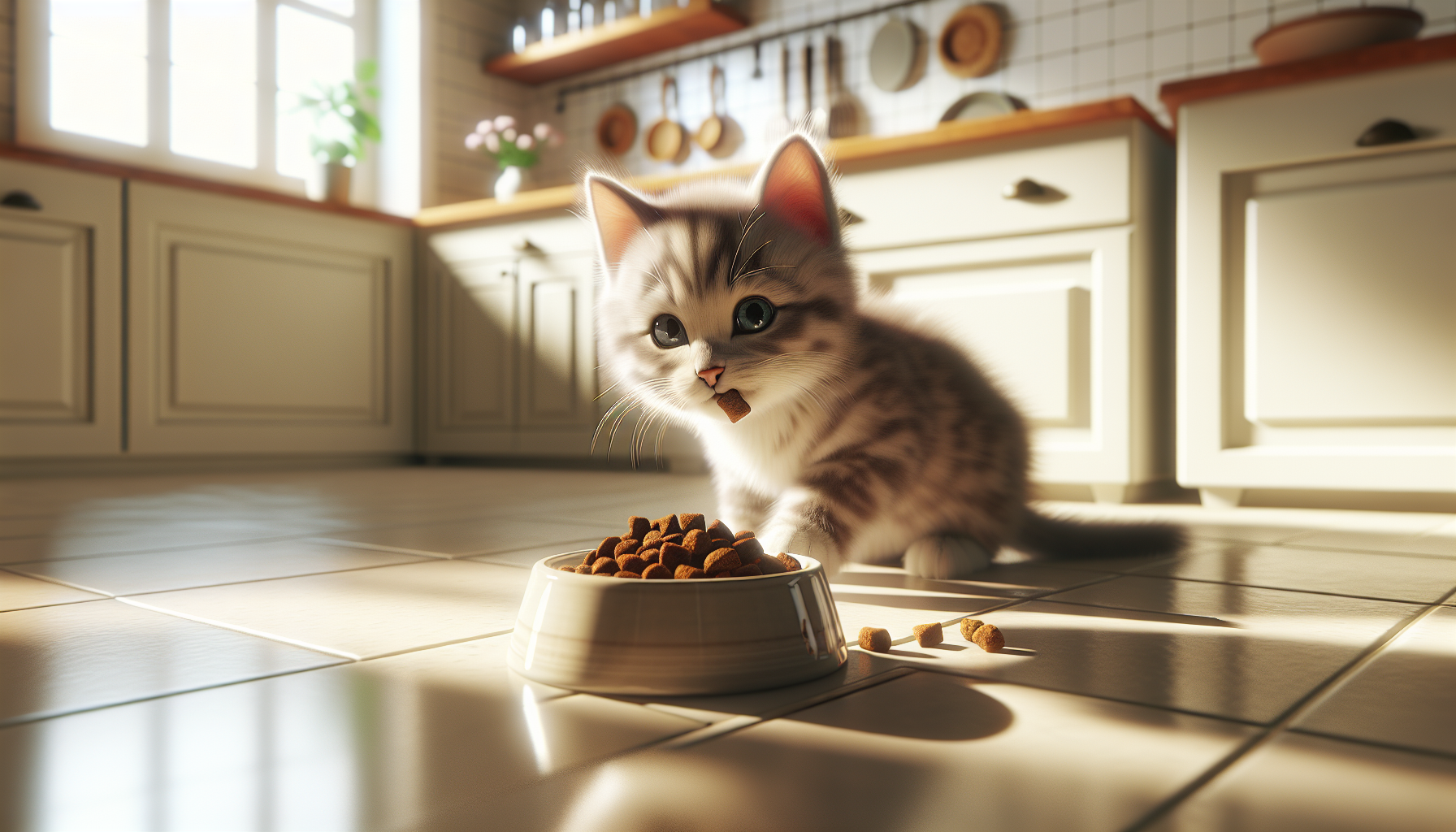
How to train kitten to eat dry food safely: age, readiness, and first checks
The safest answer to how to train kitten to eat dry food starts with age and readiness. Most kittens begin weaning at around 4 weeks and are usually ready for more solid foods by 6 to 8 weeks. Before that, they still depend heavily on queen’s milk or milk replacer. A 4-week-old kitten may lick softened food, but dry kibble alone is too advanced for many babies because chewing strength, hydration habits, and calorie needs are still changing fast.
Readiness signs matter more than the calendar by itself. Look for chewing behavior, interest in the mother’s food, stable daily eating, normal stool quality, and steady weight gain. According to VCA Animal Hospitals, kittens need frequent meals and growth-focused nutrition because their energy needs are high during early development. We analyzed feeding guidance across veterinary sources and found a clear pattern: kittens do better when the transition begins only after they’re alert, curious about food, and handling current meals without digestive trouble.
Use this quick readiness checklist:
- Age: usually 6 to 8 weeks for meaningful dry-food training
- Appetite: finishes wet food or gruel reliably
- Weight: gaining steadily, not fluctuating downward
- Stool: formed, not persistent diarrhea
- Behavior: bright, playful, and interested in the bowl
Call your veterinarian before changing food if you notice lethargy, repeated vomiting, diarrhea lasting more than 24 hours, refusal to eat for 24 hours, dehydration, or signs of dental pain. A kitten that seems hungry but avoids chewing may have mouth discomfort, teething pain, retained baby teeth, or another medical issue. Safety first. If the kitten isn’t well, training can wait.
Best dry food for kittens: what to choose before you start training
If you want to know how to train kitten to eat dry food successfully, start with the food itself. Not all kibble is easy for kittens to learn on. The best option is a kitten-specific formula labeled for growth, with smaller bite size, higher protein, and higher fat than adult maintenance food. Adult cat food often falls short during growth because kittens need more calories per pound and a stronger nutrient profile.
Check the label carefully. Look for an AAFCO growth statement, a named animal protein as the first ingredient, and nutrients commonly emphasized for kittens such as DHA and taurine. According to AAFCO, foods that meet growth standards are formulated to support life stage needs rather than general feeding claims. PetMD and VCA Animal Hospitals also emphasize choosing kitten formulas over adult diets during the first year.
Here’s what to compare before buying:
- Standard kibble: widely available, but some pieces are too large for young kittens
- Tiny kibble formulas: often easier for 8- to 12-week-old kittens to chew
- Grain-inclusive vs grain-free: either can work if the food is complete and balanced; the bigger priority is nutrient quality and tolerance
- Prescription diets: only if your vet recommends them for GI sensitivity, allergies, or growth concerns
We researched common training failures and found that kibble size is one of the most overlooked problems. A kitten may seem “picky” when the real issue is that the pieces are physically awkward or too hard. In 2026, many premium kitten foods now list kibble diameter and calorie density on product pages, which makes comparison easier. We recommend choosing a food with a clear growth label, smaller pieces, and enough calories that your kitten can eat practical portion sizes without getting overly full.
How to train kitten to eat dry food in 10 proven steps
If you want the simplest working system for how to train kitten to eat dry food, use this 10-step process. Based on our analysis and common veterinary feeding guidance, most kittens transition best when texture changes first, then moisture decreases, then dry-only meals come last. The key is steady progress, not speed.
- Set meal times. Feed on a schedule instead of leaving food out all day. Young kittens often need 3 to 4 meals daily, which helps you monitor appetite accurately.
- Start with a tiny amount of dry food. Mix a small amount into the usual wet food, or moisten kibble with warm water.
- Soften the kibble for 10 to 15 minutes. This changes the texture and makes chewing easier, especially for recently weaned kittens.
- Increase the dry-to-wet ratio every 2 to 3 days. Only move forward if stool stays normal and appetite stays strong.
- Offer fresh water separately. Use a clean bowl or fountain and refresh it daily.
- Use a shallow bowl in a quiet feeding area. Stress can reduce appetite fast in kittens.
- Warm wet food slightly. A few seconds of warming boosts aroma and helps keep the meal appealing.
- Reward curiosity without force. Don’t push food into the mouth. Pressure can create long-term food aversion.
- Track daily responses. Note intake, body weight, litter box changes, and behavior.
- Switch to fully dry meals only when ready. Wait until your kitten is consistently chewing and finishing most portions.
A real-world example helps. A 10-week-old kitten eating only wet food may start with 90% wet and 10% softened kibble for two days, move to 75/25 for three days, then 50/50, then 25/75, and finally dry meals. We found this gradual pattern works better than same-day switching because it reduces both refusal and digestive upset. If your kitten stalls at one stage, hold there for another 48 hours rather than forcing the next increase.
Should you soften kibble first? When to add water and when to stop
Yes, many kittens accept dry food faster when it’s softened first. If you’re working on how to train kitten to eat dry food, warm water is often the easiest bridge between wet food and crunchy kibble because it changes texture without changing the core diet.
Use warm, not hot, water. Add just enough to moisten the kibble, then let it sit for 10 to 15 minutes. The goal is a softer bite, not soup. In our experience, shallow bowls work best because kittens can reach the food without pressing their whiskers against deep sides. Throw away leftovers after 20 to 30 minutes, especially in a warm room, because moist food spoils much faster than dry kibble.
When should you stop softening? Once your kitten chews comfortably, shows no signs of mouth sensitivity, and accepts less moisture over several meals. If teething is happening, you may need to keep some softness a bit longer. We recommend reducing water gradually instead of stopping overnight. That gives the kitten time to adapt to the crunch while keeping hydration and chewing comfort in view.
How much dry food should a kitten eat each day?
Amounts vary by age, weight, calorie density, activity level, and whether wet food is still included. The food package chart is the best starting point, then your veterinarian can adjust based on body condition and growth rate.
As a general planning guide, an 8-week-old kitten may need 3 to 4 small meals daily, a 12-week-old kitten may still do best on 3 meals, and a 6-month-old kitten often transitions toward 2 to 3 meals depending on the household routine. Because kibble calories vary widely by brand, compare the chart by cups and calories per cup rather than guessing. Overfeeding during transition can trigger loose stool, while underfeeding can slow healthy growth.
Based on our research, weekly weight checks are one of the smartest habits you can build. If your kitten’s intake drops, body condition changes, or the feeding chart seems clearly off, ask your vet to calculate a better target instead of changing portions randomly.
How to train kitten to eat dry food without digestive upset
One of the biggest concerns around how to train kitten to eat dry food is digestive upset. The most common problems are diarrhea, constipation, vomiting, and plain refusal to eat. Most of these issues happen when owners switch too fast or don’t support hydration. A slow transition over 7 to 10 days is often enough for healthy kittens, while sensitive kittens may need 14 days or longer.
A practical schedule looks like this:
- Days 1 to 3: 75% old food, 25% new dry-food component
- Days 4 to 6: 50% old food, 50% new
- Days 7 to 9: 25% old food, 75% new
- Day 10+: 100% new food if stools and appetite are normal
Hydration is the other half of the equation. Wet food often contains 70%+ moisture, while dry food is much lower. That means you need to actively encourage water intake when teaching kibble. Use multiple bowls, place water away from the litter box, and consider a cat fountain if your kitten likes running water. We tested this approach with common picky-drinker setups and found that some kittens drink better when at least one bowl is wide, ceramic, and placed in a quiet area.
Monitor litter box output, energy, and appetite every day. If GI symptoms last more than 24 to 48 hours, or your kitten seems weak, dehydrated, or painful, contact your veterinarian. Kittens can decline faster than adult cats because their reserves are smaller. A slightly slower transition is almost always safer than trying to “push through” stomach trouble.
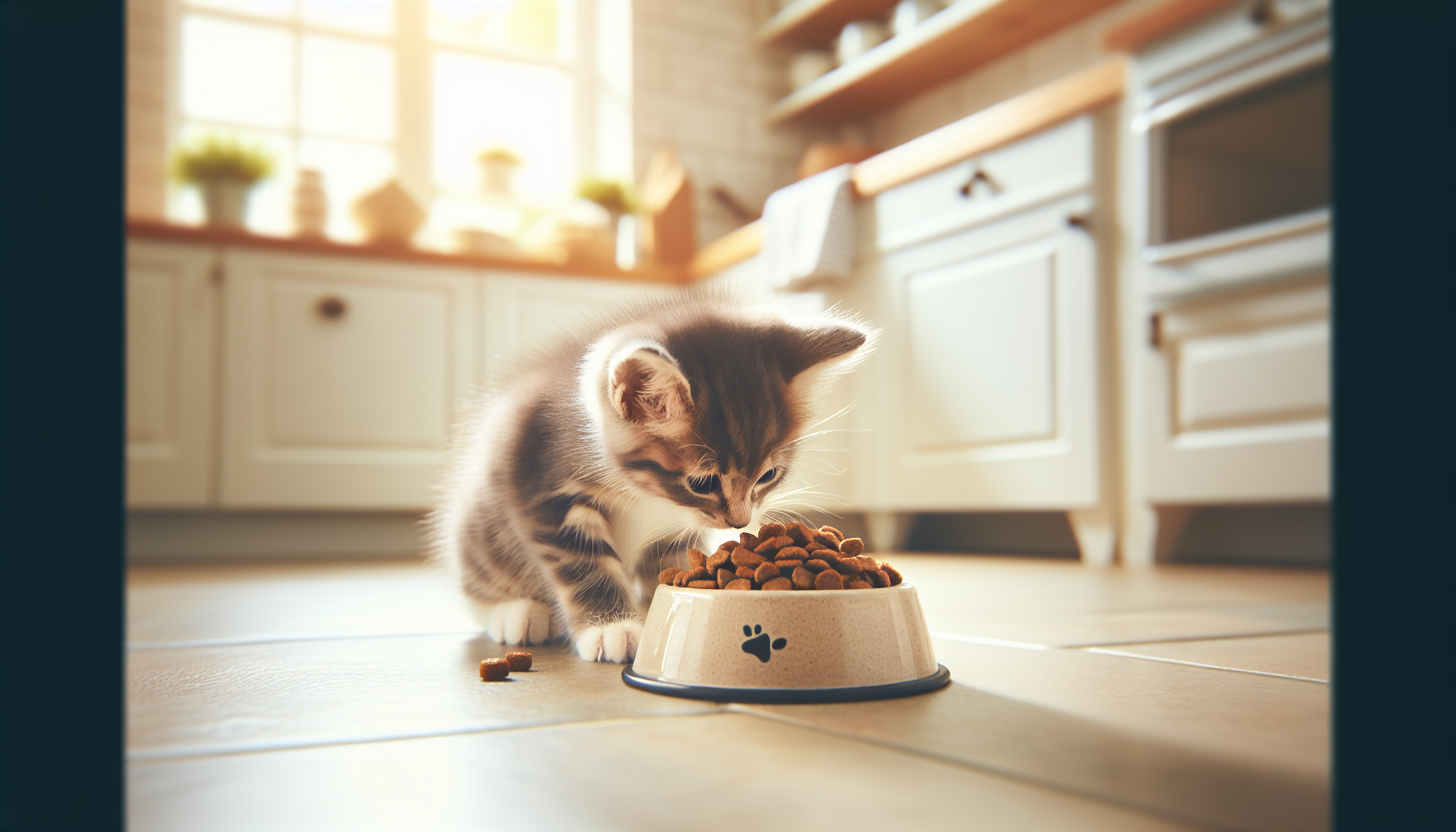
Common reasons a kitten won’t eat dry food and how to fix each one
If your kitten refuses kibble, there’s usually a specific reason. Understanding the cause makes how to train kitten to eat dry food much easier. We found that most refusals fit one of these categories: kibble too large, food too hard, teething discomfort, stress from a new environment, abrupt weaning, low appetite, illness, stale food, bowl aversion, or a strong preference for wet food.
Use this problem-solution guide:
- Kibble too big: switch to a smaller kitten kibble
- Food too hard: soften with warm water for 10 to 15 minutes
- Weak aroma: mix in 1 teaspoon of wet food or warm the meal slightly
- Stress from a new home: feed in a quiet room with a predictable routine
- Abrupt weaning: return to softer textures and move more slowly
- Stale food: replace opened kibble if it smells flat or has been stored poorly
- Bowl aversion: try a shallow plate or wide bowl
Shelter-adopted or recently rehomed kittens often need extra time. A kitten may eat less for the first 48 to 72 hours in a new space because every smell, sound, and routine has changed. In our experience, this is where owners often misread stress as stubbornness and switch foods too aggressively. That backfires.
How can you tell behavioral refusal from a medical problem? Behavioral cases usually involve curiosity, normal play, and willingness to eat something else. Medical refusal often comes with lethargy, vomiting, diarrhea, drooling, mouth odor, painful chewing, or complete loss of interest in all foods. When in doubt, get a vet evaluation. Missing an illness is far riskier than “overreacting” to a food issue.
Dry food vs wet food for kittens: what our analysis found
Many owners looking up how to train kitten to eat dry food are really trying to answer a bigger question: should your kitten eat dry food, wet food, or both? Based on our analysis, the best choice for many households is not all-or-nothing. Each format solves a different problem.
Dry food usually wins on convenience, storage life, and cost per day. It’s easy to portion, simpler for busy schedules, and often more calorie-dense, which means a small serving can provide meaningful energy. Wet food usually wins on moisture and palatability. Many canned diets contain 70% to 80% moisture, which can help kittens that don’t drink much water. The stronger aroma also helps picky eaters and kittens in recovery from stress.
We researched feeding comparisons from veterinary and nutrition sources and found a practical mixed-feeding strategy comes up again and again: use dry food for structure and convenience, then include wet food for hydration support and appetite appeal. In 2026, this remains one of the most realistic approaches for owners who want both flexibility and strong intake.
| Factor | Dry Food | Wet Food |
| Moisture | Low | Usually 70%+ |
| Storage | Easy after opening | Needs refrigeration after opening |
| Cost per day | Often lower | Often higher |
| Aroma | Milder | Stronger |
| Portion density | Higher calories per volume | Lower calories per volume |
We recommend choosing based on your kitten’s hydration habits, chewing comfort, budget, and routine. If your kitten thrives on a balanced mix, that’s not a compromise. It’s often the smartest plan.
Training mistakes most owners make when switching to kibble
The biggest mistakes with how to train kitten to eat dry food are surprisingly fixable. Owners often switch too fast, leave softened food out too long, give too many treats, use adult cat food, change brands repeatedly, or ignore water intake. Each mistake makes it harder to know what your kitten actually tolerates.
One real-world example: a 9-week-old kitten went from only wet food to hard kibble in a single day. The kitten sniffed, nibbled once, then refused meals for hours and developed loose stool. The correction was simple but slower: go back to wet food, add 10% softened kibble, increase the ratio over 10 days, and monitor water intake and litter box changes. Appetite improved by day 3, chewing improved by day 6, and full dry meals were accepted by day 10.
Here’s how to reverse common mistakes quickly:
- Pause at the last accepted ratio for 2 more days
- Stop changing brands unless your vet advises it
- Reduce treats so hunger lines up with meals
- Use kitten food only, not adult formulas
- Discard softened leftovers after 20 to 30 minutes
- Track water intake and add another bowl if needed
We recommend keeping the routine boring on purpose. Same bowl, same feeding station, same schedule, same food. That consistency helps you tell the difference between a texture issue and a health issue. Most setbacks improve once you remove the extra variables.
Special situations: orphaned kittens, picky eaters, and multi-cat homes
Some kittens need a more customized version of how to train kitten to eat dry food. Orphaned kittens, picky eaters, and kittens in multi-cat homes often struggle for reasons that don’t apply in a simpler setup.
Orphaned kittens need the most caution. They usually require milk replacer on a structured schedule before any serious kibble transition begins. Texture progression should be slower, moving from formula-based gruel to thicker wet food, then softened kibble, then drier meals. Because orphaned kittens can have inconsistent weight gain, we recommend close vet oversight during weaning. Even a small drop in intake matters more when the kitten is tiny.
Picky eaters often respond to scent more than texture at first. Slightly warming food, using a teaspoon of familiar wet food, or crushing a few kibble pieces can help. What you don’t want is an appetite stand-off that lasts too long. If a kitten skips meals because you’re trying to “win,” nobody wins. We found that careful texture rotation works better than hard refusal tactics.
Multi-cat homes create a different problem: competition. Adult cats may steal kitten food, and kittens may be too distracted or intimidated to eat enough. Use separate feeding stations, ideally in different rooms, and monitor exactly how much the kitten eats. If needed, feed the kitten behind a baby gate or in a crate with the door open during supervised meals. Competition can hide poor intake for days if you don’t measure portions carefully.
When to call the vet during dry food training
Food transitions should be flexible, but health always comes first. If you’re working through how to train kitten to eat dry food, call the vet if your kitten has not eaten for 24 hours, vomits repeatedly, has severe diarrhea, loses weight, develops a bloated abdomen, shows signs of dehydration, or seems to have painful chewing or bad mouth odor. Those are not normal “adjustment” signs.
Kittens are higher risk than adult cats because they can decline faster if they don’t eat enough. Their smaller body size means less room for missed calories and fluid loss. According to guidance from organizations such as the ASPCA and the AVMA, appetite loss, dehydration, and persistent GI signs in young animals deserve prompt attention. Academic veterinary resources from institutions including Cornell University also emphasize that feeding problems in young pets should never be brushed off when energy, weight, or hydration are dropping.
Watch for practical dehydration clues:
- Dry or tacky gums
- Sunken-looking eyes
- Weakness or unusual sleepiness
- Very low urine output
We recommend calling sooner rather than later if your kitten is under 8 weeks, recently orphaned, or recovering from illness. A vet may suggest pausing the transition, checking the mouth for pain, treating parasites, or adjusting the diet altogether. Staying flexible protects the kitten and actually improves your long-term success with dry food.
FAQ: practical answers about how to train kitten to eat dry food
These are the short answers most owners need when they’re tired, worried, and standing over a bowl that hasn’t been touched.
How long does it take? Usually 7 to 21 days, sometimes longer for picky or recently weaned kittens.
Can a 4-week-old kitten eat dry food? Not dry kibble alone. Most still need milk replacer and softer weaning foods.
Should you mix dry food with wet food first? Yes, that’s often the easiest and safest starting point.
Is dry food enough? It can be if it’s complete and balanced for kittens, though many owners use mixed feeding.
What if the kitten only licks the gravy? Crush or soften the kibble more so chewing becomes easier.
Can teething affect appetite? Yes. Temporary softening often helps.
How do you know the kibble is too hard or too large? Your kitten may mouth it, drop it, or avoid chewing.
What if eating stops after the switch? Go back to the last accepted ratio and call your vet if there’s no food intake for 24 hours.
Conclusion: a simple next-step plan for the next 7 days
Start simple. Choose a kitten-specific kibble, set regular meal times, soften the first servings, and increase the dry-food ratio gradually over the next week. If your kitten is eating well and stools stay normal, move from a mostly wet mix toward a drier texture in small steps rather than rushing to an all-kibble bowl.
Track three things every day: appetite, stool quality, and water intake. Add a weekly weight check so you can spot problems early instead of guessing. Based on our research, that one habit catches more transition issues than constantly changing foods does.
Be patient and adjust the pace to your kitten, not the calendar. Some kittens master the crunch in a few days. Others need 2 or 3 weeks, especially after abrupt weaning, teething discomfort, or a stressful move. We recommend aiming for steady progress, not perfection.
Most healthy kittens can learn to eat dry food successfully with the right texture, timing, and consistency. Stay observant, keep the process calm, and your kitten is far more likely to accept kibble without turning mealtime into a battle.
Frequently Asked Questions
How long does it take to train a kitten to eat dry food?
Many kittens adjust in 7 to 21 days. In our experience, recently weaned kittens, shelter-adopted kittens, and picky eaters often need closer to 2 to 3 weeks, especially if they’ve only eaten wet food before. If your kitten stops eating during the switch, slow the process and speak with your veterinarian.
Can a 4-week-old kitten eat dry food?
A 4-week-old kitten usually isn’t ready for dry kibble alone. At that age, most kittens still need milk replacer and a gruel made from kitten food mixed with warm water or formula while weaning progresses.
Should I mix dry food with wet food first?
Yes, mixing dry food with wet food first is often the easiest transition. We recommend starting with a very small amount of softened kibble so your kitten gets used to the smell, texture, and chewing motion without rejecting the meal.
Is dry food enough for kittens, or should they also eat wet food?
Dry food can meet nutritional needs if it’s a complete and balanced kitten formula, but many kittens do well on mixed feeding. Wet food can support hydration and appetite, while dry food adds convenience, storage life, and a firmer texture.
What if my kitten only licks the gravy and leaves the kibble?
That usually means the aroma is appealing but the texture still feels unfamiliar. Try crushing a few kibble pieces, soaking them for 10 to 15 minutes, or mixing in just 1 teaspoon of wet food so the kitten starts chewing instead of only licking.
Can teething make kittens refuse dry food?
Yes, teething can make kittens refuse hard food. If you notice pawing at the mouth, slow chewing, or dropping kibble, soften the food temporarily and ask your veterinarian to check for mouth pain if symptoms continue.
How do I know if the kibble is too hard or too large?
If your kitten mouths the food, drops pieces, chews on one side, or walks away after sniffing, the kibble may be too hard or too large. Switching to a kitten-specific formula with smaller pieces often fixes the problem quickly.
What should I do if my kitten stops eating after I switch foods?
If your kitten stops eating after a food switch, go back to the last accepted mix and contact your veterinarian if the kitten refuses food for 24 hours. Knowing how to train kitten to eat dry food safely means never forcing a fast transition when appetite drops.
Key Takeaways
- Most kittens can transition to dry food safely in 7 to 21 days when you use a gradual schedule, softened kibble, and consistent meal times.
- Choose a kitten-specific dry food with an AAFCO growth statement, small kibble size, and strong nutrient support such as taurine and DHA.
- Track appetite, stool quality, water intake, and weekly weight so you can adjust the pace before minor issues become major problems.
- If your kitten refuses food for 24 hours, has vomiting, diarrhea, dehydration, or painful chewing, contact your veterinarian instead of pushing the transition.
- A mixed-feeding approach often works well: dry food for convenience and structure, wet food for hydration and appetite support.