
Why does your cat bring you toys in bed, right when you are trying to sleep?
If this keeps happening, you are probably confused, maybe a little tired, and wondering what your cat is trying to tell you. You might wake up and find a toy mouse by your pillow, a ball near your blanket, or even hear your cat crying proudly in the dark while carrying a toy in their mouth. It can feel sweet, strange, and annoying all at the same time.
If you have been asking, why does my cat bring me toys in bed, the good news is that this behavior is usually normal. In many cases, it is actually a sign that your cat feels safe with you. Still, that does not mean you have to love being woken up at 3 a.m.
This article will help you understand why your cat does this, what it means, and how you can gently change the habit if it is disrupting your sleep.
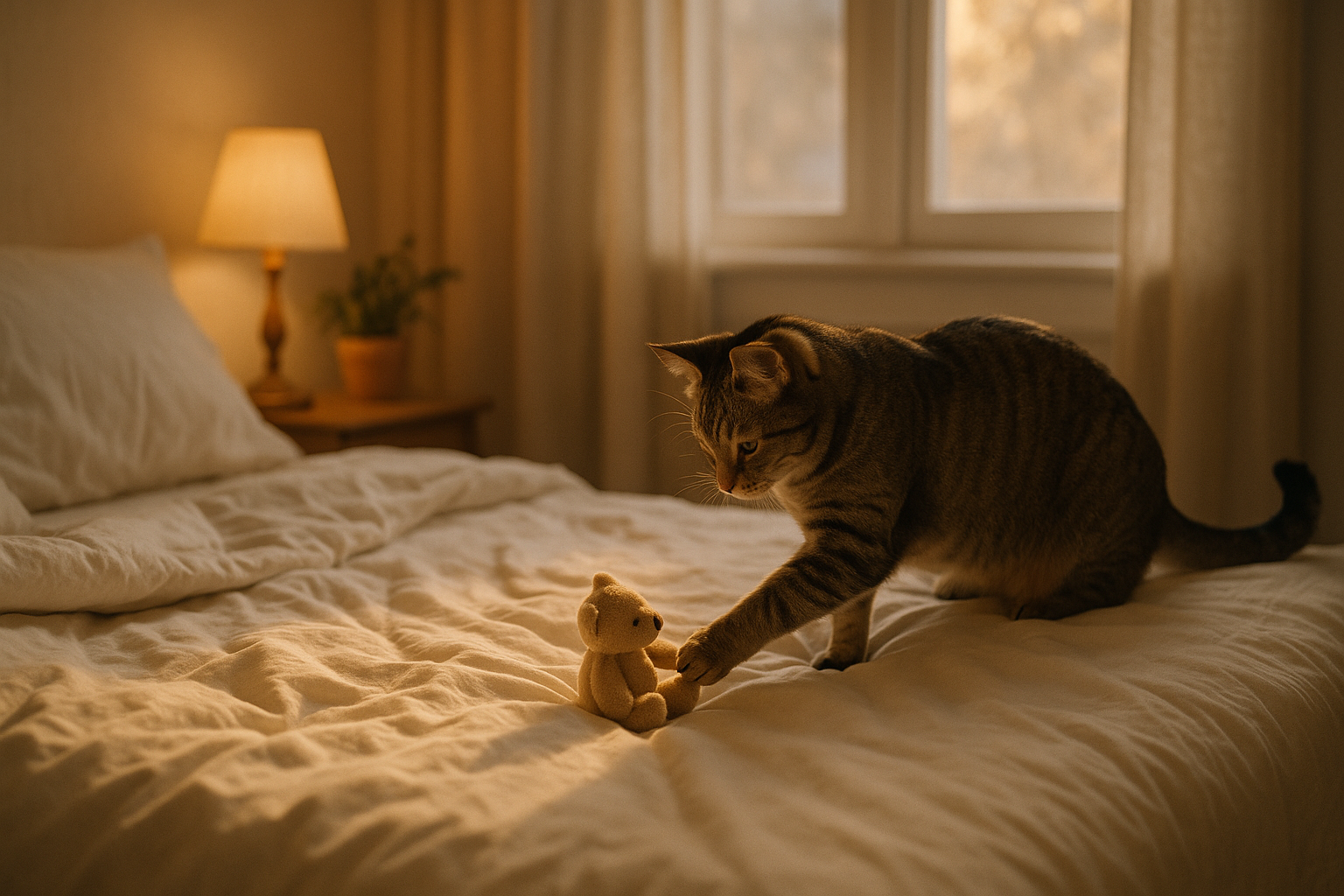
Why your cat brings you toys in bed
When your cat carries toys to your bed, they are not doing it for no reason. Cats use actions more than words. A toy in your bed can mean many things depending on your cat’s personality, age, routine, and energy level.
Here are the most common reasons.
Your cat sees you as family
Cats often bring important things to the people they trust. Your bed smells like you, feels safe, and is one of the most important places in your home to your cat. By bringing a toy there, your cat may be sharing something valuable with you.
In simple words, your cat may be saying, “This is for you,” or “You are part of my group.”
This is one reason many cat owners feel touched by the behavior, even if the timing is not great.
Your cat wants to play
This is one of the biggest reasons. If your cat brings a toy to bed, especially at night or early morning, they may be asking you to wake up and play.
Cats are often most active at dawn and dusk. That means your cat may be full of energy when you are trying to sleep. If they have learned that bringing a toy gets your attention, they may keep doing it.
This is very common in kittens and young cats, but older cats can do it too.
Your cat is following hunting instincts
Even indoor cats have strong hunting instincts. Toys can act like pretend prey. When your cat catches a toy and brings it to your bed, they may be acting out part of the hunting process.
Some cats carry their “catch” to a safe place. Since your bed feels safe, your cat may think it is the best place to bring their prize.
In some cases, your cat may also cry or make strange sounds while carrying the toy. That can be part of the hunting behavior too.
Your cat wants praise or attention
Cats learn fast. If your cat once brought a toy to bed and you reacted by talking, petting, laughing, or getting up, your cat may remember that.
Even negative attention can still feel like attention to a cat. So if you groan, move around, or speak to them, they may think, “Great, this worked.”
This does not mean your cat is being bad. It just means they found a way to connect with you.
Your cat feels lonely or bored
If your cat spends a lot of time alone during the day, they may be looking for more interaction at night. Bringing toys to bed can be a way to ask for company.
Bored cats often create their own activities. Some scratch furniture. Some cry at night. Some bite feet under blankets. And some bring toys to bed because they are trying to start something fun.
Your cat may be showing care
This sounds funny, but some cats seem to “gift” their toys to their people. It can look a little like a mother cat bringing prey to her kittens. Your cat may not think you are a kitten, of course, but instinct can still shape behavior.
To your cat, you may be someone important who deserves the prize.
Is this behavior a problem?
Most of the time, no. Bringing toys to bed is usually not a serious cat behavior problem. It is often a normal cat habit.
It becomes a problem if:
- Your cat wakes you up often
- Your cat cries loudly at night
- Your sleep is getting disrupted
- The behavior is getting more intense
- Your cat seems restless, anxious, or overly needy
If your cat simply leaves a toy by your bed and goes away, there may be no need to change anything. But if your cat is disturbing your sleep every night, it is fair to work on it.
What your cat’s timing can tell you
The timing matters. A cat who brings toys in the middle of the night may be telling you something different from a cat who does it during a daytime nap.
If it happens at night
Nighttime toy delivery often points to extra energy, boredom, or a learned attention habit. Your cat may be awake and ready for action while you are not.
If it happens early in the morning
Your cat may connect toys with breakfast, attention, or the start of the day. Some cats learn that if they wake you up, good things happen next.
If it happens during naps
Your cat may simply want closeness or may enjoy sharing their toy near you when you are resting.
Signs that your cat wants play, not just connection
It helps to know what your cat is asking for. Look for these clues:
- Your cat drops the toy, then stares at you
- Your cat paws at you after bringing the toy
- Your cat runs away, then comes back
- Your cat meows or chirps
- Your cat seems excited and alert
- Your cat brings different toys one after another
These signs usually mean your cat wants you involved.
How to stop your cat from bringing toys to bed at night
You do not need to punish your cat. Punishment can create stress and confusion. Instead, help your cat meet their needs at better times.
Here are the best ways to solve the problem.
Give your cat more playtime before bed
This is often the most effective fix.
Use interactive toys like wand toys, feather teasers, or toy mice. Try to play in a way that lets your cat stalk, chase, pounce, and “catch” something. A short, lazy game may not be enough. You want a real energy release.
Aim for 10 to 20 minutes of active play in the evening. If your cat is very energetic, do two sessions.
After play, give a small meal or treat. This can help your cat feel satisfied and ready to rest.
A simple bedtime routine
| Time | What you do |
|---|---|
| Evening | Active play session |
| After play | Small meal or treats |
| Before bed | Calm petting or quiet time |
| Night | Keep room calm and boring |
This routine can help your cat settle down.
Do not reward nighttime wake-ups
If your cat brings you a toy and you get up to play, the habit may continue. Try not to respond in a fun way during the night.
That means:
- Do not throw the toy
- Do not start petting
- Do not speak in an excited voice
- Do not feed your cat right away
This can be hard at first. Your cat may try even more for a few nights. That does not mean it is not working. It often means your cat is testing the old routine.
Stay calm and consistent.
Offer more daytime enrichment
A bored cat is more likely to bother you at night.
Try adding:
- Puzzle feeders
- Window perches
- Cat trees
- Safe solo toys
- Scratching posts
- Short play breaks during the day
If your cat has more to do while you are awake, they may be less focused on nighttime attention.
Rotate toys to keep them interesting
Some cats get bored when the same toys are always around. Put a few away and switch them every few days. This can make playtime feel fresh again.
Save your cat’s favorite interactive toy for evening play with you. That helps your cat connect fun with the right time, not bedtime.
Make your bedroom less exciting at night
If possible, reduce things that encourage play in bed.
You can try:
- Removing loose toys from the bedroom at night
- Keeping the room dark and quiet
- Ignoring playful behavior in bed
- Using white noise if small sounds wake you
This does not mean your cat is not allowed to sleep with you. It just helps set clearer limits.
Feed your cat on a predictable schedule
Cats love routine. If meals happen at random times, your cat may use toys or noise to get your attention.
Try feeding meals at regular times each day, especially with an evening meal before bed. Some cats sleep better when they have eaten after play.
Know when your cat may need more support
Sometimes the behavior is not just about toys. If your cat also shows other signs, there may be a bigger issue.
Watch for:
- Very loud crying at night
- Pacing or restlessness
- Sudden clinginess
- Changes in appetite
- Litter box changes
- Hiding or acting upset
If this behavior started suddenly, or your cat seems stressed, a vet visit is a good idea. Pain, anxiety, aging, or medical problems can change nighttime behavior.
Should you shut your cat out of the bedroom?
Maybe, but it depends on your cat and your home.
If your sleep is really suffering, closing the bedroom door may help. But some cats get more upset when they lose access to you. They may scratch the door, cry, or become more stressed.
If you try this, do it gently:
- Give your cat a cozy sleeping area outside your room
- Play with them before bed
- Feed them before bedtime
- Keep the new routine consistent
For some cats, this works well. For others, it creates a new problem. You know your cat best.
What not to do
Some reactions can make the problem worse.
Do not punish your cat
Yelling, spraying water, or pushing your cat away harshly can hurt trust. Your cat will not understand why you are upset. They may only learn that being near you feels unsafe.
Do not assume your cat is being mean
Cats do not bring toys to bed to annoy you on purpose. They are responding to instinct, habit, or a need.
Do not expect change overnight
If your cat has done this for months, it may take time to change. Small progress still counts.
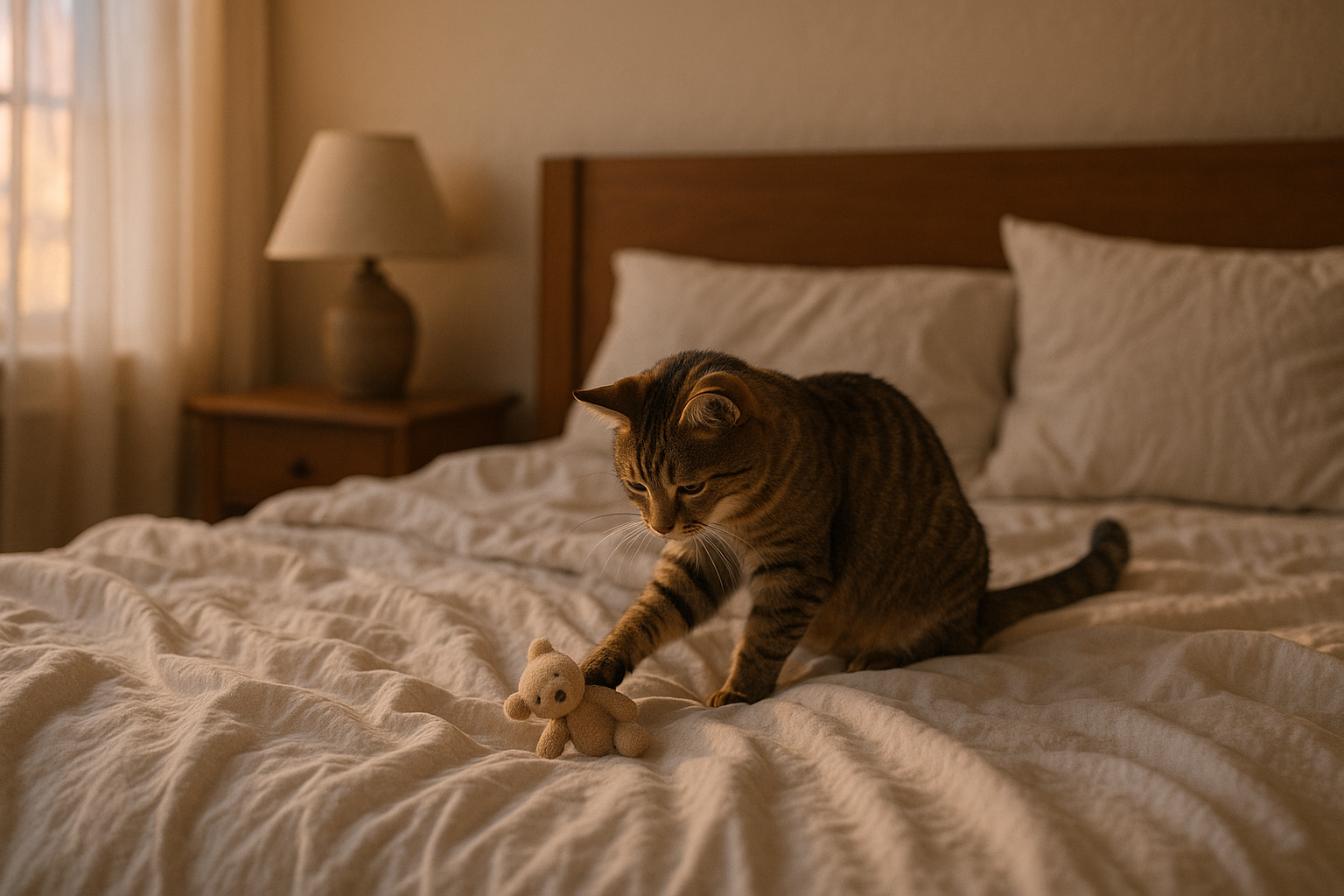
Quick guide to what your cat may mean
| Behavior | Possible meaning |
|---|---|
| Brings toy and meows | Wants attention or play |
| Leaves toy quietly by bed | Sharing or safe storage |
| Brings toy at same time nightly | Routine or learned habit |
| Brings toy after being alone all day | Boredom or loneliness |
| Carries toy and cries loudly | Hunting instinct or excitement |
FAQ
1. Why does my cat bring me toys in bed at night?
Your cat may want to play, share a prized toy, or act out hunting instincts. Night is also a time when many cats naturally feel active.
2. Is my cat giving me a gift?
Sometimes, yes, in a cat way. Your cat may be sharing something important with you because they trust you and feel close to you.
3. Why does my cat meow while carrying a toy?
This can happen during hunting-style behavior. Some cats make proud or excited sounds when carrying their “prey.”
4. Does this mean my cat loves me?
It can be a sign of trust and comfort. Your cat likely sees you as an important part of their world.
5. How do I stop my cat from waking me up with toys?
Give more playtime before bed, feed after play, and avoid rewarding nighttime wake-ups with attention.
6. Should I play with my cat when they bring a toy to bed?
Not during the night if you want the behavior to stop. Save play for daytime or evening instead.
7. Why does my kitten bring toys to my bed?
Kittens have lots of energy and strong play instincts. Your kitten may be asking you to interact or may simply feel safe near you.
8. Is this behavior normal for indoor cats?
Yes. Indoor cats still have hunting instincts and often use toys to express them.
9. Should I take toys away at night?
You can remove loose toys from the bedroom if your cat uses them to wake you. This may help reduce the habit.
10. When should I worry about this behavior?
You should talk to a vet if the behavior starts suddenly, becomes extreme, or comes with crying, pacing, appetite changes, or other unusual signs.
Conclusion
If you keep asking, why does my cat bring me toys in bed, the answer is usually simple. Your cat is trying to connect with you, play with you, or follow natural instincts in a place that feels safe.
That means the behavior is often loving, even if it is frustrating at bedtime.
The best way to handle it is with patience, routine, and better outlets for your cat’s energy. More evening play, less nighttime attention, and a calm bedtime routine can make a big difference.
You are not dealing with a bad cat. You are dealing with a cat who is communicating in the only way they know how. Once you understand the message, it gets much easier to help your cat and protect your sleep too.