
Have you ever needed to leave the house for a little while and worried that your kitten would cry, panic, scratch things, or feel scared without you?
If you are trying to learn how to train kitten to stay home alone, you are not the only one. Many first-time kitten owners feel stressed about this. You love your kitten, and you want to do everything right. But you also need to work, shop, see family, or simply take a break. That can make you feel guilty, especially when your kitten follows you everywhere or meows the second you walk toward the door.
The good news is that you can teach your kitten to stay home alone without stress. It takes patience, a safe setup, and small practice steps. Most kittens are not being naughty when they cry or act out. They are often confused, full of energy, or not yet used to being alone. With the right training, your kitten can learn that alone time is safe, normal, and temporary.
In this guide, you will learn simple step-by-step ways to help your kitten feel calm at home, stop building bad habits, and grow into a more confident cat.
Why your kitten struggles with being alone
Your kitten is still very young and learning how the world works. In the beginning, you are a big part of their safety. You bring food, warmth, play, and comfort. So when you leave, your kitten may feel unsure.
This is why kittens often:
- Cry when you leave the room
- Scratch furniture or doors
- Bite more during play
- Knock things over
- Have trouble settling down
- Seem extra clingy when you return
This does not always mean true separation anxiety. Sometimes it simply means your kitten has too much energy, not enough routine, or no training for short periods alone.
If you understand this, you can respond with calm training instead of panic.
When you should start teaching alone time
The best time to start is early, once your kitten has had a little time to settle into your home. You do not need to wait for a problem to get worse.
If your kitten is eating well, using the litter tray, and starting to feel safe with you, you can begin with very short absences. Even a few minutes of practice helps.
Start small. A young kitten should not suddenly be left alone for many hours with no training. That usually leads to stress and bad habits.
What your kitten needs before you leave them alone
Before you focus on training, make sure your kitten has the basics. A kitten who feels safe and comfortable is much more likely to stay calm when you are gone.
Create a safe kitten space
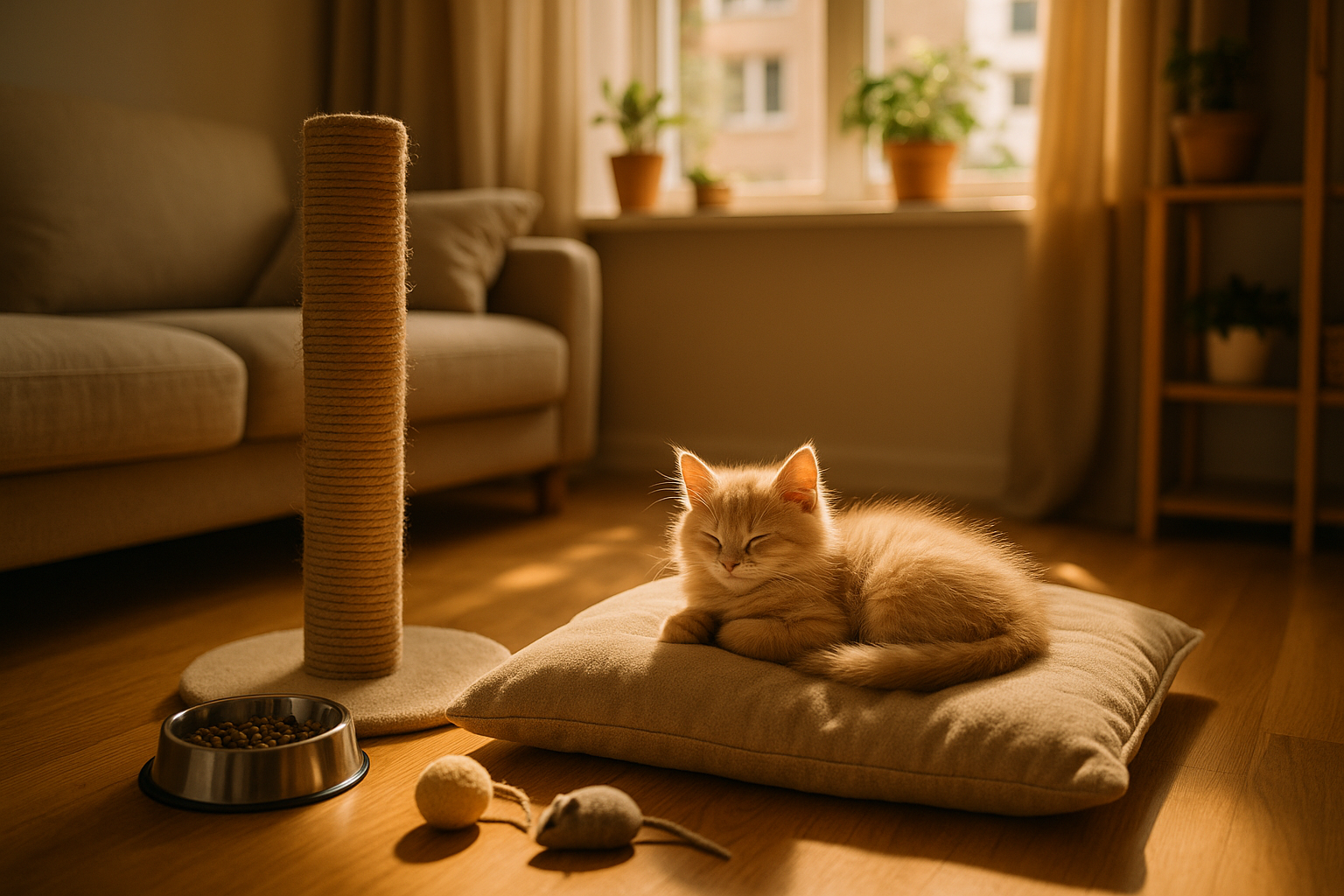
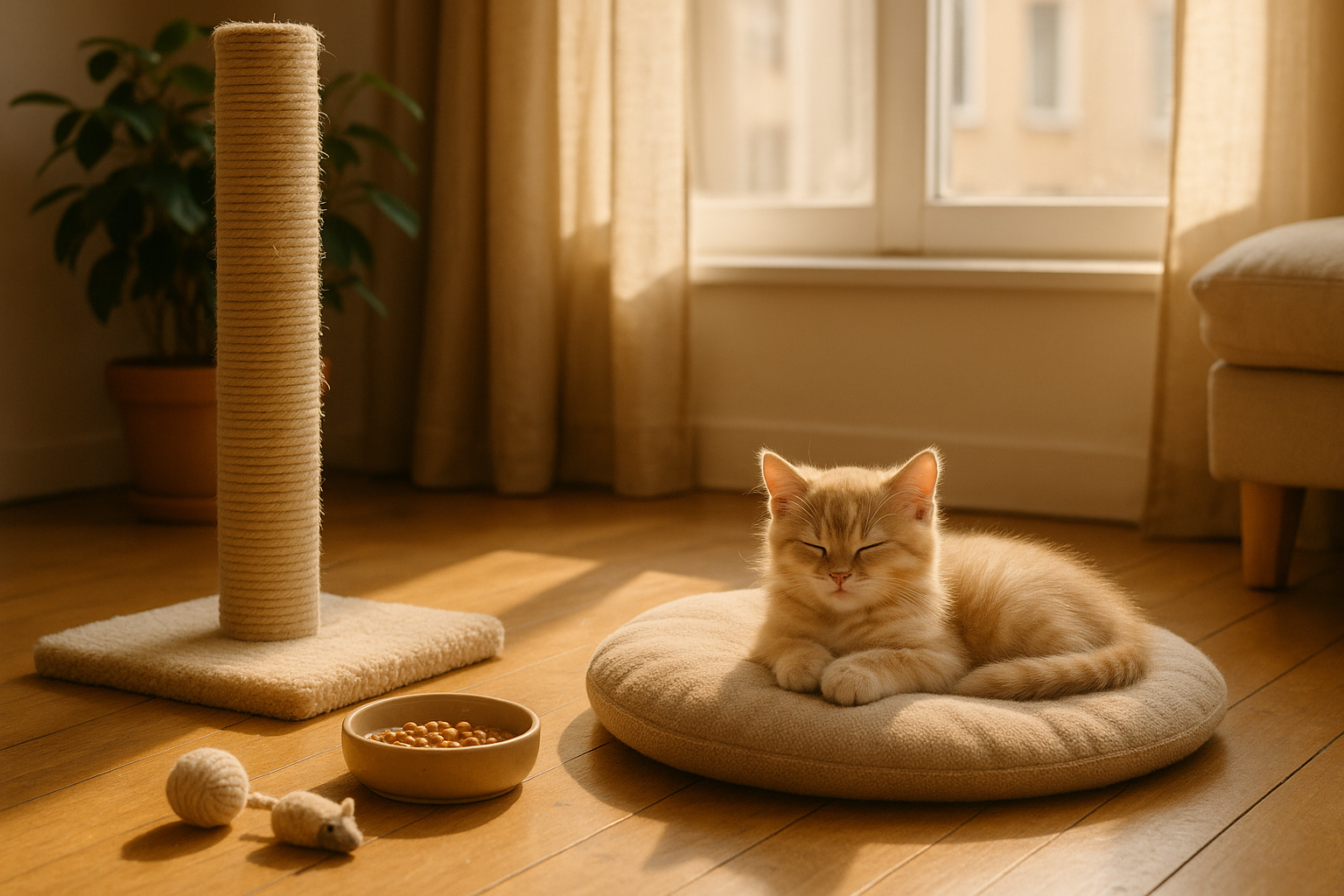
Pick one room or one small safe area where your kitten can stay when you leave. This can help your kitten feel protected instead of overwhelmed by the whole house.
Your kitten’s space should include:
- A clean litter tray
- Fresh water
- A cozy bed or blanket
- A scratching post or scratching pad
- Safe toys
- A food puzzle or treat toy
- A place to hide, like a small cat cave or box
- A place to climb, like a cat tree or sturdy shelf
A smaller, safe area often works better than giving your kitten full access to everything right away.
Remove danger and trouble spots
Kittens are curious. If something dangles, rolls, tears, or shines, they may try to play with it.
Before leaving, remove or block access to:
- Electrical cords
- Plastic bags
- Small swallowable items
- Toxic plants
- Open windows
- Strings and hair ties
- Breakable decorations
- Human food
This step matters because your kitten cannot relax in a space full of tempting trouble, and neither can you.
Meet your kitten’s needs first
A bored kitten has a harder time being alone. Before you leave, make sure your kitten has had:
- A play session
- Food
- Fresh water
- A clean litter tray
- A little affection if they want it
A kitten who has hunted a toy, eaten, and used the litter tray is much more likely to nap while you are out.
Step-by-step training to help your kitten stay home alone
This is the heart of learning how to train kitten to stay home alone. The goal is to teach your kitten that you always come back and that being alone is not scary.
Step 1: Start with very short separations
Leave your kitten in their safe area and step out for just 1 to 3 minutes. Do not make a big speech before leaving. Keep it calm and normal.
Then come back quietly.
Repeat this several times over a few days. If your kitten stays calm, slowly increase the time.
For example:
| Training day | Time alone |
|---|---|
| Day 1 | 1 to 3 minutes |
| Day 2 | 5 minutes |
| Day 3 | 10 minutes |
| Day 4 | 15 minutes |
| Day 5 | 20 to 30 minutes |
You do not need to rush. If your kitten struggles, go back to a shorter time.
Step 2: Practice leaving the room first
For some kittens, even you going to the bathroom causes crying. That means they need to learn that short distance is okay.
Close the door briefly while you move to another room. Come back before your kitten gets very upset if possible. This teaches them that people can disappear and return safely.
These tiny practice moments are very useful.
Step 3: Use play before alone time
Play is one of your best tools. It helps release energy and lowers stress.
Try 10 to 15 minutes of active play before you leave. Use a wand toy, soft ball, or toy mouse. Let your kitten chase, pounce, and “catch” the toy.
Then offer a small meal or snack.
This follows a natural pattern:
- Hunt
- Eat
- Groom or settle
- Sleep
That sleepy stage is exactly what you want before you leave.
Step 4: Leave a special activity only for alone time
Give your kitten something fun that only appears when you go out. This can help build a positive feeling about your leaving.
Good choices include:
- A puzzle feeder
- A treat ball
- A toy stuffed with kitten-safe treats
- A cardboard box with hidden kibble
- A crinkly tunnel
- A soft toy with catnip for older kittens if appropriate
When your kitten starts connecting your departure with something pleasant, alone time feels less upsetting.
Step 5: Keep your exits and returns calm
One common mistake is making leaving and coming home too dramatic. If you act worried, your kitten may think something is wrong.
Try this instead:
- Leave quietly
- Do not over-comfort your kitten right before leaving
- Return calmly
- Wait a minute before giving lots of attention if your kitten is very worked up
This helps your kitten learn that your comings and goings are a normal part of life.
Step 6: Build a simple routine
Kittens feel safer when life is predictable. A routine can reduce stress more than many owners realize.
A simple routine might look like this:
| Time | What you do |
|---|---|
| Morning | Play, feed, litter check |
| Before leaving | Short play, snack, safe toys set out |
| Return home | Calm greeting, litter check, play |
| Evening | Meal, cuddle time, quiet rest |
Your routine does not need to be perfect. It just needs to be steady enough that your kitten knows what to expect.
How long can your kitten stay home alone?
This depends on your kitten’s age, personality, and setup. Very young kittens need more care and should not be left alone for long periods.
Here is a simple guide:
| Kitten age | Time alone |
|---|---|
| Under 4 months | Only short periods, usually a few hours at most |
| 4 to 6 months | A bit longer with safe setup and training |
| 6 months and older | Often can handle longer stretches depending on the kitten |
If you work long hours, try to arrange help for a very young kitten. A family member, friend, or pet sitter can check in.
Common mistakes that make alone time harder
Sometimes kitten owners do their best but accidentally make the problem bigger. That is normal, and you can fix it.
Leaving too long too soon
If your kitten has never practiced being alone, jumping straight to hours by themselves can feel scary.
Slow progress works better.
Giving attention during panic
If you always rush back the second your kitten cries, they may learn that crying brings you back. That can make the habit stronger.
This does not mean you should ignore serious distress for hours. It means you should train in short steps and return during calmer moments when possible.
Not giving enough play
A kitten with leftover energy often turns that energy into biting, scratching, climbing curtains, or crying.
Play is not extra. It is part of training.
Punishing stress behaviors
Do not punish your kitten for scratching, crying, or knocking things over after a stressful absence. Punishment creates more fear and does not teach calm independence.
Instead, ask what your kitten needed and how you can adjust the setup.
Signs your kitten is coping well
As training improves, you may notice:
- Less crying when you leave
- More interest in toys or food puzzles
- More napping while alone
- Calmer greetings when you return
- Less scratching at doors
- Better overall behavior in the house
These are strong signs that your kitten is learning confidence.
Signs your kitten may need more help
Some kittens struggle more than others. Watch for signs like:
- Extreme panic every time you leave
- Not eating when alone
- Constant drooling or panting
- Injuring themselves trying to escape
- Litter tray accidents that keep happening
- Very destructive behavior linked only to your absence
If this is happening, talk to your vet. There could be anxiety, illness, or another issue that needs extra support.
How to help with biting, crying, and scratching during this stage
These problems often show up together when a kitten is not settled.
If your kitten cries a lot
Make sure your kitten is not hungry, lonely, or bored. Increase short practice sessions and give a special treat toy when leaving.
You can also leave soft background sound, like quiet music or gentle household noise, if that seems to help.
If your kitten scratches furniture
Place scratching posts near sleeping spots and near doors. Reward use of the post with praise, play, or treats.
If your kitten scratches when you are gone, that can mean stress or boredom. Add more enrichment and review your training pace.
If your kitten bites more than usual
Biting often means play energy, overstimulation, or frustration. Add more active play sessions each day and use toys instead of hands during play.
A tired kitten is usually a gentler kitten.
FAQ about training your kitten to stay home alone
1. At what age can you start teaching your kitten to stay home alone?
You can start once your kitten has settled into your home and feels safe. Begin with very short periods, even just a minute or two.
2. Is it cruel to leave your kitten home alone?
No, not if you do it properly. Your kitten needs a safe space, food, water, litter, toys, and gradual training. The goal is to teach calm independence, not force loneliness.
3. Why does your kitten cry when you leave?
Your kitten may feel confused, bored, full of energy, or simply not used to being alone yet. Crying is often a sign that your kitten needs slower training.
4. Should you get another cat so your kitten is not alone?
Sometimes a second cat helps, but it is not a magic fix. Two kittens still need training, space, and proper introductions. Do not get another pet only to solve one behavior problem.
5. Can you leave a young kitten alone all day?
Very young kittens should not be left alone all day. They need more frequent care, meals, and supervision.
6. Should you leave the TV or radio on for your kitten?
You can, if it seems to help. Some kittens like gentle background sound. Keep it low and calm.
7. What toys are best when your kitten is alone?
Safe toys are best, like sturdy balls, puzzle feeders, tunnels, scratching items, and simple kitten-safe toys without loose parts.
8. How do you know if your kitten has separation anxiety?
If your kitten shows severe panic, self-harm, nonstop distress, or extreme destruction linked to your absence, talk to your vet for help.
9. Should you say goodbye to your kitten before leaving?
You can give a calm little pat if you want, but do not make leaving a big emotional event. Quiet exits usually work better.
10. How long does it take to train a kitten to stay home alone?
Some kittens improve in days, while others need weeks. It depends on age, personality, energy level, and how slowly you build the training.
Final thoughts
If you feel nervous about leaving your kitten alone, that makes sense. You care deeply, and you want a happy, well-behaved kitten. The best way to get there is not by forcing your kitten to “just deal with it.” It is by teaching them, little by little, that home is safe even when you are not in the room.
Keep your training simple. Play before you leave. Use short practice sessions. Make the space safe and comforting. Stay calm when you go and when you return. Most of all, give your kitten time.
You are not trying to create a perfect kitten overnight. You are helping your kitten grow into a calm, confident cat who trusts that you always come back. And that kind of training can make life better for both of you.