
Are you worried because your kitten hardly touches the water bowl and you are not sure how to help?
If you are a first time kitten owner, this can feel stressful. You want your kitten to grow up healthy, playful, and calm, but then you notice the water bowl still looks full at the end of the day. You may start wondering if your kitten is sick, picky, scared, or just being stubborn. The good news is that this is a very common problem, and in many cases, you can gently teach better drinking habits.
Learning how to train a kitten to drink more water is not about forcing your kitten. It is about making water feel safe, easy, and interesting. Kittens are tiny, curious, and sensitive to change. Some do not like the bowl. Some do not like the location. Some are eating wet food and getting a bit of moisture there, so they seem less thirsty. Others simply need a little help learning where and how to drink.
In this guide, you will learn simple steps you can use at home. You will also learn why kittens sometimes avoid water, what mistakes to avoid, and how to build healthy habits without making your kitten anxious.
Why drinking enough water matters for your kitten
Water helps your kitten’s whole body work properly. It supports digestion, energy, temperature control, and healthy kidneys. When your kitten drinks enough, they usually feel better and act more comfortably.
Young kittens can get dehydrated faster than adult cats. Their little bodies are still growing, and they may not always notice thirst in the same way you expect. That is why paying attention early can help you avoid bigger health problems later.
Why your kitten may not be drinking much water
Before you train your kitten, it helps to understand what may be going on. Your kitten is not trying to make life hard for you. Usually, there is a simple reason behind the behavior.
Your kitten eats wet food
If your kitten eats canned food, they may already be getting a lot of moisture from meals. This means they may drink less from the bowl than a kitten eating dry food only.
That does not mean water is unimportant. It just means you should look at the full picture, not only the bowl level.
Your kitten does not like the bowl
Some kittens are picky about bowl shape, size, or material. A deep bowl can bother their whiskers. A plastic bowl can hold smells. A bowl that slides around may feel scary.
Your kitten may want water, but not from that bowl.
The water spot feels unsafe
Cats and kittens often prefer calm, quiet places. If the bowl is near a loud machine, a busy hallway, or the litter box, your kitten may avoid it.
They want to feel safe while drinking.
The water is not fresh enough
Many kittens like fresh, cool water. If the water sits too long, gets dusty, or has bits of food in it, your kitten may walk away.
Your kitten simply has not learned a good routine yet
Kittens are still learning everything. They learn where to sleep, where to eat, where to use the litter box, and where to drink. Sometimes they need gentle repetition before a habit sticks.
Signs your kitten may need more water
You do not need to panic over every small change, but you should know what to watch for.
Common signs of low water intake
- Dry or sticky gums
- Low energy
- Sunken looking eyes
- Constipation
- Less interest in food
- Darker urine
- Peeing less often
- Skin that does not bounce back quickly when gently lifted
If your kitten seems very tired, refuses food, vomits, has diarrhea, or has signs of dehydration, contact your vet right away. Training can help with habits, but health issues need professional care.
How to train a kitten to drink more water step by step
The best training is gentle and consistent. You are not trying to win a battle. You are helping your kitten build trust and comfort around drinking water.
Step 1: Put water in more than one place
Start by offering several water bowls around your home. Put them in quiet areas where your kitten already likes to spend time.
A single bowl in one corner may not be enough. Your kitten may forget where it is, or they may not want to cross the room each time they feel thirsty.
Good places for water bowls
- Near your kitten’s sleeping area, but not too close
- In a quiet corner of the living room
- In a room where your kitten plays
- Away from the litter box
- Away from noisy appliances
This small change often helps a lot.
Step 2: Try different bowls
Not all bowls feel the same to a kitten. This is one of the easiest changes you can test.
Use shallow bowls first. Many kittens prefer them because their whiskers do not press against the sides. Ceramic and stainless steel are usually better choices than plastic because they stay cleaner and hold fewer smells.
Bowl test table
| Bowl Type | Why Your Kitten May Like It | Possible Problem |
|---|---|---|
| Shallow ceramic bowl | Stable, easy to reach, no strong smell | Can break if dropped |
| Stainless steel bowl | Easy to clean, no odor | Some are too light and move around |
| Plastic bowl | Cheap and easy to find | Can hold smells and scratch easily |
| Wide low dish | Good for whisker comfort | May spill more easily |
Try one change at a time so you can tell what works.
Step 3: Refresh the water often
Your kitten may be more interested in water that feels fresh. Change the water at least once or twice a day. Wash the bowl with mild soap and rinse it well.
If you can, use cool clean water. Many kittens are more willing to sip fresh water than stale water that has been sitting for hours.
Step 4: Keep food and water a little separate
Many cats do not love drinking right beside their food. It may seem strange to you, but some kittens prefer their water bowl a short distance away.
Try moving the water bowl a few feet from the food dish. Watch whether your kitten starts visiting it more often.
Step 5: Keep water far from the litter box
This is a big one. Your kitten does not want to drink near the place where they go to the bathroom. Even if the area looks clean to you, your kitten may still avoid it.
A better setup is to place the water bowl in a fresh, peaceful area with no litter smell nearby.
Step 6: Make drinking fun with moving water
Some kittens love running water. A pet water fountain can help because it keeps water moving and fresh. The sound and movement can attract your kitten’s attention.
If you do not have a fountain, you can try letting your kitten watch a small slow stream from a faucet for a few seconds. Do this only if it feels safe and calm.
Why moving water can help
In nature, still water can sometimes seem less safe than running water. Some cats seem to keep that instinct. That is why a fountain works so well for certain kittens.
Step 7: Add water to meals
If your kitten eats wet food, mix in a little extra water. Start with a tiny amount so the texture does not change too much. You want your kitten to accept it without fuss.
If your kitten eats dry food, you can ask your vet whether adding water or switching partly to wet food would be a good idea.
Easy food moisture ideas
- Mix one or two teaspoons of water into wet food
- Warm the food slightly so the smell stays tempting
- Increase the amount slowly over several days
This is not cheating. It is a very practical way to improve hydration.
Step 8: Use gentle encouragement
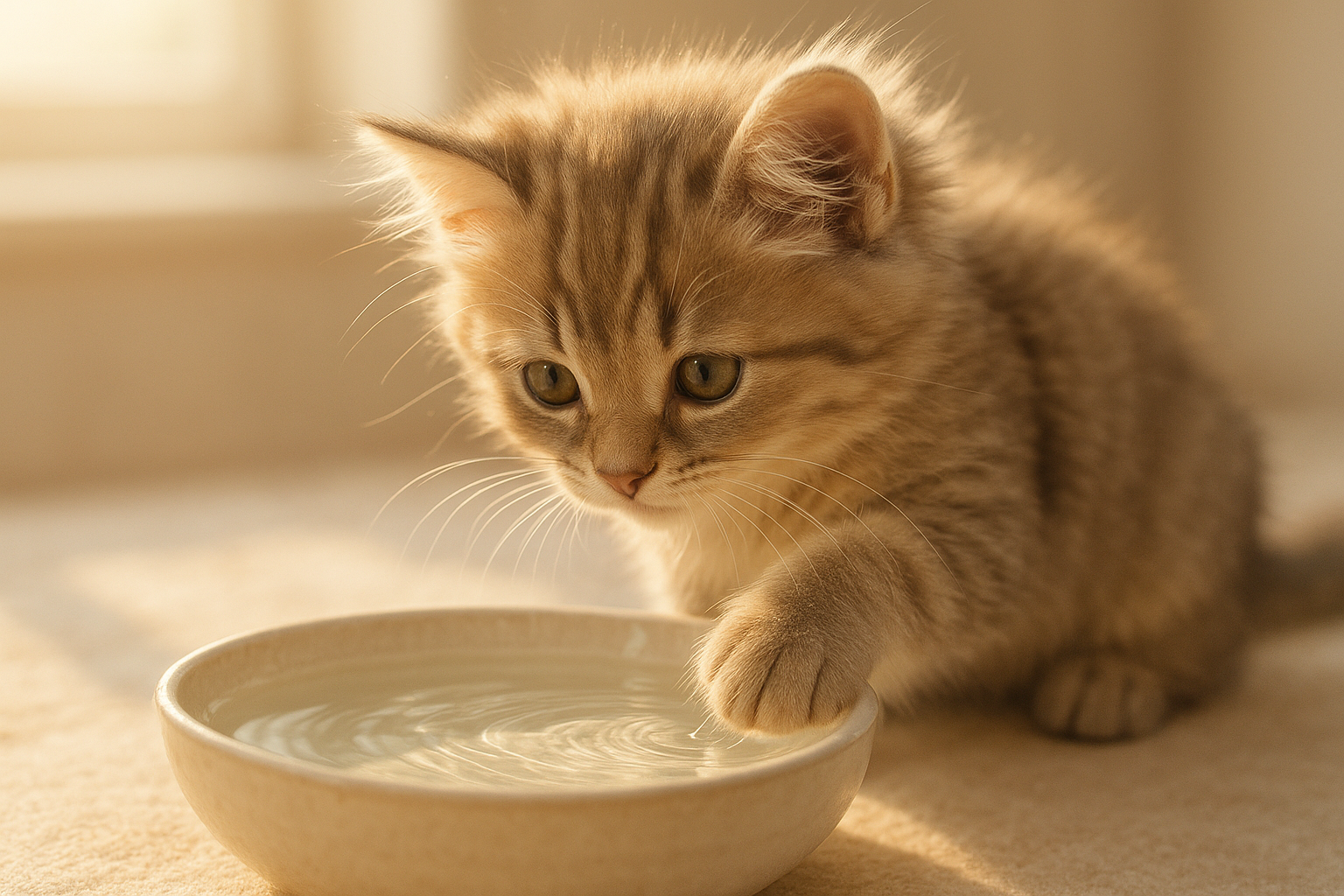
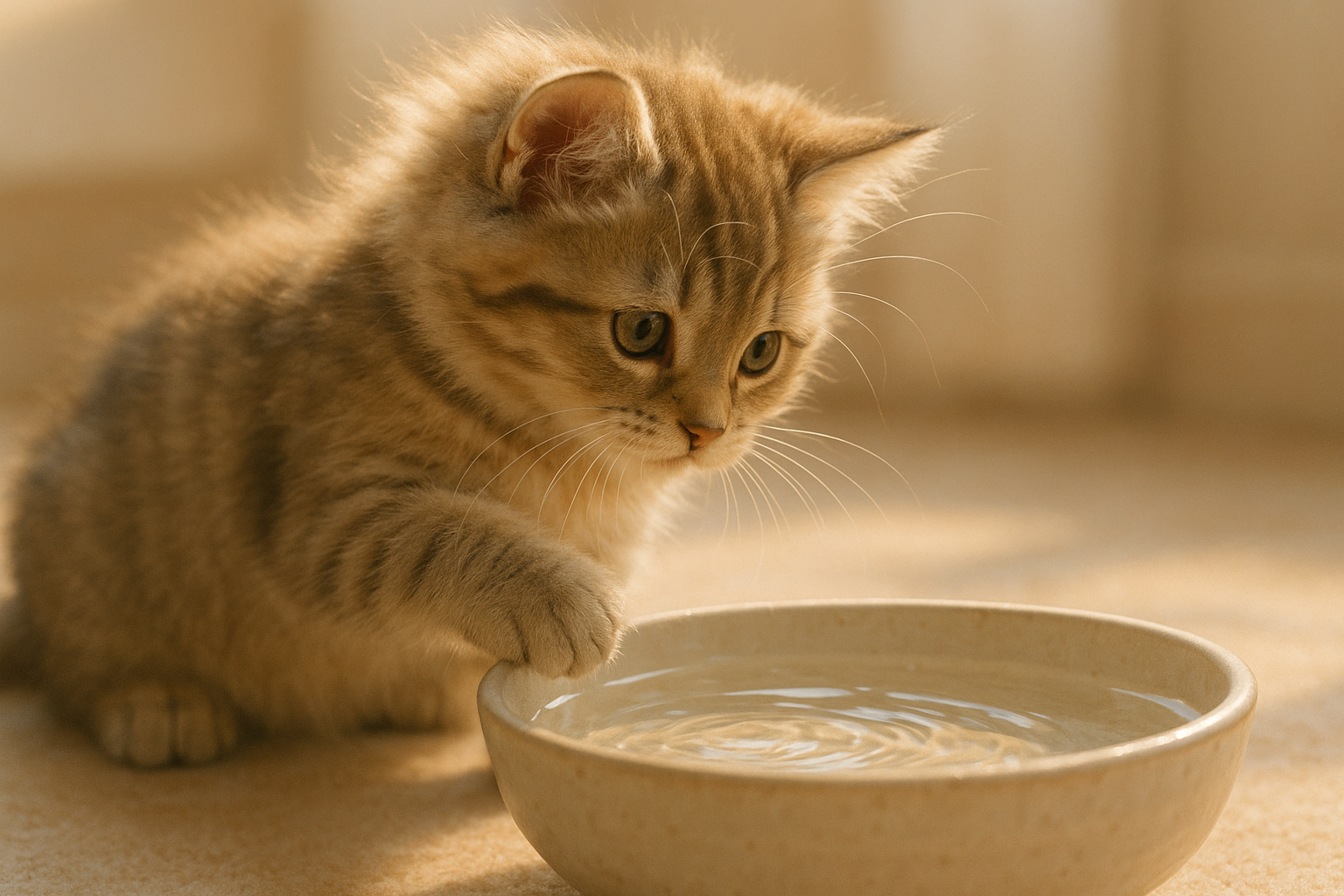
You can help your kitten notice the water without forcing anything. Gently tap the surface of the water with a clean finger so your kitten sees movement. Some kittens become curious and take a sip.
You can also bring your kitten near the bowl after playtime or after meals. Many kittens are more likely to drink at those times.
Do not push their face into the water. That can create fear and make the problem worse.
Step 9: Reward interest in the water bowl
Training works best when your kitten connects the bowl with something positive. If your kitten walks to the bowl, sniffs it, or takes a sip, praise softly. You can also give a tiny reward after they drink.
Keep the reward calm and simple. You do not want drinking water to turn into a wild game. You just want your kitten to feel that using the bowl is a good choice.
Good rewards
- A soft happy voice
- Gentle petting if your kitten likes touch
- A tiny treat after drinking
- A short play session later
Step 10: Build a daily routine
Kittens learn fast when things happen in a predictable way. Offer water in the same clean spots every day. Refresh it on a schedule. Notice when your kitten tends to drink and support that rhythm.
For example, your routine might look like this:
| Time | What You Do |
|---|---|
| Morning | Wash bowl and add fresh water |
| After breakfast | Guide kitten near water bowl |
| After playtime | Offer calm access to bowl |
| Evening | Refresh water again |
| Before bed | Check bowl level and cleanliness |
Routine helps your kitten feel secure, and secure kittens learn better.
Mistakes to avoid when teaching your kitten to drink more water
Sometimes owners try very hard, but the method causes stress instead of progress.
Do not force your kitten
Never hold your kitten down or push their face toward the bowl. This can make them scared of both you and the water area.
Do not make too many changes at once
If you switch bowls, move locations, change food, and add a fountain all on the same day, you will not know what helped. Make one or two changes, then watch.
Do not ignore health warning signs
If your kitten suddenly drinks much less, eats less, or seems weak, contact your vet. A simple habit issue and a medical problem can look similar at first.
Do not assume all kittens drink the same amount
Some variation is normal. Size, age, food type, room temperature, and activity level all matter.
How much water should your kitten drink?
There is no perfect number that fits every kitten. A kitten eating mostly wet food may drink less from a bowl because they get water from food. A kitten eating dry food usually needs more water separately.
Instead of only measuring exact amounts, watch your kitten’s whole pattern:
- Are they active?
- Are they eating well?
- Are they peeing normally?
- Do they seem alert and comfortable?
- Is the bowl level changing at least a little?
If you are unsure, your vet can help you figure out what is normal for your kitten.
When to call the vet
Training can improve habits, but some situations need medical advice right away.
Call your vet if your kitten
- Refuses water for a long time
- Stops eating
- Has vomiting or diarrhea
- Seems weak or sleepy
- Has dry gums
- Cries when peeing
- Pees very little
- Has sudden behavior changes
Young kittens can go downhill quickly, so it is better to ask early than wait too long.
Simple daily tips that make a big difference
These small habits can quietly improve your kitten’s hydration over time.
Keep bowls clean
A bowl that looks fine to you may still smell odd to your kitten. Daily washing matters.
Offer quiet drinking spots
Busy homes can make shy kittens nervous. Give them peaceful choices.
Watch after play and meals
These are often the best moments to encourage a sip.
Use wet food if it suits your kitten
Many owners find this helps a lot with total water intake.
Stay patient
Some kittens change in one day. Others need a week or two.
FAQ
1. Why is my kitten not drinking much water?
Your kitten may be getting moisture from wet food, dislike the bowl, dislike the location, or simply still be learning. Sometimes illness can also lower water intake, so watch for other symptoms.
2. Can you train a kitten to drink more water?
Yes, you can. The best way is to make water easy to find, fresh, safe, and appealing. Gentle routine and positive encouragement usually work better than force.
3. Is a water fountain good for kittens?
Yes, for many kittens it is. Moving water can seem more interesting and fresher than still water. Just keep the fountain clean so it stays safe.
4. Should your kitten’s water be next to food?
Not always. Many kittens prefer water a little away from food. If your kitten ignores the bowl, try placing it in a separate quiet spot.
5. Is wet food enough for hydration?
Wet food helps a lot because it contains moisture. But your kitten should still have clean drinking water available at all times.
6. How often should you change your kitten’s water?
At least once or twice a day. If the bowl gets dirty, dusty, or has food in it, change it sooner.
7. What kind of bowl is best for a kitten?
A shallow, wide bowl made of ceramic or stainless steel is often best. These materials stay cleaner and are usually more comfortable for whiskers.
8. Can you add water to kitten food?
Yes, in many cases you can. Add a small amount at first so your kitten still enjoys the texture and taste. If your kitten has special health needs, ask your vet.
9. How do you know if your kitten is dehydrated?
Look for dry gums, tiredness, sunken eyes, constipation, and less urination. If you notice these signs, contact your vet quickly.
10. Should you worry if your kitten only drinks a little?
Not always. If your kitten eats wet food, acts normal, and pees regularly, they may be fine. But if low drinking comes with low energy, poor appetite, or sickness, get veterinary advice.
Conclusion
If you want to know how to train a kitten to drink more water, the answer is usually simple: make water easier, fresher, safer, and more rewarding. Your kitten is not trying to be difficult. They are just small, sensitive, and still learning how their new world works.
Start with the basics. Try a better bowl. Offer more water spots. Keep water away from the litter box. Refresh it often. Add a little moisture to food if needed. If your kitten likes moving water, a fountain may help a lot.
Most of all, be gentle with yourself and with your kitten. First time kitten ownership can feel confusing and tiring. You may already be dealing with crying at night, biting during play, and worry about bad habits later. That is normal. Good training does not happen through pressure. It happens through patience, routine, and trust.
If something feels off, trust your instincts and call your vet. But in many homes, a few small changes can turn a barely used water bowl into part of your kitten’s healthy daily routine.