
Is your kitten turning your couch into a scratching post, and you feel like you are losing the battle every single day?
If you are trying to learn how to train a kitten not to scratch couch, you are not alone. Many first-time kitten owners feel stressed when they see tiny claws pulling at the sofa fabric. You may love your kitten deeply, but you also want your home to stay in one piece.
The good news is this: your kitten is not being naughty on purpose. Scratching is a normal cat behavior. Your kitten scratches to stretch, mark space, remove old nail layers, and burn off energy. So the goal is not to stop scratching completely. The goal is to teach your kitten where to scratch.
Once you understand that, training gets much easier.
In this guide, you will learn simple, practical steps you can use right away. You will also learn why kittens scratch furniture, what mistakes to avoid, and how to build good habits that last.
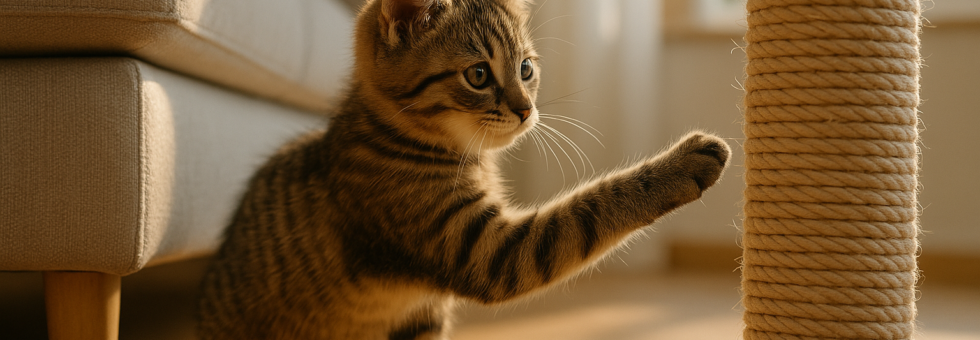
Why your kitten scratches the couch
Before you train your kitten, it helps to understand the reason behind the behavior. When you know the “why,” you can fix the problem faster.
Your kitten may scratch the couch because:
- The couch feels good under the claws
- It is in a busy part of your home
- Your kitten wants to stretch after sleeping
- Your kitten is excited or full of energy
- Your kitten is marking territory with scent glands in the paws
- There is no better scratching option nearby
Your couch is not just furniture to your kitten. It is tall, firm, and easy to reach. In cat language, it is a perfect scratching spot.
That is why punishment usually does not work. Your kitten is doing something natural. You need to guide that natural behavior to a better place.
Can you really train a kitten not to scratch the couch?
Yes, you can. But the truth is important: you are not teaching your kitten to stop scratching forever. You are teaching your kitten to scratch the right thing instead.
That means your training plan should do two things:
- Make the couch less appealing
- Make a scratching post or pad more appealing
When both happen at the same time, your kitten starts making better choices.
What you need before training starts
Training goes much better when you set up your home first. If you skip this part, your kitten may keep going back to the couch.
Here are the basics you need:
- A sturdy scratching post
- A horizontal scratcher or cardboard pad
- Toys for playtime
- Treats for rewards
- Double-sided tape or couch protector
- Nail trimmer made for cats
- Patience and consistency
Not all kittens like the same kind of scratcher. Some like tall posts. Some like flat cardboard pads. Some like sisal rope. If one option fails, it does not mean your kitten cannot learn. It just means you have not found the right scratcher yet.
Step 1: Give your kitten a better scratching option
This is the most important step.
If you want to know how to train a kitten not to scratch couch, you must give your kitten something better than the couch. A weak, tiny post hidden in a corner is not enough.
Your kitten needs a scratcher that is:
- Tall enough for a full body stretch
- Stable and not wobbly
- Covered in a texture cats enjoy, like sisal
- Placed in the right location
Many kittens love scratching after a nap. So place a scratching post near the sleeping area. Many also scratch in family spaces. So place another one near the couch.
If your kitten already scratches one side of the sofa, put the scratching post right in front of that exact spot. This makes the good choice easy.
Best types of scratchers for kittens
Different kittens like different surfaces. It helps to try more than one.
| Scratcher Type | Best For | Notes |
|---|---|---|
| Vertical post | Kittens who like stretching up | Must be tall and stable |
| Cardboard pad | Kittens who scratch carpet or floor | Cheap and easy to test |
| Angled scratcher | Kittens who like a mix of both | Good for small spaces |
| Sisal post | Many kittens love this texture | Often the top choice |
| Scratching lounge | Resting and scratching together | Good for relaxed kittens |
Try at least two styles if you are not sure what your kitten likes.
Step 2: Make the couch less fun to scratch
Now you need to protect the couch while your kitten is learning.
Your kitten keeps scratching the couch because it feels rewarding. So your job is to make it less satisfying without scaring your kitten.
You can use:
- Double-sided sticky tape made for pets
- Furniture protectors
- A tightly tucked blanket over the favorite spot
- A plastic couch shield
- Safe scent deterrents made for cats
Cats usually dislike sticky surfaces on their paws. This can help break the habit. But always pair this with a good scratching post nearby. If you only block the couch and give no good option, your kitten may just move to a chair, curtain, or rug.
What not to do
Do not use anything that may hurt or frighten your kitten.
Avoid:
- Yelling
- Hitting
- Spraying water in anger
- Forcing paws onto the post
- Using harsh smells that are unsafe for pets
These things can make your kitten scared of you, not teach the lesson you want.
Step 3: Put the scratching post in the right place
Placement matters a lot.
One big mistake first-time owners make is putting the scratching post in a quiet corner far away from where the kitten likes to be. Your kitten is not trying to make a decorating choice. Your kitten wants the scratcher to be where life happens.
The best places are:
- Next to the couch
- Near sleeping spots
- In rooms where your family spends time
- Near windows if your kitten likes looking outside
At first, do not worry about making your room look perfect. Focus on training. Once your kitten builds the habit, you can slowly move the scratcher a little at a time if needed.
Step 4: Show your kitten how to use the scratching post
Some kittens use a post right away. Others need help.
You can encourage your kitten by:
- Gently tapping the scratching post with your fingers
- Dragging a toy up the post
- Sprinkling a little catnip if your kitten is old enough to respond to it
- Putting treats near and on the scratcher
- Praising your kitten warmly when the post is used
Your tone matters. Keep it soft and happy. If your kitten touches the post, sniffs it, or scratches it even once, reward that moment.
Kittens learn fast when the lesson feels good.
Should you move your kitten to the post?
Yes, but do it gently.
If you catch your kitten scratching the couch, calmly pick your kitten up or guide your kitten toward the scratching post. Then use a toy or your fingers to get interest on the post.
The key word is calm. If you sound angry, your kitten may connect your presence with fear.
Step 5: Reward the behavior you want
This step is where training really sticks.
Whenever your kitten scratches the post, give one or more of these rewards:
- Soft praise
- A small treat
- A quick play session
- Gentle petting if your kitten likes touch
Reward right away. If you wait too long, your kitten may not understand what earned the reward.
Think like this: every time your kitten uses the scratcher, you are saying, “Yes, this is the right place.”
Over time, your kitten starts choosing the scratcher more often.
Step 6: Keep your kitten busy so scratching does not become stress behavior
Sometimes couch scratching gets worse because your kitten has too much energy. A bored kitten often creates fun by climbing, biting, scratching, and zooming around at night.
That is why training is not just about furniture. It is also about daily routine.
Try giving your kitten:
- Two to three active play sessions each day
- Toys that mimic prey, like wand toys
- Small balls or soft toys to chase
- Climbing space like a cat tree
- Short training sessions with treats
A tired kitten is usually easier to train.
A simple daily routine that helps
| Time | What to Do | Why It Helps |
|---|---|---|
| Morning | Play for 10 to 15 minutes | Burns energy early |
| After meals | Bring kitten to scratching post | Builds habit after eating |
| Afternoon | Give solo toys | Prevents boredom |
| Evening | Active play session | Reduces night chaos |
| Before bed | Calm petting or quiet time | Helps kitten settle |
A routine helps your kitten feel safe and learn faster.
Step 7: Trim your kitten’s nails regularly
Nail trimming does not stop scratching, but it can reduce damage.
If your kitten has very sharp claws, even a few couch scratches can leave clear marks. Keeping nails trimmed makes accidents less harmful.
Use cat nail clippers and trim just the sharp tip. Avoid the pink part inside the nail, called the quick, because it can hurt and bleed.
If you are nervous, ask your vet or groomer to show you how.
Simple nail trimming tips
- Trim when your kitten is sleepy
- Give treats before and after
- Do one or two nails at a time if needed
- Stay calm and gentle
- Stop if your kitten gets too upset
This is not a race. Small wins count.
Step 8: Notice patterns and fix the real trigger
If your kitten keeps going back to the couch, look closely at when it happens.
Ask yourself:
- Does your kitten scratch after waking up?
- Does it happen when you leave the room?
- Does your kitten do it before meals?
- Does it happen during zoomies?
- Is your kitten trying to get attention?
When you notice the pattern, you can act earlier.
For example:
- If scratching happens after naps, place a post next to the bed
- If it happens during zoomies, add more playtime
- If it happens for attention, reward calm behavior before scratching starts
- If it happens in one room only, add another scratcher there
Training works best when you solve the reason, not just the result.
Step 9: Stay consistent every day
This is the part many people struggle with because life gets busy.
If one day you redirect your kitten and the next day you ignore the couch scratching, your kitten gets mixed messages. The habit lasts longer.
Consistency means:
- Protecting the couch every day
- Keeping scratchers available
- Redirecting every time you can
- Rewarding good scratching often
- Making sure everyone in the home follows the same plan
Your kitten does not need a perfect owner. Your kitten just needs a clear and steady message.
Common mistakes that make training harder
You can save yourself time by avoiding these common problems.
Using a scratcher that is too small
Many store-bought kitten scratchers are tiny and light. Your kitten may knock them over and never trust them again. A good scratcher should feel solid.
Putting the scratcher too far away
If the couch is the favorite spot, the scratcher should be very close at first. You can move it later.
Only saying “no”
If you only stop the bad behavior but do not show the good behavior, your kitten stays confused.
Punishing after the fact
If you find couch damage later and scold your kitten, your kitten will not understand why. Cats do not connect delayed punishment to an earlier action.
Not giving enough playtime
An under-stimulated kitten often acts out in ways that feel frustrating to you.
Giving up too soon
Training takes time. Some kittens learn in days. Others take weeks. That is normal.
How long does it take to train a kitten not to scratch the couch?
This depends on your kitten’s age, personality, energy level, and how consistent you are.
Some kittens improve in one week. Many need two to six weeks to build a strong habit. If the couch has already become a favorite scratching place, it can take longer.
You are looking for progress, not instant perfection.
Signs of progress include:
- Your kitten uses the scratching post more often
- Your kitten pauses when redirected
- Couch scratching happens less often
- Your kitten seeks out the scratcher after naps or play
Celebrate those small wins. They matter.
What if your kitten ignores the scratching post?
This is common, especially at first.
If your kitten ignores the post, try these changes:
- Switch to a different texture
- Try a horizontal scratcher
- Move it closer to the couch
- Use a toy to lead your kitten onto it
- Reward even tiny interest
- Add more than one scratcher
- Make sure the post is stable
Sometimes the problem is not training. It is simply that your kitten does not like that specific scratcher.
Think of it like shoes. Just because one pair feels wrong does not mean all shoes are wrong.
What if your kitten scratches the couch only when you are not around?
This can happen because your kitten feels playful, bored, or unsupervised.
Try this plan:
- Leave protected covers on the couch
- Keep scratchers next to the furniture
- Give a play session before you leave the room or house
- Leave safe toys out
- Use a cat tree or climbing area nearby
If your kitten has a good outlet and the couch is less rewarding, the habit can fade.
Does catnip help with scratch training?
It can help some kittens, but not all. Also, very young kittens may not react to catnip yet.
If your kitten is old enough and responds to catnip, you can rub a little on the scratching post to make it more exciting. Do not use too much. A little is enough.
If catnip does not work, try silvervine if it is safe and available where you live. Some cats respond better to that.
Should you use nail caps?
Soft nail caps can protect furniture in some homes, but they are not a full training solution. They cover the claws, which reduces damage, but your kitten still needs to learn where to scratch.
For some people, nail caps are helpful during training. For others, regular nail trimming and good scratching posts are enough.
If you want to try nail caps, talk to your vet first to make sure they are safe and applied properly.
When couch scratching may be linked to stress
Most scratching is normal behavior, but stress can make it worse.
Your kitten may feel stressed by:
- A new home
- Loud sounds
- Other pets
- Too much handling
- Not enough hiding spots
- Big changes in routine
A stressed kitten may scratch more to feel safe and mark the area.
You can help by:
- Keeping a calm routine
- Giving quiet resting areas
- Using soft, predictable handling
- Offering vertical space
- Avoiding rough play with hands
A calm kitten is easier to train.
How to teach children in the home to help
If you have children at home, they should understand the training plan too. If children chase the kitten, yell, or pull the kitten away roughly, the kitten may get more stressed and scratch more.
Teach children to:
- Speak softly
- Use toys for play, not hands
- Call an adult if the kitten scratches furniture
- Reward the kitten when it uses the post
- Respect nap time and quiet time
When everyone helps, training gets easier.
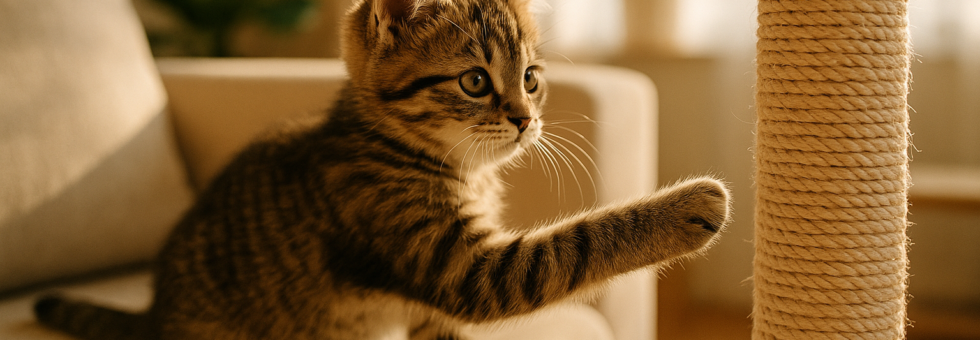
Step-by-step plan you can start today
If you feel confused, use this simple plan.
Day 1 to Day 3
- Put a sturdy scratching post next to the couch
- Add a horizontal scratcher nearby
- Cover the couch scratching area with tape or protector
- Play with your kitten twice a day
- Reward any use of the scratcher
Day 4 to Day 7
- Keep redirecting gently from couch to post
- Notice when scratching usually happens
- Trim nail tips if needed
- Test a different scratcher if interest is low
- Keep praising and rewarding good behavior
Week 2 and beyond
- Continue daily play and rewards
- Keep couch protection in place
- Slowly build the habit
- Move the scratcher only after your kitten uses it regularly
- Stay patient and consistent
This simple routine works well for many first-time kitten owners.
Signs your training is working
You may feel like nothing is changing, but look for these signs:
- Your kitten scratches the post on its own
- The couch is scratched less often
- Your kitten goes to the post after waking up
- Redirection works faster than before
- Your kitten seems calmer and less wild indoors
Progress can be slow, but slow progress is still progress.
FAQ
1. Why does your kitten scratch the couch even when a scratching post is there?
Your kitten may not like the texture, height, or location of the scratching post. Many kittens want the post right next to the couch at first. You may need to try a sturdier post or a flat scratcher.
2. Can you stop your kitten from scratching completely?
No. Scratching is normal and healthy for cats. Your goal is to teach your kitten to scratch the right surfaces instead of your couch.
3. Is it okay to spray your kitten with water?
It is better not to. Water spraying can make your kitten scared of you and does not teach a good replacement behavior. Gentle redirection and rewards work better.
4. How many scratching posts does your kitten need?
One is often not enough. A good starting point is at least two or three scratching options in different areas, especially near the couch and sleeping spots.
5. What is the best scratching post for a kitten?
A sturdy, tall post with sisal is a great choice for many kittens. But some prefer cardboard pads or angled scratchers. The best one is the one your kitten actually uses.
6. How often should you trim your kitten’s nails?
Most kittens need nail trimming every two to four weeks. It depends on how fast the nails grow and how much scratching your kitten does.
7. What if your kitten scratches the couch only at night?
Your kitten may have too much energy before bedtime. Try a longer evening play session, then offer food and guide your kitten to the scratching post after.
8. Will your kitten grow out of couch scratching?
Not always. If the habit becomes strong, it can continue into adulthood. Early training is the best way to prevent that.
9. Should you put catnip on the scratching post?
Yes, if your kitten is old enough to respond to it. Catnip can make the scratching post more exciting, but it does not work for every kitten.
10. When should you ask a vet for help?
Talk to your vet if scratching becomes sudden, extreme, or linked with other behavior changes like hiding, not eating, or acting fearful. A vet can rule out stress or health issues.
Final thoughts
Training a kitten not to scratch your couch can feel exhausting at first, especially when you are already dealing with biting, crying, sleepless nights, and the worry of raising your kitten the right way. But you are not failing. You are just teaching a tiny animal how to live in a human home.
The biggest thing to remember is this: your kitten is not trying to ruin your furniture. Your kitten is following a natural instinct. When you give a better scratching option, protect the couch, reward good choices, and stay consistent, your kitten can learn.
Be patient with yourself too. First-time kitten owners often feel confused and stressed in the beginning. That is normal. With a simple routine and steady practice, you can move from chaos to calm.
Your goal is not a perfect kitten overnight. Your goal is a happy, well-behaved kitten that understands where to scratch, how to settle, and how to feel safe in your home.
And yes, your couch has a very good chance of surviving.